The Weight of the Glass
By Mikael Löwgren
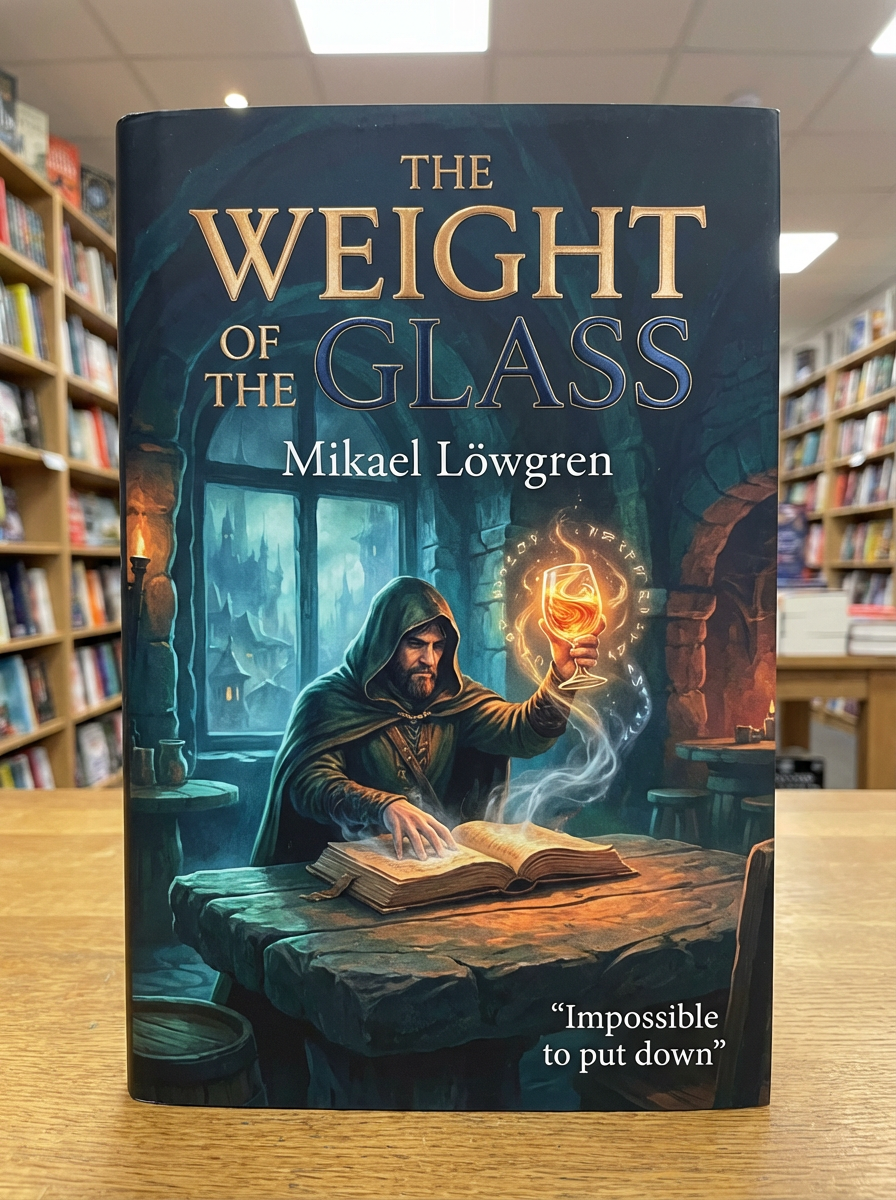
Synopsis
Jakob, a man weathered by unspoken burdens, seeks solace in the familiar ritual of a single beer after a grueling day, his contemplation interrupted by the unwelcome intrusion of a ringing phone. Each sip becomes a pause, a moment to weigh the invisible pressures of work, family, and the quiet despa
Chapter 1: The First Pour
The day died hard outside Jakob’s window, bleeding a final, anemic light across the scarred cityscape. Inside, dust motes performed their slow, silent ballet in the fading glow, indifferent to the man who watched them. Jakob didn't watch them much, not truly. His gaze was fixed inward, or perhaps, on the cold amber bottle cradled in his hand. It was a familiar weight, a promise.
He moved with a practiced economy of motion, the kind born of repetition and necessity. His apartment, spartan and functional, offered little in the way of distraction. A worn leather armchair, a scarred wooden table, and a bookshelf lined with books whose spines were more familiar than their contents. He left the lights off, preferring the deepening twilight, a natural filter to the harsh edges of the day.
The cap twisted with a soft hiss, the sound a small victory. He picked up the glass, chilled condensation beading on its surface. It was a good glass, heavy, with a thick bottom. He’d found it in a market stall years ago, a survivor. He held it to the light, inspecting its flawless clarity, then a brief, dismissive glance at the bottle. It was nothing special, just a pilsner, but it was cold.
He poured. Slow, deliberate. The golden liquid kissed the bottom of the glass, then rose, a creamy head forming, clinging to the sides. He watched it settle, a small mountain range of foam. The precision was important, a tiny act of control in a world that offered so little. The aroma was faint, hops and malt, a familiar comfort. He set the bottle down, empty now, a husk.
He sank into the armchair. The leather groaned a familiar protest under his weight. It was the only sound in the room, apart from the fading city hum, a distant, barely perceptible thrum. He closed his eyes for a moment, letting the silence press in, then opened them. The glass, held in his large, calloused hand, felt like an extension of himself.
The first sip was a cleansing. It coated his tongue, cool and bitter, a sharp counterpoint to the dull ache that resided behind his eyes. The residue of the day. Numbers on spreadsheets, faces in meetings, the drone of voices, the incessant pressure to produce, to be more, to be better. He didn't think about it directly. He didn’t have to. It was there, a persistent echo, a low hum beneath the surface of his consciousness.
He swallowed. The bitterness lingered, then receded, leaving a clean, almost antiseptic aftertaste. It was a good beer, a simple beer. He took another sip, a slightly longer one this time. The cold liquid slid down, warming slightly as it reached his stomach. He felt the tension in his shoulders ease, just a fraction.
He looked at his hands, resting on the arms of the chair. They were strong hands, marked by the years. Lines etched into the skin around his knuckles, the tips of his fingers slightly blunted. Hands that built, hands that repaired, hands that sometimes trembled with the unspoken. He recalled an old saying, something about a man’s hands telling his story. His hands told a long story, a difficult one.
He focused on the glass again. It was half-empty now. The foam had receded, leaving a delicate lace pattern on the inner surface. Each ring represented a sip, a passage of time, a moment consumed. He didn't hurry. The beer was not to be rushed. It was a ritual, a punctuation mark at the end of a sentence that often felt endless.
Work. The thought drifted unbidden, a dark cloud on the horizon of his mind. The project. The deadlines. The impossible expectations. He compressed his lips, a thin line across his face. He’d done what he could. He always did. But there was always more to do, always another peak to climb, another abyss to stare into.
He took another sip. The slight giddiness, the faint blurring of the edges, was a welcome sensation. It was a blurring of the self, a temporary abdication of responsibility. For a few moments, the world could wait. The emails could pile up. The phone could remain silent.
He considered the silence. It was a rare commodity in his life. At work, the constant hum of machinery, the relentless ringing of phones, the chatter of colleagues. At home, before, there had been other sounds. The laughter, the arguments, the quiet rustle of pages turning. Now, there was only the silence. A heavy silence, sometimes, like a blanket weighted with lead. Other times, it was a companion, a quiet confidante.
He tilted the glass, watching the last of the head dissolve into the liquid. The beer looked darker now in the deepening gloom. He took another long swallow, the bitter coolness a balm. It was almost gone. The thought brought a dull sense of loss, a faint tightening in his chest.
His gaze drifted to the window. The city lights were beginning to prickle the darkness, a million tiny pinpricks against a canvas of deep indigo. Life was out there, a vibrant, chaotic symphony. He was apart from it, observing, a specter in his own solitary world.
The glass scraped against his teeth as he drained the last few drops. Empty. He set it down on the small table beside the armchair, a gentle click. The ritual was complete. The initial burn of the day had been doused. The lingering ache remained, a muted throb, but it was manageable. It always was.
He leaned his head back against the worn leather, the beer’s subtle warmth spreading through him. He closed his eyes again, letting the darkness deepen, letting the silence envelop him. He was tired, a profound weariness that went beyond the physical. It was a weariness of the spirit, a quiet despair that clung to him like a second skin. He knew it, acknowledged it, but he did not dwell on it. Dwelling was a luxury he couldn't afford. Enduring was the only option.
The air in the room felt thick, heavy with unspoken things. The weight of the day, the weight of the tasks ahead, the weight of the past. All settled around him, a palpable presence. He breathed slowly, deeply, trying to fill his lungs with something other than this unseen pressure.
Just as he was about to surrender to the comforting haze the beer had brought, a shrill, insistent sound ripped through the quiet. The phone. Not his office phone, with its dull, predictable ring. This was his personal phone, its insistent clamor a sudden, violent intrusion into his carefully constructed peace.
He flinched, his eyes snapping open. Stefan. It had to be. No one else called him on this line after hours. *Bloody hell, Stefan,* he thought, the bitterness of the beer returning, sharp and unwelcome. He hated the phone. He tolerated it at work, understanding its necessity, but here, in his sanctuary, it was an unwelcome assault. Each ring was a tiny hammer blow against his fragile tranquility.
He didn't move immediately. He let it ring, counting the pulses of sound. One. Two. Three. Each one a demand, a pull back into the world he had just, moments before, managed to escape. He stared at the empty glass, then at the muted glow of the phone’s screen, visible from the table. It vibrated with a low hum, dancing slightly on the polished wood. Stefan. Of course. Always Stefan.
The ringing continued, relentless, a siren call to duty, to obligation. Four. Five. It was not a call that could be ignored. He knew that much. Stefan was not one for casual pleasantries or dropped calls. If he was calling this late, it was important, or at least, Stefan thought it was. And what Stefan thought was important usually had a way of becoming important to Jakob too.
He sighed, the sound escaping his lips in a long, drawn-out exhalation. The brief, fragile truce he had brokered with the day was over. The weight of the glass, now empty, felt heavier than before. He reached for the phone, his hand moving slowly, as if through thick water. The warmth of the beer had receded, replaced by a colder, sharper awareness. The world was calling, and Jakob, as always, would answer. The weight of it all, that was the thing. And tomorrow, there would be another glass. And another pour.
Chapter 2: A Bitter Taste
The first sip was a momentary anesthetic. Jakob closed his eyes, letting the bitterness wash over his tongue, a familiar wave of hops and malt. But beneath the beer’s crisp edge, he tasted something else: the sterile air of the negotiation room, the slick, false smiles of the opposing counsel. He tasted the metallic tang of words left unspoken, particularly the ones he should have said to his wife that morning, before the doors closed on another unremarkable day.
He felt the familiar weight of responsibility settle upon him, a silent anchor dropping through the quiet waters of his consciousness. It wasn’t a crushing weight, not yet, but a persistent, dull pressure, always there, just beneath the surface. It was the weight of mortgages and car payments, of tuition fees that loomed in the not-so-distant future, of promises made and expectations silently nurtured. The weight of being the man who provided, who fixed, who endured.
He opened his eyes, the cool glass pressed against his lips. The amber liquid shimmered, reflecting the tired warmth of the room. The dust motes still danced, oblivious to his struggles, their tiny chaotic movements a stark contrast to the ordered, meticulous life he tried to maintain.
His mind replayed the day's final exchange. The deal was done, signed, sealed. He had won, technically. But the victory felt hollow, a strategic retreat gained at the cost of too many concessions, too much of himself chipped away. Henderson, from the other side, had clapped him on the shoulder, a gesture that felt less like camaraderie and more like a claim of ownership. “Well fought, Jakob. You always deliver.” The words, meant as praise, felt like a judgment. They implied a lack of alternative, a predictable trajectory. Jakob always delivered. Always.
He took another slow sip, letting the carbonation tickle his throat. The cold liquid was a temporary barrier against the encroaching tendrils of thought. He wanted to empty his mind, to sit in the quiet solitude of his apartment and simply exist, a rare luxury in his overscheduled life. But the thoughts were persistent, like gnats swarming a summer lamp.
He thought of Lena, his wife. Her silence that morning had been louder than any shout. The way she had put his coffee down without meeting his eyes, the way she had turned her back as he left, busying herself with nothing in particular. The fight, or rather the lack of one, hung in the air between them, a thick, unspoken cloud. It was about the vacation, or the lack thereof. Always the vacation. The promise of escape that kept getting pushed back, month after month, year after year, until it felt less like a dream and more like a cruel joke.
He understood her frustration. He truly did. He wanted to escape too, to feel the sun on his skin without the shadow of a looming deadline. But there were always reasons. Always. The market was volatile. A major client was threatening to pull out. A critical merger was on the horizon. He was the linchpin, or so he told himself. The man without whom the whole edifice would crumble. A proud burden, and a heavy one.
He traced the condensation on the glass, a cold trail across his fingertips. The beer was good, a pale ale he’d picked up from the artisanal brewery across town. He appreciated the craft, the dedication to something simple done well. He tried to apply that philosophy to his own life, to do his job well, to be a good husband, a good provider. But the lines blurred. The simple often became impossibly complex.
The silence of the apartment was usually a comfort, a balm. Tonight, it felt amplified, almost accusatory. Every creak of the floorboards, every distant siren, seemed to echo the unspoken questions inside him. Was this it? Was this the sum of his efforts? A quiet apartment, a cold beer, and a mind full of regrets and obligations?
He wanted to dismiss the feeling, to push it down, to drown it in the next swallow. He was a practical man, a man of action, not of maudlin introspection. Sentimentality was a weakness, a luxury he couldn’t afford. He had learned that early, in the cold, unyielding world of corporate law. Show no weakness. Show no doubt. Never let them see you sweat.
Yet, here he was, sweating inside, the anxiety a cold knot in his stomach. He remembered his father, a man forged in a different crucible, who had faced hardship with a grim, unyielding resolve. His father wouldn't have paused for introspection, not in front of a beer. He would have drained it in one go, then moved on to the next task, the next problem. For his father, solutions were always practical, always external. Jakob wondered if his father had ever felt this same quiet despair, this gnawing anxiety beneath the stoic facade. He knew he would never know. His father had died before Jakob had learned to ask such questions, before he had learned the bitter taste of holding things in.
He took another sip, a long, deliberate one. The beer was exactly as he liked it: cold, slightly bitter, with a clean finish. It was a small victory, a moment of perfect execution in a day full of imperfect compromises. He focused on that, on the simple clarity of the taste, the way it settled in his stomach, a warm, comforting burn.
His eyes scanned the familiar landscape of his living room. The rows of books, unread for years, mostly legal volumes and a smattering of classic literature he’d never found the time to finish. The sturdy oak desk in the corner, piled with papers and a laptop that was always open, always waiting. The faded Persian rug, a wedding gift from Lena’s aunt, a tapestry of intricate patterns that now seemed to symbolize the complexity of his life.
He sighed, the breath a quiet expulsion of pent-up air. He considered calling Lena, trying to bridge the gap that had opened between them. But what would he say? "I'm sorry"? For what, exactly? For working too much? For being stressed? For being himself? The apology would feel hollow, another empty promise, something he was desperate to avoid. He would wait. They would talk later, once the heat of the day had settled, once the beer had dulled the sharpness of his own self-recrimination.
He raised the glass again, the level barely diminished. Each sip was a pause, a moment to weigh the invisible pressures that pressed in on him. The demands of work, the silent expectations of his family, the quiet despair that, like a phantom limb, he sometimes felt clinging to him. He was tired of enduring, tired of carrying the weight. But what was the alternative? To falter? To crumble? He couldn’t. He wouldn't. Not yet.
The thought of Stefan, his business partner, flickered through his mind. Stefan, who often called him at all hours, oblivious to the concept of personal time. Stefan, who hated when someone called *him* on the phone, a delightful hypocrisy that Jakob sometimes admired, sometimes resented. He wondered what crisis Stefan would present next, what new mountain of paperwork or thorny legal challenge would land on his desk. He braced himself for it, the inevitable intrusion into his hard-won peace.
He took another, slower sip, trying to savor the last vestiges of the quiet. The beer was thinning now, losing its initial chill, but the taste remained. A bitter taste, yes, but also a taste of resilience, of the simple, yet profound, act of enduring.
Chapter 3: The Uninvited Call
The peace was thin. It clung to the air before him, a fragile skin covering the day’s raw edges. Then it shattered. The sound was sharp, insistent. A ringing. Not a pleasant tone. A demanding one. It tore through the quiet, a jagged shard of noise.
His eyes, already heavy, shifted. The phone lay on the worn oak of the small table beside his chair. The screen glowed. A name, stark against the brightness. Stefan.
Jakob felt it in his stomach, a low, hot clench. Stefan. His colleague. The man who lived by the clock and the bell, and never understood that after the clock stopped, the world should, too. Stefan, who saw no difference between the hours of nine to five and the dead calm of the evening. Stefan, who, even now, called as if the office fire alarm had sounded.
His hand twitched. An involuntary spasm. He wanted to snatch it, silence it. But he didn’t. The irritation was raw, a live thing, pulsing just beneath his skin. He let it ring. He watched the beer in his glass. It was amber, still. The foam, a white collar, clung to the rim. There was a grim determination in his gaze. He would not be moved. Not now. Not by Stefan.
The ringing was a challenge. A gauntlet thrown down in his sanctuary. Each blare of the phone was a tiny hammer blow against the quiet he had worked to build, brick by slow, careful brick, since he’d walked in the door. The familiar weight of the glass was still in his hand, cool and substantial. He felt its resistance against his grip, a small, solid defiance.
He watched the bubbles in the beer, small ascensions, rising to meet their end at the surface. Like his own thoughts, perhaps. Rising, bursting, gone. Or like the day’s demands, surfacing always, never truly disappearing.
The phone kept its clamor. Five rings. Six. Stefan was tenacious. Like a terrier, once it got its teeth into something. And now it had its teeth into Jakob’s evening.
He thought of the office. The fluorescent light, harsh and unwavering. The hum of computers. The low, constant murmur of voices. Stefan’s voice, often too loud, too insistent, cutting through the general din. Stefan, with his endless questions, his urgent projects, his inability to discern the critical from the merely important. Each call from Stefan was a miniature reenactment of the workday, brought uninvited into his home.
The bitterness of the beer he had just tasted returned, sharper now, layered with the bitterness of resentment. He had earned this quiet. He had paid for it in hours of focused effort, in the grinding down of his own spirit against the stone of corporate ambition. And now Stefan was attempting to repossess it, ring by insistent ring.
He shifted in the armchair. The worn fabric sighed beneath him, a sympathetic sound. He felt the familiar ache in his lower back, a testament to too many hours hunched over a desk. The ache was a part of him now, like the lines etched around his eyes, like the habit of reaching for the glass.
The ringing faltered. A brief pause. He almost breathed a sigh of relief. Then it started again. A second burst of sound. Stefan was not giving up.
This was more than just a call. It was an invasion. A symbolic gesture of the world's unending demands. It was the job reaching out, its long, cold fingers attempting to pull him back into its orbit, even here, in his own space, with his own chosen moment of respite.
He closed his eyes again, but the sound was too insistent to be ignored. It vibrated in the air around him. It seeped into the quiet, poisoning it.
His wife. He thought of her. She would be asleep by now. Or pretending to be. She often did that. Pretended to be asleep when the world, or he, became too much. He wondered if the ringing, though muffled, would reach her. Another disturbance he could not control. Another thin thread of peace frayed.
He opened his eyes. The beer. It was still there. A small island of calm in the storm of noise. He lifted the glass, slowly. The weight was good. Solid. Real.
He drank. A deeper sip this time. The cold liquid moved down his throat, a dulling balm. It momentarily pushed back the irritation, the clench in his gut. But the ringing was relentless.
He considered the options. He could answer it. Get it over with. Hear Stefan’s urgent, clipped tones, his breathless rundown of some minor catastrophe that could easily wait until morning. He could placate him, offer a few words, then hang up, and return to his beer, the moment already spoiled.
Or he could ignore it. Let it ring itself out. Let Stefan stew. Let him understand, in his own thick-headed way, that there were boundaries. That there was a time for work, and a time for silence.
The second option held a certain appeal. A small, defiant act. A refusal to be dictated to. A declaration of independence, however minor, in the face of the encroaching world.
He watched the phone glow. Stefan’s name. A symbol of all that was demanding, all that was relentless.
The call ended. The screen went dark for a second. Then it lit up again. A text message. Stefan. Of course.
He didn't read it. He didn't even pick up the phone. He knew what it would say. "Urgent." "Need to talk." "Quick question." It was always the same. Underneath the veneer of urgency was simply a lack of respect for personal time. A fundamental misunderstanding of the need for quiet.
Jakob felt a weary sigh rise in his chest. He pushed it back down. No point in wasting breath.
He focused on the glass. The condensation on the outside. The way the light caught the amber liquid, making it glow. He traced a finger around the rim. Cool, smooth glass. A clean line.
The quiet, when it finally returned, was not the same. It was no longer pristine. It was bruised. Tainted. The sharp edges of the ringing still reverberated, a ghost in the air. The delicate fabric of his peace was rent. He could not mend it, not fully. Not tonight.
He took another long drink. The beer had lost some of its initial chill. It was still good, but the edge was gone. Like his own mood. The sharp clarity of his resolve had softened, blurred by the unwelcome interruption.
He closed his eyes again. The image of Stefan’s name on the screen lingered, burned into his retina. The intrusive glow. The insistent ring.
He thought of the myriad pressures that had accumulated throughout the day. The tight deadline. The demanding client. The subtle tension at home, unspoken but ever-present. These were the weights he carried, invisible but heavy. The beer was supposed to lighten the load, if only for a short while. But even that small relief was now compromised.
Stefan, in his unwitting way, had added another pebble to the already overflowing scale. A small pebble, perhaps, but it represented a larger truth. The truth that the world, in its ceaseless turning, sought always to intrude, to demand, to erode the quiet moments, the private spaces.
He put the glass down on the table, a gentle thud. He didn't pick up the phone to check the message. He wouldn't. Not now. He would confront Stefan in the morning, in the proper time and place. Let him wonder. Let him wait. Let him taste a sliver of the frustration he had just inflicted.
The beer in the glass sat still. No more bubbles rose. The foam had thinned, clinging stubbornly to the sides. It reflected the muted light from the window, a pale, almost melancholic gleam.
Jakob felt a deep weariness settle over him, heavier than before. It wasn’t just the work. It wasn’t just the family. It was the relentless, unending presence of all of it. The weight wasn't just on his shoulders. It was in the air he breathed, in the quiet he sought, in the beer he drank.
He picked up the glass again. It was cool. A steadfast companion. He raised it to his lips, but he paused. The taste now anticipated was not just the hops and malt. It was also the bitter tang of disruption, the lingering echo of a call he had refused to answer, but which had answered for him, nonetheless. It had said, clearly, that even in his chosen sanctuary, he was not truly free. Not yet.
Chapter 4: Silence and the Surface
The phone eventually quit. Its insistent chirping had been a loud, small thing against the deeper quiet of the room. Jakob let out a breath he hadn't realized he was holding. The silence settled back, not empty, but thick with the hum of the refrigerator, the distant rumble of a passing car, and the steady beat of his own blood. Stefan. He’d call back. Or he wouldn’t. It didn't matter. Not now.
Jakob’s gaze fell to the glass in his hand. The condensation had thickened. It beaded on the cool surface, clinging there, then coalescing into tiny rivulets that traced slow paths down the curved side. He watched them, each one a miniature river, brief and transient, ending in a small pool at the coaster.
Inside the glass, the beer was a dark amber, almost black in the low light. Small bubbles rose. They didn't erupt, but rather detached themselves, slowly, deliberately, from the bottom of the glass, shimmering upward. Each one a tiny, perfect sphere, carrying a sliver of gas, a fleeting breath. They broke the surface with a barely perceptible *pop*, a miniature explosion that stirred the foam for a fraction of a second before vanishing.
He thought of his life. It was like that. A surface. Placid, mostly. The days moved. He woke. He worked. He came home. There were words, necessary ones, with his wife. With colleagues. With his son. He made decisions. He solved problems. He endured.
But beneath that surface, there were depths. Unseen. Currents. Always moving. Sometimes gentle, sometimes strong enough to pull a man under if he wasn’t careful. The weight was there, a constant pressure, a familiar presence. It wasn't always obvious. Like the bubbles in the beer, sometimes the pressure released itself in small, insignificant ways. A sigh. A clenching of the jaw. A long stare into nothing.
He took another sip. The bitterness was still there. Clean. Sharp. It cut through the residue of the day, Scraped it clean. It was a good bitterness. An honest bitterness. Not the cloying sweetness of denial, nor the sour taste of regret. Just the plain, simple fact of things.
The silence grew. It wasn't the kind of empty silence that made a man feel alone. It was the kind of full silence, a space where thoughts could move, unhindered by noise or obligation. He let his mind drift, not actively thinking, but letting memories, worries, observations, flow through him. Like the current beneath the surface.
He remembered a day, long ago, when he was a boy. He’d gone fishing with his grandfather. A small, still lake. The water had been so clear that day, he could see the rocks on the bottom, the weeds swaying gently. He'd sat there for hours, the line cast out, not catching a thing. His grandfather hadn’t spoken much. Just sat, smoking his pipe, occasionally adjusting his hat. Jakob had felt a strange peace then, a sense of belonging in that quiet.
That peace was harder to find now. The world had grown louder. More demanding. The responsibilities, the expectations, they piled up. He felt them, a steady accretion, like barnacles on a hull, slowing him down. The weight of it. Always the weight.
He looked at his hand holding the glass. The veins stood out, blue lines beneath the skin, a map of his quiet endurance. The nails were short, clean. Working hands. Hands that had built things, repaired things, held things. Hands that were now, in this moment, simply holding a glass of beer. And that was enough.
The phone vibrated on the table, a low growl this time, a text message. He didn't look at it. He knew who it was. Stefan. Relentless. Undeterred by silence. It could wait. Everything could wait. For now, there was just the glass. The beer. The silence. And the rising bubbles. Each one a small, perfect punctuation mark in the long, unwritten sentence of his evening. Each one a moment of silent, unwavering resistance against the unseen currents that pulled at him. He would just hold on. And endure.
Chapter 5: The Half-Empty Glass
The beer, a golden liquid that had once brimmed to the rim, now settled an inch below the halfway mark. A quiet metric. Time passing. A day ending. The low light from the window, dulled by the dust motes still performing their slow dance, caught the remaining fluid, making it glow faintly. Jakob watched it. He watched the small bubbles, fewer now, still clinging to the inside of the glass, then detaching and rising to the surface, where they burst, silent and insignificant.
The beer offered no answers. He knew that. He had never expected it to. It was not a potion, not a magic draught. It was just beer. A temporary respite. A pause. The burdens remained. They always did. They were like the sediment at the bottom of a river, stirred sometimes, but always settling back, quiet and heavy. The meeting this morning, the words exchanged, or more accurately, the words *not* exchanged, with Anna over dinner last night. The bills on the counter, unread, but their presence felt nonetheless. These things waited. They always did. They were patient.
He lifted the glass again. The coolness against his hand. The weight, familiar. He drank slowly, letting the bitterness spread across his tongue, a familiar comfort. It was a taste that didn't demand anything, didn't ask questions. It just *was*. He felt the liquid slide down his throat, a small warmth spreading in his chest. It would not last. Nothing ever truly did.
His eyes drifted to the phone on the small table beside the armchair. It lay silent now, a black rectangle in the dim light. Stefan. The name etched itself in his mind. Stefan, who never understood. Never grasped the sacredness of the hour, the quiet, the ritual. Stefan, who would call about nothing important, or about everything important, it made no difference. The interruption was the sin. The disruption of the fragile peace.
He considered calling Stefan back. The thought was a fleeting shadow. Unwelcome. He saw no reason to. Stefan's calls were never urgent in the way that truly mattered. They were urgent in the way that office politics were urgent, or quarterly reports. Urgent in a shallow, clamoring way that faded as soon as the line disconnected. The kind of urgency that left no residue, no lasting impact.
But the thought had been born. It lingered, a faint hum in the quiet room. He found himself dissecting it. Why call back? What did Stefan want? It would be work. It was always work. And work was the last thing he wanted to think about. Work was the rough stone in the bottom of his shoe, always there, always a minor discomfort, even when he tried to ignore it.
He took another sip. The level in the glass dropped further. It was past the halfway point now. Approaching two-thirds empty. He focused on the visual, the shrinking volume. A deliberate act of distraction. He did not want to think about Stefan. He did not want to think about work. He wanted to think only of the beer, of the cooling room, of nothing at all. Emptiness. A quiet, blank space. A relief.
But the mind was a stubborn thing. It latched onto things. Like a burr on a pant leg. Stefan. He pictured Stefan, animated, pacing, talking quickly, always quickly. He heard Stefan’s voice, insistent, demanding attention. Jakob felt a familiar weariness settle over him, the kind that was deeper than physical exhaustion. It was a weariness of the spirit, a fatigue of the soul.
He had often wondered if Stefan ever truly *listened* to anyone, or if he only waited for his turn to speak. He suspected the latter. Most people were like that. He was, sometimes. Anna often accused him of it. Of retreating into himself. Of not sharing. He knew it was true. He had his reasons. He preferred silence to the clatter of idle words, preferred unspoken understanding to the often-mistranslated cacophony of conversation.
The beer was now two-thirds gone. Just a shallow pool at the bottom. The light from the window was almost completely faded now, the room deepening into shadow. He could hear the distant murmur of the city, a low thrum that was always there, a backdrop to everything. It was a sound he had grown accustomed to, so much so that he rarely noticed it until it was absent, like a breath he hadn't realized he was holding.
He ran his thumb over the smooth, cool glass. The condensation had almost disappeared, leaving a faint sheen. He should probably eat something. But the thought was abstract, without purchase. The beer was enough for now. It provided a small measure of satiation, a dulling of the edges of hunger, both physical and otherwise.
He thought of the weight of the glass. The actual weight. The weight of the liquid within it. And then the other weights. The invisible ones. The ones he carried. The weight of unspoken burdens. The weight of expectation. The weight of responsibility. The weight of enduring. Each sip was a small act of defiance against those weights, a momentary lifting of the load.
He finished the beer. The last few drops, colder than the rest, slid down. The glass was empty now. Truly empty. He placed it carefully on the small table. The clink of glass on wood was a small sound, but it echoed in the silence of the room. The ritual was complete. The temporary respite was over.
The burdens, he knew, had not disappeared. They had merely receded, waiting for the pause to end. They were still there, patient, steadfast. And Stefan, whether he called back or not, whether he was answered or not, was also waiting. He would always be there, a persistent shadow on the periphery. Jakob sat in the deepening gloom, the empty glass beside him, and felt the familiar pressure of the world settling back upon his shoulders. He closed his eyes. The quiet despair. The quiet enduring. Both were always present.
Chapter 6: The Last Drop
The last drops of amber liquid clung to the bottom of the glass, catching the muted glint of the living room lamp. Jakob tilted it, a slow, deliberate motion, watching the final beads gather and then fall. The clink of the empty glass against the worn wood of the coffee table was a small sound, but in the quiet of the apartment, it echoed with a finality that was almost stark. It was done. The ritual complete.
For a brief while, the world had been held at bay. Its insistent hum, its sharp edges, its ceaseless demands – all momentarily smoothed, dulled. The beer had been an imperfect shield, a temporary truce in a war that never truly ended. He’d savored each sip, each pause a small victory against the encroaching chaos. Now, the victory was over. The ceasefire expired.
He pushed himself up from the armchair, the springs groaning a familiar complaint. The empty glass felt light in his hand, almost meaningless in its current state. It was an artifact of a finished moment, a spent cartridge. No longer a chalice holding solace, it was just glass, thin and brittle.
But the lightness was deceptive. The physical weight of the empty vessel was negligible, yet the weight of what was coming pressed in on him. The knowledge of the morning, always waiting. The dawn, harsh and unforgiving, would bring with it the attendant responsibilities, the unfinished business, the burdens that had merely been postponed, not banished.
Each day was a ledger, and the night, a brief entry for rest, never truly balancing the accounts. Tomorrow, the figures would be redrawn, debts rediscovered, new pressures added. The conference call with the Singapore office, always an exercise in strained politeness and cultural misunderstanding. The project deadline, a phantom limb that constantly ached. And Lena. Always Lena. Her unspoken expectations a low thrum beneath the surface of their shared life, more persistent than any phone call.
His eyes drifted to the phone, lying silent on the coffee table. Stefan. The name still flickered in his mind, a minor irritant that had gained unwarranted significance simply by its timing. Jakob had chosen silence then, a small act of defiance against the world's demands. He wondered, briefly, what Stefan had wanted. Another crisis, no doubt, manufactured or real. Stefan had a knack for both.
He picked up the glass, carrying it into the small kitchen. The faucet dripped, a slow, rhythmic pulse against the quiet. He rinsed the glass, turning it under the cold stream, watching the last traces of foam disappear down the drain. He placed it carefully in the drying rack, next to another, identical glass, waiting for its turn. A fresh glass for a fresh day. Or, more accurately, for another, identical ending.
He stood by the window, looking out at the city lights. A scattered constellation against the dark canvas of the night sky. Each light a life, a story, a struggle. He was just one of them, a small spark in a vast, indifferent expanse. The thought brought neither comfort nor despair, just a flat, undeniable truth.
He thought of the beer's surface, placid, concealing. His own life, mirroring it. The calm exterior, the carefully constructed facade. Beneath it, the currents churned, the depths waited. He had touched upon those depths tonight, not by delving into them, but by simply acknowledging their presence. The acknowledgment, in itself, was a draining act.
The apartment was still, save for the hum of the refrigerator. A sentinel, guarding unseen provisions. Life continued its low thrum, even in his moments of stillness. He walked back to the armchair, not to sit, but to straighten the throw blanket, to tidy the magazines scattered on the coffee table. Small acts of control in a world that often felt beyond his grasp.
He caught his reflection in the dark glass of the television screen. A man, tired. The lines around his eyes seemed deeper in the dim light. The set of his jaw, a familiar tension. He didn't look away. It was him. The man who endured. The man who sought solace in a single glass, who valued the precious, fleeting moments of quiet.
The house was silent upstairs. Lena was asleep. Their son, too. He pictured them, peaceful, unaware of the quiet battle he fought each evening. He was the bulwark, the silent protector, absorbing the blows, letting them fall on him first. It was his burden, his choice. And it was a lonely one.
He wondered if Stefan, wherever he was, had found his own brand of peace after being ignored. Probably not. Stefan thrived on agitation, on the urgent and the immediate. He rarely saw the value in the pause, the quiet moment of contemplation. He was all surface, all action, missing the depths entirely. Jakob envied him, sometimes, the sheer unburdened nature of his existence. But then, he didn’t know Stefan's depths, if they existed at all. Perhaps Stefan was truly just the surface he presented.
He ran a hand over his tired face. The day felt long gone, yet its residue clung to him like a faint scent. The negotiations, the curt email from his boss, the subtle disappointment in Lena's voice when he'd forgotten something small but significant. Each a small prick, adding to the slow bleed of his resolve.
He wasn't running from anything, not truly. He was simply trying to survive it. To navigate the landscape of his life with some semblance of dignity, some remaining thread of self. The beer, the quiet, the ritual – these were his small, desperate attempts to tether himself. To ensure he didn't drift too far.
He moved to the small bookshelf, pulling out a volume of philosophy, its pages worn and creased. He didn't open it. Just held it, feeling the texture of the old leather, the weight of the printed words that promised answers, or at least, better questions. He was past seeking answers in books tonight. He sought only the stillness, the quiet before the next storm.
The clock on the mantel ticked, a slow, methodical rhythm marking the passage of moments. Each tick a declaration: time moved on, regardless of his weariness, regardless of his burdens. The night would yield to morning. And with morning, the world would resume its relentless turning.
He took a deep breath, letting it out slowly. There was no grand revelation, no sudden epiphany. Just the quiet understanding of what was. The empty glass, the coming morning, the ceaseless pressure. He was still here. He had endured. And that, he realized, was enough. For now.