The Weaver's Echo
By Mira
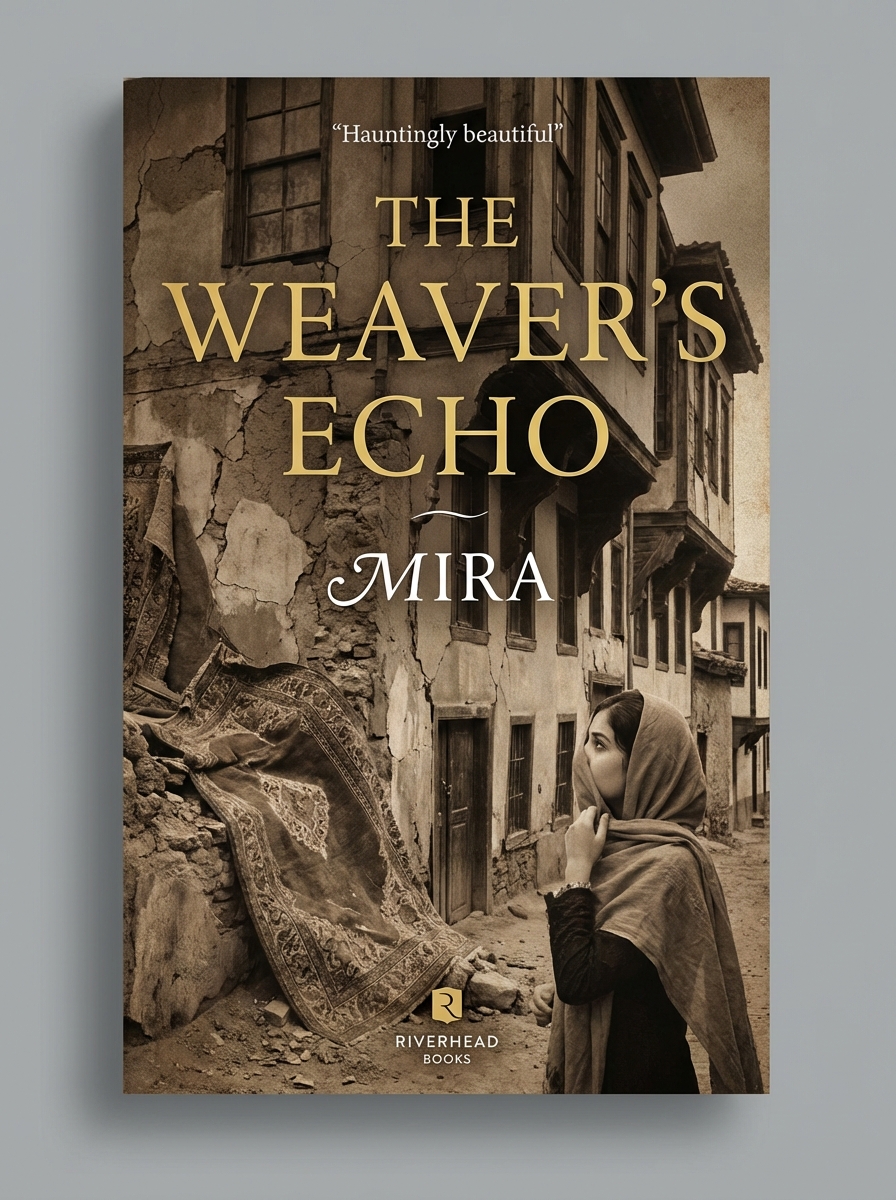
Synopsis
In the labyrinthine alleyways of Istanbul, a sudden, devastating earthquake shatters the foundations of an ancient city and the intricate lives within it. Amidst the dust and rubble, a young rug restorer grapples with the seismic cracks in her own family's history, forced to choose between the fragi
Chapter 1: Before the Tremor: A Song of Silk and Stone
## Before the Tremor: A Song of Silk and Stone
The air in the workshop, even at this hour, hummed with a quiet intensity, a breath held between the sharp tang of dye and the sweet dust of aged wool. Sunlight, a thin, buttery ribbon, sliced through the high window, illuminating the motes that danced an ancient, unhurried waltz above my head. I was perched on my low stool, a tiny world of frayed silk unfurling beneath my magnifying glass. My hands, calloused and nimble, moved with the rhythm of generations, a slow, deliberate mending that felt less like work and more like a whispered conversation with the past.
This particular piece, a prayer rug from Kayseri, was a symphony of faded rose and indigo, its central mihrab worn thin by countless genuflections. The damage was significant – a gaping tear near the border, as if a sharp tooth had savaged the delicate pile. But it wasn’t the damage that held me. It was the faint, almost imperceptible scent that clung to the fibers, a ghost of incense and old spice, a hint of lives lived and prayers offered. It was the scent of memory, and in this city, memory was as dense and palpable as the very stones beneath our feet.
Baba, his spectacles perched precariously on the end of his nose, sat across from me, his own fingers navigating the intricate knots of a much larger Kilim. He hummed, a low, tuneless murmur that was as much a part of the workshop as the rhythmic click of our needles. His face, a roadmap of laughter lines and worry, was etched with the quiet dignity of a man who understood the language of fabric better than he understood most people. He often said, “Mira, a rug doesn’t just cover a floor. It holds stories. It breathes.”
Today, however, the silence between our hums felt weighted, thicker than usual. The morning news, a cacophony of distant sirens and a somber voice reporting on yet another crisis in a land far away, had seeped into the workshop’s usually impervious tranquility. A village, flattened. Homes, gone. Lives, extinguished in an instant. It was a recurring nightmare played out on a global stage, a seismic rumble in the collective human heart. Baba had shaken his head, a slow, sorrowful movement, and then, as he always did, turned back to his work, as if the meticulous act of mending could somehow counteract the unraveling of the world.
My own mind, however, kept drifting. I thought of the faces flashed across the screen – the dust-streaked cheeks of a child, the vacant stare of an elderly woman. How did one rebuild from such utter devastation? Not just the bricks and mortar, but the very fabric of existence? Our lives here in Istanbul, though vibrant and often chaotic, felt stubbornly anchored, woven into the very bedrock of history. The walls of our apartment building, its stone façade scarred by centuries of sun and wind, felt as eternal as the Bosphorus itself.
Later, as the afternoon sun began its slow descent, painting the narrow alleyways outside in hues of apricot and rose, I walked home, the rhythmic clatter of my heels on cobblestones a familiar comfort. The air was alive with the city’s symphony – the call of a simit seller, the distant wail of a ferry horn, the chatter of neighbors leaning out of their windows. Each sound, each scent, was a thread in the rich tapestry of this place, a place where ancient mosques stood shoulder-to-shoulder with bustling bazaars, where the past wasn’t just remembered, it was lived.
My mother, Ayşe, was already in the kitchen, the scent of lentils and cumin a warm embrace. She was a woman of fierce loyalties and even fiercer anxieties, her eyes, though kind, always holding a flicker of apprehension. She looked up as I entered, a small, grateful smile gracing her lips. “Mira, my love. Your father will be home soon. Are you hungry?”
I nodded, dropping my bag by the door. “Just a little. How was your day?”
She sighed, stirring the pot with a wooden spoon. “The usual. Mrs. Demir complained about the damp in the stairwell again. And I heard… on the radio… about the earthquake. So many people…” Her voice trailed off, a familiar worry furrowing her brow. Mother always felt the world’s sorrows deeply, absorbing them like a sponge.
I squeezed her hand. “It’s far away, Anne. Don’t think about it.” A hollow comfort, I knew, but what else could I offer? The world was a vast, unpredictable place, and we were just two women in a small kitchen, clinging to the familiar rituals of evening.
The evening passed in a comfortable blur of conversation and the clatter of plates. Baba arrived, his scent a mix of wool and the faint, sweet aroma of his pipe tobacco. He spoke of a new commission, a large tribal rug that would require weeks of meticulous work. He spoke of the beauty of the dyes, the story in the patterns. His passion for his craft was a constant, steady flame, illuminating our lives.
As I lay in bed, the city’s distant hum a lullaby, my thoughts returned to the prayer rug, to the torn fibers, to the scent of memory. I thought of the village in the news, flattened, erased. What would become of their stories? Would their memories simply crumble into dust along with their homes?
I traced the intricate pattern on the ceiling, a floral design that had seen countless generations of sleepers. Our apartment building, old and grand, felt like a living entity, its stones whispering tales of Ottoman sultans, of merchants, of ordinary families like ours who had carved out their lives within its embrace. We were part of its story, and it, inextricably, was part of ours.
A sudden, sharp jolt.
My eyes flew open. The bedside lamp, a delicate porcelain bird, rattled on the nightstand. A low, guttural growl rose from the foundations of the building, a sound that wasn’t just heard but felt, vibrating through the very marrow of my bones.
Then, the world tilted.
The ceiling pattern blurred, the floral design dissolving into a terrifying shiver. A deafening roar filled the room, a monstrous symphony of grinding stone and splintering wood. The porcelain bird flew from the nightstand, shattering against the wall. Dust, thick and acrid, exploded into the air, choking my lungs.
I scrambled from the bed, my heart a frantic drum against my ribs. “Anne! Baba!” My voice was a thin, reedy cry lost in the pandemonium.
The floor bucked beneath my feet, a wild, untamed beast. The heavy wooden wardrobe crashed to the ground with a terrifying thud, sending a shower of plaster and splintered wood across the room. The air was thick with the scent of fear, of pulverized stone, of something ancient and unyielding being ripped apart.
I stumbled towards the door, my hands outstretched, grasping at air. The world was a kaleidoscope of violence – lamps swinging wildly, books cascading from shelves, the very walls groaning under an unbearable strain. A deep, guttural crack echoed from somewhere above, a sound that promised utter annihilation.
Then, a sickening lurch. The floor beneath me gave way, not in a gentle collapse, but a sudden, terrifying drop, as if the very Earth had opened its maw to swallow us whole. A primal scream tore from my throat, raw and desperate, as darkness enveloped me, a crushing, suffocating embrace of stone and dust and the terrifying, relentless roar of a city tearing itself apart.
In that final, plummeting moment, amidst the chaos and the deafening violence, one thought, clear and sharp amidst the terror, pierced through my mind: The stories. The stories, the threads we so meticulously wove, were they all just dust in the wind?
Chapter 2: The Rupture: Dust and a Thousand Whispers
The air, a moment ago thick with the scent of roasted chestnuts and the murmur of a thousand voices, now choked on dust and the shriek of contorting metal. Mira’s hands, so recently tracing the delicate arabesques of a 17th-century Ushak, now clawed at the air, searching for purchase in a world that had suddenly tilted on its axis. The roar had been instantaneous, a primal bellow from the earth’s belly, followed by a symphony of shattering glass and splintering wood.
She’d been in the workshop, tucked away on a side street off the Grand Bazaar, a haven of quiet contemplation amidst the city’s ceaseless clamor. The *kilim* she was restoring, a vibrant tribal piece with motifs whispering of ancient nomadic journeys, had been draped over her lap. Now, it lay buried beneath a cascade of plaster and brick, a vibrant ghost swallowed by the sudden maw of destruction.
A searing pain shot through her left arm as a heavy timber beam, dislodged from the ceiling, slammed against her. She cried out, a thin, reedy sound lost in the cacophony. The world spun, a kaleidoscope of grey and ochre, before settling into a suffocating darkness.
When consciousness began to knit itself back together, it was with the taste of grit and blood in her mouth. Her head throbbed with a dull, persistent ache. Every breath scraped against a throat raw with dust. She pushed herself up, wincing as shards of masonry dug into her palms. The air was thick, a gritty shroud that blinded and choked.
“Baba?” she rasped, her voice a brittle whisper. “Mahir?”
Silence. A terrifying, absolute silence, broken only by the distant, mournful wail of sirens that seemed to come from everywhere and nowhere. The workshop, her sanctuary, was a tomb. The intricate shelves, laden with spools of hand-spun wool and jars of natural dyes, were overturned, their contents scattered like forgotten jewels. The loom, a behemoth of ancient wood that had stood solid for generations, lay in a broken heap, its warp threads splayed like severed nerves.
Panic, cold and sharp, began to prick at her. She stumbled forward, her injured arm hanging uselessly at her side, her eyes straining in the gloom. The faint light filtering through a fractured wall revealed a scene of utter devastation. The familiar warmth of the workshop, the comforting scent of lanolin and age, was replaced by the acrid tang of pulverized concrete and raw sewage.
She found Mahir first, or what was left of him. His small, wiry frame was pinned beneath a collapsed section of wall, his face obscured by a thick layer of dust. Only a corner of his worn trousers, the same pair he’d worn every day for the past decade, peeked out. He was still, utterly still. A strangled cry tore from Mira’s chest, a sound born of primal grief and disbelief. Mahir, her quiet, dependable apprentice, whose hands had learned the rhythm of the loom almost as well as her own. Gone. Just like that.
The weight of it, the sheer brutality of such sudden absence, threatened to buckle her knees. But then, a faint, almost imperceptible groan.
“Baba!”
She scrambled over rubble, ignoring the fresh cuts and scrapes, the throbbing in her arm. Her father, Mehmet, was trapped beneath a mountain of debris near the back wall, where he usually kept his collection of antique tools. He was slumped, his face pale and contorted, a thin trickle of blood tracing a path from his temple.
“Baba, can you hear me?” Her voice was hoarse, desperate.
His eyelids fluttered, then slowly opened. His gaze, usually sharp and discerning, was clouded with pain and confusion. “Mira…” he coughed, a dry, rattling sound. “The… the carpets…”
Even in the face of annihilation, his first thought was for the woven treasures they guarded, the stories they held. It was both heartbreaking and infuriating.
“Never mind the carpets, Baba! Are you hurt?” She tugged at a loose piece of timber, trying to create a space, to free him. But it was too heavy, too entrenched. Her injured arm screamed in protest with every strained movement.
“My leg…” he winced, a groan escaping his lips. “Pinned.”
A fresh wave of terror washed over her. They were trapped. Buried alive. The thought was a cold stone in her gut. She could hear distant shouts now, closer, but still muffled by the layers of earth and concrete. Hope, fragile and flickering, began to stir.
“Someone’s coming, Baba. Just hold on.” She tried to sound confident, but her voice trembled.
Hours bled into a timeless agony. The dust slowly began to settle, revealing the stark outlines of their prison. Mira, despite her own injuries and the gnawing fear, did what she always did: she focused on the threads. Not of wool, but of life, of survival. She tried to clear the smaller debris around her father, easing the pressure on his chest. She talked to him, whispering stories of *kilims* and their patterns, of the history woven into every knot, trying to keep him conscious, to keep the despair at bay.
“Remember the one, Baba, the Hereke, with the Tree of Life design? You said it reminded you of our family, branching out, always reaching for the light.” She paused, her voice catching. “We’ll get out, Baba. We will.”
His eyes, glazed with pain, searched hers. “The *kilim*… the one you were working on… the tribal one…”
She swallowed, the taste of ash still in her mouth. “It’s… it’s buried, Baba. But it’s just a carpet. We can fix it. We can weave another.”
He shook his head slowly, a faint, sorrowful expression on his face. “More than just a carpet, child. It’s a whisper from the past. A voice. Lost now.”
His words, spoken with such profound regret in the face of their own precarious existence, struck her with a chilling realization. For him, the loss of these woven narratives was akin to losing a part of himself, a piece of his very soul. He saw the world not in terms of solid structures, but in the delicate, interconnected threads of history and artistry. And now, those threads were severed.
The moral calculus of their situation began to press down on her. Mahir was gone. Her father was injured, perhaps fatally. The workshop, their livelihood, their heritage, was reduced to rubble. Outside, the city was a symphony of agony. People were making choices, impossible choices, about who to save, what to salvage.
She thought of the headline she’d glimpsed just yesterday, plastered across a newspaper stand: “Syrian Refugees Face Stark Choices Amidst New Housing Crisis.” The words, then a distant echo of someone else’s struggle, now resonated with a brutal immediacy. Survival. What did it demand?
A low rumble from above made her flinch. More debris shifted, sending a fresh shower of dust over them. The air grew thinner, heavier. Panic, held at bay by the necessity of action, threatened to overwhelm her again.
“Mira…” her father’s voice was fainter now, his breath shallow. “The strongbox… under the workbench… the old one… the money, the deeds… it’s for you.”
Her heart clenched. He was preparing. Preparing for the end. No, she wouldn’t let him.
“Don’t talk like that, Baba,” she choked out, tears finally blurring her vision. “We’re not giving up.”
But his words echoed in the suffocating darkness. The strongbox. Their savings. The deeds to the workshop, to their small, unassuming home above it. It was a lifeline, a tangible link to a future that felt impossibly distant. And it was buried, just like everything else.
The sound of distant voices grew stronger, distinct now. Hope surged, a fierce, burning flame in the hollow of her chest. “They’re here, Baba! They’re here!”
She yelled, a raw, desperate cry for help, her voice tearing through the dust-laden air. The response was immediate, a flurry of shouts, the scraping of metal, the rumble of heavy machinery. Light, a blinding, glorious beacon, pierced the gloom as a section of the collapsed wall above them was finally dislodged.
A man’s face, grimy and weary, appeared in the opening. “Anyone in here? Speak up!”
“My father! He’s trapped! His leg!” Mira screamed, her voice cracking with relief and urgency.
The man nodded, his eyes scanning the devastation. “We’re coming. Just hold on.”
Hold on. The words, so simple, carried the weight of everything. Hold on to life. Hold on to hope. Hold on to the fragile threads of their existence, even as the world around them had ruptured, leaving only dust and a thousand whispers of what once was. The *kilim* of her life, once so vibrant and clearly patterned, had been torn asunder. Now, she would have to weave it anew, knot by painful knot, from the very dust of her shattered world. And she knew, with a chilling certainty, that the patterns she chose, the threads she salvaged, would be forever changed by this rupture.
Chapter 3: Beneath the Unsettled Sky: A Mother's Reckoning
The sky, once a familiar canvas of azure and scattered clouds, had become a bruised, unforgiving expanse. It pressed down on Istanbul, a heavy lid on a jar of shattered memories. Ayşe, her breath still catching in her throat with each inhale, watched it from the stoop of what was left of her shop, a skeletal grin of timber and broken plaster. The air tasted of cement and something else, something metallic and acrid – the ghosts of lives abruptly ended.
Her mother, Elara, sat beside her, a figure carved from the very sorrow that now blanketed the city. Elara, who had always moved with the grace of a sultan’s dancer, was now a study in stillness, her hands clasped so tightly her knuckles shone white. Her gaze was fixed on a point beyond the crumbled minaret, beyond the gaping maw where the old spice market once stood. Ayşe knew that gaze. It was the look of someone searching for a piece of themselves that had been ripped away, a thread that had snapped.
The headlines, when they eventually trickled in from the few functioning radios, were a brutal symphony of numbers and names. “Thousands Dead, Many More Displaced,” one blared, a cold, clinical assessment of the human cost. Another, more personal, spoke of the “Heartbreak of Sultanahmet,” detailing the loss of historic mosques and homes. Ayşe remembered the reporter’s voice, tight with a practiced solemnity, reading a list of the fallen. Each name was a hammer blow, each address a silent scream.
But it was a different kind of headline that had lodged itself in Elara’s heart, a silent, unwritten one that Ayşe could feel humming between them like a taut, invisible wire. It was the unspoken question of her brother, Kemal. He had been in the university library, studying for his final exams, a monument to his quiet ambition. Now, the library was a mound of rubble, a tomb of forgotten knowledge and shattered dreams.
Ayşe had seen the frantic calls Elara made, the desperate pleas into the dead phone lines, the hollow echo of her own hope fading with each unanswered ring. She’d watched her mother’s slender fingers tremble as she scrolled through the lists of survivors, her eyes scanning for a name that never appeared. The silence that followed was always the most crushing sound.
“The government is sending aid,” Ayşe offered, her voice a fragile whisper against the enormity of their grief. She gestured vaguely towards a distant plume of smoke, where rescue efforts were still underway, a faint pulse of life in the heart of death.
Elara didn’t respond, her eyes still fixed on that distant, unknowable point. Ayşe knew it wasn’t the government she was waiting for. It was Kemal.
The scent of damp earth and decay began to creep into the air as the days bled into one another. Ayşe found herself walking the familiar routes of her daily life, but they were no longer familiar. The bakery, where she’d bought warm simit every morning, was now a jagged wound in the street. The tea house, where the old men played backgammon, was a pile of broken ceramic and splintered wood. Each sight was a fresh stab, a reminder of what was lost.
One afternoon, a neighbor, Fatma, her face etched with a grief that mirrored Elara’s, stopped by. She clutched a tattered scarf to her chest, her eyes wide and haunted. “They say… they say they’re starting to clear the sites more quickly now,” Fatma whispered, her voice barely audible. “To make way for… for new foundations.”
Elara flinched, a subtle tremor that passed through her rigid frame. Ayşe felt the cold dread seep into her own bones. “New foundations.” The phrase was a euphemism, a polite way of saying they would be burying the past, literally and figuratively.
That night, Elara moved like a phantom through the ruin of their home. Ayşe watched her, a silent observer in the dim light of a salvaged oil lamp. She saw her mother carefully, almost reverently, pick up a chipped porcelain cup, a relic of a breakfast shared with Kemal. She traced a finger over a faded photograph of him, a younger, brighter version of the boy who was now lost beneath the earth.
Ayşe wanted to reach out, to offer comfort, but the chasm between them felt too wide, too deep. Her own grief for Kemal was a dull ache, a constant thrum beneath her skin. But Elara’s… Elara’s was a gaping wound, raw and exposed.
The next morning, Elara was gone. Ayşe found a hastily scrawled note on the splintered table: *I have to find him, Ayşe. Don’t wait for me.*
A wave of fear, cold and sharp, washed over Ayşe. She knew where Elara had gone. To the university. To the site where rescue efforts were now transforming into recovery operations, where the living were giving way to the dead, and the hope of finding survivors was dwindling to nothing.
Ayşe followed, her heart a frantic drum against her ribs. The journey was a blur of dust and detritus, of shattered dreams and silent prayers. When she arrived at the university grounds, the scene was even more brutal than she had imagined. Heavy machinery clawed at the earth, iron teeth ripping at the remains of the majestic building. The air was thick with the smell of decay, a stench that clung to her clothes, to her hair, to her very soul.
And there, amidst the chaos, was Elara. Her mother, usually so composed, so elegant, was a wild, desperate figure. Her headscarf askew, her hands grimy with dust, she was arguing with a burly foreman, her voice raw, pleading.
“My son is in there!” Elara cried, her voice cracking. “Kemal! He’s a student. He was studying for his exams!”
The foreman, his face grim and weary, shook his head. “Ma’am, we’ve been through this section. There’s nothing left. No one could have survived.” His voice was kind, but firm, a practiced recitation of a brutal truth.
“No!” Elara shrieked, her voice rising to a fever pitch. “You haven’t looked hard enough! He’s there! I know he is!” She tried to push past the foreman, her small frame surprisingly strong in its desperation.
Ayşe rushed forward, pulling her mother back, her own eyes stinging with unshed tears. “Anne, no. Please, Anne.”
Elara turned to her, her eyes wild and unfocused. “He’s in there, Ayşe! I can feel it! He’s waiting for me!”
Ayşe held her mother close, feeling the tremors that ran through her body. The foreman, seeing the futility of reasoning with such raw grief, simply turned away, resuming his grim task.
As the heavy machinery continued its relentless work, a new kind of silence descended upon them. Not the silence of peace, but the silence of resignation, of a terrible, undeniable truth. Elara crumpled into Ayşe’s arms, her body wracked with sobs that tore at Ayşe’s own heart.
The sky above them, still bruised and unsettled, seemed to weep with them. Ayşe held her mother, her gaze sweeping over the scene of destruction, over the men and women who were silently, systematically, burying the last vestiges of hope. She understood then, with a chilling clarity, the moral complexity of survival. They lived, but at what cost? What of the ones who were lost? What of the threads that had snapped, leaving gaping holes in the fabric of their lives?
Elara’s sobs eventually subsided, leaving her a hollow, fragile shell. She looked up at Ayşe, her eyes still red and swollen, but with a new, terrifying clarity. “We have to go back, Ayşe,” she whispered, her voice raspy. “We have to go back and salvage what we can. For Kemal.”
Ayşe knew what she meant. Not the remnants of a building, but the remnants of their lives, the fragile threads of their heritage that still clung to existence. For Kemal, for the ghost of his future, they would try to weave something new from the wreckage. But as she led her mother away from the site, beneath the bruised and unforgiving sky, Ayşe knew that the echoes of what was lost would forever resound in their hearts. The weaving would be different now, stained with dust and grief, an intricate tapestry of survival and unspeakable loss.
Chapter 4: The Unraveling: Ghosts in the Aftershock
## The Unraveling: Ghosts in the Aftershock
The scent of damp earth and something acrid, like burnt sugar, clung to the air, a phantom limb of the catastrophe. Three days. Three days since the earth had bucked and roared, since the ancient stones of Istanbul had wept dust and crumbled. Three days since I last saw Mama’s face, etched in a strange mixture of terror and resolve as she pushed me towards the cellar, a breath before the world tilted.
My fingers, usually nimble with silk and wool, felt clumsy, raw. They traced the outline of a faded photograph I’d salvaged from the wreckage of our home – Mama, younger, her laugh a silent echo in the stillness. Beside her, a man I’d never known, his arm around her waist, a mischievous glint in his eyes. Baba. The word tasted foreign on my tongue, a sound I’d only ever heard whispered in hushed tones, a secret kept under lock and key.
The makeshift camp in Gülhane Park was a tapestry of misery and resilience. Tents, cobbled together from tarpaulins and blankets, stretched as far as the eye could see. The air hummed with a low lament – the wail of a child, the murmur of prayers, the distant thud of rescue efforts. Every face told a story of loss, an open wound. I saw it in the hollowed eyes of the old man cradling a chipped teacup as if it held the universe, in the young woman who stared blankly at the sky, her lips moving in a silent conversation with ghosts.
A line had formed for the water rationing, a serpentine creature of thirst and desperation. I joined it, my small bundle of salvaged clothes clutched to my chest. The news had been grim. The headlines, shouted by hawkers with voices hoarse from grief and hunger, spoke of thousands dead, of entire neighborhoods flattened. My heart, a leaden weight, sank deeper with each passing hour. Mama. Where was she? Was she one of the nameless, faceless statistics on the evening news, or had she somehow, impossibly, survived?
A woman ahead of me in line, her head covered with a mud-caked scarf, stumbled. Her eyes, wide and unfocused, glazed over. A low cry escaped her lips as she sank to the ground, her body trembling. A ripple of concern, quickly subsumed by the pervasive exhaustion, ran through the line. No one moved to help her. They simply stepped around her, their gazes fixed on the slowly moving line, on the promise of a single cup of clean water.
My stomach clenched. This wasn’t us. This wasn't the Istanbul I knew, where a neighbor’s fall would be met with a dozen helping hands. The earthquake had done more than just tear down buildings; it had chipped away at something vital within us, a collective empathy, leaving behind a raw, primal instinct for self-preservation.
I hesitated, then stepped out of line. The thirst was a constant companion, a dull ache in my throat, but the woman’s shuddering form pulled at something deeper. I knelt beside her, placing a hand gently on her shoulder. Her skin was feverish.
“Are you alright?” I whispered, the words feeling inadequate, foolish in the face of such profound distress.
She opened her eyes, and for a moment, I saw a flicker of recognition, a brief respite from the haze of her suffering. “My son,” she rasped, her voice thin and broken. “He’s… he’s under the rubble. They won’t… they won’t dig anymore.”
My breath caught. The news had reported that after 72 hours, the chances of finding survivors drastically diminished. They were scaling back search efforts, focusing on recovery. The words had been clinical, detached, but now, seeing the raw grief on this woman’s face, they became a brutal, unforgiving truth.
What do you say to a mother whose child is buried beneath a city of stone? What comfort can you offer when the world has offered none? I had no answers. I simply sat with her, my hand a small anchor on her trembling shoulder, as the line for water continued its slow, indifferent crawl.
Later, huddled under a thin blanket, the chill of the night seeping into my bones, I pulled out Baba’s photograph again. Mama had always been tight-lipped about him, a closed book. He’d left, she’d said, when I was too young to remember. A war, a new life in a different country, a whispered promise to return that had never materialized. I’d grown up with the absence, a hollow space where a father should have been, a ghost in our quiet home.
But now, in the face of Mama’s disappearance, the ghost felt more solid. He was the only thread I had to her past, a fragment of a story she’d kept hidden. Why? Why the secrecy, the carefully constructed silence? Was it shame? Pain? Or something else entirely, something I was too young, too naive, to understand?
The headlines screamed of international aid, of promises of reconstruction. But here, on the ground, in the dust and the despair, those words felt distant, an echo from a world that no longer seemed to exist. We were left to our own devices, our own fractured wills to survive.
A group of men, their faces grim, began to dismantle a nearby tent. Whispers carried on the wind: “They’re going to build shanties, further out. Make way for the aid distribution centers.” The displacement continued, a cruel irony. We had lost our homes, and now we were losing our temporary shelters.
I watched them, a knot of fear tightening in my stomach. Where would we go? Where would *I* go? The thought of being completely alone, without Mama’s fierce protection, was a chilling prospect. I was used to the quiet rhythm of our lives, the meticulous work of restoration, the intricate patterns of the rugs that told stories of generations. Now, the patterns of my own life had been shattered, the threads unraveling faster than I could grasp them.
A young boy, no older than seven, approached me, his eyes wide and curious. He clutched a small, dirt-stained toy soldier. “Did you lose your mama too?” he asked, his voice surprisingly steady.
I swallowed, the lie catching in my throat. “I… I don’t know,” I admitted, the raw truth escaping before I could temper it.
He nodded, as if my answer was perfectly understandable. “My baba said she’s with the stars now. He said she’s watching over us.” He looked up at the inky sky, studded with a million indifferent diamonds. “Do you think your mama is with the stars?”
His innocent question, born of a child’s understanding of loss, pierced through the layers of my grief. I wanted to believe it, wanted to imagine Mama’s face among the celestial bodies, a guiding light. But the reality was colder, harsher. She was either buried beneath the dust, or she was somewhere, struggling, just like me.
I looked at the photograph again, at Baba’s smiling face. A memory, fleeting and fragile, surfaced—Mama, her hands flying over a loom, telling me tales of ancient queens and brave warriors, her voice a balm. She had woven stories into the rugs, into my very being. And now, the stories felt incomplete, fragmented, like the ruins around us.
The tremor had not just shaken the earth; it had shaken the foundations of my understanding, of my family, of myself. I was adrift in a sea of questions, with only a faded photograph and a child’s innocent faith to guide me. The unraveling had begun, and I knew, with a chilling certainty, that I had to find Mama, not just for my sake, but to reclaim the threads of our story, to somehow, against all odds, weave them back together. But the question remained: what parts of the old tapestry would I be willing to sacrifice to make a new one? And what moral compromises would I have to make to survive in this new, brutal world?
Chapter 5: Reconstruction: Threads of a New Horizon
**5. Reconstruction: Threads of a New Horizon**
The air still tasted of stone dust and the acrid tang of something lost, something undeniably gone. Yet, beneath the perpetual haze that clung to the Bazaars, a different scent began to assert itself: the metallic tang of newly laid rebar, the faint, sweet perfume of fresh plaster. Istanbul, ever a city of layers, was adding another, a raw, unpolished stratum atop the wounds.
I traced the jagged scar on the ancient wooden beam of our workshop, a wound that mirrored the one in my heart. Each splinter, each exposed grain, told a story of the earth’s fury, of a sudden, brutal intimacy with destruction. But the beam, miraculously, still held. It was a testament, perhaps, to the enduring strength of things crafted with intention, with a history woven into their very fibers.
Mama, her movements now a delicate dance between weariness and fierce resolve, had begun to sort through the salvaged threads. Piles of crimson, sapphire, and gold lay like jewel-toned wounds on the makeshift worktable. Each skein, once part of a grand design, now awaited its new purpose. “We cannot mourn forever, Mira,” she’d said, her voice raspy from the dust and the unshed tears. “Life, like these threads, demands to be rewoven.”
But what new pattern could we possibly create from such fractured pieces? The very ground beneath us had shifted, and with it, the familiar constellations of our lives. Uncle Ahmet, once a booming presence, was now a ghost that haunted the periphery of our thoughts, his workshop a pile of rubble just a few streets away. His absence was a silence that echoed louder than any tremor. I had seen his wife, Aunt Leyla, her face a mask of bewildered grief, her hands clasped around a single, unbroken ceramic dish – a relic of a life that had been, and now was not. The weight of her unspoken sorrow settled upon my shoulders like a shroud.
The headlines, plastered on makeshift kiosks, screamed of numbers: casualties, displaced families, economic forecasts that painted a bleak future. But the numbers, I knew, were a cold, inadequate measure of the human cost. They couldn’t capture the tremor in a child’s voice, the hollow in a mother’s eyes, the way the simplest act of walking down a familiar street now felt like navigating a foreign land.
One afternoon, a young woman, no older than myself, approached our salvaged display of rugs. Her eyes, the color of bruised plums, scanned the intricate patterns, but her gaze was distant, as if seeing beyond the threads to something only she could perceive. She was a refugee from the hardest-hit district, her home a memory, her family scattered. She carried a small, tightly rolled bundle, her only possession.
“This one,” she whispered, her voice barely audible, pointing to a small prayer rug, its faded dyes telling tales of countless devotions. “It reminds me of my grandmother’s.”
I felt a familiar ache in my chest. This was not a transaction of commerce; it was an exchange of solace. Mama, sensing the unspoken narrative, stepped forward. “It is a very old piece,” she said gently, her hand resting lightly on the girl’s arm. “Made with wool from the mountains, spun by hand.”
The girl nodded, her eyes welling. “My grandmother used to say the threads carried her prayers from the earth to the sky.” She paused, then slowly unrolled her bundle. Inside was a single, exquisitely embroidered silk scarf, the colors muted with age, the needlework impossibly fine. “I have nothing else to offer,” she said, her voice cracking. “But this… this was hers. She said it held the stories of our women.”
A silence descended, thick with the unsaid. The scarf was a masterpiece, a testament to generations of skill and artistry. It was also, clearly, the last tangible link to a vanished past. To accept it in exchange for the rug felt like an act of profound, almost sacrilegious, appropriation. Yet, to refuse it felt equally cruel. What value could money hold when the very fabric of existence had been torn asunder?
Mama, ever the steady anchor, reached out and gently touched the silk. Her fingers, calloused from years of mending, traced the delicate patterns. “It is beautiful,” she said, her voice a balm. “A treasure.” She then looked at the girl, her gaze unwavering. “But your grandmother’s prayers are not for sale. Nor is your comfort.”
My heart clenched. I knew what Mama was doing. She was offering not just a rug, but a lifeline, a small, tangible piece of stability in a world that had become utterly unmoored. She was giving, not taking.
The girl’s eyes widened, then filled with a mixture of disbelief and gratitude. She looked from Mama to the rug, then back again. “But…” she began, her voice trailing off.
“Take it,” Mama said, her tone firm yet compassionate. “May it bring you peace. And when the time comes, if you wish, you can tell us the stories of your women, the ones woven into that scarf. We will listen.”
The girl, her shoulders shaking, could only nod. She clutched the prayer rug to her chest as if it were a fragile bird, a flicker of hope illuminating her bruised eyes. As she walked away, a faint, almost imperceptible tremor of defiance seemed to emanate from her, a quiet assertion of survival.
Later that evening, as we sat amidst the salvaged threads, the glow of a single oil lamp casting long, dancing shadows, Mama picked up the silk scarf. Her fingers, ever nimble, began to unravel a tiny, almost invisible stitch.
“What are you doing?” I asked, surprised. The scarf was perfect, a work of art.
She looked at me, her eyes reflecting the lamplight, holding a depth I often struggled to understand. “We cannot simply replace what is lost, Mira. We must weave something new. Something that carries the echoes of the old, but embraces the demands of the now.” She held up the single, detached thread, a vibrant crimson. “This thread, it will become part of something else. Something for our workshop. A new beginning, perhaps.”
Her words hung in the air, a whisper of possibility in the face of so much devastation. I thought of the girl with the bruised plum eyes, of her quiet resilience. I thought of Uncle Ahmet, of the gaping hole he’d left behind. And then I looked at the single crimson thread in Mama’s hand, so small, so seemingly insignificant. But in her hands, I knew, it would find its purpose. It would become part of a larger design, a testament to endurance, a prayer for a future yet to be woven. The reconstruction wasn’t just about rebuilding walls; it was about reweaving the very fabric of our shared humanity, one fragile, hopeful thread at a time.