The Weaver's Daughter
By Mira
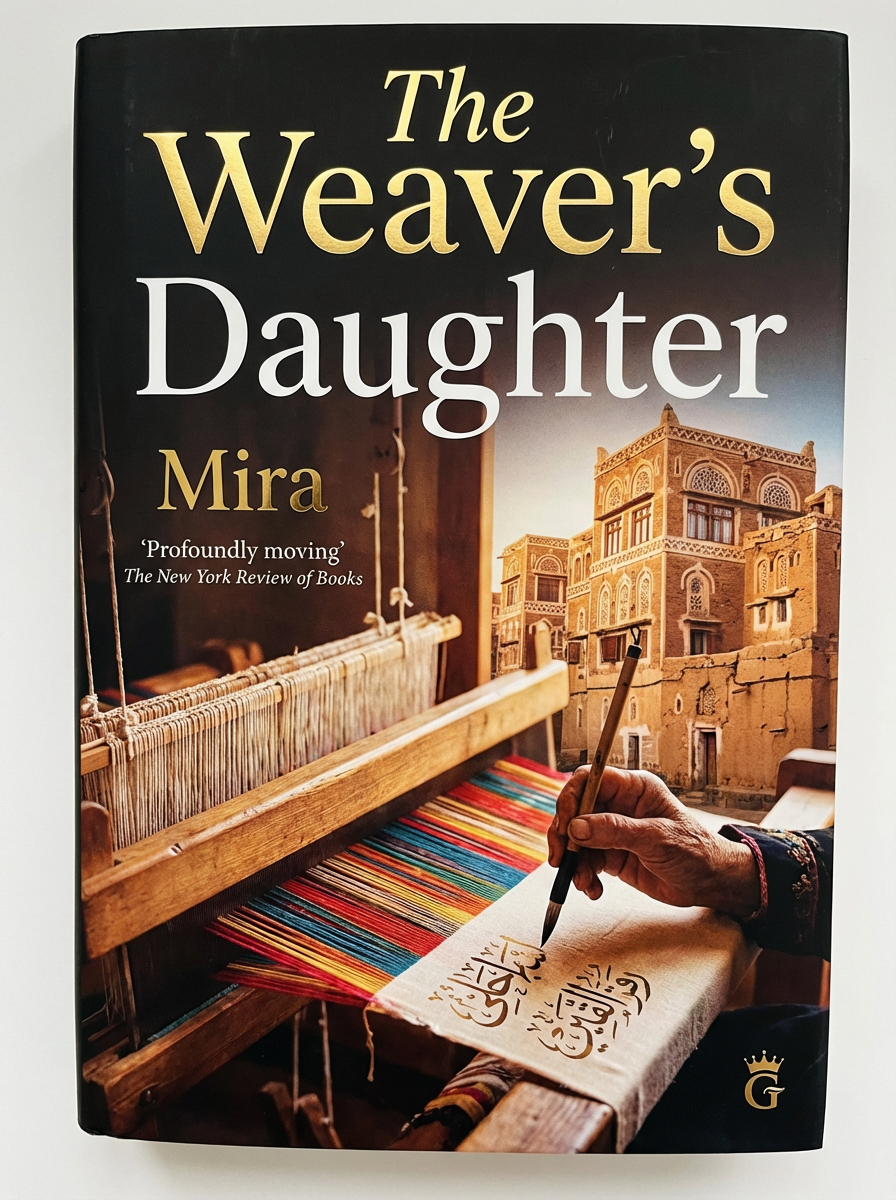
Synopsis
In the labyrinthine alleyways of Old Sana'a, a young calligrapher grapples with her conscience as her family's ancient textile business faces ruin. The relentless blockade tightens its grip, forcing her to choose between the integrity of her art and the survival of those she loves, intertwining her
Chapter 1: Dust and Ink on Ancient Stone
The first tremor was not of the earth, as Sana’a so often felt, but of the loom. A shiver ran through the ancient cedar frame, a sigh from deep within the wood, before the shuttle, heavy with crimson thread, began its rhythmic dance. Adani’s fingers, stained with indigo and the faintest trace of soot, moved with a practiced grace that belied her twenty years. Each throw, each catch, was a whisper of defiance against the silence that had begun to creep into the souq.
The silence was a relatively new thing. Not the blessed, hushed quiet of a dawn prayer, nor the peaceful lull of midday siesta. This was a hollow silence, an emptiness that swallowed up the familiar symphony of Sana’a: the hawkers’ cries, the clang of the coppersmiths, the distant bleating of goats. Now, only the wind, a dry, persistent spirit, whined through the narrow alleyways, carrying with it the scent of dust and, increasingly, desperation.
Adani worked by the sliver of sunlight that dared to pierce the thick stone walls of the workshop. The loom, a relic passed down through generations, stood sentinel in the coolest corner, its intricate patterns a testament to a time when silk and gold thread flowed freely into the city. Now, the threads were coarser, the dyes muted. Even the crimson she wove today, a vibrant splash against the white cotton, felt a little less alive than it should.
Her father, Abbas, sat hunched over a ledger in the entryway, his brow furrowed deeper than the lines etched by years of sun and worry. He ran a thumb over the page, not reading, but feeling the paper, as if searching for answers in its texture. He was a man made of quiet dignity and stubborn pride, a weaver whose hands could coax beauty from the most unruly fibers. But the blockade, a slow, relentless vise, was squeezing the life out of his craft, his family, and, Adani feared, his very spirit.
“The black dye,” he murmured, his voice a dry rustle, “it’s almost gone. And the good indigo… gone for weeks.”
Adani didn’t look up. She didn’t need to. The news was an old wound, picked at daily. The ships that once brought their precious materials – the fine silk from China, the rich dyes from India – no longer docked in Aden. The roads, once arteries of trade, were now choked with checkpoints and fear. What little made it through was impossibly expensive, a luxury they could no longer afford.
She focused on the rhythm, letting the thrum of the loom be her anchor. Lately, she found solace in the meticulous precision of her work. Each thread laid down, each pattern emerging, was a small act of creation in a world that felt intent on destruction.
But even the loom could not fully banish the gnawing anxiety. Her younger brother, Tariq, was due home from school soon, his thin frame needing sustenance. Her mother, Mariam, would be preparing the evening meal, stretching their dwindling rations further each day. The thought of their hunger, a dull ache in the pit of her own stomach, made her movements falter.
A shadow fell across the doorway. Not Tariq’s light step, nor a customer’s hopeful approach. This was different. A figure, tall and gaunt, stood silhouetted against the blinding afternoon sun, their face obscured.
Abbas looked up, his hand dropping from the ledger. “May peace be upon you,” he said, his voice wary.
“And upon you,” the voice replied, a low rumble that seemed to carry the weight of distant sands. As the figure stepped further into the cool dimness of the workshop, Adani saw him. His clothes were travel-stained, the fabric rough and worn. His face, though etched with fatigue, held a fierce, unsettling intensity. His eyes, dark as polished obsidian, swept over the looms, the stacks of fabric, and finally, settled on Adani.
He was a stranger, a rarity in these parts. Sana’a was a city of ancient lineage, where faces were known, and names carried generations of history. A stranger meant trouble, or need. In these times, usually both.
“I am Jamil,” he said, his gaze unwavering. “I was told the Abbas family still weaves the finest textiles in Sana’a.”
Abbas inclined his head, a flicker of pride momentarily eclipsing his weariness. “We try, God willing.”
Jamil’s eyes moved to the intricate patterns on the loom Adani was working on. “I need a very specific piece,” he continued, his voice softer, almost reverent. “A prayer rug. Not just any rug. It must be woven with the finest available cotton, dyed with true indigo, and… it must bear a particular inscription.”
Adani’s shuttle stilled. A prayer rug. A sacred object, demanding the utmost skill and devotion. But the “finest available cotton” was a dwindling dream, and true indigo… Abbas had just lamented its absence.
Abbas hesitated. “The materials… they are difficult to come by, honorable sir.”
Jamil reached into the folds of his worn cloak. He produced a small leather pouch, its surface smooth from handling. He tipped it, and a stream of gold coins, dull with age but unmistakable, spilled onto the dusty wooden counter. They gleamed like hidden suns in the dim light.
Adani’s breath hitched. Gold. More gold than she had seen in months, perhaps years. It was enough to buy the remaining stock of indigo from the last merchant in the souq who hoarded it. Enough to buy food, good food, for weeks. Enough to silence the gnawing hunger that had become a constant companion.
Abbas stared at the coins, a complex mix of longing and suspicion warring on his face. “This is… generous.”
“The price is fair,” Jamil said, his gaze still on Adani. “But the inscription. It is not a common one.” He paused, then pulled a small, rolled parchment from his cloak. He unfurled it carefully, revealing delicate script, penned in a hand Adani recognized as masterful calligraphy. But the words themselves… they were unfamiliar, flowing in a cadence that was not the usual praise for God, nor a simple supplication. It was a lament, a plea, a quiet cry for justice.
Adani, a calligrapher in her own right, her hands as adept with reed pen and ink as they were with threads, felt a jolt of unease. She could read the script, every elegant curve and precise dot. It spoke of betrayal, of broken promises, of a people’s suffering. It was a political statement, thinly veiled by art.
Abbas, too, stared at the parchment, his eyes tracing the unfamiliar words. He was a devout man, but also a pragmatic one. He understood the dangers of speaking out, even in the subtle language of art, in a city where whispers could become shouts, and shouts could lead to disappearance.
“This… this is unusual,” Abbas said slowly, his voice laced with a new kind of caution.
Jamil’s face hardened. “It is the truth. And it must be woven into the fabric. Discreetly, yes, but undeniably present.” He looked from Abbas to Adani, his dark eyes intense, almost pleading. “It is for a man who has lost everything. A man who needs to carry this message, this truth, close to his heart.”
The silence in the workshop deepened, broken only by the persistent sigh of the wind. Adani looked at the gold, then at the intricate, dangerous words on the parchment. She saw the hunger in her father’s eyes, the unspoken worry for her mother and brother. She saw the desperation in Jamil’s face, a reflection of the desperation that was slowly consuming their city.
Her heart, usually so steady, began to pound a slow, heavy rhythm against her ribs. This was more than just a commission. This was a choice, woven into the very fabric of their lives. A choice between the integrity of her family’s ancient craft and the survival of those she loved. A choice between the quiet dignity of their traditions and the dangerous, necessary act of resistance.
The dust motes danced in the sliver of sunlight, illuminating the conflict etched on Adani’s face. She felt the weight of it all: the centuries of weavers who had come before her, the hungry eyes of her family, the silent plea in Jamil’s gaze. And in the heart of it, the intricate, beautiful, perilous words that would either save them or condemn them. The loom, silent now, seemed to hold its breath. The crimson thread, still on the shuttle, waited for her command.
Chapter 2: The Fraying Thread of Days
## The Fraying Thread of Days
The sun, a brazen eye in a sky bleached by dust, beat down on the courtyard, turning the worn flagstones a shimmering, treacherous gold. Mira’s fingers, stained with indigo, traced the cool, rough surface of a ceramic pot, a small, futile comfort against the heat that pressed in from all sides. The rhythmic thud of the loom, usually a soothing pulse through the house, was silent. A silence that hummed with a different kind of tension, a thread stretched taut, vibrating on the edge of snapping.
Her grandmother, Sitt Maryam, sat hunched over a pile of faded silks, her needle a tiny silver dart flashing in the dim light of the alcove. The intricate patterns she was mending, once vibrant and defiant, now seemed to whisper of forgotten celebrations, of a grandeur slowly eroding. Sitt Maryam, whose eyes had once sparkled with the wisdom of generations, now held a weary resignation, a shadow clinging to their depths.
“The dyes… they are almost gone, habibti,” Sitt Maryam murmured, her voice a dry rustle, like leaves skittering across ancient stones. She didn’t look up, her gaze fixed on the delicate mend. “The indigo from Aden, the madder from Ta’izz… they are ghosts now, memories in the bottom of jars.”
Mira’s throat tightened. The vibrant hues that had defined their family’s textiles for centuries, the very language of their craft, were being silenced. The blockade, a word whispered in hushed tones in the souqs, was not just a political decree; it was a slow, deliberate strangulation. It squeezed the life out of their looms, out of their pigments, out of their very breath.
She thought of the headline she’d glimpsed on a tattered newspaper scrap – “Aid Efforts Stymied: Humanitarian Crisis Deepens.” It was a distant echo of the immediate, tangible crisis unfolding before her. It didn’t speak of the empty dye pots, or the dwindling threads, or the growing hunger in her younger sister’s eyes. It didn't speak of the subtle shift in her father’s shoulders, the way they seemed to carry an invisible weight that bowed him lower with each passing day.
“Baba spoke to the merchant, Musa,” Mira said, her voice barely a whisper against the oppressive quiet. “He said… he said there might be a way to acquire some synthetic dyes. Cheaper, more readily available.”
Sitt Maryam’s needle stilled. The silence that followed was heavy, laden with generations of tradition, of artisans who had sworn by the purity of natural pigments, who had coaxed their colours from the earth itself. The very idea of synthetic dyes was a blasphemy, a stain on their heritage.
Finally, Sitt Maryam sighed, a sound that seemed to carry the weight of all their ancestors. “Cheaper,” she repeated, the word a bitter taste in her mouth. “Readily available. But at what cost, Mira? What cost to the soul of our cloth?”
Mira had no answer. She understood the weight of Sitt Maryam’s words. She had spent countless hours with her, learning the subtle art of extracting color, the spiritual connection to the natural world that infused every thread. To use synthetics felt like a betrayal, a surrender. But a small child’s hungry cry was a more primal scream than the whispers of tradition.
Later that evening, after the last embers of the cooking fire had faded and the city outside was cloaked in a fragile, uneasy darkness, Mira found her father, Yusuf, on the rooftop. He was gazing out at the skeletal silhouettes of minarets, his face etched with a silent struggle.
“Baba,” she began, her voice soft, hesitant.
He turned, his eyes tired but filled with an unwavering love that always both comforted and burdened her. “Mira, my daughter.”
“Sitt Maryam… she is reluctant about the dyes.”
Yusuf nodded slowly, his gaze returning to the distant horizon. “I know. It tears at her, as it tears at me. To compromise the integrity of our craft… it feels like undoing the work of our fathers, and their fathers before them.” He paused, a deep breath filling his lungs, then exhaling slowly, as if releasing a physical weight. “But what is a craft without its practitioners, Mira? What is tradition when there is no food on the table, no warmth in the hearth?”
His words were a raw, honest admission of defeat, a concession forced by circumstances beyond their control. It was a truth Mira had begun to grasp herself, a bitter pill she was slowly swallowing. The world outside their walls, with its blockades and its hunger, was demanding a sacrifice, and it was demanding it from their very essence.
“Musa also spoke of a new client,” Yusuf continued, his voice lower now, almost a conspiratorial whisper. “From outside the city. He needs… a specific kind of scroll. One that requires a very particular hand.”
Mira’s heart gave a small, uneven flutter. A scroll. Not cloth. Not their traditional textiles. Her calligraphy. Years she had spent perfecting the delicate dance of ink and parchment, the intricate flourishes that brought words to life. It was a private passion, an art she practiced in the quiet hours when the looms were still, a solace and a secret joy. Her skill was renowned within their small circle, but her work was rarely for external clients. Their family was weavers, not scribes for hire.
“What kind of scroll, Baba?” she asked, a thread of apprehension weaving through her curiosity.
Yusuf turned to her fully, his eyes searching hers, a flicker of something she couldn’t quite decipher – hope? Concern? “He said… it is a document. A plea. For passage.”
The words hung in the air, heavy and significant. Passage. In these times, passage meant one thing: escape. Escape from the tightening grip of the blockade, from the constant fear, from the slow erosion of their lives.
“Who is it for?” Mira asked, her voice barely audible.
Yusuf hesitated, then spoke, his voice low and grave. “He did not say. Only that it is urgent. And that it must be perfect. The characters… they must convey a truth that cannot be denied.”
Mira looked out at the city, its familiar contours now imbued with a new, unsettling ambiguity. The moonlight cast long, distorted shadows, turning familiar alleyways into a labyrinth of secrets. A plea for passage. A document that could mean life or death for someone. And her hands, her skill, would be the instrument of that plea.
The moral clarity of her youth, the unwavering belief in the purity of her art, began to fray at the edges. The choice between sustaining her family through a compromise of their weaving traditions, and the use of her calligraphy for an unknown purpose, for an unknown person’s desperate hope, was a tangled knot she couldn't immediately unravel. The threads of her days, once so meticulously woven, were coming undone, each strand pulling her in a different direction, leaving her exposed to the cold wind of uncertainty. The silent thud of the loom, replaced by the silent thrum of her own conscience.
Chapter 3: A Whisper in the Wind's Teeth
## A Whisper in the Wind’s Teeth
The wind, a mischievous thief, tore at the edges of my abaya as I navigated the familiar maze of Old Sana’a. It carried with it not just dust, but the faint, acrid tang of distant smoke – a scent that had become as much a part of our air as the sweet notes of frankincense from the souk. Each gust felt like a whisper of accusation, a chill that seeped deeper than my thin cotton. The headlines, those harsh pronouncements of distant powers, had been reduced to a single, brutal truth in our city: the blockade was tightening.
Baba had sent me to fetch extra paraffin, a task that once would have been a mundane errand, now felt like a desperate quest. The small, flickering flame of our oil lamp was the only warmth in the evenings, a beacon against the encroaching darkness. As I walked, my gaze, usually drawn to the intricate latticework of the *shamasi* windows, now scanned the faces of those I passed. There was a new tautness in their expressions, a weariness etched around eyes that once held the sparkle of easy laughter. The playful banter of children seemed muted, their games shorter, punctuated by hurried calls from worried mothers.
My footsteps led me to the bustling heart of the souk, a place that once vibrated with the rich tapestry of life. Today, a different kind of hum permeated the air – a low thrum of anxiety. Stalls that once overflowed with vibrant silks and fragrant spices now displayed meager offerings. The scent of roasted coffee was fainter, replaced by the persistent, metallic tang of scarcity.
I found Abu Tariq, the paraffin vendor, hunched over his counter, his face a roadmap of worry lines. His usual booming greetings were replaced by a quiet nod. “Mira, my child,” he said, his voice raspy, “the last of it. A small measure, I’m afraid.” He poured the precious liquid into my empty flask, his movements slow, deliberate, as if each drop weighed a thousand pounds.
The price, when he quoted it, felt like a punch to the gut. It was nearly double what Baba had given me. My fingers instinctively tightened around the worn leather purse. “Abu Tariq,” I began, my voice barely a whisper, “is there… no other way?”
He met my gaze, his eyes, usually twinkling with good humor, now held a profound sadness. “The trucks, Mira. They don’t come. The ships, they don’t dock. What trickles in… it carries the cost of a thousand prayers and a thousand dangers. My own children shiver at night.”
The words hung in the air, heavy and undeniable. I knew of his family, huddled in a single room, sharing what little food they could find. His eldest boy, Salim, was no older than me, but his shoulders already carried the burdens of a man. I nodded, a lump forming in my throat, and counted out the coins, each clinking sound a stark reminder of our dwindling resources.
As I turned to leave, a commotion erupted near the entrance of the souk. A woman, her face veiled but her frame trembling, was speaking in urgent, choked tones to a group of men. Her voice, though low, carried through the hushed air, a desperate plea. “My son… he needs medicine. The clinic… they have nothing.”
One of the men, his face grim, shook his head slowly. “Sister, we are all struggling. The roads are closed. The aid… it is a ghost story.”
My curiosity, a dangerous thing in these times, pulled me closer. I heard fragments of her story – a fever, a cough that wouldn’t cease, the agonizing wait for a medicine that may never arrive. My mind flashed to Layla, my younger sister, whose cough had lingered for weeks, a persistent, unsettling flutter in her chest.
Then, a detail that snagged at my conscience like a thorn in a silken thread. “My husband,” the woman whispered, her voice cracking, “he works the dhows. He said… a merchant, in the old city, he *might* have some. A foreign man, they say, who deals in… *unusual* goods.”
My steps faltered. *Unusual goods.* The words hung in the air, a shadow of suspicion. The dhows, those ancient vessels, once carried spices and silks, now whispered of illicit trades, of desperation pushing good people to impossible choices. The foreign man, a phantom figure in the whispers of the city, was a name I had heard before, always accompanied by a shiver of unease. They said he dealt in artifacts, in fragments of our heritage, traded for a price that no one could refuse.
The wind picked up again, whipping my veil around my face, stinging my eyes with dust. It felt like a warning, a hand pushing me away from this dangerous information. But the image of Layla’s pale face, her small cough, played on a loop in my mind. The woman’s plea, raw and unvarnished, resonated with a fear I knew intimately.
I knew the talk. The whispers that reached our weaving room, carried by the women who came to admire Baba’s designs, spoke of families selling off heirlooms, not for luxury, but for bread, for medicine, for a chance to breathe another day. The thought twisted in my stomach. To sell a piece of our history, a tangible link to our ancestors, for a fleeting moment of relief… it was a profound violation. Baba had always instilled in us the sacred duty of preservation, of being custodians of our heritage, not its pawns.
Yet, the woman’s desperation was palpable, a mirror to the gnawing fear that lived in the deepest corners of my own heart. What would I do, if Layla’s cough worsened, if the fever took hold? Would I cling to principles of preservation, or would I claw at any straw, however tainted, to save her?
I found myself walking not towards our small home, but in the direction the woman had indicated, a winding path through narrower alleys, past crumbling walls that seemed to hold their breath. Each turn brought me deeper into the forgotten corners of the city, where the sunlight struggled to penetrate and shadows stretched long and hungry. My heart hammered against my ribs, a frantic drumbeat against the silence. This was not the familiar Sana’a of my childhood, but a city stripped bare, its bones exposed by the relentless siege.
Then, I saw it – a door, unremarkable in its weathered wood, but distinct in the way it seemed to absorb the light. No intricate carvings, no vibrant paint, just a stark, uninviting presence. A faint, cloying scent emanated from within, not the sweet spices of the souk, but something heavier, mustier, like ancient dust and something else I couldn’t quite identify.
Hesitation gnawed at me. This was not my world. This was the world of desperate compromises, of shadows and unspoken deals. But the woman’s face, etched with a mother’s terror, flashed in my mind. And Layla’s cough.
My hand, as if acting independently, reached out and touched the rough wood. It was cold, unyielding. A decision, not born of courage, but of a creeping, insidious dread, formed in my mind. I would not ask for medicine for Layla today. Not yet. But I would observe. I would listen. I would understand the nature of the choices people were being forced to make. The line between right and wrong, once so clear, was blurring into a dangerous, shifting landscape. And I, Mira, the weaver’s daughter, was slowly, irrevocably, being drawn into its treacherous currents. The wind picked up, howling through the narrow alley, a mournful lament that carried the weight of a city’s suffering and the whisper of its desperate acts.
Chapter 4: The Unfurling Banner of Doubt
The morning light, usually a benevolent painter of gold across the courtyard, felt thin and watery today, leaching the usual vibrancy from the indigo dyeing vats. Even the scent of madder and sumac, typically a comforting incense that clung to my clothes and hair, seemed muted, a ghost of its former self. My father, his back a permanent curve of worry these days, was already at the loom, his hands moving with a practiced slowness that spoke less of ritual and more of resignation. The rhythmic clack of the shuttle, once the heartbeat of our home, now felt like a metronome counting down to an unknown end.
A week had passed since the stranger, Khalil – or was it Khalid? – had pressed coins into my palm, his desperation a tangible weight. The memory of his eyes, dark pools reflecting a despair I recognized from the faces on the newsreels, still pricked at me. He had asked for a banner, something grand and defiant, a protest against the very silence that was choking our city. My father, bless his stubborn heart, had refused, his voice a low growl about the danger, about the sanctity of our craft. But the image of those coins, glinting in the dim light of the alley, had stayed with me, a persistent whisper in the quiet hours.
The Sana’a Gazette, its pages crinkled and stained with yesterday’s tea, lay open on the worn wooden table. A headline, stark and uncompromising, screamed about the latest casualty count in Sa’ada, children mostly, caught in the crossfire of a war that seemed to exist only in headlines for those far away, but was a visceral, daily reality for us. Another article detailed the dwindling supplies of medicine, the desperate pleas of doctors echoing from the hospitals. Each word was a tiny splinter, embedding itself deeper into my conscience.
I traced the swirling lines of a thuluth script, an unfinished calligraphy piece, with a fingertip. The ink, usually a rich, living black, appeared merely dull. My hand, typically steady and assured when holding the qalam, felt clumsy, hesitant. How could I make beauty when the world around me was so ugly? How could I weave tales of ancient heroes when modern ones were dying, unheard?
My mother, her face etched with a fatigue that no amount of sleep could erase, brought me a cup of sweet tea. "You are quiet, habibti," she murmured, her voice a balm. She sat beside me, her own hands, calloused from years of tending to the dyes, resting on the table. Her gaze, usually so sharp and discerning, was distant, as if she were looking into a future she couldn't quite decipher.
"The news," I began, then faltered. What was there to say that hadn't been said a thousand times over, in hushed tones, in angry shouts, in the silent tears of a mother who had lost a child?
"It is always the news," she replied, her voice soft but firm. "But we must live, Mira. We must find a way to make the threads hold."
Her words were a gentle admonition, a reminder of our family’s legacy, the tapestry of survival we had inherited. And yet, the image of Khalil’s eyes, the weight of his plea, felt just as much a legacy, a burden of shared humanity.
Later, as the sun climbed higher, casting sharp shadows across the courtyard, I watched my father work. He was weaving a bridal cloth, a delicate piece destined for a wedding that might never happen, its threads a vibrant testament to hope in a city that had little left to spare. His movements were slow, deliberate, each throw of the shuttle a prayer. He wove intricate patterns of stars and crescents, designs passed down through generations, symbols of protection and new beginnings.
But the threads in my own mind were tangled. Khalil’s request, a banner of protest, felt like a betrayal of my father’s quiet resistance, his insistence on preserving beauty in the face of despair. Yet, to refuse it, to turn away from such blatant suffering, felt like a betrayal of something deeper, something intrinsically human. The family loom, a sanctuary of tradition, suddenly felt like a cage, its threads binding me to a silence I could no longer bear.
I remembered a headline from weeks ago, about a protest in another city, a silent march of women in black, carrying nothing but empty water jugs. They had been dispersed, their cries unheard, their thirst unquenched. Was Khalil’s banner any different? Would it be met with the same brutal indifference?
The thought gnawed at me. My father’s wisdom, his deep-rooted belief in the quiet power of our craft, had always been my anchor. He believed that beauty, meticulously crafted, was a form of defiance in itself, a refusal to let the chaos consume us entirely. But sometimes, when the chaos was so overwhelming, couldn't a louder voice be necessary?
I walked to the corner of the workshop, where discarded scraps of silk and cotton lay in untidy piles. My fingers brushed against a length of rich, undyed linen, coarse yet strong. It was the kind of fabric used for banners, for proclamations. It was raw, unpretentious, a canvas waiting for a message.
My heart hammered against my ribs. The moral compass I had always trusted, honed by years of my father’s quiet guidance, now spun wildly, pointing in too many directions at once. To weave Khalil’s banner would be to risk everything – our family’s safety, my father’s disapproval, the very tradition he held so dear. But to refuse, to let that desperation go unanswered, felt like an even greater risk, a tearing of the fabric of my own soul.
The sun began its slow descent, painting the sky in hues of bruised purple and fiery orange. The scent of cooking wafted from neighboring courtyards, a comforting aroma that felt out of place with the turmoil in my mind. My mother called us for supper, her voice a gentle summons.
As I sat down, my eyes met my father’s across the simple meal. He did not speak, but his gaze, deep and knowing, seemed to pierce through my carefully constructed composure. He had seen the question in my eyes, the unfurling banner of doubt that now waved so fiercely within me. And in that silent exchange, a silent understanding passed between us, a shared burden of choice in a world that offered so few good ones. The silence of the loom, once a comfort, now felt like a challenge, daring me to break it, to weave a new story, a dangerous one, with threads of rebellion and hope.
Chapter 5: Saffron and Shadow, Truth and Necessity
The aroma of saffron, usually a balm to the soul, now felt like a heavy cloak, stifling the air in the workshop. It mingled with the dry, metallic scent of the ink and the fainter, almost forgotten sweetness of the undyed silk. Amira traced the faint outline of a geometric pattern on a scrap of parchment, her fingers moving with a familiar grace that belied the turmoil churning within her. The news from the souk had been a fresh wound, another gnawing bite from the unseen beast that was the blockade. Spices, once abundant, were now bartered like jewels, and the merchants, their faces etched with a weariness that mirrored her own, spoke of dwindling supplies and prices that soared beyond the reach of ordinary hands.
Baba, his shoulders stooped deeper than she remembered, had spent the morning haggling for a handful of threads, their colors muted, their quality compromised. He hadn’t complained, not once, but the silence that followed him through the house was louder than any lament. Amira knew the unsung truth: the vibrant dyes, the very lifeblood of their textiles, were becoming a luxury they could no longer afford.
Her calligraphy, usually a meditative escape, felt like a hollow ritual today. Each stroke of the reed pen, a whisper of black ink on cream paper, seemed to mock her. *Truth and Necessity*, the chapter title echoed in her mind, a cruel juxtaposition. What was truth when necessity gnawed at your bones?
She remembered the headline from the smuggled newspaper, weeks ago, about the children in the northern villages, their bellies distended, their eyes wide and vacant. It had been a fleeting image, a black-and-white ghost, but it had clung to her, a burr beneath her skin. Now, the whispers in the souk confirmed it, amplifying the horror. Malnutrition, a word that felt too clinical for the stark, human suffering it described, was no longer a distant threat. It was here, at their doorstep, a shadow lengthening over the city.
The stranger’s words, spoken in the hushed intimacy of their workshop, returned to her with an unsettling clarity. *“There are ways, Amira. Ways to ensure the dyes flow, the threads glow, even when the world outside turns to ash.”* His eyes, dark and knowing, had held a promise that felt both tantalizing and terrifying. He spoke of routes, of unspoken arrangements, of a world where survival often wore the face of compromise.
Her family’s legacy was woven into every thread, every intricate pattern that left their hands. Integrity was not just a word; it was the very warp and weft of their existence. To compromise, to deviate from the pure, the authentic, felt like a betrayal of generations. Yet, the image of Baba’s stooped shoulders, the hushed conversations about dwindling stores, the phantom hunger in the children’s eyes – these were also truths.
She picked up a piece of the new, cheaper silk. It felt rougher, less luminous than the kind they usually worked with. Her fingers, accustomed to the smooth caress of Egyptian cotton or the subtle sheen of Persian silk, registered the difference with a pang. Could she, a weaver’s daughter, truly create beauty from this? Could she, a calligrapher of truth, lend her hand to a deception, however small?
The afternoon light, usually a warm, golden embrace through the high windows, now seemed to dissect the room, highlighting the dust motes dancing in the air, the faint imperfections in the unfinished cloths. She remembered her mother, her fingers nimble as butterflies, explaining the subtle art of dyeing. “Each color holds a spirit, Amira,” she would say, her voice soft as velvet. “To misuse it is to dim its light.”
Was it misuse to use a slightly less vibrant saffron, if it meant the looms could still hum, if it meant their hands could still work, if it meant their family could still eat? The question was a knife, twisting in her gut. The stranger had offered a way, a path shrouded in shadows, but a path nonetheless. He hadn’t asked for gold or silver, but for a different kind of currency – a willingness to look away, to not ask too many questions.
She closed her eyes, the scent of saffron filling her lungs. She pictured the intricate patterns she had spent her life perfecting, the stories etched in their lines, the history held in their hues. To continue this, to keep the flame of their art alive, felt like a moral imperative. But at what cost?
The image of Fatima, their neighbor’s youngest, her face pale and drawn, flickered before her. Fatima, who had once chased pigeons in the courtyard with such a joyful abandon. Now, her laughter was a rare, fragile thing. The blockade was not just a political maneuver; it was a slow, insidious poison seeping into the very fabric of their lives.
Amira picked up her reed pen again, but instead of a geometric pattern, she found herself sketching a single, stylized pomegranate, its seeds bursting forth, a symbol of life and abundance. But the ink, usually so rich, seemed to lose some of its depth on the inferior paper. It was a subtle difference, imperceptible to the untrained eye, perhaps. But she knew. She would always know.
The truth, she realized, was rarely a clean, clear line. It was often a tangled skein, interwoven with necessity, fear, and a desperate hope. The stranger's offer, once a dark whisper, now felt like a desperate hand reaching out in the encroaching darkness. She had to decide if she would take it, and in doing so, acknowledge the shadows within herself. The loom of her conscience was weaving a new pattern, one she hadn't anticipated, one that would redefine the very meaning of integrity in a world that was slowly, inexorably, falling apart.