The Silent Harvest
By Cassius
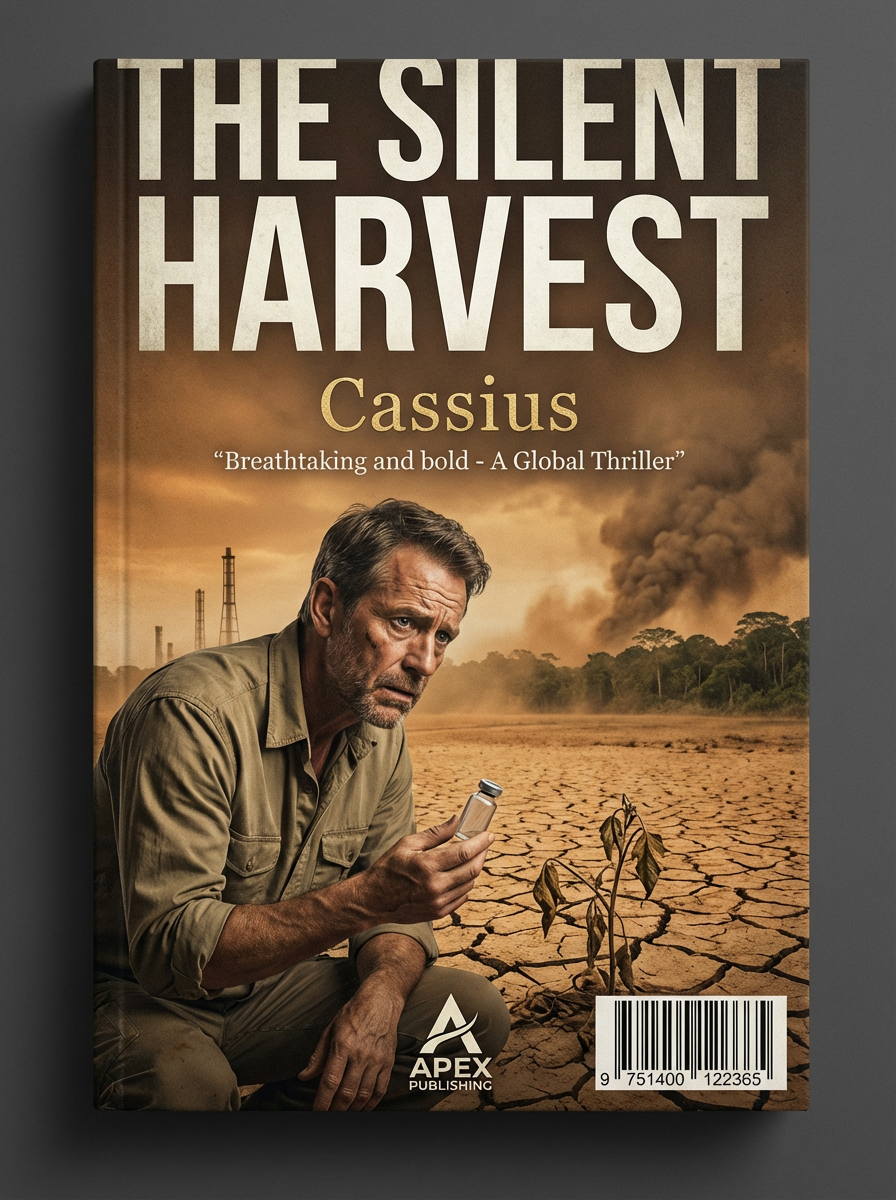
Synopsis
When an unprecedented drought chokes the lifeblood from a remote farming community in the Amazon, a desperate doctor unearths a grim truth: the water isn't just gone, it's been stolen. Now, with a village dying and a ruthless conglomerate closing in, he must choose between expose the crime and savin
Chapter 1: Dust and Promise
## Dust and Promise
The river was a scar. A raw, gaping wound where the Rio Araguaia used to pulse with life. Dr. Elias Vance scraped his boot across the cracked earth, the sound a dry whisper in the oppressive heat. Three months. Three months since the last decent rain. Three months since the water level began its inexorable retreat, leaving behind a landscape of desiccated dreams.
He knelt, not to pray, but to examine a petrified fish, its scales fused to the mud like ancient armor. This wasn't natural. Not even the worst dry seasons he'd seen in his forty years in Vila Nova had wrought such devastation. The air itself felt thin, brittle, like glass.
A child’s cough, rattling and wet, echoed from the cluster of huts barely visible through the shimmering haze. Elias’s gut clenched. Malnutrition. Dehydration. The slow, agonizing creep of death. He was a doctor, not a rainmaker. And his dwindling supply of antibiotics felt like an insult in the face of this ecological apocalypse.
He stood, wiping sweat from his brow with the back of a hand. The sun was a malevolent eye, staring down, unrelenting. He squinted towards the horizon, where the distant, unbroken line of the rainforest should have been a vibrant emerald. Now, it was a dull, dusty green, a shadow of its former self.
His gaze snagged on something out of place. A shimmer, metallic and sharp, glinting through the skeletal branches of a dead kapok tree. Not the sun. Something else. Too bright, too regular.
Curiosity, a dangerous companion in these parts, tugged at him. He moved, not towards the village where his wife, Ana, and their daughter, Sofia, waited, but perpendicular to the riverbed. Every step kicked up a puff of fine, red dust that clung to his trousers, his shirt, his very skin.
The shimmer resolved into a glinting pipe. Not a small one. A behemoth. It snaked across the landscape like a mechanical serpent, disappearing into the dense undergrowth. Elias felt a cold dread seep into his bones, colder than any morning dew. This wasn't a natural phenomenon. This was… engineered.
He followed the pipe, his heart hammering a frantic rhythm against his ribs. The air grew heavier, the silence more profound. The jungle, usually a symphony of buzzing insects and chattering monkeys, was eerily quiet. A predator’s quiet.
The pipe led him to a clearing, a brutal scar carved into the heart of the forest. Bulldozers, now silent and still, stood like metal beasts. And in the center, a monstrous pumping station, its dull grey concrete a stark contrast to the verdant memory of the surrounding trees.
A sign, freshly painted, declared in bold, black letters: **AGRIFUTURO LLC – PROSPECTION SITE 4.**
Agrifuturo. Elias knew the name. A multinational agricultural conglomerate, whispers of their ruthlessness preceding them like a desert wind. They’d been trying to buy up land around Vila Nova for years, offering prices that were both insulting and tempting to the struggling farmers. No one had sold. Not yet.
He crept closer, his medical bag feeling suddenly useless, a featherweight against the enormity of what he was witnessing. The pumping station hummed with a low, barely perceptible thrum. A single, uniformed guard, rifle slung casually over his shoulder, leaned against the concrete wall, smoking.
Elias ducked behind a clump of dry foliage, his breath catching in his throat. The guard flicked his cigarette butt, a tiny spark in the vast, desolate landscape. It landed near Elias’s foot. He held his breath, willing himself to be invisible.
The guard stretched, yawned, then turned his back, ambling towards a small, prefabricated office at the edge of the clearing. This was his chance.
He moved, a shadow among shadows, towards the pumping station. The pipe, he now saw, disappeared into the ground at the base of the structure. He placed his hand on the metal. It vibrated. Subtly, but unmistakably.
They were pumping the river. Not just diverting, but actively siphoning the lifeblood of his community. His village. His family.
He stared at the massive machinery, a cold fury building in him. This wasn’t just theft. It was murder, slow and agonizing.
A sudden noise. A twig snapped behind him.
Elias froze.
He hadn’t been alone.
Chapter 2: The Empty River
The air, thick with the scent of sun-baked earth and despair, clung to Elias like a second skin. He stood at the edge of what was once the Rio Perdido, his gaze sweeping across the cracked riverbed. Not a trickle. Not a shimmer. Just a vast, parched scar running through the heart of La Esperanza.
He remembered it differently. He remembered childhood afternoons, laughing with his sister, Mariana, as they splashed in the cool, swirling currents. He remembered the vibrant greens of the riverside flora, the cacophony of exotic birds. Now, only the skeletal remains of trees stood sentinel, their leaves long since surrendered to the relentless sun.
A tremor of unease snaked through him. This wasn't just a dry spell. This was an amputation.
His medical bag, slung over his shoulder, felt heavier than usual, each instrument a testament to the lives he was failing to save. Dehydration. Malnutrition. Dysentery from the stagnant puddles the villagers were now forced to drink. The clinic, a flimsy structure of corrugated metal and desperation, was overflowing.
He knelt, running a calloused hand over the fissured clay. It was strangely uniform, the cracks almost… patterned. Not the chaotic rupture of natural desiccation, but something more deliberate. He’d seen drought before, knew its cruel hand, but this felt different. Too clean. Too absolute.
A high-pitched wail pierced the oppressive silence.
Elias straightened, his heart lurching. It was the sound of a child in distress, a sound that had become all too common in La Esperanza. He broke into a run, the dust rising in miniature whirlwinds around his worn boots.
He found Mateo, a boy no older than six, convulsing in his mother’s arms. His skin was pale, lips cracked, eyes rolling back in his head. The mother, Juana, was a ghost of her former self, her face etched with a terror Elias knew intimately.
“He’s burning, doctor,” she choked out, tears carving clean paths down her dusty cheeks. “He can’t keep anything down.”
Elias’s fingers, steady despite the tremor in his gut, went to the boy’s forehead. Blazing. He checked his pulse, a weak, thready flutter. Dysentery. Advanced. The water. It had to be the water.
He administered an IV, the saline solution a precious commodity he hoarded like gold. Juana watched him, her eyes wide with a desperate hope that mirrored the fading light in Mateo’s. He knew, even as he worked, that it might not be enough. The source of the illness was still there, poisoning them all.
Later, as the sun dipped below the horizon, painting the desiccated landscape in hues of bruised purple and angry orange, Elias returned to the empty riverbed. The clinic had emptied somewhat, Mateo clinging to life, but only just.
He pulled out a small, worn notebook from his bag, flipping through pages filled with medical notes and desperate observations. He’d meticulously charted the village’s decline, the escalating cases of waterborne illness, the accelerated rate of the river’s disappearance. The data didn't lie.
He looked up, scanning the distant hills, their contours softened by the encroaching twilight. He knew, logically, that the Amazon, even in its vastness, wasn't immune to climate change. But something in his gut, a primal instinct honed by years of living off the land, screamed foul play.
He thought of the rumors that had been circulating for months, whispers carried on the dry wind. Whispers of a new mining operation, far upstream. A powerful company, with deep pockets and even deeper ambitions.
*Aquas Corp.*
The name, when he finally allowed himself to think it, felt like a stone in his mouth. He’d dismissed them as paranoid ramblings, the desperate imaginings of people facing unthinkable loss. But now, standing before the desolate expanse of the Rio Perdido, the whispers began to coalesce into a chilling possibility.
He remembered a conversation with Old Man Jacinto, the village elder, a week before Jacinto succumbed to the sickness. Jacinto had spoken of strange machinery, of men in foreign uniforms, of an unnatural silence descending upon the upper reaches of the river. Elias had attributed it to delirium. Now, he wasn't so sure.
He needed to see for himself. He needed proof.
The thought ignited a cold fury within him, a stark contrast to the burning despair that had been his constant companion. He was a doctor, not an investigator. His oath was to heal, to protect. But what good was healing if the very source of life was being systematically ripped away?
He knew the risks. This wasn’t some harmless corporate transgression. This was an act of war against a community, against a way of life. And if Aquas Corp. was indeed behind it, they wouldn’t hesitate to silence anyone who threatened their operation.
He looked back at the flickering lights of La Esperanza, a fragile beacon against the encroaching darkness. Mariana, his spirited sister, ran the small general store, her optimism a desperate shield against their reality. His nephew, young Miguel, a whirlwind of energy, oblivious to the encroaching shadows. He had a family to protect.
The choice, when it came, was stark. Silence and the slow, inevitable death of his village, or exposure and the very real risk of becoming another forgotten casualty in a land that cared little for justice.
He clenched his jaw, the grit of the riverbed digging into his palm. He would go upstream. He would find out what happened to the Rio Perdido.
He just needed to make sure his family would be safe while he was gone. But how could he guarantee their safety in a world where even the river itself had betrayed them?
A rustle in the dry brush behind him. Elias froze, every muscle tensed. He spun around, his hand instinctively going to the small, rusty machete he kept for clearing paths.
A shadow detached itself from the deepening gloom. Tall. Silent.
And it wasn't alone.
Chapter 3: Whispers of the Wells
The air, thick with the scent of dying earth, prickled David’s skin. The silence, once a comfort, now hummed with a predatory stillness. He followed the old man, Mateo, a shadow among the deeper shadows cast by the skeletal trees. Mateo, his face a roadmap of sun-baked wrinkles, moved with a surprising agility for his age, his bare feet barely disturbing the parched ground.
They walked for what felt like hours, the only sound the crunch of their footsteps and the frantic thrum of David’s own heart. The moon, a sliver of bone in a black sky, offered little illumination. David clutched his medical bag, a futile anchor in this sea of uncertainty. He was a doctor, not an explorer, not a detective. But the desperate pleas of his patients, the hollow eyes of the children, had ignited a spark of something he hadn’t known he possessed. A dangerous, unwelcome curiosity.
Mateo stopped abruptly, holding up a gnarled hand. David froze, his breath catching in his throat. The old man pointed. Ahead, a faint, almost imperceptible shimmer. It was the last well, Mateo had said. The deepest, the most sacred. The one that had never, ever run dry. Until now.
As they drew closer, the shimmer resolved into a dark, viscous sheen. Not water. Oil. A thick, iridescent film coated the surface, catching the faint moonlight and twisting it into grotesque, shifting patterns. The air above the wellhead was heavy with a sickly sweet odor, a chemical perfume that burned the back of David’s throat.
“They poisoned it,” Mateo whispered, his voice a low, guttural growl. “Just like the others. But this… this is different.”
David knelt, his gaze fixed on the oily surface. Beneath the slick, he could discern the faint outline of something else. Something large. Something metallic. He reached out, his fingers trembling, and dipped them into the foul liquid. The oil was strangely warm, almost body temperature. He pulled his hand back, repulsed, and wiped it on his trousers.
“What is it?” David asked, his voice barely a whisper. The silence that followed was deafening, punctuated only by the distant, mournful cry of a nocturnal bird.
Mateo shook his head, his eyes wide with a primal fear David had rarely witnessed. “They did not just poison it,” he rasped. “They put something *in* it. To make sure it would never be used again.”
David’s mind raced. He was a man of science, of logic. But this… this felt like a violation that transcended the physical. It was a declaration of war, not just on the water, but on the very spirit of the land.
He pulled a small, powerful flashlight from his bag and aimed it into the well. The beam pierced the oily film, revealing a chaotic tangle of pipes and wires, snaking down into the black abyss. It was an industrial nightmare, an alien intrusion into the pristine heart of the Amazon. And at the center of it all, a hulking, cylindrical object, half-submerged, its surface glinting ominously under the light.
“What in God’s name is that?” David breathed, a cold dread seeping into his bones.
Mateo didn’t answer. He simply stared, his ancient eyes reflecting the monstrous contraption, a silent testament to a terror that had found its way into their hidden world.
A sudden rustle in the undergrowth shattered the oppressive silence. David spun around, his heart hammering against his ribs. He clicked off the flashlight, plunging them back into near-total darkness.
“Who’s there?” he demanded, his voice thin and uncertain.
No answer. Only the whisper of the wind through the dying leaves, a sound that now seemed imbued with malevolent intent.
Mateo grabbed David’s arm, his grip surprisingly strong. “We must go,” he urged, his voice strained. “Now.”
David hesitated, his gaze drawn back to the well. He had seen enough, perhaps too much. But the image of that monstrous object, half-hidden in the poisoned water, was seared into his mind. It wasn’t just a device. It was a statement. A promise of further devastation.
Another rustle, closer this time. And then, the faint but unmistakable click of a rifle bolt.
Fear, cold and sharp, pierced through David’s apprehension. This wasn't just about water anymore. This was about survival.
Mateo, sensing the imminent danger, pulled David with surprising force, dragging him deeper into the tangled undergrowth. They moved quickly, silently, the old man’s instincts guiding them through the labyrinthine jungle. David stumbled, scratched by thorns, his medical bag bumping against his hip. He could feel the eyes on them, a chilling awareness of being hunted.
The jungle, once a place of vibrant life, now felt like a suffocating tomb. Every snap of a twig, every rustle of leaves, was amplified, distorted, twisted into a threat. He could hear his own ragged breathing, the panicked beat of his heart.
They ran until David’s lungs burned and his legs screamed in protest. Finally, Mateo stopped, pressing himself against the rough bark of a towering tree. David collapsed beside him, gasping for air, his vision blurring.
“We are safe here, for now,” Mateo whispered, his voice raspy. “They will not follow us into the spirit trees.”
David didn’t understand, but he didn’t question it. All he knew was the searing pain in his chest and the lingering image of that metallic behemoth in the well.
He looked at Mateo, his face etched with a grim determination. “What was that thing, Mateo?” David asked, his voice barely audible.
The old man’s eyes were fixed on the impenetrable darkness of the jungle. “It is a machine, Doctor,” he said, his voice heavy with resignation. “A machine that drinks the earth’s blood. And it is only the beginning.”
A chill, colder than the night air, snaked down David’s spine. He had come seeking answers to a drought. He had found something far more insidious. A deliberate act of ecological terrorism, hidden beneath the guise of natural disaster. And now, he was a witness. A dangerous witness.
The jungle around them seemed to hold its breath. David knew, with a terrifying certainty, that his life, and the lives of those he had sworn to protect, had just taken a perilous turn. The silence, once a comfort, now held a new, terrifying promise. The promise of a hunt.
Chapter 4: A Price on Water
## Chapter 4: A Price on Water
The old man’s breath hitched, a dry rasp in the suffocating heat. His eyes, clouded with cataracts, fixed on Mateo. “They offered.”
Mateo didn’t speak. He just waited, the silence of the parched hut a third presence.
“For the well,” the old man finally croaked, his voice barely a whisper. “My well.”
Mateo’s stomach clenched. He’d suspected it. The new wells, deep and plentiful, were a miracle. Too much of a miracle. He’d seen the gleaming equipment, the men in uniforms, the carefully worded contracts. He’d dismissed it as progress, a necessary evil. Now he knew better.
“Who?” Mateo asked, his voice flat.
“The company,” the old man said, his gaze darting to the open doorway, as if expecting someone to materialize from the shimmering heat. “They called it… an investment.”
Mateo’s mind raced. An investment. In a village dying of thirst. The irony was a bitter taste in his mouth. He thought of the gleaming logo he’d seen on the water tankers, a stylized drop of water, innocent and inviting. He thought of the promises whispered by the men in suits, promises of jobs, of prosperity, of a future. Lies. All of it.
“What did you tell them?” Mateo pressed, his voice taut with a tension he couldn’t quite conceal.
The old man coughed, a dry, wracking sound that shook his frail frame. “I said no. My father… his father… they dug that well. It’s our life.”
A flicker of hope, hot and fleeting, ignited in Mateo. Not everyone had sold out. Not everyone had been bought.
“But…” the old man’s voice trailed off, his gaze fixed on Mateo’s face, a silent plea for understanding. “Others… they took the money.”
Mateo’s hope shriveled, replaced by a cold dread. He thought of the families leaving, the empty huts, the whispers of new lives in the city. He’d attributed it to the drought, the relentless march of progress. Now he saw the truth: a slow, insidious poisoning.
“How many?” Mateo asked, his voice barely audible above the frantic thumping of his own heart.
The old man shook his head, his eyes welling with unshed tears. “Too many. They came with papers, with promises. They said it was for the good of all, for a bigger plan.”
A bigger plan. Mateo felt a surge of cold fury. He pictured the sleek, air-conditioned offices, the men in suits, their hands clean, their consciences clear. They wouldn’t see the dust, the dying crops, the hollow eyes of the children. They wouldn’t hear the silence that had replaced the laughter.
“Did they… offer you anything else?” Mateo asked, his voice barely a whisper.
The old man hesitated, his gaze shifting to a small, wooden crucifix hanging on the wall. “They said… if we didn’t cooperate, the water… it would be harder to find. For everyone.”
A threat. Not a promise, but a thinly veiled threat. Mateo’s blood ran cold. They weren’t just buying wells; they were buying control. Control over life itself.
Mateo stood up, the anger a burning coal in his gut. He had to go to the mayor, to the authorities. He had to expose this. He had to save his village.
“Thank you,” Mateo said, his voice strained. “I have to go.”
The old man nodded, his eyes still fixed on the crucifix, a silent prayer on his lips. As Mateo stepped out of the hut, the sun beat down on him, a brutal reminder of the desiccated landscape. The air shimmered, distorting the familiar outlines of the village, turning it into a mirage.
He walked with purpose, his anger fueling his steps. He passed empty homes, their doors ajar, their windows like vacant eyes. He passed fields of dead crops, their stalks brittle and brown. The silence was deafening, broken only by the crunch of his boots on the parched earth.
He reached the mayor’s office, a small, whitewashed building at the edge of the village. He pushed open the door, the bell above it jingling, a jarring sound in the oppressive silence.
The mayor, a portly man with a perpetually worried expression, looked up from his desk. His eyes, usually a dull brown, were wide with a fear Mateo hadn’t seen before.
“Mateo,” the mayor said, his voice a tremor. “What brings you here?”
“The water,” Mateo said, his voice tight with suppressed rage. “The company. They’re buying up our wells. They’re threatening us.”
The mayor’s face blanched. He looked around, as if expecting someone to be listening. “Mateo, please. Not so loud.”
“Not so loud?” Mateo shot back, his voice rising despite himself. “Our village is dying! Our children are sick! And you tell me not so loud?”
The mayor stood up, his hands trembling. “Mateo, you don’t understand. This company… they’re powerful.”
“Powerful enough to steal our water?” Mateo retorted, his voice laced with venom.
The mayor wrung his hands. “They offered… they offered me a deal. For the village. A new school. A clinic. They said it would bring prosperity.”
Mateo stared at him, the bitterness rising in his throat. Another one. Another one bought.
“And what about the water, Mayor?” Mateo asked, his voice low and dangerous. “What about the water for the rest of us?”
The mayor avoided his gaze, his eyes fixed on a spot just beyond Mateo’s shoulder. “They promised… they said they would ensure everyone had enough. That it would be managed efficiently.”
“Efficiently?” Mateo scoffed. “You mean controlled. You mean rationed. You mean sold back to us at a price we can’t afford.”
The mayor slumped back into his chair, his shoulders hunched. “Mateo, what else could I do? They came with lawyers, with papers. They said if I refused, they would simply… bypass me. Go directly to the people. And then… then we would have nothing.”
Mateo felt a cold despair settle over him. He had believed in the mayor, in the system, in the possibility of justice. Now, he saw the truth: the system was broken. The powerful always won.
“So you sold us out,” Mateo said, his voice devoid of emotion.
The mayor flinched, his eyes pleading. “No, Mateo. I tried to protect us. I thought… I thought it was the only way.”
Mateo turned, his back to the mayor, and walked out of the office. The sun beat down on him, a relentless reminder of the desert his village was becoming. He felt a profound sense of isolation, a chilling realization that he was alone in this fight.
He walked past the market, now mostly empty, the few vendors huddled in the shade, their faces grim. He walked past the school, its classrooms silent, the children sent home due to the lack of water. He walked towards his own home, the image of his wife, Maria, and his daughter, Sofia, swirling in his mind.
He had to protect them. He had to fight. But how? Against a force so powerful, so insidious, that it could buy a village’s soul?
As he reached his doorstep, a glint of metal caught his eye. A small, silver object, half-buried in the dust near his door. He bent down, his heart pounding. It was a bullet casing. Fresh.
He looked up, his gaze sweeping the desolate landscape. He was being watched.
He was no longer just fighting for water. He was fighting for his life.
Chapter 5: The Reckoning of Rain
## Chapter 5: The Reckoning of Rain
The first drops were an insult. Not the deluge they craved, but a spatter, a mockery against the parched earth. Dr. Elias Vance watched from the clinic doorway, the dust around his feet barely darkening. He’d hoped for a miracle. He’d been given a tease.
Inside, the wheezing coughs of Luciana’s youngest echoed through the thin walls. Dehydration, compounded by the constant dust. He’d given her what little of his personal saline he dared. It wouldn’t last. Nothing ever did.
He remembered the old men, their faces etched like ancient maps, telling tales of rivers that ran so high, they’d swallow canoes whole. Now, the riverbed was a cracked, sun-baked scar, a testament to a forgotten age.
A shadow fell across the clinic entrance. Mateo. His face was grim, a fresh bruise blooming beneath his left eye. Elias didn’t need to ask. The patrols from Cerberus Global were getting bolder, their presence a constant, suffocating pressure.
“They took old Manolo’s last goat,” Mateo said, his voice flat. “Said it was for ‘resources.’”
Elias balled his fists. Resources. Code for anything they wanted. Anything they could take. “Did he fight them?”
Mateo scoffed. “Manolo’s ninety. He spat at them. They laughed.”
The rain, if you could call it that, had stopped. The air felt heavier, hotter, as if the sky itself was holding its breath. Elias knew that feeling. It was the same one that pressed down on his chest, a constant weight of impossible choices.
He thought of the satellite images Eduardo had smuggled him, the ones showing the vast, unseen network of pipes snaking away from the community's traditional water source, deep into the jungle. Pipes that led to the Cerberus Global compound. A fortress of steel and razor wire, humming with generators, its private reservoir undoubtedly brimming.
He’d almost gone to the regional authorities. Almost. But Mateo’s warning had echoed in his mind: *They own the authorities, Elias. You expose them, you expose us. And you’ll sign our death warrants.*
The choice, then, was stark. Silence and the slow, agonizing death of his people. Or exposure, and the sudden, brutal death at the hands of Cerberus.
A new thought, cold and venomous, slithered into his mind. What if there was another way? A way that skirted both extremes. A way that was… unsanctioned.
He looked at Mateo, his eyes hard. “Where do they keep their supplies?”
Mateo blinked, surprise replacing the anger in his gaze. “The main compound. Heavily guarded. You can’t be thinking…”
Elias cut him off. “I’m thinking of Luciana’s daughter. I’m thinking of Manolo’s goat. I’m thinking of a thousand children who will die if we do nothing.”
Mateo’s jaw tightened. He knew the risks. He’d lived them his whole life. “The perimeter is electrified. Motion sensors. Thermal cameras. And armed patrols, always moving.”
“They have to bring water in, don’t they?” Elias pressed, his voice low, urgent. “For their own operations. For their personnel. They can’t rely solely on what they’re siphoning off. Not for everything.”
Mateo paused, considering. “They have supply trucks. Come in once a week from the coast. Massive tankers.”
A spark, dangerous and thrilling, ignited in Elias. A tanker. Carrying water. His gaze drifted to the wilting crops, the desperate faces of the villagers. One tanker wouldn’t save them all, but it would buy them time. Time they no longer had.
“When’s the next delivery?”
Mateo’s eyes narrowed. “Tomorrow. Midday.” A flicker of understanding, then grim resolve, settled on his features. “You’re mad, Elias.”
“Perhaps,” Elias admitted, the word tasting like ash in his mouth. “But what sane man stands by and watches his world die?”
The sun began its slow descent, painting the sky in bruised purples and angry oranges. The air grew thick with the scent of fear and desperation. Elias spent the evening in the clinic, tending to the sick, doling out the last dwindling medicines. Every cough, every feverish brow, was another brick in the wall of his resolve.
He caught sight of his reflection in a cracked mirror – hollow eyes, gaunt cheeks, a new grimness around his mouth. He was no hero. He was a doctor, desperate. And desperate men did desperate things.
He found Mateo by the communal fire, the embers casting dancing shadows on his face. The usual laughter and conversation were absent. Just the crackle of wood and the quiet despair of a dying village.
“Explain it to me,” Elias said, his voice barely a whisper. “Every detail of that compound. Every shift change. Every weak point. Every path in. And out.”
Mateo looked into the fire, his expression unreadable. For a long moment, the only sound was the distant, unsettling hum of Cerberus Global's generators. Then, Mateo began to speak, his voice low and steady, detailing a fortress designed to protect a stolen future.
Elias listened, his mind a whirlwind of blueprints and possibilities. He knew he was stepping onto a precipice, a point of no return. The consequences of failure were unthinkable.
But the consequences of inaction were already unfolding, all around them.
The next morning, the sky was a relentless, cloudless blue. The promised tanker would arrive soon. Elias felt a cold knot of dread in his stomach, mixed with a strange, fierce exhilaration. He strapped a small, antiquated pistol to his hip, a relic from his father, never fired in anger. Now, it felt heavy, a symbol of the line he was about to cross.
He looked at the faces of his people, drawn with thirst and hunger, their hope dwindling with each passing day. He thought of his own family, far away, safe for now, but not if he failed.
He made his way to the edge of the jungle, where Mateo waited, a coil of rope and a crude map in his hands. The air was thick with the scent of decaying leaves and the unspoken weight of their mission.
“Ready, doctor?” Mateo asked, his voice devoid of his usual wry humor.
Elias met his gaze, the vast, green expanse of the Amazon stretching out before them, a silent, unforgiving witness. He nodded, a single, definitive movement.
He was not ready. But he had to be.
The roar of a diesel engine, distant but growing, echoed through the trees. The tanker. Their salvation. Or their doom.
“Let’s go,” Elias breathed, and stepped into the suffocating embrace of the jungle, into the reckoning.
Chapter 6: Blood on the Basin
## Blood on the Basin
The air hung heavy, thick with the scent of dried earth and something else. Something metallic. Elias knew it before he saw it, a primal chill snaking up his spine. He’d seen enough death to recognize its perfume.
He pushed through the skeletal remains of what was once a vibrant coffee plantation, the brittle leaves crunching under his boots like broken glass. The sun, a malevolent eye in a bleached sky, seemed to press down on him, amplifying the dread. He’d ignored his wife, Sofia’s, pleas to stay. Her eyes, wide with fear, still haunted him. *“Don’t go, Elias. It’s not safe.”* But he couldn’t. Not after the call. The stuttering voice, the frantic words, the abrupt silence. Mateo.
The clearing opened abruptly. Not a clearing, really, but a scar on the land where the last of the basin’s water had once pooled. Now, it was a cracked, ochre expanse, shimmering with heat. And in the center, a dark, irregular shape.
Elias’s breath hitched. He tasted bile.
Mateo.
Or what was left of him.
He knelt, his hands trembling as he reached for the man’s wrist. Cold. So damn cold. The eyes, staring up at the relentless sky, were wide with a terror that transcended death. Mateo’s face was a mask of contorted agony, his mouth open in a silent scream. But it was the neat, almost surgical precision of the wound that truly chilled Elias. A single, deep incision, just below the ribs. Not a frenzied attack. This was calculated. Professional.
He looked around, his senses screaming. The silence was absolute, broken only by the frantic thump of his own heart. The air itself felt…watched. He was exposed, a lone figure silhouetted against the desolate landscape. He needed to move, to think, but his mind was a tangled knot of horror and disbelief.
Mateo, the stoic elder, the last holdout against the encroaching greed, was gone. And with him, the fragile hope that had begun to bloom after the whispers of the wells.
He stood, forcing himself to breathe, to focus. His gaze swept the perimeter of the clearing. No tracks. No signs of a struggle beyond Mateo’s final, desperate thrashing. Whoever did this had been careful. Or very good.
Then he saw it. Tucked beneath Mateo’s lifeless hand, a small, dark object. Elias hesitated, his instincts screaming caution. This could be a trap. But the desperate need for answers overrode his fear.
He reached down, his fingers brushing against clammy skin. It was a folded piece of paper, stained with blood. He unfolded it carefully, his eyes scanning the crude, block letters.
*“The water is ours. The land is ours. Silence is survival.”*
No signature. None needed. The message was clear. This wasn’t just about Mateo. This was a warning. To him. To Sofia. To anyone who dared to question.
He crumpled the note in his fist, his knuckles white. The blood on his hands felt like his own. He pictured Sofia, her face etched with worry. He’d promised her safety. Promised her a future. Now, that future seemed to be dissolving into a nightmare.
He had to get back. Had to protect her. But how? The enemy wasn’t just a faceless corporation anymore. It was a killer. And they knew he was watching.
As he turned to leave, a glint of metal caught his eye. Just beyond the edge of the clearing, partially obscured by a desiccated bush, was a small, almost imperceptible depression in the baked earth. Footprints. Not Mateo’s. Larger. Deeper. And leading away from the scene, not towards it.
He crouched, examining them. Not boots. Something lighter, more agile. And a distinct pattern on the sole. He’d seen it before. On the security patrols guarding the perimeter of the conglomerate’s experimental farm. The same farm that had mysteriously blossomed while the rest of the basin withered. The same farm that had started construction just weeks before the river ran dry.
A cold certainty settled in his gut. This wasn't just corporate greed. This was systematic. Calculated. And now, bloody.
He stood, his mind racing. Mateo’s death wasn’t just a tragedy. It was a declaration of war. And Elias, a doctor, not a soldier, was now on the front lines. He had a choice: retreat, protect his family, and let the darkness consume the basin. Or fight. Fight a nameless, faceless enemy with blood on their hands and an army at their back.
He looked back at Mateo, lying alone in the vast, unforgiving emptiness. Justice, he realized, wasn't just a concept here. It was a desperate necessity. But at what cost?
He started walking, his steps firm, resolute. He wouldn't just leave Mateo. He would remember him. And he would make them pay.
The sun beat down, turning the world into a shimmering mirage. Elias pushed on, the dust rising in clouds around his boots. He had to warn Sofia. Had to tell the others. But what could they do against such power?
A flicker of movement in his peripheral vision. He froze.
A shadow, long and indistinct, detached itself from the edge of the desiccated forest, moving with an unnerving grace. Too far for a clear shot. Too close to ignore.
He quickened his pace, his heart hammering against his ribs. He was being watched. He knew it. The hunter had become the hunted. And the jungle, once his sanctuary, was now a labyrinth of unseen eyes and echoing threats.
He risked a glance over his shoulder. The shadow was gone. Or had it ever been there? His mind, reeling from the gruesome discovery, could be playing tricks.
He picked up his pace, a desperate sprint now, the image of Sofia’s terrified eyes spurring him forward. He had to get back. Had to warn her. But as he ran, the chilling realization solidified: they weren't just after the water. They were after anyone who stood in their way. And Elias, by simply bearing witness, had just put a target on his own back.
The next sound he heard wasn't a rustle in the undergrowth, or the cry of a distant bird. It was the low, guttural growl of an engine. And it was getting closer. Rapidly.
He had nowhere to hide.
Chapter 7: The Last Drop
The air shimmered, a living thing, hostile. Elias wiped sweat from his brow, a futile gesture. The last well, a gaping maw of sun-baked earth, offered no comfort. Only a thin, putrid film clung to the bottom, a mocking testament to what was.
"Nothing," he rasped, the word tearing at his throat. His daughter, Lena, her small hand clutching his, looked up at him, her eyes wide, unblinking. He saw the question there, a silent accusation. *Why, Papa? Why is there no water?*
He had no answer. Not one she would understand.
The village was a graveyard of broken hopes. Children, their bellies distended, lay listless in the shade of wilting mango trees. The elderly, their faces etched with the wisdom of a dying land, watched the horizon, waiting for a miracle that wouldn't come.
A shadow fell over them. Mateo, his face a mask of grim determination, stood by the well. "They're coming," he said, his voice flat. "The 'surveyors'."
Elias’s jaw tightened. He knew what "surveyors" meant. More men with guns. More paperwork. More lies. They’d come to claim what little remained.
"We have to fight," Mateo urged, his hand resting on the machete at his hip. A flicker of desperation, quickly masked, in his eyes.
Elias looked at Lena, then back at Mateo. Fight? With what? A handful of sick men against a private army? It was suicide. But what was the alternative? Watch his people die of thirst?
He remembered the glint of steel in the foreman’s smile, the casual cruelty in his eyes. They wouldn't just take the land. They would take their dignity, their very existence.
"There has to be another way," Elias muttered, more to himself than to Mateo. He thought of the hidden spring, a secret passed down through generations, a last resort. But even that was miles away, through terrain now patrolled by armed guards.
Suddenly, a cry cut through the oppressive heat. "Papa! Look!"
Lena was pointing. A dust cloud, growing larger, faster, on the horizon. Not the surveyors. Something else. Something bigger.
The rumble grew into a roar. Trucks. Heavy machinery. The conglomerate wasn't just surveying. They were moving in. Now.
Fear, cold and sharp, pierced Elias. He had to decide. Now. Fight, flee, or…
A glint of metal caught his eye. A small, silver locket, clutched in Lena’s hand. His wife’s. He saw her face, her smile, heard her voice. *Protect our daughter, Elias. No matter what.*
He made his choice.
"Mateo," he said, his voice low, steady. "Get everyone to the old sugar mill. The one by the ravine. Tell them to hide. Don't fight. Not yet."
Mateo’s eyes narrowed. "And you?"
Elias looked at the approaching dust cloud, then at Lena, her face pale with fear. "I have to buy us time."
He turned and strode towards the edge of the village, towards the advancing threat. He didn't know what he would do, or say. He only knew he couldn't let them reach his daughter. Not yet.
The lead truck, a behemoth of steel and mud, skidded to a halt mere feet from him. The doors swung open. Men in fatigues, automatic weapons slung across their chests, spilled out. Their eyes, hard and unforgiving, scanned the parched landscape.
Then, a figure emerged from the cab, taller than the rest, impeccably dressed despite the dust. His eyes, a chilling blue, met Elias’s. It was Vargas. The corporate man. The architect of their slow death.
"Doctor Mendes," Vargas said, his voice smooth, devoid of emotion. "A pleasure to see you again. Though I confess, I expected you to be… more accommodating."
Elias stood his ground, the sun beating down on his unprotected head. "You're taking our water, Vargas. You’re killing us."
Vargas chuckled, a dry, humorless sound. "Killing? My dear Doctor, we are merely optimizing resource allocation. This land, as you well know, is rich in minerals. And minerals require… water." He gestured vaguely at the parched earth. "A small price to pay for progress, wouldn't you agree?"
Elias’s hands balled into fists. "Progress for whom? Not for my people. Not for this land."
Vargas sighed, a theatrical display of patience. "We've offered you a fair relocation package. Better land, better housing, access to our medical facilities. You refuse."
"Relocation to what? A desert? A prison?" Elias spat. "We belong here. This is our home."
Vargas’s blue eyes hardened. "Then you leave me no choice. This land has been legally acquired. Your continued presence is an… inconvenience." He nodded to one of his men. "Clear the area."
The men advanced, their boots crunching on the dry earth. Elias saw Lena, peeking from behind a crumbling wall, her eyes wide with terror. He had to do something. Anything.
"Wait!" Elias shouted, his voice cracking. "There's… there's a problem with your survey. A major one."
Vargas paused, a flicker of irritation in his eyes. "And what might that be, Doctor?"
"The geological data," Elias stammered, scrambling for a believable lie. "It's… unstable. There's a fault line. A major one. Right under your proposed mining site." He pointed vaguely towards the hills. "If you start drilling, you'll trigger a collapse. A catastrophic one."
Vargas stared at him, unblinking. The corporate man was calculating, weighing the words. Elias knew he was playing with fire. If Vargas called his bluff, it was over.
A long, agonizing silence stretched between them, broken only by the distant whirring of the trucks. Elias could feel the sweat trickling down his back. He held Vargas’s gaze, trying to project an air of conviction he didn't feel.
Finally, Vargas spoke, his voice dangerously soft. "Is that so, Doctor? And how, precisely, did a village doctor come by such… specialized geological information?"
The question hung in the air, cold and deadly. Elias swallowed, his throat dry. He had pushed too far. He had no answer.
Vargas smiled then, a chilling, predatory baring of teeth. "Perhaps, Doctor, you would be so kind as to elaborate on this… fault line… for my engineers. In more… detail." He gestured towards the nearest truck. "Get in."
Elias looked at the truck, then back at Lena, still hidden from sight. He knew what awaited him. Interrogation. Torture. And when they were done, they would still take the land.
But if he refused, they would simply move in. And Lena…
He looked at Vargas, then at the armed men. He had bought them a few precious moments. Maybe just enough.
He took a deep breath. "Alright," he said, his voice steady now, a strange calm settling over him. "I'll tell you everything. But not here." He pointed towards the jungle, a dark, impenetrable wall at the edge of the parched village. "The data is… sensitive. We need to go somewhere discreet."
Vargas’s eyes narrowed. He was suspicious, but Elias had planted a seed of doubt. The cost of a potential geological disaster outweighed the inconvenience of a quick detour.
"Very well," Vargas said, a hint of amusement in his voice. "Lead the way, Doctor. But understand this: if you are lying, the consequences will be… severe."
Elias nodded, his heart pounding a frantic rhythm against his ribs. He turned and walked towards the jungle, the armed men fanning out behind him. He didn’t know what he would find in the dense foliage, or if his desperate gamble would pay off. He only knew that he had to lead them away from the village. Away from Lena.
He glanced back, a fleeting look. He saw Mateo, his face grim, disappearing into the shadows of the old sugar mill. And then, a tiny flicker of movement. Lena, her small hand waving, a silent, heartbreaking farewell.
Elias plunged into the green darkness, the sounds of the village fading behind him, replaced by the ominous whispers of the jungle. He was alone now, a lamb leading wolves into a trap he hadn't yet set. And somewhere, in the heart of that unforgiving wilderness, hope, like the last drop of water, was slowly, agonizingly, evaporating.