The Silence Between Japanese Train Stations
By Mikael Löwgren
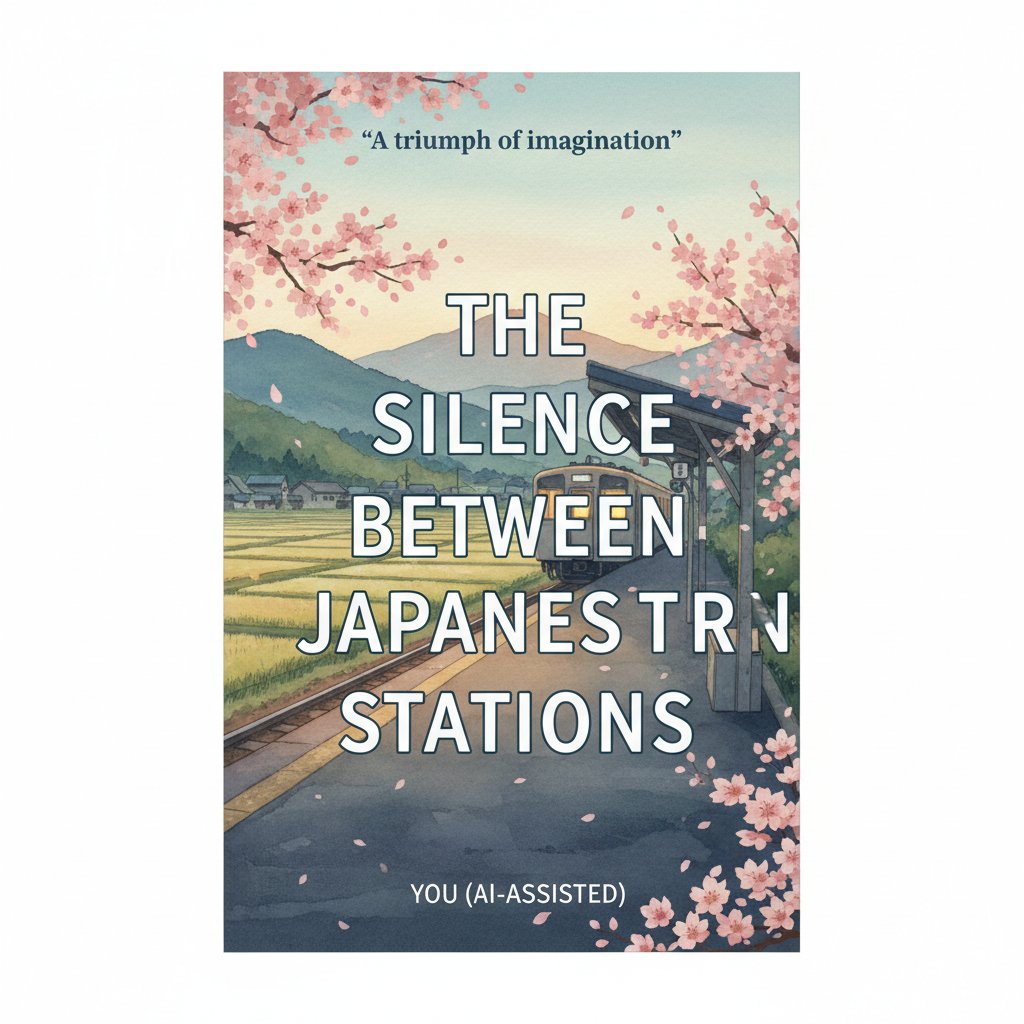
Synopsis
A contemplative journey through rural Japan uncovers the serene beauty and enduring traditions of aging communities hidden within the tranquil pauses between bustling train stations.
Chapter 1: Departure from the Roar
The jostle of Shinjuku Station was a familiar kind of friction, a constant gnawing at the edges of the mind. Even at this relatively early hour, before the full crush of the morning commute, the air throbbed with a thousand unseen vibrations: the rumble of distant trains, the staccato announcements echoing from warped speakers, the low murmur of conversations, and the ceaseless, rhythmic tread of countless feet. It was a symphony of modern life, captivating in its complexity, yet ultimately deafening. I felt it, a pressure behind my eyes, a tightness in my jaw I hadn't realized was there until the moment I decided to leave it behind.
My duffel bag, a well-worn canvas companion, felt light on my shoulder, a metaphor for the burden I was shedding. Inside, a few changes of clothes, a sketchbook, a well-thumbed paperback, and my camera – essentials for a journey of unburdening. The platform was a river of dark suits and crisp blouses, all flowing towards the gleaming silver behemoths that would ferry them to their daily grind. I, however, was headed in the opposite direction, toward a less-frequented track, a less-celebrated line.
The train that finally pulled in was different. Shorter, older, with a slightly faded green livery that spoke of countless journeys through sun and rain. Its doors hissed open with a gentler sigh, and the interior, though meticulously clean, had a comfortable, worn-in feel. The seats, upholstered in a pattern of subtle geometrics, were mostly empty. A small, anachronistic detail caught my eye: a discreet brass plaque near the door, tarnished with age, bearing the name of the train’s manufacturer and a date from decades past. It felt like stepping into an older, quieter world.
I chose a window seat toward the front, settling in with a sigh that felt like the untying of a knot. The windows, large and unframed, promised unimpeded views. Outside, the platform still hummed with restless energy, but inside, the air was already cooler, calmer. A faint scent of old wood and something vaguely metallic hung about, a clean, almost antiseptic smell balanced by the faint, earthy aroma of distant mountains.
The doors hissed shut. There was no theatrical jolt, no sudden surge of power. Merely a gentle lurch, a slow, deliberate gathering of momentum. The station began to recede, its neon glow shrinking, its cacophony slowly fading. The cityscape, a towering forest of glass and steel, glided past, a breathtaking testament to human ambition, yet one I was eager to leave behind. Blocks of apartments, stacked like children’s toys, blurred into a mosaic of windows and balconies. The train tracks snaked through a canyon of concrete, occasionally punctuated by splashes of unexpected greenery – a small park, a meticulously tended bonsai on a window sill.
As we moved further out, the urban sprawl softened. The buildings gradually shed their height, becoming lower, squatter, their façades less reflective, more tactile. Red-tiled roofs began to appear, replacing the flat, modern lines. Small shops with faded awnings lined the streets, their wares spilling out onto the pavements: plastic buckets, garden tools, brightly colored candies catching the morning light. The roar of the city had gradually transmuted into a hum, then a whisper, and now, as we passed under a concrete overpass adorned with graffiti too far away to discern, a gentle rhythmic clatter of steel on steel.
The journey was marked by a deliberate slowness. Each stop was a momentary pause, a brief inhalation. The doors would open, offering glimpses into small, unassuming stations – unstaffed platforms, a lone vending machine, a bicycle propped against a weathered sign. A handful of passengers would disembark, always with a quiet efficiency, their footsteps barely disturbing the air. Sometimes, a child would peer in, their eyes wide with curiosity, before being gently tugged away by a parent. It was a world of fleeting connections, of small, transient exchanges.
I pulled out my sketchbook, more out of habit than a conscious desire to draw. The rhythm of the train, a lullaby of movement, encouraged a dreamier state of mind. But the landscape outside was too captivating to ignore. The concrete gave way to fields, vast rectangles of emerald green and golden brown, recently tilled or bravely sprouting young rice shoots. Rows of tea bushes, meticulously pruned into undulating waves, climbed gentle slopes, their smooth, dark green leaves shimmering under the strengthening sun.
The mountains began to assert their presence. First, as a faint, hazy outline on the horizon, a distant indigo smudge against the pale blue sky. Then, as we burrowed deeper into the countryside, these smudges resolved into distinct peaks, their craggy faces softened by a verdant cloak of trees. Ancient pines, gnarled and resilient, clung to impossible angles, their dark needles a stark contrast to the brighter greens of deciduous growth.
The air, even through the sealed windows, felt cleaner, lighter. The oppressive humidity of the city was replaced by a crispness that carried a hint of distant earth and cool water. I imagined the scent of blossoming wild dogwood, of damp moss, of a hidden stream bubbling over smooth stones.
The train entered a tunnel, plunging us into sudden darkness. For a few moments, the rhythmic clatter amplified, echoing off the concrete walls. Then, just as abruptly, we emerged into a burst of light, the landscape transformed. We were now winding our way along a river, its waters a deep, inviting blue, reflecting the sky and the surrounding hills. Small, brightly painted fishing boats bobbed gently offshore, their nets drying in the sun like intricate lace.
Here, the houses were clustered in tiny hamlets, their traditional architecture a stark departure from the urban anonymity. Dark tiled roofs, often steeply pitched, nestled amongst gardens bursting with flowers – hydrangeas in bloom, their heavy heads a riot of blue and purple, and slender bamboo swaying gently in the breeze. Smoke curled lazily from a few chimneys, even on this mild spring day, hinting at unseen hearths and a slower pace of life.
I watched a farmer, his back bent over a patch of soil, his movements slow and deliberate. He worked with a quiet intensity, undisturbed by the occasional passage of our train. His presence, a solitary figure against the backdrop of an ancient landscape, felt like a silent testament to endurance, to a way of life that had roots far deeper than the concrete foundations of the city I had left behind.
My initial purpose for this journey was a retreat, an escape. But as the miles slipped by, the desire for mere escape began to morph into something richer, something more inquisitive. It wasn't just about leaving *behind* the clamor; it was about moving *towards* something. Towards the quiet murmur of a forgotten stream, the rustle of leaves in an ancient forest, the untold stories held within the walls of aging houses.
The train slowed again, approaching another small station. From my window, I could see a wooden sign, weathered and painted with bold, simplified kanji. I couldn't read the characters, but the image they conjured in my mind felt right: a promise of stillness, a whisper of untold tales.
The doors sighed open. A few passengers disembarked, their figures quickly disappearing down a narrow path bordered by tall, whispering reeds. No one got on. The platform was deserted, bathed in the soft, golden light of the early afternoon. The air, through the open doors, carried the scent of freshly cut grass and something sweet, perhaps from a nearby orchard.
As the doors closed, as the train began to pull away with its gentle, familiar lurch, I felt a shift within me, a subtle reorientation. The tension I hadn’t realized I’d been carrying had evaporated, replaced by a quiet anticipation. I was no longer merely a passenger; I was an observer, a quiet seeker. The roar of Shinjuku was a distant echo, replaced by a profound and enveloping silence, broken only by the rhythmic whisper of the rails. This was where the journey truly began, in the quiet, undulating spaces between the stations, in the forgotten corners of this ancient land, waiting to unfurl its stories. I knew, with a certainty that settled deep in my bones, that this was precisely where I needed to be.
Chapter 2: The Station Master's Tale
The world outside the window began to soften, the concrete towers of the capital dissolving into a hazy memory. Rice paddies, still wet with morning dew, sprawled like emerald cloths across the flat plains. Clusters of traditional wooden houses, their dark roofs gleaming under the emerging sun, clung to the foothills like barnacles. The train, a modest two-car affair, slowed its rhythmic clatter, the wheels emitting a low, familiar groan as if in agreement with the descending pace. A hush fell within the carriage, shared by the half-dozen other passengers, mostly elderly, their faces softened by sleep or contemplation.
This station, unlike the gleaming behemoths of Tokyo, announced itself with a discreet, almost apologetic sign. “Yumesono,” it read, the characters faded by years of sun and rain. There was no bustling platform, no throng of commuters. Just a single, weathered wooden bench, a narrow strip of asphalt, and beyond it, a small, meticulously kept garden. And standing amidst the vibrant hydrangeas and carefully pruned azaleas was a figure straight from a forgotten photograph: an old man in a neatly pressed uniform, his cap perched squarely on his head, a silver whistle on a cord around his neck.
The train hissed to a halt, the doors sighing open. A single passenger, a woman with a wicker basket brimming with freshly picked vegetables, stepped off. She exchanged a quiet bow and a few soft words with the old man, their voices barely audible above the chirping of cicadas. He nodded, a slow, gracious movement, then turned his gaze towards me, a faint, welcoming smile crinkling the corners of his eyes.
I was the only one to disembark. The doors closed behind me with a gentle thud, severing my connection to the moving world. The train pulled away, its departure a whisper rather than a roar, leaving an amplifying silence that settled over Yumesono. The air was cool and sweet, carrying the scent of damp earth and blooming flowers.
The old man, his uniform a deep, faded indigo, was slender, his frame appearing almost fragile against the backdrop of the verdant hills. Yet, there was a quiet strength in his posture, a dignity that belied his age. His face was a roadmap of seasons, etched with fine lines that spoke of a life lived outdoors, under the sun and wind. His eyes, though shadowed by the brim of his cap, held a gentle intelligence, a spark of curiosity.
“Welcome to Yumesono,” he said, his voice soft and melodic, like the rustle of dry leaves. He spoke in Japanese, but slowly, as if anticipating my limited understanding. “Are you enjoying your journey?”
“Yes, immensely,” I replied, fumbling for the right words in my nascent Japanese. “It’s… beautiful here.” I gestured vaguely at the small station, at the riot of color in the garden, at the hazy mountains in the distance.
He chuckled, a low, warm sound. “It is tranquil. Many say so.” He paused, his gaze sweeping over the station with an almost proprietary affection. “Are you… sightseeing?”
“Yes, exploring,” I confirmed, feeling a blush creep up my neck. It felt somehow too grand a word for my aimless wandering. “I just wanted to see… different places. Away from the city.”
He nodded, a flicker of understanding in his eyes. “The city… it can be loud. Demanding.” He stepped closer, inviting me to join him on the platform. “Here, we have a different kind of music. The wind in the bamboo, the river flowing down from the mountains.” He paused, then added, almost as an afterthought, “My name is Kenjiro. I am the station master here, such as it is.”
“I’m Alex,” I offered, extending a hand. He took it, his grip surprisingly firm, his palm calloused but soft.
“Station master, you say?” I looked around at the humble platform, the single track disappearing into a tunnel at one end, curving gently around a hill at the other. There was no office, no ticket booth, no complex system of signals.
Kenjiro smiled, a slight turn of his lips. “A courtesy title, perhaps. This station, Yumesono, it has been unmanned for many years. Since the younger people left for the cities, there are not so many passengers. So, the company… they make adjustments.” He gestured to the immaculately kept garden. “This garden, it was my wife’s idea. She loved to tend to the flowers. After she passed… I continued. It gives me purpose.”
He led me along the platform, his steps unhurried. “The trains still stop, of course. Twice in the morning, twice in the afternoon. For the few who still travel, for the children who come home from school in the next village. It is important to keep this connection.” He stopped at a small, recessed alcove carved into the station building, where a dusty, ancient timetable was taped to the wall. “This… this is a link to the world, even if it is a small one.”
I noticed that the station building itself was old, its wooden panels weathered to a silvery grey. But there were no cobwebs, no peeling paint. Everything was meticulously clean, as if polished by years of loving care. The bench was free of dust, and a small, ceramic planter on the ledge held a single, vibrant orchid.
“You maintain all of this yourself?” I asked, genuine awe in my voice.
He gave a modest shrug. “It is not work, not truly. It is… caring. For this place, for the memories it holds.” He pointed to a fading photograph tacked next to the timetable, showing a much younger Kenjiro, his face alight with youthful enthusiasm, standing beside a steam locomotive. “This was Yumesono, sixty years ago. Bustling, full of life. Farmers bringing their produce to the markets in the next town. Children going to school, excited for their lessons. Holidaymakers from the cities, coming to enjoy the quiet of the countryside.”
He leaned closer to the photograph, his eyes tracing the outlines of the figures. “My father was the station master then. And his father before him. For generations, this station has been a part of my family. I remember watching the trains pull in, the steam hissing, the smell of coal smoke and excitement.” His voice took on a wistful quality, a distant echo of a time that was long gone. “Even in those days, it was a small station, but full of heart.”
“And now?” I prompted, feeling the pull of his story.
“Now,” he said, his gaze returning to the present, encompassing the peaceful garden and the empty platform, “it is quieter. But not empty. Not yet. We still have our rhythm. The early train for the few who work in the town, the school children on the afternoon train. The occasional delivery. And sometimes, like you, an unexpected visitor.” He turned to me, a glint in his eye. “A welcome surprise.”
He offered to show me the village, a mere handful of houses nestled in the valley beyond the station. As we walked along a narrow, paved lane, the scent of wildflowers mingling with the distant aroma of cooking, he pointed out landmarks with quiet pride. “That is the old temple, just beyond the persimmon grove. My family has prayed there for centuries. And the river, that is where we fished as boys, for carp and trout.”
The village was a collection of well-maintained homes, each with its own small garden, a few bicycles leaning against walls. There was no discernible shop, no bustling square. Life here seemed to unfold organically, measured by the rising and setting of the sun, the changing of the seasons.
“It must be very different from your city,” Kenjiro observed, sensing my contemplation.
“Completely,” I confessed. “It’s… peaceful. Unhurried.”
“That is the way of things here,” he agreed. “We live with the land, with the seasons. We do not rush them. If a journey takes longer, then it takes longer. There is always time for a cup of tea, for a conversation.” He gestured to a small wooden house with a porch adorned with hanging baskets. “That is my home. Would you care for some green tea, before the next train arrives?”
The offer was deeply appealing. I nodded eagerly. “I would love to, thank you.”
His home was simple, yet warm and inviting. Sliding wooden doors opened onto a small, perfectly raked garden with a single cherry tree. Inside, the walls were adorned with calligraphy and a few faded photographs. He ushered me to a low table, where he carefully prepared the tea, the aroma of the brewing leaves filling the small room.
As we sipped the warm, slightly bitter brew, Kenjiro spoke of the village’s past, of the subtle shifts that had occurred over the decades. The dwindling population, the departure of the younger generations, the closing of the small general store. Yet, he spoke without bitterness, only with a quiet acceptance.
“The world changes,” he said, his gaze fixed on the steam rising from his teacup. “But some things, they remain. The mountains, the river, the spirit of this place. And the connection, however small, that this station provides.” He looked up, his eyes meeting mine. “It is important, I think, to remember these places. These pauses. They are not empty spaces between the bustling hubs. They are places of their own, with their own stories.”
The conversation flowed easily, a gentle current carrying us through the afternoon. He told me about his wife’s love for hydrangeas, about the village's annual autumn festival, about the joy of seeing his grandchildren, who lived in a distant city, visit occasionally. His narratives were unvarnished, filled with the simple truths of a life well-lived.
Far too soon, a faint, rhythmic rumble resonated through the valley. The next train, announcing its arrival. Kenjiro rose with a fluid grace that belied his age. “Time for the journey to continue,” he said, a touch of regret in his voice, mirroring my own.
Back at the station, the platform was still empty save for us. He stood by the tracks, his posture erect, as the train approached. It was another two-car local, a mirror image of the one that had brought me here.
“You keep this place alive, Kenjiro-san,” I said, extending my hand once more. “Thank you for sharing your story.”
He took my hand, his grip gentle. “It is merely the story of Yumesono, Alex-san. It is an honor to have you listen.” He bowed, a deep, respectful inclination of the head.
As I boarded the train, my gaze lingered on Kenjiro. He stood sentinel on the platform, his cap, his uniform, a quiet beacon against the backdrop of the hills. The train pulled away, and I watched him shrink into the distance, a solitary figure guarding a forgotten gateway. His stoic silhouette embodied the profound connection these old stations held to their communities, a silent testament to enduring tradition in a rapidly changing world. The gentle rhythm of the train wheels began again, carrying me further into rural Japan, but Yumesono, and Kenjiro’s serene presence, had imprinted themselves deeply. I knew, with a certainty that hummed in my bones, that the silence between stations held more than just scenery; it held narratives waiting patiently to be heard.
Chapter 3: Echoes in the Valley
The train, a single car rattling with the earnestness of a workhorse, burrowed deeper into the mountains. Pines pressed close against the windows, their scent, clean and sharp, occasionally wafting through the slightly ajar ventilation. The rhythmic clickety-clack on the rails became a lullaby, and the vivid greens of the rice paddies, still wet with morning dew, blurred into an emerald ribbon. My previous stop, with the thoughtful station master and his weathered hands, felt a lifetime away, yet it had only been hours. The world outside the window was quieter now, the towns sparser, the occasional clustered rooftops fewer and farther between.
Then, the valley opened. It wasn’t a sudden, dramatic reveal, but a gentle unfolding, like a scroll being unrolled. The train emerged from a short tunnel, and there it was: a basin cupped by verdant hillsides, a patchwork of fields clinging to the slopes, and nestled at its heart, a village. The houses, mostly dark timber with slate-grey roofs, seemed to hunker down, seeking shelter from the vastness of the surrounding nature. A narrow river, no wider than a stream, snaked its way through the center, its surface glinting like polished metal under the weak morning sun.
The train slowed, its brakes hissing a sigh of arrival. This station was even more rudimentary than the last — a single platform, an open-sided shelter barely large enough for two people, and a weathered sign bearing characters I couldn't quite decipher, but understood to be the village's name. No station master greeted us, no bustling crowd milled about. A lone figure, an elderly woman in a faded indigo kimono, stood patiently, a wicker basket clutched in her hands. She offered a small, almost imperceptible bow as I stepped onto the platform, and then, with a slow, deliberate grace, boarded the train as its doors hissed shut behind me. The single car pulled away, leaving me enveloped in a silence so profound it felt like a physical presence.
Sunlight, filtered through the high peaks, dappled the unpaved path leading away from the station. The air was cool and crisp, carrying the earthy smell of damp soil and distant woodsmoke. I followed the path, my backpack feeling surprisingly light, and within minutes, the first houses came into view. They weren't clustered tightly, but spread out, each with its own small garden, meticulously tended. Here, a cascade of fuchsia azaleas spilled over a low stone wall; there, rows of vibrant green vegetables stood guard beside a meticulously raked gravestone.
A faint, almost ethereal music reached my ears. It was a high-pitched, reedy sound, accompanied by a rhythmic thrum, like a taut cord being plucked. Intrigued, I veered off the main path, following the sound. It led me to a small, open-sided structure, almost a pavilion, set among a copse of ancient cedar trees. Inside, bathed in the dappled sunlight, sat two figures. One, a man with a wispy white beard and eyes that seemed to hold the wisdom of generations, played a *shakuhachi*, the bamboo flute producing the haunting melody. His fingers, gnarled with age, moved with a surprising agility. Beside him, a woman, her face a map of gentle wrinkles, strummed a *koto*, its long strings vibrating with a deep, resonant hum.
They didn't acknowledge my presence, their eyes closed in concentration, lost in the delicate dance of sound. The music was both melancholic and uplifting, a lament for something lost and a celebration of something enduring. I sat on a moss-covered stone nearby, content to simply listen, letting the notes wash over me. When the piece concluded, a soft silence settled, punctuated only by the rustling of leaves and the distant chirping of cicadas. The man opened his eyes, and a slow smile spread across his face, revealing a few missing teeth.
"Welcome," he said, his voice raspy but warm, "to Futatsuboshi."
I introduced myself, explaining my journey and my desire to experience the quieter corners of Japan. The woman, who introduced herself as Sato-san, nodded, her gaze surprisingly direct. "Not many come to Futatsuboshi these days," she said, her voice softer than the man's, "unless they are lost."
"I am not lost," I replied, "but I am seeking something."
The man, whose name was Kenji-san, chuckled softly. "We all are, aren't we? Some seek the answers in the hurry, some in the stillness." He gestured around the pavilion. "This is where we prepare for the autumn dance."
"The autumn dance?"
Sato-san leaned forward. "It is the *Kagura* dance. To thank the spirits of the mountains and the river for their bounty. And to ask for their continued protection as winter approaches."
"Are there many people who still participate?" I asked, mindful of the train's near-empty carriage.
Kenji-san's smile faded slightly. "Fewer than before. Our young ones, they go to the cities, where there are more opportunities. But those who remain, we carry on. It is important. It is who we are." His gaze drifted to the ancient cedars, as if seeking affirmation from their venerable trunks. "We were taught by our parents, and they by theirs. The rhythm of the valley, the songs of the spirits – they live in us."
I spent the next few days in Futatsuboshi, finding lodging in a small guesthouse that seemed to have more dust than guests. The owner, a stoic woman with powerful hands, communicated mostly through a series of nods and gestures, producing exquisite meals from her tiny kitchen. The rhythm of the village was slow, dictated by the sun and the seasons. Mornings were for tending fields and gardens, the clang of a distant hammer occasionally breaking the quiet. Afternoons saw the elders gather at the only communal space, a small tea shop, where they would sip green tea and discuss the day's events, their voices a soft murmur.
I watched Kenji-san and Sato-san practice in the pavilion each day, their dedication unwavering. Gradually, more people joined them – an elderly farmer with a booming laugh who played a deep, resonating drum, a woman with a gentle voice who sang ancient chants, and a handful of children, their movements still tentative and uncoordinated, but eager. It was a generational transfer, slow and deliberate, like the growth of the cedars themselves.
One afternoon, Kenji-san invited me to join them for a meal. We sat cross-legged on tatami mats, a low table laden with simple, delicious dishes: freshly steamed rice, grilled river fish, pickled vegetables, and a clear, flavorful miso soup. The conversation flowed easily, tales of the village interwoven with personal anecdotes. They spoke of the good harvests, the harsh winters, the old ways, and the changes that had crept in over the decades.
"The children," Sato-san said, gesturing to the two young girls who were practicing a dance step in the corner, mimicking their grandmother with earnest concentration, "they learn in the village school. But when they are old enough, they will go away, just like their older brothers and sisters." Her voice was devoid of bitterness, merely stating a fact.
"Do you worry about the traditions fading?" I asked, choosing my words carefully.
Kenji-san took a slow sip of his tea. "Worry is like a shadow," he mused. "It follows you whether you walk in the light or in the dark. We do what we can. We plant the seed, we tend to it. If it grows, it grows. If it doesn't, we plant another." He smiled, a glint in his eye. "The mountain endures. The river flows. And so, too, does the spirit of Futatsuboshi."
As the days turned into weeks, the air grew crisper, and the first hints of autumn blush appeared on the distant maples. The *Kagura* dance was approaching. The entire village seemed to hum with a quiet anticipation. The sound of the *shakuhachi* and *koto* was now accompanied by the deeper thrum of drums, practiced movements in the pavilion growing more fluid, more confident. The children, their initial awkwardness replaced by focused determination, mimicked the elders with remarkable precision.
One evening, as the sun began its slow descent, painting the valley in hues of orange and purple, Kenji-san found me by the river. He carried a small, intricately carved wooden mask, its features a blend of human and mythical creature.
"This," he said, holding it out to me, "is the mask of the Mountain Kami. It has been passed down through my family for generations. My grandfather wore it, and his father before him." He looked at me, a profound seriousness in his eyes. "Would you like to watch the dance?"
"I would be honored," I said, my voice barely a whisper. The weight of his trust, the invitation to witness such a deeply personal and sacred ritual, settled upon me.
"Good," he said, a rare depth of emotion in his voice. "Because our traditions are not meant to be kept secret. They are meant to be shared, so that their echo might reach even those who have forgotten the song." He turned, his silhouette outlined against the darkening sky, and began to walk back towards the village, leaving me by the river, its gentle gurgle a prelude to the ancient rhythms that would soon awaken the valley. The thought lingered: how many more of these quiet echoes were woven into the fabric of this land, waiting to be discovered, patiently enduring, even as the world hurried on?
Chapter 4: The Artisan's Refuge
The train eased to a stop with a sigh of air brakes, a sound almost swallowed by the chirping of cicadas. This station was no grand affair, just a simple wooden platform canopied by dark, age-smoothed timbers. A single slate roof, edged with moss, protected a single bench from the gentle morning drizzle. The name on the sign, hand-painted in elegant kanji, spoke of "White Clay Village." My backpack thudded softly as I swung it onto the platform, the cool, damp air a welcome change from the recycled breath of the carriage.
Beyond the tracks, a narrow path, paved with uneven river stones, wound its way uphill, disappearing into a thicket of bamboo and cedar. The air tasted of damp earth and something else, something subtle and deep, like woodsmoke mingled with minerals. This, I knew, was the scent of pottery.
White Clay Village, or Shirakawa, as locals called it, was famed for its kilns, a tradition stretching back centuries. I had arranged, through a series of rather formal but polite emails, to visit a master artisan, one Matsumoto-san. His kiln, I was told, was tucked away from the main cluster of workshops, a testament to his reclusive nature and perhaps, his age.
The path soon opened into a hamlet, a scatter of well-maintained homes with dark tiled roofs, each with a small garden bursting with hydrangeas and carefully pruned azaleas. Smoke curled lazily from a few chimneys, painting faint gray strokes against the soft, pearlescent sky. There was an almost audible quiet here, broken only by the distant murmur of a stream and the occasional, almost lyrical clang of metal on metal from one of the unseen workshops.
I followed the instructions I’d been given, a hand-drawn map tucked into my pocket, its creases softened with repeated folding. It led me deeper into the village, past open doors revealing glimpses of wooden lathes and stacks of unglazed pots, until the houses thinned out and the path narrowed once more, becoming little more than a dirt track snaking through tall grass. Then, emerging from a grove of ancient pines, stood a small, weathered house, its exterior dark and unadorned. Beside it, a larger, more imposing structure, built of chunky stone and timber, its broad chimney reaching towards the sky like a petrified tree. This was the kiln.
A small, stooped figure knelt by a terracotta pot overflowing with vibrant green ferns at the entrance to the house. His back was to me, his hands carefully plucking withered leaves. His hair, what little remained, was a wispy-white halo, and his shoulders, though seemingly fragile, held a certain dignity.
"Matsumoto-san?" I called softly, not wanting to startle him.
He turned slowly, his movements deliberate, like a finely tuned machine winding down. His eyes, though clouded with age, held a sharp, intelligent spark, framed by a web of kindly wrinkles. He wore a simple indigo kimono, patterned with faint geometric designs, and a stained apron tied loosely around his waist.
A gentle smile touched his lips. "You have arrived. Welcome." His voice was a low rumble, worn smooth by years of quiet conversation. He rose, with aid from a gnarled walking stick, and gestured towards a small, gravel courtyard. "Please, come in. The tea is fresh."
Inside, the house was cool and quiet, smelling faintly of cypress and a ghost of woodsmoke. The main room, spare but elegant, contained only a low table and two cushions. A single, perfectly formed ceramic vase holding a delicate spray of wildflowers sat in an alcove. No television, no radio, just the hum of an ancestral quiet.
Matsumoto-san served green tea in earthy, unglazed cups that felt cool and smooth in my hands. The tea was bitter and invigorating, a perfect antidote to the mild chill of the morning. We sat in comfortable silence for a few minutes, the only sound the faint clatter of a distant bell and the gentle rustle of leaves outside.
"You have come to see clay," he finally said, his gaze fixed on my cup. It wasn't a question, but a statement of understanding.
"I have. And the hands that shape it."
He nodded slowly, picking up his own cup. "My hands are old now. But they remember." He took a sip of his tea, then placed the cup down with a soft *clink*. "The clay here, it holds the spirit of this land. It is patient. It waits for one to listen."
He led me to his workshop, a separate, airy building behind the house. Sunlight streamed in through large windows, illuminating dust motes dancing in the air and highlighting the subtle textures of the raw clay piled in large bins along one wall. The air here was heavy with the rich, mineral scent of damp earth. Along another wall, rows of shelves held countless pots, bowls, and vases in various stages of completion – some gleaming with fresh glaze, others dull and bisqued, waiting for their transformation.
Matsumoto-san settled himself on a low stool before a potter’s wheel, its wooden surface worn smooth with countless hours of use. He picked up a lump of gray clay, surprisingly large, and kneaded it with a practiced rhythm, his movements slow but powerful. His hands, gnarled and powerful, worked the clay, pressing and folding, expelling air pockets with a quiet satisfaction.
"Preparation is everything," he murmured, his eyes focused entirely on the pliable earth. "If the clay is not ready, it will resist. It will fight. You cannot force it."
He centered the clay on the wheel, his movements precise, almost meditative. As the wheel began to turn, slowly at first, then gaining speed, his hands, dusted with clay, transformed the revolving mound. He didn't speak again for a long time, lost in the delicate dance between man and earth. The clay yielded under his touch, rising from a squat cylinder to an elegant, trembling form that seemed to breathe. I watched, mesmerized, as he shaped it, thinning the walls, flaring the rim, until a perfect teacup emerged, its form simple yet utterly profound.
The process unfolded with a grace that was almost spiritual. Each movement was deliberate, economical, honed over decades. There was no hesitation, no wasted motion. It was as if his hands knew the clay intimately, understood its hidden language.
"When I was a boy," he said, finally breaking the silence, his voice barely a whisper, "my grandfather taught me. He said the clay remembers the rain, the sun, the mountains. When you work it, you are not just making a vessel. You are telling its story."
He lifted the finished teacup from the wheel with a thin wire, then placed it gently on a wooden board. It gleamed, wet and fragile, a testament to silent mastery.
"How many years have you been doing this, Matsumoto-san?" I asked, my voice hushed.
He paused, a faint smile playing on his lips. "Perhaps seventy. More, if you count watching my grandfather." He gestured towards a stack of rough, unglazed bowls. "These are from my early days. They are still strong, but they lack... what do you call it? Understanding."
He then showed me shelves of his finished work, explaining the different glazes, the nuances of firing, the importance of patience. He pointed out subtle imperfections in some pieces, not with regret, but with a quiet acceptance, almost reverence. "The clay, it has its own will sometimes," he explained. "These are stories that came out different than planned. But even so, they are part of the journey."
We spoke of the changing world, of younger generations drawn to the cities, of the struggle to maintain traditions in an age of mass production. He acknowledged the difficulties, but without bitterness. "The wind blows," he said, gazing out the window at the swaying bamboo. "Sometimes it blows hard. But the roots of the trees are deep. We endure."
He selected a small, unfired clay object from a shelf, a tiny, exquisitely detailed bird. "This," he said, holding it delicately in his palm, "is for my grandson. He is in Tokyo, studying computers. But when he visits, he likes to sit here with me. He may not make pots, but he understands the feeling of the clay. He understands the quiet." His eyes twinkled. "Perhaps, one day, he will return. Or perhaps he will find his own way to connect with the quiet."
Before I left, Matsumoto-san insisted on a final cup of tea. He presented me with a small, unglazed teacup, its surface rough and tactile, warm from the firing. "A small token," he said, "to remember the clay." The cup felt ancient in my hands, a tangible piece of a living tradition.
As I walked back down the path, the scent of woodsmoke and damp earth clinging to my clothes, the words of Matsumoto-san echoed in my mind. "The clay waits for one to listen." It was more than just pottery; it was a philosophy. It was about patience, about understanding, about finding the quiet beauty in the mundane.
The train, when it arrived, was a modern affair, its polished metal gleaming in the afternoon sun. But as I settled into my seat, the weight of Matsumoto-san's teacup in my bag, the gentle hum of the journey felt different. I wasn't just a traveler passing through stations; I was a listener, learning the silent stories of the land and its people, one quiet pause at a time. The next stop was miles away, across valleys and through tunnels, but I felt a new connection, a deeper understanding of the enduring spirit that quietly shaped the heart of Japan. And I knew, with a certainty that settled deep within me, that the journey was far from over.
Chapter 5: A Shared Silence
The late afternoon sun dipped, casting long, fractured shadows across the single-track platform. A persistent cicada chorus, thick and humid, hummed from the dense woods bordering the station. Here, where the train line tapered into obscurity, the air lay heavy with the scent of pine and something subtly metallic, the lingering aroma of the distant ocean. The journey was nearing its quiet close.
Days had blurred into a tapestry of encounters and solitary wanderings. The metropolitan din of Tokyo felt a lifetime away, a forgotten dream. My senses, once dulled by the constant assault of urban life, now felt acutely alive. Every rustle of leaves, every distant dog bark, every fleeting scent carried a weight, a story. The land, with its patient hills and tireless rivers, had begun to seep into my very bones.
I sat on a worn wooden bench, its surface smoothed by countless years of waiting passengers, of local farmers returning from their fields, of schoolchildren with their bright, echoing laughter. Today, the platform was mine alone. The station building itself, a small, unassuming structure of weathered timber, stood silently behind me, a benevolent guardian of this humble space. Its paper-thin walls, once echoing with the clatter of shoes and the murmur of conversations, now held only the hushed breath of aged wood.
Above me, a solitary swallow darted from its nest tucked beneath the eaves, a fleeting dark arrow against the deepening blue. Its chirps, sharp and clear, pierced the cicada drone before it vanished into the gathering twilight. I watched it go, a flicker of envy for its effortless freedom touching me. Yet, my own freedom, found in this profound stillness, felt equally boundless.
A slow, deliberate wind stirred the bamboo grove on the opposite embankment, a soft, rhythmic shushing sound, like a secret being whispered. It was a sound I had come to recognize, a natural counterpoint to the quiet dignity of these forgotten places. The same wind had rustled the rice paddies outside the station master's window, had carried the scent of woodsmoke from the valley village, and had whispered through the drying pottery of the artisan. It was a thread, invisible yet palpable, connecting every step of this journey.
My fingers traced the grain of the wooden bench, feeling the subtle imperfections, the history embedded within its surface. Each groove, each splinter, was a testament to time, to life lived out in this quiet corner of the world. It was a tangible connection to the hands that had smoothed it, the lives that had rested upon it. I thought of the station master, his eyes crinkling with stories, his hands calloused from years of maintaining order in a world that increasingly valued speed over contemplation. I thought of the village elder, her voice thin as parchment, recounting tales of spirits residing in the ancient camphor tree. And of the potter, his fingers deft, shaping clay with a patience that transcended generations.
These were the true treasures of this journey, not grand monuments or bustling cities, but these quiet souls, keepers of traditions and custodians of a way of life that refused to be swallowed by the ever-onward march of progress. They lived in harmony with the rhythms of the land, their lives intertwined with the subtle shifts of seasons, the rise and fall of the sun and moon. There was a profound dignity in their existence, a quiet defiance that resonated deeply within me.
The sun finally slipped below the horizon, painting the sky in a palette of soft oranges and purples that bled into a deepening indigo. The cicadas, in a final surge of energy, intensified their symphony, a farewell dirge to the day. The air grew cooler, carrying with it a faint, unfamiliar fragrance – perhaps night-blooming jasmine, or some other elusive blossom stirred by the evening breeze.
A distant rumble, faint but unmistakable, began to grow. The train. My ride back to the periphery of the known world, back to the larger stations, the more frequented routes. A sense of gentle melancholy mingled with gratitude arose within me. This journey, I realized, hadn't been about going somewhere, but about finding something – a quiet space within myself, a connection to a deeper, more enduring rhythm.
As the rumble strengthened, a solitary light appeared in the distance, a small, unwavering beacon against the encroaching darkness. It grew steadily, resolving into the familiar single headlight of the local train. Its approach was unhurried, a testament to the pace of this region. It wasn't rushing to get anywhere; it was simply making its way, dutifully connecting these scattered specks of humanity.
When the train finally pulled into the station, its brakes hissed softly, a gentle sigh. The doors slid open with a whisper, revealing an empty carriage, bathed in the soft, yellow glow of its interior lights. It was as if the train itself had been waiting, patiently, just for me. No one disembarked. No one else waited. It was a private invitation, a silent acknowledgment of the journey I had undertaken.
I stood, my limbs feeling light, my mind clear. As I stepped onto the train, I cast one last look back at the quiet platform. The wooden bench, now bathed in the train’s light, seemed to glow, holding its secrets. The station building stood sentinel against the fading sky, a dark silhouette. The cicadas continued their song, a steady, unwavering pulse of life.
The doors closed with a soft thud, a final punctuation mark. The train began to move, its initial jolt barely perceptible. I watched through the window as the station receded, shrinking into the growing darkness, eventually disappearing altogether, swallowed by the dense foliage.
The carriage remained empty, save for myself. The rhythmic clickety-clack of the wheels on the tracks filled the silence, a comforting, almost meditative sound. I sat by the window, my reflection ghost-like against the passing blur of trees and dim, distant lights. The train was taking me away, but something essential had been left behind, and something equally profound had been carried within.
There was no sudden rush of regret, no pang of longing for what lay ahead. Only a deep, abiding sense of peace. The world outside the window was now a canvas of dark shapes and fleeting glimpses of distant lights, but the landscapes within me were vivid and clear. I carried the echo of the station master's chuckle, the scent of woodsmoke from the valley, the sturdy feel of the potter's clay in my mind.
This shared silence, the one between the bustling cities and the forgotten stations, was more than just an absence of noise. It was a presence, a living, breathing entity that held within it the stories of generations, the enduring spirit of a land and its people. It was a space where time seemed to slow, where the mundane became profound, and where the self, stripped of its urban anxieties, could finally hear the quiet whispers of its own soul.
As the train picked up speed, carrying me further from the tranquil heart of rural Japan, I knew one thing with absolute certainty: the silence, so carefully cultivated and so generously shared, would linger long after the sound of the train had faded. It was not merely a memory, but a part of me now. And as the distant city lights began to prickle on the horizon, their harsh glow a stark contrast to the darkness I was leaving behind, I wondered how long it would be before the clamor of the new world could truly erase the profound quiet that now resided within.
Chapter 6: Return, Transformed
The rhythmic clatter of the train wheels, a comforting pulse for so long, began to accelerate, the gentle sway morphing into a more insistent lurch. Houses, once scattered and deliberate against the green canvas of distant hills, started clustering, their grey roofs tightly packed, jostling for space. The sky, which had stretched boundless and pale above rice paddies, now narrowed into strips between office blocks. Tokyo. The realization hit with a familiar jolt, a faint echo of the initial departure, yet this time it brought no anxiety, only a quiet certainty.
Stepping onto the platform at Shinjuku, the air, thick with the exhalations of a million lives, pressed in. The cacophony of recorded announcements, the shuffle of thousands of shoes across polished linoleum, the distant hum of traffic – it was all here, undiminished, demanding attention. But something had shifted within me. The assault on the senses, once overwhelming, now felt like a distant roar, observed rather than absorbed.
My suitcase, a familiar weight in my hand, felt heavier than I remembered, or perhaps it was just the contrast with the feather-lightness I had felt just hours before, immersed in the quiet humility of rural Japan. The faces rushing past me were countless, a river of intent, each destination etched onto their features. I found myself slowing my pace, a small rebellion against the current, allowing the human tide to part around me. No one seemed to notice. No one paused to question the deliberate slowness of my steps. In the countryside, even a slightly delayed gait might invite a curious glance, a polite inquiry. Here, anonymity was the default.
I found a bench tucked away by a flower stall, its vibrant blooms a surprising splash of color amidst the concrete and chrome. Sinking onto the cool metal, I watched the world go by. Before, these flowers would have been nothing more than a backdrop, a fleeting flash of beauty in the peripheral vision. Now, their intricate petals, the subtle gradient of a rose from crimson to blush, demanded contemplation. I remembered the perfectly shaped chrysanthemum in the potter’s garden, each petal a testament to painstaking cultivation, and the wild irises that had lined the path to the unmanned station, their resilience a quiet statement.
The urgency that had once defined my everyday existence in the city, the relentless pursuit of the next task, the next accomplishment, had dissipated, replaced by a spaciousness I hadn't known I lacked. It wasn't that I moved slowly, but that time itself seemed to have slowed its relentless march when I was in these small communities. The station master, his gnarled hands meticulously sweeping a single fallen leaf; the village elder, explaining the origins of a centuries-old festival with endless patience, as if time were an abundant, unlimited resource; the artisan, his movements deliberate, every stroke of the brush a testament to years of practiced devotion. They had lived not against time, but in harmony with it, allowing its currents to carry them rather than fighting upstream.
A young woman in a sharp business suit, her phone glued to her ear, sped past, her heels clicking a staccato rhythm against the platform. She swerved, barely avoiding a collision with an elderly gentleman shuffling slowly towards the exit. There was no exchange, no acknowledgment. Just a momentary ripple in the human stream. I recalled the shared silence on the platform in the deep countryside, the unspoken understanding between strangers, the gentle nod of recognition. It was a different language, a different grammar of human interaction.
My apartment, when I finally arrived, felt both familiar and alien. The minimalist decor that had once felt so chic now seemed stark, almost cold. The silence, which I had once sought with desperate longing, now felt empty, lacking the gentle hum of cicadas or the distant chirping of frogs. My untouched books stood in neat rows, their pages waiting. My laptop, a glowing portal to the digital world, beckoned. But the pull was fainter now. The stories I had found, the unspoken narratives woven into the fabric of these aging communities, were infinitely richer, more nuanced than any algorithm could generate.
I unpacked my bag slowly, running my fingers over the small, unglazed pottery cup I had purchased from the artisan. Its irregular rim, the faint thumbprint pressed into its side, spoke of human hands, of intention, of a lifetime dedicated to craft. It was imperfect, and therefore perfect. The thought brought a quiet smile to my lips. Before, I would have sought manufactured perfection, the flawless symmetry of mass production. Now, I saw beauty in the irregularities, in the unique imprint of genuine creation.
Dinner that evening was a simple affair. I prepared a small meal, carefully arranging the ingredients on a plate. I remembered the exquisite bento boxes served by the station master's wife, each compartment a tiny masterpiece of flavor and texture, eaten not with haste, but with reverence. I found myself taking smaller bites, savoring each taste, allowing the flavors to unfold on my tongue. The act of eating, once a necessary fuel stop, became a moment of quiet enjoyment.
Later, I sat by the window, watching the city lights twinkle into existence. They were like a scattered handful of diamonds, cold and brilliant. My mind drifted back to the small shrines, barely illuminated by a single paper lantern, their soft glow spilling onto moss-covered stones. To the distant gleam of a lone farmhouse light, a beacon in the vast darkness of a mountain valley. The city’s light felt less like comfort, more like an insistent claim on something precious.
The journey had not been about finding grand revelations or sudden epiphanies. It had been a slow, quiet unfolding, like the meticulous process of cultivating a rare flower. It was a realization that true contentment lay not in accumulation or speed, but in the deliberate appreciation of what already exists, often in the quietest, most overlooked corners of the world. It was a recognition that the "silence between train stations" was not empty, but filled with the profound wisdom of patience, resilience, and a deep connection to tradition.
I opened my journal, its pages still mostly blank. My pen hovered. What words could capture the essence of what I had experienced? It wasn't just sights and sounds; it was a way of being. A transformation not of the external, but of the internal landscape. The rush of the city was still there, but my internal compass had been recalibrated. The needle now pointed towards a gentler current, a slower tide.
The next morning, the city woke with its usual urgency. The distant wail of a siren, the rumble of ascending subways – the symphony of urban life was in full swing. But I woke to it differently. I took my time making coffee, watched the steam rise from the mug, felt the warmth of the ceramic in my hands. I thought of the village elder's morning tea ceremony, each movement imbued with grace and intention.
As I stepped out, ready to re-enter the world, I still walked with purpose, but without the frantic edge. I noticed the small patch of wildflowers pushing through a crack in the pavement, a testament to life's enduring resilience. I saw the subtle shift in the light as the sun climbed higher, painting the grey buildings in hues of apricot and gold. These were details I would have once missed, hurried past, deemed irrelevant. Now, they registered. They deepened the texture of my day.
The city, with its relentless pace, its endless demands, had seemed to define my identity. Now, I carried within me the echo of ancient rhythms, the quiet dignity of fading traditions, the wisdom gleaned from the unhurried lives of those who chose to live in the pauses. The journey was over, but its lessons had just begun to unfurl, reshaping my perception, one deliberate breath at a time. The roar of the city had not been silenced, but I had learned to listen to a different melody, a softer, more profound song that hummed beneath the surface, a quiet reminder of beauty found in the forgotten spaces. And as I walked, I realized that the journey wasn't truly over; it had simply shifted, the contemplation now woven into the fabric of my renewed engagement with the world. The greatest transformation was yet to fully reveal itself, but I knew, with a certainty that settled deep in my bones, that I would never again simply rush past the silence.