The Limestone Pit
By Mikael Löwgren
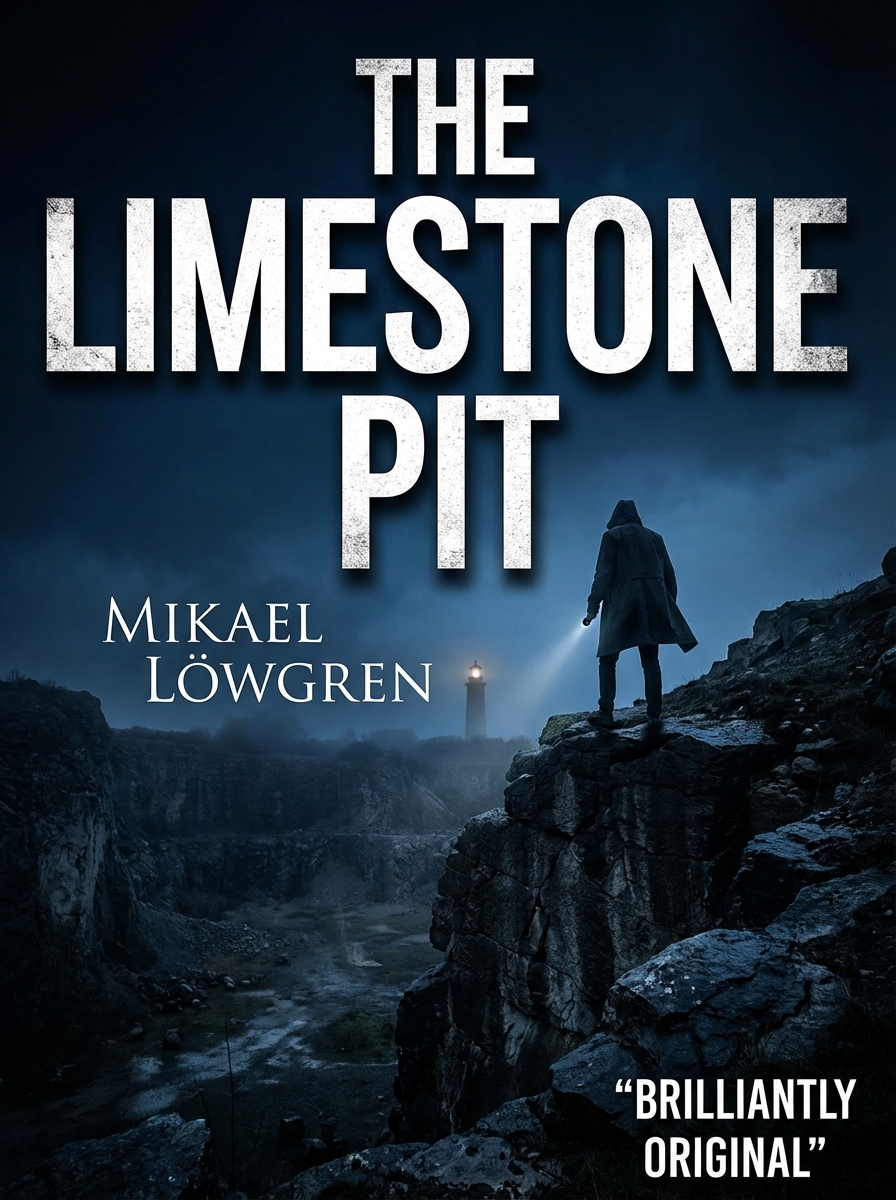
Synopsis
A chilling discovery in a remote quarry resurrects a decades-old mystery, forcing a small island community to confront its buried secrets and the darkness lurking beneath its tranquil facade.
Chapter 1: The Quarry's Secret
The bite of the wind off the Baltic was a familiar companion, but today it carried a keen edge that snaked under Bengt’s worn wool cap and plucked at the collar of his high-vis jacket. The air, usually thick with the scent of pine and damp earth, was instead acrid with the exhaust fumes of heavy machinery and the fine, chalky dust stirred up by the excavators. He wiped a gloved hand across his brow, leaving a streak of grey on already grimy skin, and squinted at the horizon. The winter sun, a pale, watery disc, offered little warmth or cheer.
It was meant to be a straightforward job: clearing out the old quarry’s eastern flank for the new residential development. Another fifty homes, another chunk of Gotland’s wild beauty sacrificed for progress. Bengt, a man who’d seen more rock than he had sky in his fifty-odd years, harboured no illusions about the march of time. But this… this felt different.
The rhythmic thudding of the hydraulic hammer had been a background drone for weeks, a mechanical heartbeat against the quiet pulse of the island. Then, around mid-morning, it had stopped. Abruptly. Bengt had felt the silence more than heard it, a sudden void where the insistent clatter had been. He’d trudged towards the stoppage, his boots crunching on loose limestone chippings, a knot of irritation already tightening in his gut. Delays meant lost time, lost money.
He found Lars, the youngest of the crew, standing rigid as a fence post beside the excavator, his face drained of colour, eyes wide and unseeing. The machine itself stood frozen, its massive bucket poised, an obscene metal claw tangled in a freshly exposed layer of earth and shattered rock.
"What is it, boy?" Bengt had barked, more out of habit than anger, but Lars didn't reply. His gaze was fixed, not on the rock face, but on something nestled within it.
Bengt followed his stare.
The first thing he saw was the fabric, a faded, sun-bleached remnant of what might once have been a sweater, its fibres brittle, almost fossilized against the ochre clay. Then, the shape beneath it. Not rock. Too deliberate. Too… organic. A curve. Like a jawline. And then, undeniably, the hollow sockets. Bone, clean and white, stark against the dark earth.
A shiver, colder than the Baltic wind, stole down Bengt’s spine. He cleared his throat, the sound dry and small in the sudden vastness of the quarry. "Get back to the office, Lars. Call the police. And tell the others to stay put. No one touches anything."
Lars simply nodded, a jerky, mechanical motion, and stumbled away, his gaze still fixed over his shoulder as he retreated from the silent, staring presence in the earth.
The call had come in just after one. Lena Svensson, usually unflappable, felt a familiar clench in her stomach. Disgorging Gotland of its ancient secrets was increasingly becoming her speciality. The quarry was less than a twenty-minute drive from Visby, but as she navigated the narrow, winding country roads, the distance felt vast, a chasm between the bustling harbour town and the island's stark, untamed interior. The winter light was already failing, lending the landscape a muted, melancholic hue. Grey skies pressed down on grey fields, dotted with leafless trees that clawed at the air like skeletal hands.
She pulled her unmarked Saab through the temporary barrier, a single strip of red and white tape that seemed woefully inadequate against the gaping maw of the quarry. A lone uniformed officer, a young recruit she vaguely recognized, stood hunched against the wind, stamping his feet. He gestured towards the main excavation site.
"Inspector Svensson. They're over there. The site foreman says it's a mess." His voice was thin, reedy in the cold.
"A mess of what?" Lena asked, already knowing the answer.
She found Bengt, the foreman, pacing a tight circle on the perimeter of the cordoned-off area, his face etched with a kind of grim resignation. A small cluster of workers stood some distance away, their shoulders hunched, smoking in silence, their usual banter conspicuously absent.
"Inspector Svensson," Bengt acknowledged, pulling off his cap, his few remaining hairs ruffled by the wind. "Bengt Karlsson. Never thought I’d be calling you for this kind of thing."
"No one ever does, Bengt," Lena replied, her gaze sweeping over the scene. The excavator loomed, a silent, monstrous sentinel. The earth around it was disturbed, raw, exposing layers that had not seen the light of day for decades, centuries perhaps.
"Show me," she said, her voice calm, devoid of the tremor she felt internally.
He led her to the edge of the pit, then stopped, pointing down into the excavated trench. The wind whipped at her overcoat, and Lena pulled it tighter, feeling the cold seep into her bones.
There it was. Exactly as Bengt had described. The pale bone, embedded in the dark soil, a stark contrast that screamed ‘not natural’. But it wasn't just a jawbone now. A skull, mostly intact, stared blankly upwards. Ribs, fractured and displaced, hinted at a torso. A pelvis, angled awkwardly. The distinct, chilling architecture of a human skeleton, partially exhumed from its long, silent sleep.
"The bucket just… caught it," Bengt mumbled, his voice rough. "Lars was on the controls. He swore he didn’t even feel it. Just noticed the…" he trailed off, unable to articulate the grim reality.
Lena knelt, careful not to disturb the ground around the remains. Her gloved fingers grazed the rough, cold earth just inches from the skull. The delicate structure of an eye socket seemed to stare back at her, black and empty. The bone had a chalky texture, pale and dry from its long entombment. No tissue remained, only the bare framework, testament to the passage of time.
"No clothes?" she asked, her voice low.
Bengt shook his head. "Just bits. Like I said, almost dust. Around the… up here, on the chest." He pointed vaguely. "Might’ve been a jumper. Or a shirt. Couldn’t tell the colour. Just a sort of shadow of fabric."
Lena’s gaze moved from the remains to the surrounding earth. The ground here was a mixture of clay, limestone chippings, and what looked like fossilized marine deposits – a testament to Gotland’s ancient past as a seabed. There was no sign of a grave, no neatly dug hole. The bones appeared almost organically part of the strata.
"How deep was it?"
"Hard to say exactly," Bengt replied, squinting. "The topsoil here, it’s not much. Maybe a metre and a half. This part of the quarry hasn’t been touched since the fifties, sixties, at least. Before my time, even. They just dug what they needed, then left it."
A metre and a half. Not a deep burial, if it was a burial at all. The thought sent another shiver through Lena. This wasn't some ancient Viking grave, respectfully interred. This was something else. Something hidden. Then accidentally stumbled upon.
She stood slowly, her joints protesting the cold. Her eyes scanned the entire area again, taking in the disturbed earth, the towering walls of the quarry, the distant, silent workers. The wind picked up, whistling a mournful tune through the barren landscape.
"I need Dr. Engström here, and a full forensic team from Visby," Lena informed the young officer, her voice regaining its professional crispness. "Secure this entire area, wider than you think. No one, absolutely no one, in or out without my express permission. And I mean *no one*."
The officer nodded, already reaching for his radio.
"Bengt," Lena turned back to the foreman. "Did anyone else know about this specific spot? Workers, locals, anyone?"
He shrugged, a heavy, tired movement. "No more than usual. It’s an old quarry. Locals know it, kids sneak in sometimes. But this corner, it’s always been pretty much left alone. Nothing here but rock, really. Until today." His voice was flat, imbued with the sense of a man whose quiet, predictable life had just taken an irreversible turn.
"And how long has this excavation work been going on, in this section?"
"About two weeks. We started on the top layer, clearing the scrub, mapping it. Today was the first day we really started digging deep."
Two weeks. The remains could have been exposed, subtly, for longer than they knew. A thought, cold and unsettling, began to form in Lena’s mind. What if someone had already known? What if someone had seen the first glints of bone, and then simply walked away?
She walked the perimeter of the cordoned-off area, feeling the weight of the silence, broken only by the distant call of a gull and the incessant sigh of the wind. The quarry was a vast, open wound in the landscape, but it also felt like a closed book, its pages cemented shut by decades of neglect. Now, one of those pages had been violently torn open.
The darkness was deepening now, the sky turning a bruised purple. The air grew colder, the wind more insistent, tugging at Lena’s hair, biting at her exposed skin. She pulled her practical, no-nonsense scarf tighter around her neck, relishing the small comfort of the woven wool.
The forensic team arrived an hour later, their vehicle’s flashing blue lights a garish splash of colour against the deepening gloom. Dr. Engström, a woman whose calm demeanour belied a sharp intelligence, immediately set about assessing the situation. She was methodical, precise, her movements economical as she and her team began the delicate process of documenting and carefully exposing the bone fragments.
While they worked, Lena took out her notebook. Names. Dates. Everything was vital now. She questioned Bengt again, patiently, meticulously, pressing for any detail, no matter how small, that might stir a memory. Had anything unusual happened around the quarry in years past? Any disappearances? Any strange sightings?
Bengt scratched his chin, his brow furrowed in thought. "Disappearances? Not that I recall, not since I was a boy anyway. There was a young couple, back in the sixties, went missing off the coast. Never found them. But that was out at sea, nowhere near here. And a woman, older, she just… walked off. Dementia, they said. Her body turned up in the forest five years later, not a mark on her." He shook his head. "No, nothing in the quarry itself, not that I’ve heard."
His answers rang with the sincerity of a man who genuinely wanted to help, but who also felt the weight of his community's unwritten rules. In small island communities, secrets were both currency and consequence.
Lena knew this. She had seen it played out before, a slow, grinding battle against a collective amnesia, against the unspoken pacts that bound people closer than any law.
As the forensic specialists continued their delicate work under the beam of powerful spotlights, illuminating the scene with an eerie, theatrical glow, Lena felt the island’s grip tighten around her. The quarry, once a site of industry, now felt like a mausoleum. The limestone, the very foundation of Gotland, was revealing a grotesque truth.
Later, as the first fragments of the skull were carefully extracted and bagged, Lena stood apart, watching the methodical process. The wind still howled, rattling the temporary floodlights, making the shadows dance. Dr. Engström approached her, her face grim.
"It’s definitely human, Inspector. And it's been there for a very long time. The bone degradation suggests decades. Possibly more."
"Any obvious cause of death?" Lena asked, though she knew it was too early.
Engström shook her head. "Not yet. But there are fractures. Post-mortem, likely from the excavator, but some older damage too. We’ll know more once we can get it back to the lab." She paused, her gaze settling on the exposed remains. "This wasn't a natural death, Lena. And they weren't buried with care. This was a discarding."
Discarding. The word hung in the air, heavy and chilling. This wasn't an unfortunate accident. This was an act. Someone had carried a body into this remote corner of the quarry, and left it to be reclaimed by the earth.
Lena's gaze drifted over the quarry walls, the craggy, grey stone catching the harsh light. The vast, empty space seemed to hold its breath. This wasn’t just a case of identifying a missing person. This was a story. A very old, very dark story. And it had just begun to whisper from the limestone.
As the last of the key evidence was gingerly packed away for transport to the lab, Lena found herself standing alone at the edge of the pit, looking down into the newly revealed void. The winter night had descended fully, starless and unforgiving.
A murder. A decades-old murder. On an island that prided itself on its tranquility, its quiet history. Lena knew, with a certainty that settled deep in her bones, that this discovery would ripple through Gotland like an icy tremor. It would force a community to face its buried secrets, to remember what it had perhaps deliberately forgotten. And she, Lena Svensson, was now tasked with unearthing not just bones, but the darkness that had laid dormant for so long beneath the tranquil façade of the limestone island. The quarry had given up its secret. Now, she had to discover its name. And the name of the one who had put it there.
Chapter 2: A Fading Photograph
The sharp tang of formaldehyde mingled with the damp earth still clinging to the bones, a peculiar perfume in the sterile confines of the pathology lab. Dr. Elara Jensen, her face a map of concentration lines around intelligent, tired eyes, moved with a controlled efficiency that bespoke years of practice. Lena watched from a respectful distance, the insistent hum of the ventilation system a low thrum against her eardrums. It had been barely twelve hours since the grim discovery, yet the machinery of investigation was already grinding forward, relentless and impersonal.
“Definitely human, Detective,” Elara stated, gesturing with a gloved hand towards the skeletal fragments laid out meticulously on a stainless-steel tray. A partial skull, vertebrae like a string of ancient pearls, and a collection of long bones, all stained a uniform earthy brown. “And old. Very old.”
Lena nodded, her gaze fixed on the fractured mandible. “How old, Dr. Jensen?”
Elara picked up a small brush, gently clearing some stubborn soil from a section of femur. “Initial assessment, judging by the degree of mineralization and cortical bone density… I’d say at least thirty years, possibly more. We’ll need carbon dating for a definitive timeline, of course, but put it this way: this isn’t a recent disappearance.”
The words hung in the air, weighted with the implication of forgotten lives, cold cases left chilling in dusty files. Thirty years. That meant the quarry’s grim secret had been buried long before Lena had even considered putting on a police uniform.
“Sex?” Lena pressed, her voice calm despite the churning in her gut.
Elara paused, her brow furrowing slightly as she examined the pelvis. “Indications point strongly to female. The pelvic inlet, the subpubic angle… all consistent with a young woman. Not fully mature, perhaps late teens to early twenties.”
A young woman. The image, unbidden, flashed into Lena’s mind: a girl, vibrant and full of life, reduced to this anonymous collection of brittle calcium. It was the hardest part of the job, the cold dehumanization of what was once a breathing, laughing person.
“Any immediate signs of trauma?” Lena asked, stepping closer. The air felt colder now, despite the lab’s regulated temperature.
Elara ran a finger carefully along the edge of a rib. “Nothing obvious that would suggest cause of death at a glance. No clear bullet entry, no sharp force trauma visible on the bone. But soft tissue tells so much more, and that’s long gone. We’ll perform a full skeletal analysis, looking for microfractures, anything that might speak of violence, but for now…” She shrugged, a weary gesture. “It’s a clean slate, in that regard.”
Lena let out a slow breath. “So, we have a young woman, late teens to early twenties, who died at least thirty years ago. In the middle of an isolated quarry.”
“Precisely,” Elara confirmed, her eyes meeting Lena’s. “The story these bones tell is incomplete. It’s your job to fill in the blanks.”
Before Lena could respond, her phone buzzed in her pocket. It was her colleague, Detective Max Karlsson, his voice tight when she answered. “Lena, they found something else at the site.”
A fresh wave of adrenaline hit Lena. “What is it?”
“A locket. Buried a few feet from where the remains were found. The forensics team just brought it in.”
——
The locket lay on a velvet cloth in the evidence room, carefully handled by a gloved technician. It was tarnished with age and earth, its silver once gleaming now dulled to a matte grey, but its delicate filigree work was still discernible. Oval-shaped, about the size of a thumbprint, and hinged.
“It was quite deeply embedded,” the technician explained, her voice precise. “We had to excavate carefully around it. Looks like it might have been dislodged, or dropped, or even discarded near the body.”
Lena leaned in, her breath catching. Her own grandmother had worn a locket, a small, privately held treasure. This one, too, carried the weight of intimacy. “Can we open it?”
“We’re trying,” the technician said, gently attempting to pry apart the two halves with a specialized tool. “It’s seized up from corrosion, but I think I can get it.” After a moment of careful manipulation, there was a soft click. The locket sprang open.
Inside, nestled snugly in the minuscule compartments, were two faded, sepia-toned photographs. One was almost completely obscured by damp, a shadowy blur. But the other… the other image, despite its age and poor condition, was unmistakably a face.
A young woman, her hair styled in a way that spoke of a bygone era, perhaps the late 70s or early 80s, smiling shyly. Her eyes, though faded to indistinct smudges, seemed to hold a spark of youthful optimism. It was impossible to discern specific features, but the general impression was one of innocent beauty.
“Oh,” Lena whispered, the sound barely audible. This wasn't just bone anymore. This was a person, a life. A name.
Max, standing beside her, let out a slow whistle. “Well, that’s a hell of a lead.”
Lena didn’t take her eyes off the miniature portrait. “It’s more than a lead, Max. It’s a face. A face they tried to bury.”
The forensics team took detailed photographs of the locket and its contents, meticulously cleaning the silver and attempting to digitally enhance the faded image. While they worked, Lena and Max retreated to Lena’s makeshift office at the local police station – a small, cramped room usually reserved for processing minor offenses.
“Alright,” Lena said, pulling up a chair and gesturing for Max to do the same. “We have a young woman, late teens/early twenties, possibly from the 70s or 80s. And we have a face, albeit a poor one. Our first step is to scour missing persons reports.”
Max was already tapping away at his laptop. “I’ve already started cross-referencing. The national database goes back pretty far, but localized records from that era… they can be patchy on the islands. Especially from smaller communities.”
He wasn’t wrong. Gotland, particularly in decades past, had been a patchwork of close-knit villages, each with its own rhythm and, sometimes, its own interpretation of official procedures. Missing persons in big cities made headlines. On a quiet island, a disappearance could be explained away, covered up, or simply forgotten, swallowed by the vastness of the sea or the unforgiving landscape.
They spent the next several hours lost in the digital archives, the glow of the screen illuminating their tired faces. Cases of young women gone missing across Sweden from 1975 to 1985 scrolled past, a grim litany of names and unanswered questions. They filtered by age, by location, by any description that might remotely match the vague impression of the locket's face.
But as the hours wore on, a pattern, or rather a lack of one, began to emerge. There were indeed missing persons reports – runaways, suspected suicides, unexplained vanishings. Yet, none of them seemed to fit the specific time frame of a young woman disappearing *from Gotland* in that critical window. There were a few older reports, a few more recent, but the particular decade of interest seemed strangely quiescent for females in the target age group.
"It's like this whole period is… silent," Max finally said, rubbing his temples. "Barely a whisper regarding young women from Gotland. A couple of men, yes. But no women matching the age."
Lena leaned back, frustration tightening her jaw. “That’s not right. Gotland wasn’t a hermetically sealed bubble. People vanished everywhere. Why not here, during this specific time?”
“Could be they were never reported?” Max suggested, though his voice lacked conviction. “Sometimes families handle things internally, especially if they suspected a runaway and wanted to avoid police involvement.”
“Possible,” Lena conceded, though the idea didn't sit well. To go missing for thirty years, with no report whatsoever? For a young woman? It felt unlikely. “Or maybe she wasn’t from Gotland originally. Just ended up here.”
“Then why were her bones found in a quarry on this island?” Max countered, gesturing to the map on the wall. “That’s a big leap for a body.”
A chilling thought struck Lena. What if the silence wasn't an oversight, but deliberate? What if someone *wanted* her to be forgotten?
“Check local newspapers from that period,” Lena instructed, her mind racing. “Not just official police reports. Look for anything – community notices, old articles about local events, even high school yearbooks if we can get our hands on them. We need to build a picture of what Gotland was like then, and who might have been part of it.”
The task was laborious. Digital archives for local newspapers from decades past were often incomplete, fragmented, or simply non-existent. They had to rely on dusty microfiche readers in the municipal library, the whirring of the machines a monotonous counterpoint to the ticking clock.
Days bled into a week. The locket, having undergone meticulous cleaning and digital enhancement, yielded a slightly clearer image of the young woman, though still far from forensic quality. Experts painstakingly tried to reconstruct facial features from the skull, a slow, painstaking process that yielded only a generalized approximation.
Lena felt the familiar pressure building. The quarry incident had sent ripples through the small community. Whispers, speculation, old fears rising to the surface. People wanted answers, and Lena, standing at the precipice of such a prolonged silence, felt the weight of that expectation.
One drizzly afternoon, while poring over a faded copy of the *Gotlands Allehanda* from August 1982, Max suddenly sat up straighter. “Lena, look at this.”
He pointed to a small, almost inconsequential article hidden on an inside page. It wasn't about a missing person, not directly. It was a community notice, a blurb about a summer festival in the small village of När, not far from the quarry. And buried within the text, almost an afterthought, was a line: "*…among the new faces seen this summer in När, young Anna Nilsson, visiting from the mainland, captivated many with her lively spirit…*"
Lena leaned in, her heart quickening. "Anna Nilsson, visiting from the mainland." No missing persons report under that name from the mainland that matched the timeframe. A visitor. Someone who might have come and gone, her absence perhaps not causing immediate alarm back home. And the description – "lively spirit" – a ghost of a voice from the past.
They cross-referenced Anna Nilsson, but the name was common. Thousands of Anna Nilssons existed in Sweden. Without more information – a hometown, a specific age, family details – it was a dead end. Still, it was the first concrete name, however tenuous, they had found that even vaguely coincided with their timeline and location.
“It’s a thread, Max,” Lena said, tapping the newspaper article. “A very thin one, but it’s something. Let’s focus on När. See if we can find anyone who remembers a summer visitor named Anna Nilsson around 1982.”
The shift in focus brought a desperate hope. Perhaps the silence wasn’t a conspiracy, but simply the natural fading of memory, easily lost in the ebb and flow of summer tourists and temporary residents.
Lena stared at the enhanced photograph of the locket. The young woman’s faint smile seemed to mock their efforts, a silent challenge from the grave. They had a face, a place, a general time. But the deeper they dug into the past, the more the answers seemed to recede, swallowed by the thirty years of cold earth and forgotten history. And for the first time, Lena felt a prickle of unease that went beyond the usual demands of a police investigation. This wasn't merely a cold case; it felt like unearthing a truth someone had fought very hard to keep buried. And whoever had done that, was still out there, somewhere.
Chapter 3: Whispers of the Past
The scent of woodsmoke and damp earth clung to Lena’s clothes, refusing to dissipate even after the drive from the quarry. The air in Stenby, a village just a handful of kilometers from the excavation site, was laden with the heavier perfume of brine and ancient stones. It felt less like a village and more like a collection of weathered houses huddled against the relentless sea wind, their windows like wary eyes.
She parked the patrol car in front of the community hall, a faded crimson building that had seen better days. Inside, the echoing silence was broken only by the hum of an ancient fluorescent light and the nervous shuffle of feet. A small cluster of elderly residents, urged by the local konstapel to speak with the detective, sat stiffly on hard-backed chairs, their faces etched with the stories of long lives. They were the island’s memory keepers, or so Lena hoped.
“Thank you for coming,” Lena began, her voice a calm counterpoint to the quiet tension in the room. She held up the laminated photograph of the locket, its tarnished silver a stark contrast to the brilliant white paper. “We’re investigating a discovery near the old quarry. We believe these remains belong to a young woman, likely from several decades ago.”
She watched their faces. A flicker of recognition in one woman’s eyes, a downturned mouth from an old man, a quick, almost imperceptible glance between two others. They were all playing a similar tune: an internal debate between civic duty and the deep-seated island impulse to keep quiet.
“This locket was found with the remains,” Lena continued, a calculated pause before she added, “It’s distinctive, don’t you think?” She let her gaze sweep across them, inviting comment, but receiving only a collective tightening of lips.
A man at the front, his hands gnarled like ancient roots, finally cleared his throat. “Quarry… that place always had a bad reputation. Stories, you know. Nothing solid. Just stories.” He looked at the floor, as if consulting the scuffed linoleum for confirmation.
“What kind of stories, sir?” Lena prodded gently, her pen poised over her notebook.
“Of… disappearances,” the man muttered, almost inaudibly. He looked up, his eyes suddenly sharp. “But that was a long time ago. Before most of us even. Before the war.”
Lena frowned. The forensic estimate put the bones at around fifty to seventy years old, placing the disappearance much later than pre-war. She knew better than to correct him, not yet. “Were there any young women, around seventeen or eighteen, that went missing from Stenby or nearby villages, say in the late 1940s or early 1950s?”
Silence descended again, thicker this time. The smell of dust and old wood seemed to amplify the tension. It was the silence of unspoken histories, of secrets carefully guarded.
One woman, her hair a wispy cloud of white, finally spoke. Her voice was thin, like spun glass. “There was a girl. Not from Stenby, exactly. From a farm further inland. But she worked at the fish factory here for a season.”
All eyes turned to her. She was Ingrid, Lena remembered from the konstapel’s briefing, nearing ninety, and known for her sharp memory—and her even sharper tongue.
“When was this, Ingrid?” Lena asked, leaning forward slightly.
Ingrid’s gaze drifted to the window, fixed on something unseen in the grey sky. “Just after the war. People were still trying to put things back together. There was work here then. Not like now.” A sigh escaped her, a wisp of smoke from a dying fire. “Her name… I think it was Kristina. Or Karin. Something like that. She just… left. They said she ran away to the mainland. Got tired of the island, you know.”
Lena scribbled the names, her mind already racing. This aligned better with the forensic timeline. “Was she reported missing? Did anyone look for her?”
Ingrid gave a short, humourless laugh. “Reported? Back then, if a young woman left, often enough it was just… accepted. Especially if she had a reputation. Or if there were… circumstances. Families didn’t want the fuss. Better to say she ran away than to admit… other things.” Her eyes flickered with a knowing glint, then her lips sealed shut. The door to that particular memory was firmly closed.
Lena pressed gently. “Did she have any close friends here in Stenby? Anyone who might have kept in touch with her?”
Ingrid shook her head. “No one I knew of. Kept to herself, mostly. A quiet one.”
The other elderly residents offered nothing further, retreating behind their wall of vague recollections and convenient memory gaps. Lena thanked them, the sense of hitting a quiet, impenetrable barrier growing with each polite dismissal.
As they filed out, Lena caught the eye of a woman she hadn’t noticed much before. She was slight, with a neat bun of silver hair and eyes that held an unnerving depth. Astrid, if Lena recalled correctly from the quick introductions. She had remained silent throughout the interview, her gaze rarely leaving Lena’s face. Now, as the others shuffled past her, Astrid hesitated, her fingers plucking at the worn fabric of her cardigan.
Lena sensed a possibility. She stepped closer. “Astrid, do you have something to add?”
Astrid’s breath hitched, a small, bird-like sound. She glanced around, as if checking for eavesdroppers, though the hall was almost empty now. “Not Kristina,” she whispered, her voice a reedy murmur. “Not like that. That was a different girl. Kristina went to Stockholm. Sent a postcard once, years later.” Her eyes, a startling pale blue, locked onto Lena’s. “This girl… the one who disappeared. Her name was Elsa.”
The name hung in the air, heavy and unexpected. Lena felt a prickle of anticipation. “Elsa? You knew her?”
Astrid nodded slowly, her gaze still skittish. “She was a few years older than me. We went to school together for a while. Her family lived by the coast, near the old fishing cabins. Then they moved further inland, towards Ljugarn.”
“And she disappeared?” Lena prompted, her voice carefully neutral, not wanting to spook the fragile thread they were on.
“Yes.” Astrid’s voice dropped to an almost inaudible level. “They said she went to the mainland. To Malmö, I think. To find work. But… no one ever heard from her again. Not really. Just stories. Rumours.”
“What kind of rumours, Astrid?” Lena pressed, feeling the urgency now.
Astrid wrung her hands, her gaze darting to the door, then back to Lena. “That she wasn’t happy. That she was… with child.” The words tumbled out, soft but sharp, slicing through the polite veneer of village denial. “No one talked about it. It was a shame, you see. Back then. For an unmarried girl.”
Lena’s mind clicked into place: young, pregnant, desperate. A perfect storm for a tragic end, compounded by a community’s instinct for silence. “When was this, Astrid? Roughly.”
Astrid closed her eyes for a moment, an act of deep concentration. “It must have been… 1952. Or maybe 1953. I remember because the autumn was particularly cold that year. And there was a big storm just after she left. Everyone said it was God’s wrath.” A faint shudder ran through her small frame.
“And what about the locket?” Lena pulled the photograph from her pocket again, holding it out. “Did Elsa have a locket like this?”
Astrid’s eyes widened as she focused on the image. Her hand, trembling slightly, reached out, but didn’t touch it. “I… I think so. It was a gift. From a boy. He gave it to her at the summer dance, down at the old jetty.” A ghost of a wistful smile touched her lips. “Everyone knew they were sweet on each other.”
“Do you know the boy’s name?” Lena asked, her pulse quickening. A name, a relationship, a potential lead.
Astrid hesitated again, her gaze suddenly opaque. “He was… from a good family. Respected, even then. He wouldn’t want his name mentioned. Not after all these years.” Her shoulders hunched, as if under an invisible weight.
“Astrid, this is important,” Lena stressed, her tone firm but empathetic. “This could help us identify the young woman. And bring closure to a family.”
The old woman chewed on her lower lip, her frail frame trembling. The weight of decades of silence, of suppressed truths, was palpable in the small space between them. “His name was Olle. Olle Jönsson.” The name was barely a whisper, a secret finally breathed into the stark light of day. “His family owned the mill, further up the coast.”
“Thank you, Astrid,” Lena said, her voice filled with a genuine gratitude that seemed to ease some of the tension in the old woman’s shoulders. “You’ve been a great help.”
Astrid finally looked directly at Lena, a strange mix of fear and relief in her pale blue eyes. “It’s been a long time. Too long, perhaps. Sometimes… the past doesn’t stay buried, no matter how deep you dig.” Her gaze flickered, for a brief, disquieting moment, to the direction of the quarry. “Some things just wait to be found.”
The words hung in the air, a chilling echo of the quarry’s grim discovery. Lena watched Astrid shuffle away, her small figure framed by the community hall’s open door, before she turned and reached for her phone. The first name in decades to be linked to the missing woman. Elsa. And a new name, Olle Jönsson. The silence of Stenby was finally beginning to crack, and Lena knew this was just the beginning. The whispers of the past, long suppressed, were finally starting to be heard. And they spoke of more than just a tragic disappearance; they spoke of secrets, shame, and perhaps, something far more sinister. The tranquil façade of the island, she suspected, was about to be peeled away.
Chapter 4: The Artist's Haven
The gravel crunched under Lena’s boots, a sound swallowed by the vast, open sky above the Gotland plains. The map coordinates Astrid had scrawled on a napkin led her down a single-track road, the tarmac soon giving way to a dirt path barely wider than her patrol car. Pine trees, stunted and gnarled by the coastal winds, began to thin, revealing glimpses of a squat, timber-framed building nestled in a clearing. It looked abandoned, its windows boarded over, paint peeling from the clapboard like sunburnt skin.
This, Astrid had explained, was the Ananda Collective – or what was left of it. A place where “the artists ran wild.” The words had been laced with a mixture of disdain and a curious, almost nostalgic, resignation. Lena parked a little way off, not wanting to announce her presence, though it was clear no one had taken residence here in decades. The air hung thick with the scent of damp earth and decay.
She stepped out, the silence pressing in. A lone magpie cawed, a harsh, sudden sound that scraped against the stillness. The building itself was low-slung, sprawling, almost swallowed by the encroaching undergrowth. A narrow, crooked path, choked with weeds, led to a roughly hewn wooden door. The lock, if there ever was one, was long gone, the door ajar, revealing a gaping maw of shadow.
Lena drew her torch, its beam cutting a stark path through the gloom. The air inside was cold, stagnant, thick with the smell of mildew and dust. Cobwebs, thick as old lace, draped from the rafters. The floorboards groaned beneath her weight, protesting each step with a mournful creak. She moved slowly, methodically, her eyes sweeping over the skeletal remains of what was once a vibrant, if unconventional, community.
The main room was vast, an open space that must have served as a communal area. A crude stone fireplace dominated one wall, its hearth crusted with generations of soot. Near it, a collection of broken pottery lay scattered, shards painted with strange, swirling patterns. Lena knelt, picking up a piece. The glaze was vibrant, a startling splash of cobalt blue against the muted tones of the room. A single, almost imperceptible brushstroke formed a stylized bird.
Further in, remnants of canvases were propped against a wall, their surfaces faded to an indistinct smear of colour. Easels, skeletal and broken, littered the floor like fallen soldiers. This was an artists’ haven indeed, or at least, its ghost.
She moved from room to room, each a testament to a life lived and abruptly abandoned. In what might have been a studio, dried lumps of clay still clung to a potter’s wheel, frozen in time. Sketches, brittle as autumn leaves, lay scattered across a workbench, depicting nudes rendered with a raw, almost violent energy. These weren't quiet landscapes or gentle portraits. These were figures contorted, stretched, their faces etched with a desperate, hungry beauty.
Then she found it. Tucked away in a small, windowless alcove at the back of the building, a space that felt designed for solitude, perhaps even secrecy. A series of drawings, not on canvas, but on rough, salvaged paper and tacked to the wall with rusty nails. Unlike the others, these were distinct, preserved by the lack of direct light, their colours still holding an unusual depth.
These were portraits.
The first was a woman with wild, dark hair, her eyes burning with an almost feral intensity. The lines were bold, confident, capturing not just a likeness, but an untamed spirit. Lena recognized the face from the faded locket. The artistic flair, the distinctive style... Elsa.
Beneath it, another portrait, this one starker, almost unsettling. The same woman, but her expression here was different. Her eyes were shadowed, her mouth a thin, grim line. There was a vulnerability, a fear, that the first portrait had only hinted at. And then, the third. This one sent a chill down Lena’s spine. The woman’s face was contorted in terror, her mouth open in a silent scream. The brushstrokes were frenzied, raw, a desperate cry frozen in paint.
Lena felt a knot tighten in her stomach. This wasn't just art; it was a narrative. A journey from defiant confidence to abject fear. She examined the back of the third drawing, her fingers tracing the faint, almost ghostly inscription: ‘A.N.’
Who was A.N.? Was this another artist? A witness? Or perhaps, the one whose hand created this unsettling prophecy?
She photographed each piece meticulously, making sure to capture the rust stains from the nails, the texture of the old paper. This was more than just proof of Elsa's presence here; it was a glimpse into her inner world. A world that was clearly unraveling.
Moving back to the main room, Lena noticed a section of the wall near the fireplace that looked recently disturbed, despite the overall decay. The plaster was newer, lighter in colour, a small rectangle of incongruity. She ran her hand over it, feeling a slight unevenness. Curiosity prickled. She found a loose piece of timber nearby and used it to pry at the edge of the plaster. It crumbled away easily, revealing a small cavity.
Inside, wrapped in oilskin, was a leather-bound journal. Its covers were scuffed, its pages yellowed, but surprisingly intact. Lena carefully unwrapped it. The first page was dated, the year smudged but legible: 1974. And the elegant, looping script that filled the pages confirmed her suspicion: ‘Elsa Nordström.’
She flipped through the early entries, her eyes scanning for clues. Elsa’s words flowed, vibrant and passionate, sketching a life lived on the fringes. The village, Stenby, was mentioned with disdain, its inhabitants portrayed as narrow-minded, judgmental. "Their eyes are dulled by tradition," one entry read, "they see only what they have been told to see."
The collective, Ananda, was her refuge, her sanctuary. "Here," she wrote, "we are free. Free to create, to love, to *be*." There were detailed descriptions of her artistic process, her struggles with form and colour, her triumphs and frustrations. And then, woven through it all, like a persistent refrain, was the name 'Anders'.
Anders. Lena remembered Astrid mentioning him, a young man from the village who had been "too friendly with the collective folk." A dark-haired, brooding figure.
The tone of the journal shifted, almost imperceptibly at first. The initial exuberance gave way to a subtle undercurrent of unease. Entries became shorter, more fragmented. "Anders is troubled," she wrote in one. "His family disapproves of us, of me. He says he understands, but I see the doubt in his eyes."
Later entries spoke of arguments, whispers, of feeling watched. "They stalk me like a shadow," she penned, the ink bleeding slightly as if pressed too hard. "Their disapproval is a physical weight."
And then, the chilling entries. "He frightens me, Lena. Not Anders. The other one. The one who watches from the trees. He never speaks, just observes. Like a predator." Lena’s breath hitched. A predator.
The final entry was scrawled, raw, almost illegible. The careful looping script had dissolved into a desperate, jagged scrawl. "He came to the window tonight. His face was lit by the moon, a distorted mask. He wants something from me. Something I cannot give. I am afraid, Anders. Truly afraid."
The date on this last entry was just days before the presumed time of death, based on the forensic report of the bones in the quarry.
Lena carefully closed the journal, the leather soft and cool in her hand. The pieces were beginning to connect, forming a picture far more complex and sinister than a simple runaway girl. Elsa Nordström hadn't just 'disappeared.' She had been silenced. And perhaps, watched, stalked, and then, ultimately, murdered.
The artists of Ananda, with their unconventional lifestyles and provocative art, had been an anathema to the conservative village of Stenby. Elsa, with her striking beauty and defiant spirit, would have been a particular target, a lightning rod for their judgment and fear. Her art, as evidenced by the portraits, was a mirror, reflecting not only her struggles but perhaps also the darkness she perceived in others.
Lena stepped back into the sunlight, blinking against the sudden brightness. The world outside felt too vibrant, too alive for the horrors she had just unearthed. The magpie was gone, replaced by the distant bleating of sheep. The wind rustled through the pines, a murmur of secrets.
She had Elsa Nordström's story now, at least in part. The vibrant young artist, ostracized, frightened, ultimately silenced. But the 'who' remained. Who was the predator Elsa spoke of? And what did 'A.N.' mean on the back of that terrifying final portrait? Was it the anonymous artist who had captured her fear? Or was it the initial of the monster himself?
Lena looked back at the dilapidated building, shrouded in the long shadows of the afternoon. It was more than just an abandoned collective. It was a tomb of forgotten dreams and unanswered cries. The Limestone Pit had given up its secret, but the darkness lurking beneath Gotland's tranquil facade was only just beginning to reveal itself. And Lena knew, with a chilling certainty, that the answers lay not in the cold facts, but in the echoes of human emotion, in the whispers of betrayal, and in the raw, aching fear that Elsa Nordström had poured onto her canvas, just before she disappeared forever.
The journal was a living thing in her hand, a fragile bridge across decades. It held not just Elsa’s words, but her very essence. And now, Lena had to carry that essence, that burden, into the quiet, resistant heart of Stenby village.
Chapter 5: Unearthing Old Grievances
The air in Elsa Nordström’s former studio, now a storage room for forgotten canvases and cracked pottery, was thick with the dust of ages and the faint, sweet scent of turpentine. It clung to Lena’s clothes, a phantom touch of a life long extinguished. Sunlight, fractured by the grimy panes of a tall, narrow window, illuminating the motes dancing in the stillness. Lena ran a gloved hand over a stack of yellowed newspapers, their headlines screaming of distant crises while Elsa’s own quiet tragedy played out in the shadows.
Astrid’s hushed confession, her voice barely a whisper through the receiver, had been a cold hand on Lena’s shoulder, a direct link to the collective. "Elsa… she was always sketching, always dreaming. But not everyone at the collective shared her dreams, not in the way she did." The old woman had cleared her throat, a dry rustle of age. "There was Åke. Head of the ceramics workshop. He thought himself quite the maestro. And then there was Ingrid. Always in Åke’s shadow, but with her own sharp edges, like a shard of broken glass." Lena had transcribed Astrid’s every hesitant word, the pen scratching a furious path across her notebook.
Now, standing amidst the ghosts of creativity, Lena felt a prickle on her skin. The collective, once a vibrant hub of artistic fervor, had become a mausoleum of ambitions. She had spoken briefly with Lars, the aging caretaker who had reluctantly granted her access. He’d eyed her with a weariness that went beyond his years, a silent plea for the past to remain buried. His words had been clipped, evasive. "They were artists, Inspector. That’s all. Passionate. Sometimes too much so."
Lena’s gaze settled on a dusty, paint-splattered stool. She imagined Elsa perched there, eyes alight, brush poised. What had she seen from this vantage point? What had she heard?
She moved towards a corner where a large, intricately carved wooden chest stood, its surface marred by time and neglect. The lock was rusted shut, but the wood itself seemed to hum with untold stories. She tried the heavy iron handle, but it wouldn't budge. Lars had mentioned it belonged to the collective’s founder, old Gunnar, a man renowned for his eccentricities and his almost fanatical devotion to the collective’s ideals. He’d passed away peacefully in his sleep years ago, leaving behind a legacy of vibrant art and whispered controversies.
Back in her temporary office – a surprisingly functional space carved out of an old storage shed near the quarry – Lena spread out the collected scraps of information. Old photographs, faded interviews with former residents of the collective, and police records from the time. The police reports, she noted with a sigh, barely scratched the surface. Elsa Nordström, missing. No foul play suspected. Runaway. Case closed. The easy answer, the one that required the least effort from a community eager to turn a blind eye to its unconventional neighbours.
She poured over a group photo of the collective from the late 70s. Faces stared back at her, some defiant, some joyful, others wary. There was Elsa, her dark hair tumbling over her shoulders, a half-smile playing on her lips, her eyes holding a depth that belied her youthful appearance. Next to her, Åke stood stiffly, a muscular man with a thick beard and an intensity in his gaze that verged on possessive. And a little behind him, almost obscured, Ingrid, her slender frame almost swallowed by a voluminous smock, her expression unreadable.
Lena zoomed in on Åke’s face. He was a potter of some local renown at the time, his pieces abstract and earthy, but his true claim to fame – or infamy, depending on who you asked – was his reputation as a volatile perfectionist. She recalled a passage from an archived diary entry, supposedly Gunnar's, detailing a heated argument between Elsa and Åke over artistic interpretation. "She challenged him," Gunnar had written in his sprawling hand, "and he hated it. Not the challenge itself, but that it came from her. A young woman, barely out of her teens, daring to question his mastery."
Lena felt a familiar tightening in her gut. She’d seen it before, the fragile male ego crumbling under the weight of female talent. A tale as old as time, yet eternally relevant.
Then there was Ingrid. What about her? Astrid had portrayed her as perpetually in Åke’s orbit, a shadow. But shadows, Lena knew, could conceal as much as they revealed. She found a few mentions of Ingrid in the collective’s early newsletters. A gifted weaver, her tapestries intricate and rich with symbolism. But her work seemed to disappear from the chronicles around the same time Elsa arrived.
Lena opened her laptop and typed “Ingrid Karlsson, Gotland artist.” A few links popped up. An online article from a local arts magazine from the early 2000s, featuring a retrospective of Ingrid’s work. The accompanying photograph showed a woman with sharp, intelligent eyes, her hair streaked with grey, a hint of bitterness etched around her mouth. The article praised her unique style, her vibrant use of color, but subtly alluded to a long period of creative dormancy. “After a promising start in the late seventies at a now-defunct artist’s collective, Karlsson’s work vanished from public view for nearly two decades, before her powerful resurgence in the new millennium.”
Lena’s finger traced the words on the screen. A promising start. A long dormancy. A resurgence. What had happened in between? Had Elsa’s presence sparked that dormancy? Or had her disappearance opened the door for Ingrid to finally shine?
A thought struck Lena. Unrequited love. Astrid had mentioned it. She flipped back through her notes. "Åke… he admired Elsa, yes. But it was more than that. He was captivated. And Ingrid… Ingrid saw it all."
Lena imagined the scene. The shared studio space, the intense creative atmosphere, the simmering emotions. Åke, the established artist, drawn to the young, vibrant Elsa, whose talent shone like a beacon. Ingrid, perhaps feeling overlooked, overshadowed, witnessing Åke’s fascination with a younger, more vivacious rival. The unspoken glances, the subtle shifts in allegiance, the quiet envy that could fester into something far more dangerous.
She recalled Åke’s work shown in the archives. His ceramics often featured powerful, angular forms, sometimes with deeply etched, almost violent, patterns. After Elsa’s disappearance, his later works seemed to soften, flowing more, almost as if a certain tension had been released, or perhaps, resolved. Ingrid’s tapestries, on the other hand, in her later period, were renowned for their complex narratives of struggle and triumph, dark threads interwoven with brilliant bursts of colour.
Lena leaned back in her chair, the wooden planks groaning beneath her weight. This wasn’t just about a missing person anymore. It was about the messy, unpredictable currents of human emotion. Ambition, jealousy, unrequited love – a potent cocktail.
The quarry, she realized, wasn’t just a burial site. It was a metaphor. A place where things were stripped away, layer by layer, exposing what lay beneath. And what lay beneath the tranquil facade of that artist’s collective, Lena was increasingly certain, was a story far darker than any of them had dared to imagine.
She decided to seek out Ingrid Karlsson. If Ingrid had loved Åke, and Åke had loved Elsa, then the answer might be woven into the very fabric of Ingrid’s history. A quiet vengeance, a silent resentment, a buried secret that had finally clawed its way to the surface.
Lena packed her briefcase, the silence of the office pressing in on her. The scent of turpentine was still faintly present, a lingering reminder of passion and forgotten dreams. She locked the door, the click echoing in the stillness. The limestone pit had given up its secret, and now it was Lena’s turn to unearth the truth from the tangled weeds of old grievances. The island had secrets, but Lena had a tenacious will to find them.
Chapter 6: The Confidante
The narrow gravel track, barely more than a deer path, snaked through a dense thicket of gnarled pines. Their branches, heavy with needles, scraped against the patrol car’s paintwork, a harsh whisper against the hum of the engine. Lena squinted through the windshield, the afternoon sun a low, blinding disc above the Baltic’s grey expanse. Elias Bergman lived at the edge of the world, or so it felt. The collective had been an isolated pocket then, a haven for the unconventional. Elias had simply taken that isolation a step further.
She’d spent the better part of the morning tracing his last known address from the faded collective records, a brittle ledger kept by a meticulous, if slightly unhinged, archivist in Visby. The address had led her to a rundown farmstead on the island’s northern tip, and the farmhand, a man whose teeth seemed to be perpetually clenching, had pointed vaguely north-east and muttered something about “the old hermit” and “a shack by the sea.”
Now, the track opened onto a small clearing, dominated by a weathered wooden cottage. Its paint, once perhaps a cheerful blue, had long since peeled and faded, exposing the grey, ancient timber beneath. A rough-hewn shed leaned precariously to one side, its corrugated iron roof rusted to a deep, earthy brown. The only sign of life was a thin wisp of smoke curling lazily from the chimney, a faint signature against the muted sky.
Lena cut the engine. The sudden silence was profound, broken only by the distant, rhythmic sigh of the waves breaking on the shore and the lonely cry of a seagull. The air tasted of salt and pine sap, a clean, sharp scent that did little to calm the unease that had settled in her stomach. This wasn't just physical isolation; it was a chosen severing from the world.
She stepped out, her boots crunching on the loose gravel. The wind, though gentle, carried a chill hint of the approaching autumn. She adjusted the collar of her jacket and walked towards the cottage, her footsteps sounding unnaturally loud in the quiet. A pile of meticulously stacked firewood stood beside the door, testament to a methodical, if solitary, existence.
She rapped on the door, a firm but polite series of knocks. The wood felt rough under her knuckles, cold and unyielding. She waited, listening. No immediate response. She knocked again, a little louder. A scuffling sound from within, then silence. And then, a voice, raspy and thin, like dry leaves skittering across pavement.
“Go away.”
Lena pressed her ear closer to the door, though she knew it was futile. “Mr. Bergman? My name is Detective Inspector Lena Svensson. I’m here regarding Elsa Nordström.”
Another prolonged silence. She was about to knock a third time when the door creaked open, just a sliver. A single eye, pale blue and watery, peered out at her. The face was a roadmap of wrinkles, etched deep by sun and time, framed by a wild, unkempt white beard and hair. He looked like an ancient spirit of the island, a forgotten god of the rocks and waves.
“Elsa?” the voice rasped again, softer this time, laced with a tremor that wasn't entirely due to old age.
“Yes. From the collective. Many years ago.”
The eye held hers for a long moment, assessing, distrustful. Then, with a slow, deliberate movement, the door opened fully. Elias Bergman stood there, a frail figure in a faded wool sweater and trousers that looked as though they’d seen decades of wear. He was surprisingly tall, a gaunt scarecrow of a man, his frame bowed with age. The air around him carried the faint, earthy scent of woodsmoke and old paper.
He didn't invite her in, but stepped back, leaving the doorway open. Lena took it as her cue. The cottage was dark, lit only by the weak light filtering through the grimy windows and the glow from a small, pot-bellied stove in the corner, its iron sides radiating a comforting warmth. The room was crammed with books and papers, stacked haphazardly on every available surface, forming dusty, precarious towers. A single, rickety wooden table served as both dining table and workspace, littered with half-finished drawings and dried paintbrushes.
“Sit,” he grunted, gesturing vaguely towards a worn armchair by the stove. He didn’t sit himself, remaining standing, his hands clasped behind his back, his gaze fixed on some point beyond her.
Lena carefully navigated the maze of clutter and lowered herself into the armchair. It sagged under her weight, exhaling a puff of dust. The room felt heavy with memories, the air thick with unspoken stories.
“You knew Elsa well, Mr. Bergman?” Lena began, trying to keep her voice gentle, non-threatening.
He turned his head slowly, his pale eyes finally meeting hers. “Elias. We used first names, in the collective. No need for formalities.” His voice was still thin, but held a surprising sharpness beneath the age. “And yes. I knew Elsa.” A flicker of something, pain or regret, crossed his ancient features. “She was… a flame. Burning too brightly for this drab island.”
“What was your relationship with her?”
He finally moved, easing himself onto a stool by the window, his movements stiff. He picked up a small, smooth piece of sea glass from the windowsill, turning it over and over in his gnarled fingers. “Friend. Confidante, perhaps. She talked to me. More than to the others. They… they saw her art, her passion. I saw her fear.”
Lena leaned forward slightly, her interest piqued. “Fear? Of what?”
“Everything. Nothing. That’s how fear works, isn’t it? It starts as a whisper, then it becomes a shout. She was sensitive, you see. Felt things more deeply than most.” He paused, his gaze drifting to the sea glass, then out to the grey expanse of the Baltic. “But in the end… no, in the end, it was something quite specific.”
Lena waited, letting the silence hang. Push too hard, and he might retreat into his shell.
“She was changing, in those last weeks,” Elias continued, his voice a low murmur, as if speaking to the ghost of Elsa herself. “Her laughter became less frequent. Her eyes, they held a… a troubled light. She stopped painting. For her, that was like stopping breathing.”
“Did she tell you why?”
He sighed, a long, shaky exhalation. “She spoke of a secret. Something she’d stumbled upon. Something that could ‘topple giants,’ were her words. I told her to be careful. To let sleeping dogs lie.” He shook his head, a gesture of profound regret. “Foolish old man. Should have pressed her. Should have made her tell me.”
“Did she give you any details about this secret?” Lena pressed gently. "What giants was she referring to?"
Elias closed his eyes for a moment, as if sifting through the dust of decades. “She never specified. Not directly. She spoke in riddles, as artists often do. But I gathered… it concerned someone powerful. Someone in the village. Not one of us, from the collective. Someone who held sway.”
Lena thought of Astrid’s whispered tales of Elsa's ostracization, the village's disdain for the collective. She thought of the unspoken resentments from her previous interviews. "Could it have been related to the collective itself? Internal conflicts?"
Elias opened his eyes, a spark of indignation in them now. “No. The collective had its squabbles, its petty jealousies, yes. Artists, prone to drama. But this was different. This was… dark. She used the word ‘corruption.’ It stuck in my mind. She said she’d found something that smelled rotten, right at the core of things.”
“And she was going to expose it?”
He nodded slowly. “That was her plan. She had a fierce sense of justice, Elsa. Couldn’t stand dishonesty. She said she had evidence. She was going to show the world what was truly happening.” He gripped the sea glass tighter, his knuckles white. “And then she disappeared.”
The chill in the room had nothing to do with the outside air now. “Did she mention anyone specific who might be involved in this ‘corruption’?” Lena asked, her voice deliberately even.
Elias hesitated, his gaze drifting to the window once more, as if the answer lay somewhere beyond the glass, in the vastness of the sea. “She never gave a name. But she spoke of a specific family. A family with deep roots here. Land. Influence. ‘The ones who truly own this island,’ she’d say, with a bitter laugh.”
Lena's mind immediately went to the wealthy families that had dominated Gotland's economy for centuries. The families who owned the quarries, the large farms, the shipping interests. The ones who, even today, held influence far beyond their numbers.
"Could you describe this family?"
Elias finally turned from the window, his eyes meeting Lena's again, sharp and unwavering. "No. Not by name. Not directly. It was always veiled. An allusion. But I felt… I felt she was referring to the Lundgrens. They’ve been here forever. Owned the quarry, all the best land, controlled the fishing. Always been whispered about, their methods. Not always… clean, shall we say. But untouchable.”
A powerful local family. The Lundgrens. The name resonated. It was a common enough name on Gotland, but in Stenby, there was only one family that fit Elias’s description. The family that owned the very quarry where Elsa’s remains had been found.
“Did she ever say she was meeting someone? Or going somewhere specific with this information?”
“She simply said she was going to make it known. She had copies, she said. Evidence. She was going to show it to someone outside the village. Someone she trusted.” He paused, a troubled frown deepening the furrows on his brow. “But she never got the chance. Or if she did… she never came back.”
Lena leaned back, digesting this new information. Elsa, a young artist, discovering a secret about a powerful local family, a secret that smelled of corruption. A secret potent enough to “topple giants.” And then, her disappearance. It fit. Too perfectly, perhaps.
“Do you remember anything else, Elias?” Lena asked, her voice softer, almost pleading. "Any small detail? A place she mentioned? A person? Anything that seemed insignificant at the time?"
He closed his eyes again, his head leaning back against the cold windowpane. His breathing was shallow, his chest rising and falling slowly. The silence stretched, filled only by the crackle of the wood in the stove.
“She was afraid,” he whispered, his eyes still closed. “More afraid than I’d ever seen her. The night before… the night before she vanished, she came to my cabin. Pacing. Wringing her hands. She kept repeating, ‘They know. They know I have it.’” His voice cracked, etched with the echo of that long-ago fear. “I told her to run. To leave. To forget about her precious truth. But she wouldn’t. She said, ‘I can’t. Not now. It needs to be told.’”
"They know I have it," Lena repeated mentally. The "they" clearly implying the Lundgrens or their associates. This wasn't merely a discovery; it was a confrontation.
"Did she describe what 'it' was that she had?" Lena probed, though she suspected the answer.
Elias shook his head slowly, his eyes still closed. "No. Just 'it.' Some piece of information, some document, picture, I don’t know. Something tangible. Enough to expose them.”
Lena’s gaze swept over the room, the dusty books, the unfinished drawings. A faint scent of turpentine lingered in the air, a ghost of creativity. She pictured Elsa in this very room, sharing her fears with her only confidante, the gentle old artist.
“Elias, this is very important. What was the last thing she said to you? Before she left that night?”
He opened his eyes then, and they were stark, haunted by a memory decades old. “She embraced me. Said she loved me, like… like a father. And then she said, ‘Don’t worry, Elias. I’m meeting someone. Someone who will help me. Someone who believes in justice. I’ll be back by morning.’” He paused, a single tear tracing a path through the ancient wrinkles on his cheek. “She never came back.”
The room was silent once more, save for the distant cry of a gull. Elias the Confidante had given her a name, a motive, and a glimpse into the terror that gripped Elsa in her final hours. Not a runaway, not a tragic accident, not even a lover’s quarrel gone wrong. Elsa had stumbled upon something dangerous, something that threatened powerful interests, and she had paid the ultimate price for her conviction.
Lena stood, the old armchair groaning in protest. “Thank you, Elias. You’ve been very helpful.”
He nodded, not looking at her, his gaze once again fixed on the bleak expanse of the sea, as if searching for a distant sail that would never appear. “Find her, Detective. Let her truth be told, at last.” His voice was barely a whisper.
Lena left the cottage, pulling the door shut behind her, the soft click final and resolute. The wind still carried the scent of salt and pine, but now, beneath it, she detected the faint, acrid tang of decay. Elias had given her the first real direction. The Lundgrens. The quarry. A secret buried for decades, now stirring in the cold Gotland earth. The seemingly tranquil facade of the island was, indeed, beginning to crack. And Lena had a feeling that beneath it, lay a darkness deeper than any limestone pit.
Chapter 7: A Calculated Threat
The fluorescent lights of the Gotland police archive hummed, a bland counterpoint to the dramatic stories whispered within the brittle pages of the reports stacked around Lena. Detective Sara Lindqvist, her brow furrowed in concentration, ran a gloved finger down a yellowed ledger. Dust motes danced in the lone shaft of sunlight piercing the high, grimy window, illuminating the forgotten details of minor disturbances and quiet tragedies.
“Here,” Sara said, her voice a low murmur that cut through the oppressive stillness. “May 1982. Elsa Nordström.”
Lena leaned closer, her breath catching. Forty years. The paper felt insubstantial, almost crumbling at their touch, yet it contained a sliver of Elsa’s life, plucked from the void. The entry was brief, almost dismissive, tucked between a complaint about a stray dog and a petty theft from the ICA.
Lena took the file from Sara, her eyes scanning the faded ink. The handwriting was neat, impersonal. *Nordström, Elsa. Address: Lärbro Konstkollektiv.* The complaint: *Harassment, theft of personal property (artwork).* The alleged perpetrator’s name, however, sent a cold jolt through Lena. *Björn Gunnarsson.*
Björn Gunnarsson. The name resonated with a different kind of authority now. He was not just a prominent landowner; he was a pillar of the community, a man whose word carried weight in Stenby, whose family history stretched back generations, entwined with the very limestone of the island. His photograph had graced the pages of the local paper countless times – at council meetings, opening ceremonies, charity events. His smile, usually affable, had a certain steeliness about it, a hint of privilege and power.
“Gunnarsson,” Lena repeated, the name tasting sharp on her tongue. “The local magnate. The man who practically owns half of northern Gotland.”
Sara nodded, her gaze fixed on the report. “It was logged as ‘insufficient evidence.’ Dropped within a week.”
Lena read the sparse details. Elsa had claimed Gunnarsson had trespassed onto the collective’s land, verbally abused her, and, she believed, taken a specific painting from her studio. The painting wasn't described, merely referred to as "a piece depicting the quarry at dawn." A piece that might have held particular significance, perhaps, or depicted something Gunnarsson wished to keep hidden.
“Trespassed, harassed, stolen artwork,” Lena mused aloud. “And it was dismissed. Just like that.” She tapped the report. “What does it say about the investigation, or lack thereof?”
Sara pointed to a short, terse note at the bottom. *Officer Karlsson. Interviewed both parties. Gunnarsson denies all allegations. Nordström unable to provide concrete proof. Case closed.*
“Officer Karlsson,” Lena said, a flicker of recognition. “He retired last year. Still lives in Stenby, I think.” She pictured the stooped figure she’d briefly seen at a village meeting, his face a roadmap of age, his eyes cloudy with memory or indifference.
“So, Elsa Nordström, a young, unconventional artist, makes a claim against Björn Gunnarsson, a powerful, well-respected figure, and her complaint is swept under the rug,” Lena summarized, the cynical rhythm of small-town justice thrumming beneath her words. “Doesn’t surprise me. Not then, not now.”
The report offered no further details, no interviews with witnesses, no attempt to locate the alleged stolen artwork. It was as if Elsa’s words had simply evaporated into the thin air of official indifference. The power imbalance was palpable even across four decades.
“This could be the secret Elias mentioned,” Sara offered, her voice quiet. “The powerful local figure. He was afraid to name him, remember?”
Lena nodded slowly, the pieces beginning to fit, albeit uneasily. Elias’s fear had been real, etched into the lines around his eyes. He had hinted at a threat, a discovery Elsa was on the verge of exposing. What if it wasn't just about a painting? What if that specific piece of artwork had revealed something more damning?
“Find everything you can on Björn Gunnarsson from that period,” Lena instructed, her voice regaining its usual sharp edge. “His business dealings, any legal disputes, anything that might paint a picture of the man he was then. And see if there are any other complaints linked to him, even minor ones, that might have been dismissed.”
Sara was already typing on her laptop, the soft click of keys a jarring intrusion into the hushed archive. Lena, meanwhile, stared at the brief, dismissed report, a sense of injustice rising in her. Elsa Nordström’s voice, silenced once, was now echoing across the years, demanding to be heard.
They spent the next few hours in the archive, the air growing heavier with each passing report. Sara managed to pull up a few local newspaper articles featuring Björn Gunnarsson from the early 80s. They were largely glowing, depicting him as a shrewd businessman, a generous patron, a man dedicated to the prosperity of Stenby. There were photographs of him at various functions, always impeccably dressed, a confident, almost arrogant glint in his eye. His influence was undeniable, even then.
No other police complaints against him surfaced. It seemed Elsa’s was a lone, quickly extinguished spark. Or perhaps, Lena thought darkly, others had known better than to challenge him.
“He married Ingrid two years after this complaint was dismissed,” Sara noted, scrolling through an online genealogy database. “Ingrid Bergstrom, from the wealthy Bergstrom shipping family. A real power couple, even by Gotland standards.”
Lena envisioned Gunnarsson, now in his seventies, still exuding a quiet authority. She remembered him at a recent island council meeting, his voice calm but firm, his opinions rarely challenged. He had built an empire, solidified his family's position. And forty years ago, he had seemingly brushed aside a young artist’s complaint with nary a ripple.
But Lena knew that sometimes the smallest ripples could hide the deepest currents.
They carefully re-filed the report, the fragile paper handled as if it were a delicate historical document, which, in a way, it was. Stepping out of the archive into the late afternoon sun, Lena felt a familiar determination solidify within her. The dry administrative details had, paradoxically, brought Elsa Nordström closer, made her more real, more wronged.
“We need to talk to Gunnarsson,” Lena stated, pulling her keys from her pocket. “And we need to talk to Officer Karlsson. If he still has an ounce of memory, or a conscience, he might recall something more.”
The drive back to the station was punctuated by Lena's thoughts, circling around the quiet power of men like Gunnarsson. How many tales, she wondered, had been buried under the weight of influence, dismissed as trivial, forgotten by everyone but the victim? Elsa's story, it seemed, was one of them.
Later that evening, after the office had emptied and the only sounds were the distant wail of a ferry horn and the rhythmic tapping of Lena’s laptop, she pulled up a satellite image of the old limestone quarry. She zoomed in, then out, trying to superimpose Elsa’s likely perspective. A painting depicting the quarry at dawn. What would have been so special about that? The rugged beauty of the landscape? Or something more, something hidden in the shadows of the rising sun?
She thought of Elias’s trembling hands, his evasive eyes. He had warned her, had spoken of fear. A fear that, forty years later, still held him captive. And now she had a name. Björn Gunnarsson.
The pieces were scattered, disparate, but a faint outline was beginning to form. A young artist, alienated from her community, making a claim against a powerful man. A claim dismissed. A disappearance. And now, a body unearthed from the very quarry she sought to immortalize in paint.
The connection felt too strong to be a coincidence. But what was the motive? What in that painting, or in Elsa’s knowledge, had posed such a threat to Björn Gunnarsson that it could lead to such a brutal end?
Lena leant back in her chair, the stark white of the overhead fluorescent light reflecting in her contemplative eyes. The clock on the wall read eleven past nine. The island was quiet now, asleep. But Lena felt wide awake, a cold certainty settling in her gut. The tranquil façade of Stenby was about to crack wide open, and the darkness beneath promised to be profound. Tomorrow, she would call Björn Gunnarsson. The game had just begun.
Chapter 8: The Confession's Echo
The interrogation room was a sterile box of pale grey, the fluorescent lights humming with an oppressive drone that amplified every sigh, every rustle of clothing. Elias, despite his frailty, had delivered his testimony with a surprising clarity, detailing Elsa’s growing fear, the hushed threats, the name of the landowner that had always been whispered, never spoken aloud. Now, that name hung in the air, a thick, palpable presence. Lena watched him, the current landowner, Harald Nilsson, across the scarred laminate table. He was an imposing man, even in his advanced age, his frame still broad, his hair a thin halo of white. His eyes, though, were what held her. They were a watery blue, darting and evasive, the windows to a mind that had clearly been under siege for decades.
She had laid out the facts, one by one, like stones on a grave. The archived complaint, handwritten by a young Elsa, detailing alleged harassment and the theft of her art. The timing, just days before her disappearance. Elias’s account, raw and unvarnished, of Elsa’s declaration that she would expose Harald’s “illicit dealings,” his “unwanted advances.” Lena hadn't used the word 'rape' yet, but the implication was a heavy shroud, weighing down the air between them.
Harald had maintained a stoic facade for the first hour, a practiced performance honed over a lifetime of keeping secrets. He’d leaned back in his chair, arms crossed over his chest, a slight sneer playing on his lips as if the very notion of his involvement was absurd. “Elsa Nordström was a troubled young woman,” he’d rumbled, his voice gravelly with age and disuse. “Always chasing attention. Had a wild imagination.”
Lena had let him speak, her gaze unyielding. She knew this dance. The deflection, the character assassination of the victim, the subtle shifting of blame. But she also knew the cracks were there, forming beneath the surface of his carefully constructed denial. She had seen it in the way his right hand repeatedly gripped and ungripped the armrest, the faint tremor that ran through his fingers. The flicker in his eyes when she mentioned the specific quarry, the exact spot where the remains had been found.
“She threatened to expose you, didn’t she, Harald?” Lena’s voice was calm, almost conversational, but it cut through the sterile air like a scalpel. “Elias told us. About your… arrangements for the limestone, off the books. And about her refusal to accept your advances.”
Harald’s jaw tightened. A vein pulsed visibly in his temple. He cleared his throat, a dry, raspy sound. “Nonsense. Old man’s rambling. Elias was always a dreamer.” He shifted in his seat, the sound of leather groaning under his weight unnervingly loud.
“Elias’s memory is remarkably clear on certain points,” Lena countered, her gaze unwavering. “And the police report, Harald? It exists. Your name is on it. Elsa Nordström’s signature is on it. Accusations of harassment. Theft of artwork. It was dismissed, yes. But it was *filed*.” She let the word hang, heavy with implication. “And then she disappeared. Just days later.”
He scoffed, a hollow, dismissive sound. “Coincidence. She ran away. Everyone knew that.”
“Everyone *said* that,” Lena corrected gently, “because you were powerful, Harald. Because you had influence. Because it was easier to believe a young woman with unconventional views simply ‘ran away’ than to look at what might have actually happened.”
She pushed the photograph of Elsa across the table, a replica of the one Astrid had initially shown her. Elsa’s vibrant smile, her fearless eyes, now faded with the passage of time, still held a captivating intensity. Harald’s gaze fell upon it, and Lena saw it then – a flicker of something raw, something akin to pain or regret, cross his face before he could bury it.
“She was a… persuasive woman,” Harald mumbled, almost to himself, his voice quieter now, the bluster deflating like a pricked balloon.
Lena leaned forward, her voice low, a conspiratorial murmur. “Persuasive enough to threaten to bring your world crashing down, Harald? To expose the illegal limestone extractions, the money you were skimming? And to publicly humiliate you for your actions towards her?”
His head snapped up, his watery eyes locking onto hers. There was a raw, naked fear in them now, stripped bare of the practiced indifference. “She… she wouldn’t have hesitated,” he admitted, his voice barely a whisper. “She had a sharp tongue. No fear, that one.” He swallowed hard, his Adam’s apple bobbing. “She thought she was untouchable.”
“What happened, Harald?” Lena pressed, her tone softer now, almost empathetic. She knew this was the moment. The dam was about to break. “Tell me. Before it’s too late. Before the coroner’s report details come out. Before we start digging deeper into those illegal dealings.” It was a bluff, in a way, but a necessary one. They had suspicions, but not yet concrete evidence of his financial malfeasance that would stand up in court.
He closed his eyes, and a shudder wracked his broad frame. The silence in the room stretched, taut and agonizing. The hum of the fluorescent lights seemed to grow louder, filling the void. When he opened his eyes again, they were clouded with a lifetime of guilt and the crushing weight of forty years of unspoken horror.
“It was the money,” he began, his voice hoarse, barely audible. “Always the money. The quarry, it was good land, worth more than anyone knew back then. I had… arrangements. Buyers on the mainland who overlooked the paperwork. Elsa found out. She stumbled upon some correspondence, some ledger entries she shouldn’t have seen. She had a way of finding things, that girl, a nose for trouble.” He gave a short, bitter laugh, devoid of humor.
“She said she would expose me. Not just the limestone, but… everything. She said she’d ruin me. Make sure everyone knew what kind of man I truly was.” He paused, his gaze drifting to some unseen point beyond Lena, lost in the shadows of the past. “And then… then she brought up the other. My… my interest in her.”
Lena remained silent, letting him weave the tapestry of his confession, thread by agonizing thread.
“She was… beautiful,” he continued, his voice thick with a strange mix of longing and repulsion. “And defiant. Nothing like the meek women in the village. This was back before… before society got so soft. A man knew what he wanted. And I wanted her. But she scorned me. Laughed at me, even. Called me old, a pig. Said she’d rather sleep with a goat than a man like me.” A flicker of old anger crossed his face, quickly subsumed by a deeper despair. “That day… that day she came to the quarry. Alone. She said she had more evidence. Papers. She would go to the police, she said, tell them everything. Expose me. Not just for the limestone, but for… for trying to force myself on her. For the things I had done.”
His breathing became ragged, his shoulders slumped forward. “I tried to reason with her. To make her see sense. Offered her money. Anything. But she just laughed. Said my money was tainted, like my soul. Said she’d make sure I lost everything. My land, my reputation, my wife… everything.”
Lena saw the fear, the desperation, that must have gripped him in that moment. The fear of a powerful man on the precipice of absolute ruin, driven to a corner by a young woman who refused to yield.
“We argued,” he croaked, his eyes still fixed on that distant point. “It was… it was loud. Violent. She started to walk away, to leave, to do as she promised. I grabbed her arm. I didn’t want her to leave, not like that. Not to destroy me.” His voice dropped to a barely audible whisper. “She fought back. Like a wildcat. Clawed at me, insulted me. Called me a monster.”
Lena pictured it, the raw desperation, the surge of adrenaline, the isolated quarry as a silent, unwilling witness. The sharp, unforgiving limestone, the precipitous drops.
Harald lifted his gaze, meeting Lena’s eyes, and in them, she saw the full horror of that moment, frozen in time. “She stumbled. On the edge, near the drop. I… I tried to grab her. To pull her back. But my hand slipped. My foot… it caught on a loose rock. We both fell.”
A strangled sob escaped his throat, a raw, tormented sound that seemed to tear through the sterile air. “She went over. Down. I heard… I heard a sound. A sickening thud.” He covered his face with his hands, his broad shoulders shaking. “I looked over the edge. She was… she was at the bottom. Twisted. Broken. Barely moving.” He paused, his hands still over his face, as if trying to shield himself from the memory. “I climbed down. To her. She was… she was still breathing. Just barely.”
Lena’s heart pounded, a heavy drumbeat in her chest. This was it. The truth, emerging from the depths of a four-decade-old silence.
“She looked at me,” Harald choked out, his voice thick with tears. “Her eyes… they were so empty. But I could see the hate. The accusation. She tried to say something. One word. ‘Monster.’ And then… then she was gone.”
He finally lowered his hands, his face a roadmap of regret and torment. His eyes were red-rimmed, glistening with unshed tears. “I panicked. I didn’t know what to do. No one saw. No one was there. I… I covered her. With loose rock, with debris. Anything I could find. To hide her. To hide… what I had done.” He shook his head, a gesture of profound weariness. “I told myself it was an accident. An accident. But I knew. I knew I had caused it. I went home. And I told no one. Not my wife. Not anyone.”
The air in the room was thick with the weight of his confession, the confession of a man consumed by a lifetime of guilt. He had built an empire on lies, maintained a reputation grounded in deceit, all while the ghost of Elsa Nordström haunted the depths of his conscience, waiting for this moment.
Lena sat back, absorbing it all. The accidental fall. The fight. The illicit dealings. The desperate attempt to silence a young woman who dared to challenge him. It was a story as old as time, played out in the unforgiving landscape of Gotland, its details finally dragged into the light.
She reached for the recorder, her finger hovering over the stop button. “Harald,” she said, her voice firm, cutting through the lingering emotions. “There’s just one more thing. The locket. The one with Elsa’s picture, found with her remains. Was that yours?”
He looked at her, his eyes still red, and a faint, almost imperceptible nod of his head was her only answer. A final, heartbreaking admission of an obsession that had cost a young woman her life and a man his very soul. The echoes of Elsa’s final, silent accusation now deafened the room. The case, Lena knew, was far from over, but the truth, finally, had been unbound.
Chapter 9: Justice in the Shifting Sands
The words, once caged behind a lifetime of careful construction, spilled from Axel’s lips in a torrent of jagged confessions, each as sharp as the limestone dust that had settled in his throat. His eyes, rheumy and distant, fixed on a point beyond Lena, seeing not the sterile interrogation room but the shifting sands of that long-ago night.
“It was an accident,” he rasped, his voice a dry rustle. “I swear to God, Inspector. Just an argument that… spun out of control.” He squeezed his eyes shut, a tic in his jaw working furiously. “She was going to ruin everything. Said she had proof, photographs even, of my… dealings. And that she’d tell Anna about us. About what we’d been doing, sometimes, when Anna was away. It was a folly, a momentary madness, but Elsa… she had a way of cutting you, you see. Of making you feel small. And that night, she pushed too far.”
Lena listened, her pen poised, a silent observer to the unraveling of a carefully curated life. The image of the powerful landowner, the pillar of the community, crumbled before her, revealing a frightened, desperate man.
“We were at the quarry,” Axel continued, his voice dropping to a near whisper, “down by the old blasting shed. She’d met me there. Said she wanted to ‘discuss’ terms. Wanted money, a lot of it, to keep quiet. And to fund her… her ‘artistic endeavors’ somewhere far away from here. As if her paint-splattered hands were worth anything more than dirt.” A flicker of old disdain tightened his lips. “I told her no. Told her she was dreaming. And she just laughed, that mocking laugh of hers. Said she’d already sent letters, outlining everything, to people who mattered. And that Anna would know by morning.”
He paused, a shudder racking his frail frame. “That was it. The red haze. I grabbed her arm. Just wanted to shake some sense into her. Tell her she was making a mistake. She fought, of course. Always fighting. Always pushing. And then… she stumbled.”
His gaze darted to Lena, a plea for understanding in its depths. “The ground there, it’s not stable, Inspector. Loose shale, fine grit. One minute she was screaming, the next… she was falling. Backward. Her head hit a rock, just behind that outcrop near where we, where you found her. A sickening thud, even over the wind.” He swallowed hard, his Adam’s apple bobbing. “She didn’t move. Not a sound. And her eyes… they were open. Staring. So empty.”
The silence that followed was heavy, punctuated only by Axel’s ragged breathing. Lena imagined the scene: the windswept quarry, the nascent darkness, the terrible finality of a human life extinguished.
“Panic,” Axel finally choked out, the word a confession in itself. “Pure, unadulterated panic. My life. My family. Everything I had built. Gone. Just like that. Because of her. Because I was weak enough to give in to… to temptation.” His voice hardened, a brief resurgence of the old arrogance. “She brought it on herself, Lena. She did.”
Lena didn't react, her expression unreadable. She had seen this before – the immediate shift from remorse to deflection, the victim blaming that often accompanied guilt.
“What did you do then?” she prompted, her voice calm, devoid of judgment or accusation.
Axel’s shoulders slumped. “I just stood there for a long time. The wind picked up, carried the sound of the sea. I kept expecting her to… to get up. To laugh again. But she didn’t. The blood… there was a lot of it. Seeping into the ground. That’s when I knew. Knew there was no coming back from this.”
He ran a trembling hand over his face. “I dragged her. Not far. Just into that deeper depression. Covered her with some of the rocks, the loose shale. Anything to hide her. My hands were shaking so much I could barely lift the stones. My heart was pounding like a drum. I remember thinking, *No one will ever know. No one.*”
A bitter, humorless laugh escaped him. “Foolish, wasn’t it? To think that. Forty years, and you still found her.” He met Lena’s gaze, a flicker of grudging respect in his worn eyes. “You’re thorough, Inspector. I’ll give you that.”
“The cover-up,” Lena pressed, ignoring the compliment. “You said you involved others.”
Axel sighed, a long, weary sound. “Not many. Just a few. People who owed me. People whose livelihoods depended on me. People who understood the importance of… discretion.” He looked away again, his gaze skirting the edges of the room. “Tomas, who ran the quarry for me. He was there later that night, saw the mess, saw… her. He helped me deepen the grave, ensure it was properly hidden. Promised him a generous share of the quarry’s profits. And a blind eye on some of his own… less scrupulous activities.”
Lena made a note. Tomas Kristiansson. Deceased five years prior, reportedly of a heart attack. Convenient.
“And the others?”
“Old Karl, my foreman. He was good at keeping his mouth shut. And Sven, the local constable at the time. A good man, but easily swayed by a… persuasive argument. Knew which side his bread was buttered on. He ensured that any whispers about Elsa’s disappearance were dismissed as a runaway, a bohemian off on a new adventure. He suppressed any official inquiry. Filed a report, yes, but marked it as ‘voluntarily departed, no foul play suspected.’ He ensured any mention of her quarrel with me, or her accusations, never made it onto official paper.”
Lena felt a cold knot tighten in her stomach. A constable. Corrupted. It was a familiar, depressing pattern. The powerful protecting their own, burying truths beneath layers of influence and intimidation.
“And what about the anonymous tips? The letters Elsa sent?” Lena asked, remembering Elias’s fragmented memories.
Axel shrugged, a faint smirk touching his lips. “I intercepted them. Had my ways. Sven helped, of course. Anything that hinted at trouble, it disappeared. And anyone who asked too many questions… they received a visit. A quiet word. A reminder of who held the power in Stenby. Of how easily lives could be made, or broken.” His smirk faded, replaced by a ghost of that old panic. “It worked. For a time. Everyone just… moved on. Elsa became a ghost. A cautionary tale for wayward girls.”
He paused, his eyes sweeping the room, as if searching for an escape. “The money. The land deals. My reputation. It was all at stake. And I was not about to lose it all for a foolish girl who couldn’t control her tongue.” The self-preservation was chilling in its starkness.
Lena closed her notepad, the click echoing in the confined space. The narrative was complete, ugly in its details, but undeniably coherent. A moment of uncontrolled rage, followed by calculated ruthlessness to preserve a life built on privilege and deceit. The system, once meant to protect, had become a shield for the perpetrator, silencing the victim even in death.
She looked at Axel, a man brought low by the weight of his own secrets, yet still clinging to a sliver of self-justification. The years had not dulled the sharp edges of his culpability, only buried them deeper.
Later, as Lena drove back through the twilight-draped landscape of Gotland, the island’s beauty seemed to mock the ugliness she had just uncovered. The limestone cliffs, gleaming softly in the dwindling light, no longer represented timeless majesty but a stark, silent witness to human depravity. The sea, usually a calming presence, now whispered of hidden depths, of the corrosive nature of buried secrets.
She thought of Elsa Nordström, the vibrant, rebellious artist, silenced and erased, her dreams turned to dust in a lonely pit. And she thought of the myriad characters touched by this tragedy. Elias, carrying the burden of his friend’s final fears. Astrid, a vessel of forgotten whispers. Even Axel, now a hollowed-out shell, consumed by the legacy of his choices.
The justice here, she mused, was not swift or clean. It was slow, agonizingly so, unearthed by chance and propelled by the relentless pull of truth. It picked at the foundations of a community, revealing the rot beneath the picturesque surface. This island, with its stark beauty and deep-rooted traditions, had become complicit in a silence that had allowed a killer to walk free for decades.
Lena gripped the steering wheel, her knuckles white. The air grew colder as night fully descended, wrapping the island in a shroud of impenetrable darkness. But the secrets, once buried, were now exposed, shimmering under the pale gleam of the moon. And Lena knew, with a certainty that settled deep in her bones, that this was only the beginning of Stenby’s reckoning. There were still questions that lingered, loose ends that tugged at the edges of Axel’s confession, threads leading beyond the quarry and into the tangled lives of those who had benefited from Elsa’s permanent disappearance. The shifting sands of time might have concealed the truth, but the wind, eventually, always revealed what lay beneath. And she intended to uncover every last grain.
Chapter 10: The Unspoken Truths
The late afternoon sun, already low in the October sky, cast long, bony shadows across the cobbled streets of Stenby. Its golden light, usually so warm and inviting, now seemed to highlight the fissures in the ancient stone walls, the rot in the weathered timber frames, mirroring the cracks that had appeared in the community’s façade. The news of Bror Karlsson’s confession had ripped through the village like a sudden, violent squall. Whispers, once confined to shadowed doorways and hushed telephone calls, now erupted into open lamentations, recriminations, and a bitter, almost palpable sense of betrayal.
Lena observed it all from the window of the police station, a temporary outpost that suddenly felt far too permanent. The arrest had been swift, almost anticlimactic after weeks of grinding uncertainty. Karlsson, once the pillar of Stenby, had gone quietly, his frame somehow shrunken, his eyes haunted by a lifetime of deceit. The iron gate of the district court had clanged shut behind him with a finality that resonated deep within the collective consciousness of the island.
But for Lena, the apprehension of the killer was not the resolution she usually found. There was no clean closure, no clear line drawn beneath the case. Instead, it had ripped open a wound, exposing not just one man’s depravity, but the systemic rot that had allowed it to fester for decades. Elsa Nordström hadn't just disappeared; she had been erased, dismissed, her fate deliberately obscured by those in power. And the village had been complicit, some actively, others passively, by their silence.
She watched a woman, her face etched with a grief Lena couldn't quite place – was it for Elsa, for Karlsson, or for the shattered myth of their peaceful existence? – stop abruptly mid-stride, her gaze fixed on the Karlsson ancestral home, now an empty shell guarded by yellow police tape. The woman wrung her hands, a gesture of profound distress, before hurrying away, as if fleeing a pestilence.
"They're finding it difficult to reconcile," Daniel's voice, surprisingly soft, broke the stillness. He stood beside her, a mug of lukewarm coffee steaming faintly in his hand. "The hero and the monster. Hard to believe they were the same man."
Lena nodded, her gaze still fixed on the street below. "Or that the monster walked among them for forty years, respected, celebrated even." The words tasted bitter in her mouth. "And no one truly questioned it."
"Some did," Daniel countered, a faint defensiveness in his tone. "Elias, for one. And Astrid. But a lone voice against a consensus of silence... it's easily drowned out."
He was right, of course. The human tendency to believe what is comfortable, what upholds the existing order, was powerful. The alternative – to acknowledge that the man who chaired their town meetings, who donated to their church, who offered a kind word to their children, was a murderer – was simply too horrifying for most to contemplate. And so, they hadn’t. They had clung to the convenient narrative of the wayward artist, the runaway, the one who didn't fit.
The silence that had shrouded Elsa's disappearance wasn’t just a simple lack of information; it was a carefully constructed edifice, cemented by fear, power, and a collective desire for tranquility. Bror Karlsson had been the architect, but many had contributed to its construction, whether by actively participating in the cover-up or by simply turning away. Sheriff Olsson, now long dead, had been one of the key pillars. His hasty dismissal of Elsa's complaint, his refusal to pursue the matter, had sealed her fate as surely as Karlsson's brute force. And the collective — the other artists who had benefited from Karlsson's patronage, who had been intimidated by his influence— had effectively been silenced. Even Elias had faltered, taking decades to speak his truth.
Lena thought of the old quarry, a gaping maw in the earth, now a symbol of Stenby's hidden darkness. It wasn't just a physical void; it was an emotional one, a place where truth had been buried, hope extinguished. The limestone, once a source of prosperity, had become a tombstone for a young woman's dreams.
She pushed away from the window, the image of that grieving woman still lingering. "There's no justice for Elsa in Bror Karlsson's conviction, not truly. It comes too late."
"But it comes," Daniel insisted. "And for those remaining, for Elias and Astrid… for the truth, it matters."
Lena knew he was right. The truth, however belated, had a corrosive power, capable of stripping away layers of denial and revealing the stark, unvarnished reality. But the healing process, if it ever came, would be arduous. The community would carry this scar for generations.
The following morning, the crisp autumn air was tinged with the scent of damp earth and woodsmoke. Lena packed her meager belongings into her rental car. The small apartment she’d occupied above the baker’s shop felt strangely sterile now, emptied of its temporary purpose. Her work here was done. The paperwork would follow, the legal proceedings would unfold, but her active involvement on Gotland was at an end.
She drove through Stenby one last time, the village still wrapped in a tense, expectant quiet. The bakery, usually bustling, had only a handful of patrons, their voices hushed. The fishing boats bobbed gently in the harbour, their colourful flags muted by the grey light. Everything seemed subtly altered, as if the very air had absorbed the weight of the confession.
As she passed Elias's secluded cottage, she slowed the car. She considered stopping, offering a final word, but decided against it. Their last conversation had been enough. He had found a fragile peace in finally speaking his truth, a hard-won victory after a lifetime of carrying his burden. Now, he needed time, space, to process the aftermath. The truth, unearthed so belatedly, was not a balm, but a cauterizing flame.
The road wound through fields of stubble, past ancient stone fences leading towards the ferry terminal. The gentle undulations of the landscape, once so soothing, now seemed imbued with a somber gravity. Gotland was beautiful, undeniably so, but its beauty was now inextricably linked with the darkness she had found beneath its surface. The stark cliffs, the whispering pines, the endless expanse of the Baltic Sea – they all held secrets, the profound weight of human fallibility.
At the ferry terminal, the familiar rumble of the engines filled the air. She parked the car, the cool wind whipping at her hair as she walked towards the terminal building. The sea stretched out before her, a vast expanse of bruised violet and steely grey, a reflection of her own introspective mood. The waves crashed against the shore with a rhythmic, mournful sigh.
She thought of Elsa, finally at rest in hallowed ground, her name now restored to its rightful place. But the cost had been immense. A young life snuffed out, a future stolen, a truth buried for forty years. And the ripple effect of that one act of violence had spread far beyond the quarry, touching generations, infecting the very fabric of a community.
Lena knew, with a certainty that chilled her to the bone, that Stenby was not unique. Every community, no matter how idyllic its façade, held its own unspoken truths, its own buried secrets. She had seen it countless times in her career, but there was something about the isolation of the island, the intense insularity of its people, that had made Elsa's story particularly poignant, particularly stark. The past wasn't just a previous time; it was a living, breathing entity that shaped the present, twisting and distorting until its tendrils reached out to claim fresh victims.
She boarded the ferry, the gangplank groaning under the weight of passengers and their luggage. She found a seat by the window, watching as the island slowly receded. Stenby, a cluster of red roofs and grey stone, melted into the horizon, becoming a faint smudge against the autumn sky.
The irony was not lost on her. She had come to Gotland to unearth a crime, to give a voice to a silenced victim. She had succeeded, in a way. But she was leaving with a profound understanding of the fragility of peace, the insidious power of collective denial, and the enduring shadow of buried truths. The island, with its ancient forests and windswept shores, had revealed not just a killer, but a deeply ingrained malaise, a darkness lurking beneath a tranquil facade that was far more pervasive and enduring than any single act of violence. She carried that weight with her, a stark reminder that even in the most picturesque corners of the world, there were corners where the light simply refused to reach.