The Emerald Bloom
By Cassius
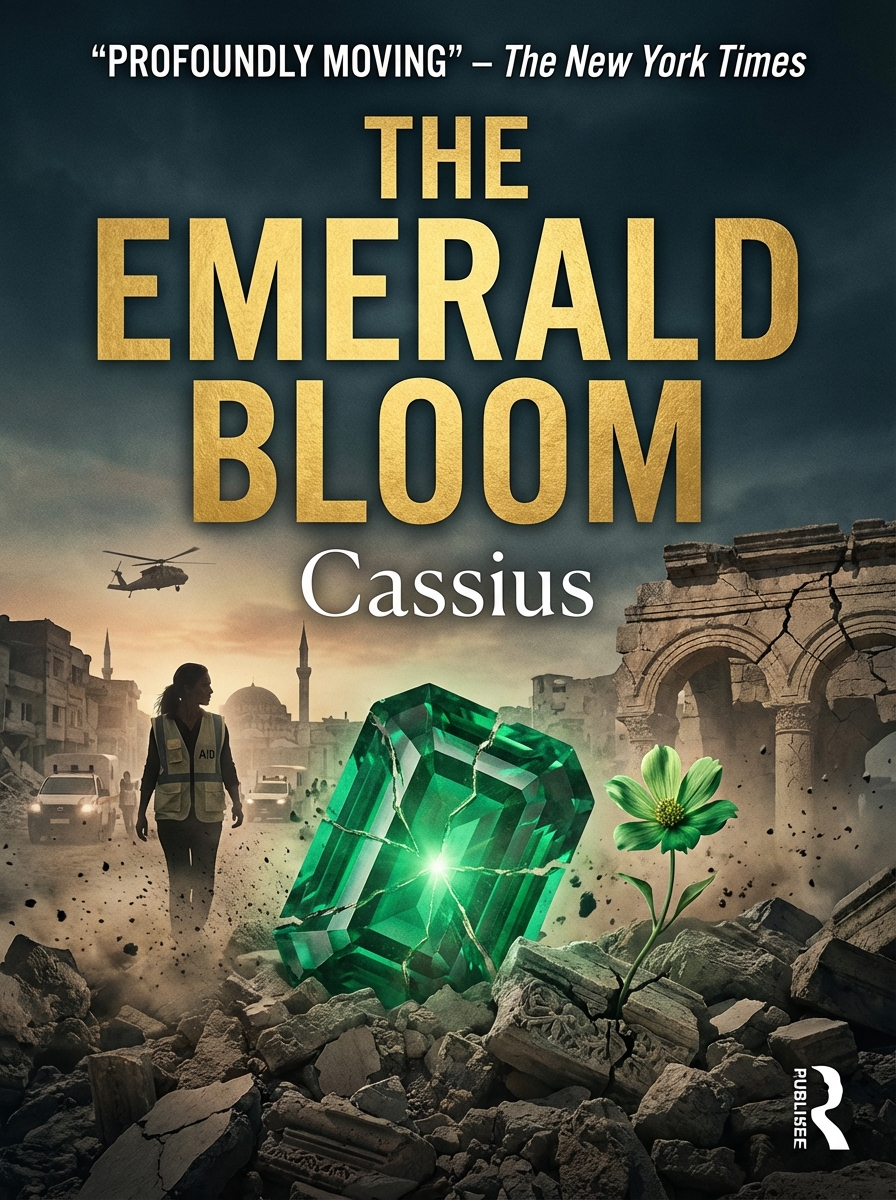
Synopsis
In the wake of a devastating earthquake in Turkey, a desperate aid worker uncovers a horrifying secret: the very relief efforts meant to save lives are being hijacked to traffic priceless antiquities. As tremors continue and hope dwindles, she must outwit a ruthless network before the ancient treasu
Chapter 1: Dust and Echoes
## Dust and Echoes
The aftershock hit like a fist to the gut. Not the rolling, sickening lurch of the first quake, but a sharp, violent jolt that sent another plume of concrete dust blooming into the bruised dawn. Dr. Anya Sharma, already braced, felt the ground buck beneath her worn boots. A fresh crack spiderwebbed across the remaining wall of what had once been a bustling market stall, spitting a shower of pulverised brick onto a canvas tarp already thick with the stuff.
She didn’t flinch. Not anymore.
Three days. Seventy-two hours since the earth had screamed its defiance, swallowing homes, lives, and the naive belief that some things were sacred. The air, thick with the stench of decay and fear, scratched at her throat. Every breath was a conscious effort, a fight against the grit that coated her lungs.
Anya adjusted the strap of her medical pack, the weight a familiar ache on her shoulder. Her eyes, bloodshot and ringed with exhaustion, scanned the devastation. Rubble. Just endless, impossible mountains of rubble where vibrant, ancient buildings had stood. The silence, punctuated by the distant wail of a siren and the low moan of someone trapped, was the most terrifying sound of all.
She’d seen worse. Syria. Yemen. Haiti. Each crisis leaving its indelible mark, a scar on her soul. But this… this felt different. The sheer scale of it. The biting cold that gnawed at the survivors huddled in makeshift tents, their faces etched with a grief too profound for tears.
“Dr. Sharma!”
The voice, hoarse and urgent, cut through the oppressive stillness. Anya turned, her gaze locking on Yusuf, a local volunteer whose youthful enthusiasm was slowly being devoured by the enormity of their task. His face, usually open and kind, was a mask of grim determination. He gestured frantically towards a newly collapsed section, a section they’d only just cleared.
“More coming down. And… and something else.”
Her pulse quickened. “Something else?” The words were out before she could process them. Hope, that cruel, deceptive flicker, ignited briefly. A survivor? A child?
She moved, a practiced economy of motion, picking her way over precariously balanced debris. The ground still trembled, a low hum beneath her feet, a constant reminder of the earth’s simmering rage. Yusuf was already there, pointing a trembling finger.
“Here. Underneath.” He kicked at a loose slab of concrete. “I heard… a clang.”
Anya knelt, ignoring the sharp pain in her knees. The air here was even heavier, dustier, a metallic tang mingling with the usual decay. She peered into the newly formed cavity, a narrow, dark space where the market stall had caved in on itself. Not a body. Not yet.
Her flashlight beam cut through the gloom. It illuminated a glint of gold.
Not the cheap, tawdry gold of a broken trinket. This was deeper, richer, reflecting the light with an ancient, subdued glow. It was a faint glimmer, half-buried beneath a cascade of splintered wood and shattered pottery.
Yusuf let out a small gasp. “What is it?”
Anya didn’t answer. She reached, her fingers brushing against something cool and heavy. She pulled gently, carefully, dislodging a small piece of carved stone. The dust clung to it, obscuring its details, but even caked, she could see the unmistakable artistry.
This wasn’t a market stall. This was…
Another tremor. Sharper. The ground bucked again, and a fresh wave of debris tumbled down, nearly burying her outstretched hand. Yusuf cried out, scrambling back. Anya, however, stayed. Her eyes, wide and suddenly alert, were fixed on the opening.
The gold was clearer now. Part of a larger object. Something impossibly old, impossibly valuable.
And then she saw it. Not just the gold. But a figure, partially revealed by the shifting rubble, half-hidden in the darkness. A man. His face, gaunt and pale, was contorted in a silent scream. His eyes, wide and staring, were fixed on the golden object, a desperate, possessive terror etched into their depths.
He wasn’t a survivor. Not in the way they understood it. He was dead. And his hand, stiff and rigor-mortised, was clamped around a small, leather-bound book.
Anya’s breath hitched. Fear, cold and sharp, snaked through her. This wasn’t just a buried treasure. This was a guarded secret.
She ignored the tremors, the dust, the lingering scent of death. Her focus narrowed, honed to a razor’s edge. She had to get that book. Had to understand what had driven this man to his final, desperate grip.
With a surge of adrenaline, fueled by an instinct she couldn’t name, she squeezed further into the opening. The space was tight, claustrophobic, the weight of the collapsed building pressing down on her. Her fingers brushed against the man’s stiff hand. Cold. Unyielding.
She pulled. The book resisted.
Another tremor. This one stronger than the last. A deep, guttural rumble that vibrated through her bones. The remaining wall of the market stall groaned, a tortured shriek of metal and concrete.
Yusuf was yelling, his voice a frantic plea. “Dr. Sharma! Get out! It’s coming down!”
But Anya couldn’t. Not yet. The book. The gold. The dead man’s terrifying secret. It all coalesced into a single, overwhelming imperative.
She pulled harder. The man’s grip finally gave, with a sickening crack. The book, small and heavy, slid into her hand. Just as she clutched it, a roar erupted above her. The world went dark.
The last thing she saw, before the dust swallowed everything, was the terrifying glint of the gold, winking back at her from the suffocating darkness. And she knew, with an icy certainty, that she had just unearthed something far more dangerous than she could ever comprehend.
Chapter 2: The Scarred Earth
## The Scarred Earth
The aftershocks were a cruel joke. Not enough to bring down the precarious structures, but enough to keep the terror fresh, a constant thrum beneath the dust-caked ground. Elara, her face a canvas of fatigue and grime, watched the convoy from the makeshift clinic. Six trucks, heavy with supplies, lumbered through the rubble-strewn streets. Standard issue. Or so they seemed.
Her gut, a reliable compass in a world of shifting sands, told her otherwise.
She’d seen the manifests. Meticulously detailed, down to the last bag of rice and bottle of iodine. But earlier, in the brief, frantic chaos of unloading a previous shipment, she’d caught a glimpse of something else. Something heavy, wrapped in tarpaulin, tucked deep within a crate marked "medical supplies." Not rice. Not iodine.
A shiver, not from the chill wind, snaked down her spine.
“Elara? You alright?” Dr. Khan, his kind eyes rimmed with exhaustion, touched her shoulder. He was a good man, too good for this hell.
She forced a smile. “Just… tired. The tremors.”
He nodded, understanding in his gaze. “We all are. The next field hospital is a day’s drive. They need those antibiotics yesterday.”
*Antibiotics.* The word tasted like ash. What if those trucks weren’t just carrying medicine? What if they were carrying secrets, hidden beneath the veneer of humanitarian aid?
Later that evening, after the last patient had been seen, after the last makeshift bandage had been applied, Elara found herself alone, the flickering kerosene lamp casting long, distorted shadows around her. She pulled out the tattered manifest, the one she’d “borrowed” from the supply tent. Her finger traced the neat columns of items, the calculated weights.
Then, she found it. A discrepancy. Small, almost imperceptible. A crate listed as 500kg of blankets. But she remembered the straining hoist, the grunts of the men. That crate had felt heavier. Much heavier.
Her mind raced, piecing together fragments. The hushed conversations she’d overheard between certain drivers. The sudden, unexplained detours taken by some convoys. The way certain sections of a damaged archaeological site, previously cordoned off by local authorities, were now mysteriously accessible to “aid workers.”
The earthquake hadn’t just shattered buildings; it had shattered the thin veneer of order, creating a vacuum where opportunists thrived.
She thought of the Emerald Bloom, the fabled ancient city, said to be buried deep beneath the very ground they now stood on. Local legends spoke of its priceless relics, its intricate mosaics, its emerald-encrusted statues. A myth, most believed. A children’s story.
But what if it wasn’t? What if the tremors had cracked open more than just homes? What if they had cracked open history itself?
The thought was a dangerous one, a spark in the dry tinder of her weary mind. It could lead her down a path she wasn’t prepared for, a path that could jeopardize her mission, her life.
She knew the risks. She’d seen what corruption did to aid efforts, how it bled resources, how it starved the desperate. But this felt different. This felt darker.
She had to know.
The next morning, a new convoy was being loaded. This time, she positioned herself strategically, near the back of the line, feigning interest in a broken-down generator. She watched the crew, a mix of local volunteers and international aid workers. Her eyes scanned for the familiar faces, the ones she’d seen with the previous, suspicious shipment.
And there he was. Rashid. A burly man with eyes that held too much calculation, too little empathy. He was supervising the loading of a large, oddly shaped crate. It wasn't on the manifest she'd seen.
Her heart hammered against her ribs.
She moved closer, pretending to check the generator’s fuel line. The air hummed with the growl of engines, the shouts of men, the constant, low murmur of shared grief. She needed a distraction.
A child, no older than five, clutching a tattered teddy bear, stumbled near the edge of the loading dock. A volunteer rushed to intercept him, but Elara was faster. She scooped him up, her voice soothing, her eyes never leaving Rashid.
“Careful there, little one,” she murmured, her back to Rashid.
As she turned to hand the child back to his mother, she caught it. A brief, almost imperceptible flash of green from the crate. Not the dull green of tarpaulin. A vibrant, unmistakable emerald hue.
Her breath hitched.
Rashid met her gaze, a flicker of something unreadable in his eyes. He smiled, a thin, humorless curve of his lips. “Everything alright, aid worker?”
“Just making sure everyone’s safe,” she replied, her voice steady despite the tremor in her hands.
He lingered for a moment too long, his gaze analytical, assessing. Then he turned, barked an order, and the crate, the one not on any manifest, was hoisted onto the truck.
As the convoy rumbled to life, kicking up a fresh cloud of dust, Elara felt a cold knot tighten in her stomach. She had seen it. A glimpse of the truth, hidden in plain sight.
But what was she going to do about it? And more importantly, who could she trust? The lines between rescuer and villain were blurring, and the scarred earth held more than just fallen buildings. It held secrets. Deadly ones.
She watched the trucks disappear into the haze, carrying their illicit cargo towards an unknown destination. The stakes had just escalated. And Elara, a lone aid worker in a land ravaged by disaster, was now caught in a deadly game, a whisper of ancient wealth echoing in the ruins.
The ground shuddered again. Not an aftershock. This was a warning.
Chapter 3: A Whisper of Gold
The generator sputtered, casting long, dancing shadows across the makeshift clinic. Dr. Anya Sharma, her face smudged with dust and weariness, tightened the bandage on a young girl’s arm. The tremor hours ago had been a nasty one, the earth groaning like a dying beast. Casualties were mounting, not just from the quake itself, but from the crumbling infrastructure, the desperate scramble for dwindling resources.
Anya’s gaze drifted to the pile of donated supplies. Standard fare: medical kits, tarpaulins, water purification tablets. Her eyes snagged on a crate in the corner, one she hadn't seen before. It was smaller than the others, stenciled with a faded red crescent, not the crisp blue of the UN. She’d made a point of knowing every shipment that came through her sector. This one was an anomaly.
Her heart gave a faint lurch. Too many anomalies lately. The missing medical supplies from the previous week, dismissed as "logistical errors." The sudden influx of a new aid organization, their volunteers strangely uncommunicative, their focus oddly specific on a remote, unstable region.
She finished with the girl, offering a weak smile. "You'll be okay, little one." The child, eyes wide and haunted, simply nodded.
Anya pushed herself up, her muscles aching. She walked towards the crate, her steps deliberate. The air in the clinic was thick with the scent of antiseptic, dust, and fear. She glanced over her shoulder. Dr. Demir, her usually jovial Turkish counterpart, was hunched over a flickering lamp, meticulously inventorying medications. He seemed oblivious. Good.
She knelt beside the crate. The wood was rough, the lid secured with rusty nails. No manifest. No sender. Just that faded red crescent. Her fingers traced the outline of the symbol, a cold premonition tightening its grip.
With a grunt, she pried at a loose corner of the lid. The wood splintered with a soft *crack*. She froze, listening. Only the distant wail of an ambulance, the rhythmic drip of water from a broken pipe. No one had heard.
She worked quickly, carefully, until a narrow gap appeared. A faint metallic gleam caught the limited light. Not instruments. Not food.
She widened the opening, peering inside. Her breath hitched.
Stacked neatly within, nestled amongst layers of cheap, synthetic insulation, were not medical supplies, but intricate, golden artifacts. Statuettes, delicate filigree, a necklace that seemed to hum with ancient power. Each piece glowed with an undeniable, terrifying beauty.
These weren't just old. These were priceless. Untouched by time, now unearthed by disaster, and being smuggled under the guise of humanitarian aid.
The implications hit her like another aftershock. The sheer audacity. The callous disregard. While people died from lack of medicine, while children starved, these… these treasures were being spirited away.
Anya’s mind raced. Who? Why? And how deep did this go? The new aid organization. The missing supplies. It wasn't just a logistical error. It was a pattern. A meticulous, horrifying pattern.
Her hand trembled as she carefully pushed the lid back down, trying to erase any sign of her intrusion. The gold still seemed to burn behind her eyelids.
She stood, feigning a stretch, and walked back to her makeshift desk. Her heart hammered a frantic rhythm against her ribs. She needed proof. She needed to expose this. But to whom? The local authorities were overwhelmed, possibly even compromised. Her own organization? She couldn't be sure who to trust.
The clinic door creaked open. A tall, gaunt man, his face etched with fatigue and suspicion, entered. It was Sergeant Kaan, head of the local gendarmerie. His eyes, dark and sharp, swept across the room, lingering for a fraction of a second on the corner where the anomalous crate rested.
Anya felt a prickle of unease. Kaan was a man of few words, fewer smiles. He was a survivor, hardened by years of patrolling these volatile borders. He was also fiercely protective of his people, his land.
"Doctor," Kaan's voice was a low rumble, "another body found. Near the old Roman ruins."
Anya swallowed. "Cause of death?"
Kaan's gaze met hers, unblinking. "Not the earthquake."
A cold dread seeped into Anya’s bones. Not the earthquake. That meant violence. And the old Roman ruins… a site known for its extensive, unexcavated history. A site close to where the new aid organization had set up its primary camp.
"Sergeant," Anya began, her voice carefully neutral, "have you noticed anything… unusual with the recent aid shipments?"
Kaan’s eyes narrowed fractionally. He didn't answer immediately. He simply held her gaze, a silent question passing between them. Then, slowly, almost imperceptibly, he shook his head.
"The chaos, Doctor," he said, his voice flat. "Everything is unusual."
He turned to leave, his boots crunching on the debris-strewn floor. But as he reached the door, he paused. He didn't look back at Anya. Instead, his eyes flickered, just for a moment, to the corner where the crate lay hidden.
Anya felt a chill that had nothing to do with the night air. Kaan knew. Or at least, he suspected. And if he suspected, he was either part of it, or he was a dangerous ally.
She watched him disappear into the encroaching darkness, leaving her alone with the silent accusation of the golden relics. The air crackled with unspoken threats. The earth might have stopped its violent shaking, but the true tremors, the human ones, were just beginning. And Anya realized, with a sickening jolt, that she was standing on the fault line. She had seen the whisper of gold. Now, she had to decide if she would scream.
Chapter 4: Beneath the Rubble
### Chapter 4: Beneath the Rubble
The air grew thicker, each breath a gritty swallow. The beam of my headlamp, a frantic white insect, danced across the cavernous space. It wasn’t a natural cave. The cuts in the stone were too precise, the angles too deliberate. This was a chamber, carved by human hands, now partially collapsed. Above me, massive timbers, splintered like matchsticks, groaned under the immense weight of the fallen earth.
“Anyone?” My voice, hoarse and thin, was swallowed by the oppressive silence. A silence that pulsed with unspoken dread.
I moved deeper, the crumbling earth a soft, treacherous carpet under my boots. The stench of damp soil and something else – something metallic, ancient – clawed at my throat. My heart hammered against my ribs, a frantic bird trapped in a cage. This wasn't a search and rescue. This was a tomb raid.
The air shimmered, the headlamp beam revealing a grotesque tableau. Shards of pottery, glinting like scattered jewels, lay embedded in the dust. A human femur, stark white against the dark earth, protruded from a pile of debris. My stomach churned. This wasn't merely a chamber; it was a burial site.
Then I saw it. Not immediately, not clearly. A faint, almost imperceptible gleam, half-buried beneath a fractured stone slab. My hand, trembling, reached out. Dust, centuries old, coated my fingertips. I brushed it away, my breath catching in my throat.
It was a mosaic. Not a simple pattern, but a vibrant, intricate depiction of a goddess, her eyes wide and knowing, her hands outstretched. The colors, impossibly bright, seemed to sing even in the gloom. Emeralds, rubies, sapphires – not inlaid, but *part* of the design, pulsing with an inner light. The Emerald Bloom. It was real.
A wave of vertigo hit me. This wasn’t just an artifact; it was a legend made manifest. And it was here, beneath tons of rubble, exposed to the elements, vulnerable.
A shadow detached itself from the deeper gloom. I spun, the beam of my headlamp stabbing into the darkness. A figure. Tall, broad-shouldered. He moved with a predatory grace, his face obscured by the flickering light.
“You shouldn’t be here,” a voice, raspy and low, resonated through the chamber. It wasn’t a question. It was a statement of fact, laced with menace.
My hand instinctively went to the small, ineffective knife I carried in my boot. A desperate, futile gesture.
The man stepped forward, into the circle of light. His face was a roadmap of scars, etched deep into sun-weathered skin. His eyes, the color of burnt umber, held a chilling intelligence. He wasn't a looter; he was too controlled, too deliberate. He was a guardian. Or a predator.
“The girl,” he said, his gaze flicking to the mosaic, then back to me. “She speaks of a network.”
My blood ran cold. He knew about Elara. Had he hurt her? Was she still alive?
“What do you want?” I tried to keep my voice steady, but a tremor betrayed me.
He smiled, a slow, unsettling baring of teeth. “What everyone wants, aid worker. What everyone has always wanted.” His eyes, dark and ancient, held a flicker of something terrifyingly familiar. Greed. But it was more than that. It was an obsession.
He gestured around the collapsed chamber. “This is the heart of it. The true prize. And you, in your foolish innocence, stumbled upon it.”
He took another step, closing the distance between us. The air hummed with unspoken threat. My heart pounded against my ribs, a frantic drumbeat of fear.
“Who are you?” I whispered, the words barely audible.
His smile widened, a chilling expanse of white. “They call me Kaan. And you, my friend, have just found yourself at the very top of my guest list.”
A low rumble vibrated through the earth. Dust rained down from the ceiling. The timbers above groaned louder, a tortured shriek. The ground beneath us shifted.
Kaan’s eyes narrowed, a flash of irritation crossing his scarred face. “The earth is impatient tonight.”
Another tremor, more violent this time. A shower of loose stones cascaded down, narrowly missing my head. My legs threatened to give way.
Kaan glanced at the struggling headlamp, then at the groaning ceiling. “Time is a luxury we don’t possess, aid worker. Now, tell me everything you know about this ‘network.’ Or perhaps, the earth will tell its secrets before you do.”
He took a step closer, his shadow engulfing me. The air grew heavy, thick with the scent of dust and fear. The ground beneath us continued to tremble, a low, guttural growl that promised destruction.
I looked from Kaan’s chilling eyes to the magnificent, vulnerable mosaic. The Emerald Bloom. A priceless piece of history, about to be consumed by the very earth that had hidden it for centuries. And I, a lone aid worker, stood between it and a ruthless, morally ambiguous man who clearly knew more than he let on.
The ground bucked violently. A crack, loud as a gunshot, echoed through the chamber. The timbers above us shrieked, then gave way.
Darkness. And the roar of a thousand tons of earth.
Chapter 5: The Smuggler's Hand
The air in the makeshift clinic was thick with the scent of antiseptic and fear. Dr. Anya Sharma moved between cots, a ghost in the flickering lamplight. Her hands, usually so steady, trembled slightly as she re-bandaged a child's fractured arm. Each tremor in the earth was a reminder of the fragility of their existence, and of the secret she carried, heavy as the dust that coated everything.
The "aid shipments" from Istanbul, initially a blessing, had become a nightmare. The manifest discrepancies, the guarded crates, the hushed conversations she'd overheard—they coalesced into a horrifying truth. Someone was using the chaos, the desperation, to plunder Turkey's history. And that 'someone' was woven into the very fabric of the relief effort.
Her eyes darted to the clinic entrance. Ahmet, the burly, perpetually sweating logistics coordinator, stood there, his shadow stretching long and distorted in the lamplight. He always seemed to be watching her. Or was she just paranoid?
"Dr. Sharma," he rumbled, his voice like rocks shifting. "A new delivery. Urgent."
Anya's stomach clenched. Urgent. Always urgent. She followed him out into the biting night air. The ground was uneven, treacherous. Headlights of a convoy cut through the gloom, illuminating a fresh pile of rubble – another building succumbed.
The trucks were larger than usual, their tarpaulins pulled tight. Men moved with an efficiency that felt out of place amidst the general disarray. No shouts, no frantic activity. Just cold, deliberate movements. She saw a familiar face among them: Kemal, the driver who’d brought her first batch of medical supplies. He caught her eye, and for a fleeting second, his usual jovial expression was replaced by something grim, almost a warning.
Ahmet led her to the rear of the lead truck. "Supplies for the field hospital," he explained, his voice flat. "They need your signature for receipt."
Anya approached, her senses on high alert. The tarpaulin was secured with industrial-strength straps. Too strong for medical supplies. She reached for the clipboard Ahmet offered, but her gaze was fixed on a loose corner of the tarp. A sliver of dark fabric, almost black, caught her attention. It wasn't the usual canvas. It had the sheen of silk, ancient and rich.
"Just sign, Doctor," Ahmet urged, his hand hovering over her shoulder. His breath smelled of stale tobacco and something acrid.
Her heart hammered against her ribs. She signed, her hand barely steady. But before she handed the clipboard back, she feigned a stumble. Her hand brushed against the loose corner of the tarp. Her fingers snagged on something hard beneath. Not a medical crate. Not a stretcher. It felt like carved stone.
Ahmet snatched the clipboard, his eyes narrowed. "Careful, Doctor. The ground is treacherous."
"Indeed," she replied, her voice a little too high. She risked another glance at Kemal. He was watching her, his expression unreadable. Then, he subtly, almost imperceptibly, nodded towards the back of the truck, towards the tarpaulin.
Anya walked away, her mind racing. Stone. Silk. It confirmed her worst fears. But how big was this operation? How many were involved? And what precious pieces were being spirited away under the guise of humanitarian aid?
Sleep was a luxury Anya couldn't afford. She spent the remaining hours of the night hunched over her battered laptop, a dim headlamp illuminating the screen. Her internet connection was erratic, a frustrating dance of signal and static. She poured over satellite images, cross-referencing aid routes with known archaeological sites. The earthquake had decimated infrastructure, but some ancient roads, built to withstand centuries, were still passable. These were the veins through which the blood of Turkey's past was being drained.
She felt a cold dread settle in her bones. The patterns were too precise, the routes too deliberate. This wasn't opportunistic looting. This was a sophisticated, well-organized network. And Ahmet, the man who seemed to materialize whenever her suspicions peaked, was undoubtedly a part of it.
The next morning, the clinic was a hive of activity. More casualties had been brought in overnight, survivors pulled from the skeletal remains of collapsed buildings. Anya worked mechanically, her thoughts a jumble of diagnoses and desperate plans. She needed proof. Irrefutable proof.
During a brief lull, she sought out Kemal. He was offloading crates of bottled water, his face streaked with dirt and exhaustion.
"Kemal," she said, her voice low. "Can we talk?"
He nodded, wiping his brow with the back of his hand. "Later, Doctor. Too many eyes." He gestured subtly towards Ahmet, who was observing them from across the makeshift camp.
Anya understood. The camp was a panopticon, every movement potentially observed.
Later that afternoon, a fresh tremor shook the camp. Dust plumes rose, and shouts of alarm echoed. Anya, treating a child with a deep laceration, felt the familiar surge of adrenaline. But this time, it was laced with something else: opportunity.
In the ensuing chaos, with everyone distracted by falling debris and the fear of further collapse, Anya saw Kemal heading towards the supply trucks. He was alone.
She moved quickly, weaving through the panicked crowd. She found him at the back of his truck, ostensibly securing a loose strap.
"What did you mean?" she whispered, her heart pounding. "Yesterday, your nod—"
Kemal cut her off, his voice barely audible above the rising wind. "The last shipment, Doctor. Not medical. Not food. Crates. Heavy. Sealed. From the site near Antioch."
Antioch. The ancient city, buried under millennia of history, now exposed by the earthquake's cruel incision. A treasure trove.
"What's in them?" Anya pressed, her voice trembling with a mix of fear and righteous anger.
Kemal glanced over his shoulder, his eyes darting. "What do you think, Doctor? What is more precious than lives, to some men?" He pulled a small, intricately carved fragment from his pocket. It was a piece of ancient pottery, depicting a goddess with flowing hair. "This fell from a crate. They didn't even notice."
Anya gasped, taking the fragment. It was exquisite, centuries old. Her fingers traced the delicate lines. This was irrefutable proof.
"Where are they taking them?" she asked, her voice barely a whisper.
Kemal shook his head. "I don't know the final destination. But the next transfer point… the old fishing village, beyond the hills. Tonight. Midnight. Under the new moon."
"Who is behind this, Kemal?"
He hesitated, his gaze hardening. "Powerful men, Doctor. Men who see opportunity in tragedy. Men who would silence anyone who gets in their way."
Another tremor, sharper this time, rattled the ground. A nearby tent collapsed with a groan of snapping poles. The earth grumbled, a low, guttural growl.
"You have to be careful, Doctor," Kemal warned, his voice urgent. "They are everywhere." He looked past her, his eyes widening. "He's coming."
Anya spun around. Ahmet was striding towards them, his face a mask of suspicion.
"Dr. Sharma, Kemal," he said, his voice flat, devoid of its usual bluster. "What are you discussing so intently?" His eyes flickered to Anya's hand, where she still clutched the fragment.
Anya quickly shoved it into her pocket, her heart leaping into her throat. "Just discussing the logistics of the next supply run," she lied, her voice surprisingly steady. "Kemal was just confirming the route."
Ahmet's gaze lingered on her, cold and calculating. "Is that so?" He didn't believe her. She knew it.
The ground shuddered again, a more violent jolt. This time, the clinic lights flickered, then died, plunging them into near-darkness. A collective gasp rose from the camp.
In the sudden gloom, Ahmet’s voice cut through the air, chillingly calm. "Some things, Doctor, are best left undisturbed."
Anya felt a surge of adrenaline, cold and sharp. He knew. Or he suspected. The night was falling, and with it, a new kind of darkness. She had a piece of ancient history in her pocket, a whispered rendezvous, and the chilling certainty that she was now a target. The earth still trembled, but the real danger was no longer beneath their feet. It walked among them, silent and deadly.
She had to get to that fishing village. Tonight. Before the next shipment, before the tremors died down and the corruption solidified its hold. But how? And who could she trust, in a world where even aid workers wore the masks of thieves? The night held its breath, waiting for her next move.
Chapter 6: False Fronts
## False Fronts
The air in the makeshift clinic was thick. Not with dust, for once, but with the cloying sweetness of antiseptic and the low murmur of pain. Elara moved through it like a ghost, her hands a blur of efficiency. A fractured arm here, a lacerated leg there. Each bandage, each injection, a temporary bulwark against the rising tide of despair.
But her mind was elsewhere. It was with the glint of gold in a darkened tent, the rough silk of a priceless fabric, the chilling certainty of what she’d witnessed. She was a healer. Now, she was also a hunter.
Dr. Aris Demarcus, the WHO liaison, was a man carved from granite. His eyes, though weary, held an unsettling intensity. He'd watched her for days, a silent, assessing presence. Elara felt his gaze now, a prickle on the back of her neck as she stitched a young boy’s gash.
“You’re remarkably… resilient, Dr. Vance,” he said, his voice a low rumble.
Elara didn’t look up. “It’s the job.”
“Indeed. Most crumble. You seem to thrive amidst the chaos.”
A dangerous word, *thrive*. She finished the last stitch, her fingers precise. “Survival is a powerful motivator, Dr. Demarcus.”
He chuckled, a dry, humorless sound. “For some, perhaps. For others, chaos is merely an opportunity.”
The words hung in the air, a subtle challenge. Elara finally met his gaze. His eyes were like chipped obsidian, reflecting nothing but a cold, calculating intelligence. Was he testing her? Or warning her?
She straightened, wiping her hands on a sterile cloth. “Opportunity for what, exactly?”
“For anything, Dr. Vance. When the rules collapse, new ones are forged. And those with the foresight to recognize it… they prosper.”
A shiver traced its way down her spine. Demarcus was a man of power, of influence. His presence here, far from the polished halls of Geneva, felt incongruous. He was too calm, too controlled for the surrounding bedlam.
“And you, Dr. Demarcus?” she asked, her voice deliberately neutral. “Do you see opportunity here?”
He smiled then, a slow, predatory curve of his lips that didn’t quite reach his eyes. “My opportunity, Dr. Vance, is to ensure that the aid reaches those who truly need it. A thankless, often infuriating task.”
A lie. Or a partial truth, laced with something more sinister. Elara knew a false front when she saw one. She’d worn enough herself.
Later that night, the city groaned under another tremor. The lights flickered, casting grotesque shadows across the clinic walls. Elara was in her tent, trying to make sense of the fragmented information she’d gathered. The black market seemed to have its own supply chain, impervious to the general collapse. How? And more importantly, *who* was pulling the strings?
She’d seen the relief trucks, overflowing with supplies. Food, water, medical kits. But she’d also seen the veiled figures, the hushed transactions, the swift, almost invisible transfer of goods from one vehicle to another. Not food. Not water. Something else entirely.
A soft tap on her tent flap sent a jolt through her. She froze, her hand instinctively reaching for the small, heavy rock she kept by her cot.
“Dr. Vance? Are you awake?” It was the voice of Ahmet, one of the local volunteers. His sincerity was a beacon in the pervasive murk.
Elara relaxed, a fraction. “Come in, Ahmet.”
He entered, his face etched with worry. “There’s… trouble. At the distribution point.”
“What kind of trouble?”
“They’re saying… the shipments. They’re lighter. Fewer tents. Fewer blankets. But the manifests… they’re marked as full.”
Elara’s breath hitched. This was it. The proof.
“Who is ‘they’?” she asked, her voice low.
“The other volunteers. The locals. They’ve been complaining for days. But no one listens.” His eyes, usually so bright with youthful optimism, were clouded with fear. “They say… it’s the ones with the power. The ones who decide who gets what.”
“Did you see anything, Ahmet?” she pressed, her heart hammering. “Anything specific?”
He hesitated, glancing nervously towards the tent flap. “There was a man. Not from here. He was always with the main shipments. Tall. Dark. Wore a ring… a very unusual ring. And he spoke with the drivers. Quietly.”
An unusual ring. The image flashed in Elara’s mind: the subtle gleam of a signet ring on a gloved hand, glimpsed in the flickering torchlight of the archaeological dig. The hand that had motioned for the heavy crates to be moved. The hand of the man who had overseen the clandestine loading.
“Can you describe him?” she asked, her voice barely a whisper.
Ahmet nodded, his brow furrowed in concentration. “He wasn’t… Turkish. His accent was different. And his eyes… like yours, but colder. And he had a scar, here.” He traced a thin line along his own jaw.
Elara’s blood ran cold. The man in the tent. The man with the emerald. The man who had almost caught her.
“Ahmet,” she said, her voice tight with urgency. “You need to be careful. Very careful. Don’t talk about this to anyone else. Not yet.”
He looked at her, his fear giving way to a flicker of understanding. “You know something, don’t you, Doctor?”
She nodded, her gaze unwavering. “I think so. And I think we’re both in deep trouble.”
A sudden, sharp blast of a whistle pierced the night. Two short, then one long. The signal for a security alert.
Ahmet’s eyes widened. “They’re coming.”
“Who?” Elara demanded, her hand now firmly on the rock.
“The ones who guard the shipments. The ones with the guns.”
The tent flap ripped open. A hulking figure loomed in the entrance, silhouetted against the dim light. A rifle was slung across his back. His face was a mask of grim determination.
“Dr. Vance,” he said, his voice flat. “Dr. Demarcus requests your presence. Immediately.”
Elara looked at Ahmet, then back at the guard. The whistle echoed again, closer this time.
She had walked into a trap. Or perhaps, she had just been invited to play her hand.
“Tell Dr. Demarcus,” she said, her voice steady, “that I’ll be there.”
She glanced at Ahmet, a silent instruction in her eyes. He understood. He had to.
As she stepped out into the chaotic night, the ground beneath her feet began to tremble once more. A stronger tremor this time, rattling her bones. The earth was a living, breathing thing, and it was angry.
Or perhaps, it was simply providing cover.
Chapter 7: The Final Aftershock
The air still tasted of pulverized concrete and despair. A fine grit coated everything, a constant reminder of the world that had shattered. Elara’s throat burned with it, an internal fire mirroring the embers of her dwindling hope. She clutched the satellite phone, its cold plastic a stark contrast to the sweat slicking her palms. One bar. Just one.
“Agent Volkov, do you copy?” Her voice was raw, thin against the incessant hum of generators and the distant wail of another ambulance.
Static crackled, a mocking laugh from the ether. Then, a voice, distorted but undeniably Volkov’s. “Elara? Barely. What’s…your…sitrep?”
“He knows,” she hissed, every word a struggle to push past the knot of fear in her chest. “Al-Hazim knows I’m onto him. He moved the last shipment. The Emerald Bloom… it’s gone.”
A beat of silence, heavy and pregnant with unspoken implications. “Gone where?” Volkov’s voice had sharpened, cutting through the static.
“That’s the problem. He’s deliberately obscured the trail. But one of his men… Karim. He talked.”
“Karim? The one you mentioned was… unreliable?” Volkov’s skepticism was a tangible thing, even through the broken connection.
“Unreliable, yes. But desperate. He gave me a location. A staging post. North of Antakya, near the Syrian border. A village called… Kılıç. He said it’s the final leg. The handoff point.”
Another tremor shook the ground, a familiar lurch that sent a fresh wave of panic through the camp. Tents swayed, dust plumed anew, and a collective gasp rose from the survivors. Elara stumbled, bracing herself against a damaged wall, her focus never leaving the phone.
“Kılıç?” Volkov repeated, his voice now laced with urgency. “That’s… close to the demilitarized zone. Extremely dangerous territory. Are you sure, Elara? This could be a trap.”
“I’m sure he’s desperate enough to talk, Volkov. He’s afraid Al-Hazim will make him a scapegoat. And I think Al-Hazim is even more desperate now. The authorities are closing in. He’s accelerating the timeline.”
“Accelerating… How much time do we have?”
Elara looked at her watch, the luminous hands a cruel reminder of the ticking clock. “Less than 24 hours. Maybe even less than twelve. Karim said the meet is at dawn.”
A low growl emanated from the phone, a sound of frustration and calculation. “We have limited resources on the ground, Elara. Especially in that region. It’s too hot.”
“Then you need to find them. You need to send someone. I can’t go in alone.” The words were out before she could second-guess them, a raw plea for backup she rarely allowed herself.
“You’re already there, aren’t you?” Volkov’s tone was grim. “You’re in Antakya. Kılıç is a direct route.”
A cold dread seeped into Elara’s bones. He wasn’t sending help. He was telling her to go.
“Volkov, that’s suicide,” she whispered, the tremor in her voice a testament to her fear. “Al-Hazim has a private army. I’m an aid worker.”
“You’re our only asset on the ground, Elara. And you’re closer than anyone. We’ll try to coordinate something from our side, but… don’t wait for us. If you can get Eyes On, that’s all we need. Confirm the location. Confirm the players. We’ll take it from there.”
The connection crackled violently, then died. Elara stared at the dead phone, the silence ringing in her ears, louder than any generator. She was alone. Truly alone.
The aftershock subsided, leaving a fresh layer of dust and a renewed sense of fragility. People slowly began to emerge from under tables and doorways, their faces etched with a familiar blend of fear and resignation. But Elara saw only one path forward. Kılıç.
She knew the risks. She’d seen what happened to those who crossed Al-Hazim. But the thought of the Emerald Bloom, that priceless artifact, disappearing into the black market, stolen from a shattered nation, was unbearable. It was more than just a relic; it was a piece of their identity, a whisper of their ancient glory.
Her gaze fell on her aid worker vest, the bright logo mocking her sudden shift in purpose. Humanitarian. That’s what she was. But what about the humanity of a culture, stripped bare and sold for profit?
She made her way to her battered Land Rover, the engine a symphony of groans and complaints. It was her only ticket out, her only chance. She packed a small bag: water, some dried fruit, a map, a first-aid kit, and the one thing she always carried, a small, worn compass. Her father’s. He’d taught her that sometimes, the only way to find your way through chaos was to rely on the oldest tools.
As she drove through the ravaged streets of Antakya, the moonlight casting long, skeletal shadows over the ruins, she felt a profound sense of isolation. The city was a ghost, a testament to nature’s indifference and man’s depravity. But amidst the destruction, a new resolve hardened within her. She was no longer just an aid worker. She was a guardian. A hunter.
The road to Kılıç was a treacherous ribbon of cracked asphalt and loose gravel, winding through hills that seemed to swallow the moonlight whole. The air grew colder, thinner, carrying the scent of pine and something else – something wild and untamed. She passed abandoned checkpoints, their sandbags scattered like forgotten toys, their flags tattered remnants of a forgotten authority.
Every shadow seemed to hold a threat, every distant light a potential ambush. Her heart pounded a frantic rhythm against her ribs, a drumbeat of fear and adrenaline. She kept her foot pressed to the accelerator, the Land Rover groaning in protest, its headlights cutting a narrow swathe through the oppressive darkness.
Then, the village. A cluster of dark shapes huddled together, barely discernible against the looming mountains. No lights. No sounds. Just a profound, unsettling silence.
She cut the engine, letting the momentum carry her for another hundred meters before coasting to a stop behind a cluster of ancient olive trees. The silence descended again, heavier this time, amplified by the sudden cessation of the engine’s roar.
She peered through the binoculars, her breath misting in the cold night air. The village was a collection of crumbling stone houses, many of them scarred by the quake, others seemingly untouched by time. A narrow dirt track, barely a road, snaked through the center, disappearing into the darkness beyond.
And then she saw it. A flicker of light. From the largest building, a squat, windowless structure at the edge of the village. Not electricity. A generator. And a muffled hum, like machinery.
This was it. The staging post.
Her hand went to the small, rusted door handle of the Land Rover. But before she could open it, a new sound pierced the silence. The rhythmic thud of a helicopter. Distant at first, then growing steadily louder, a metallic beast approaching from the north.
Al-Hazim. Or his buyers.
The final aftershock was upon her. And she was utterly alone.