Southern Africa by Night Train
By Mikael Löwgren
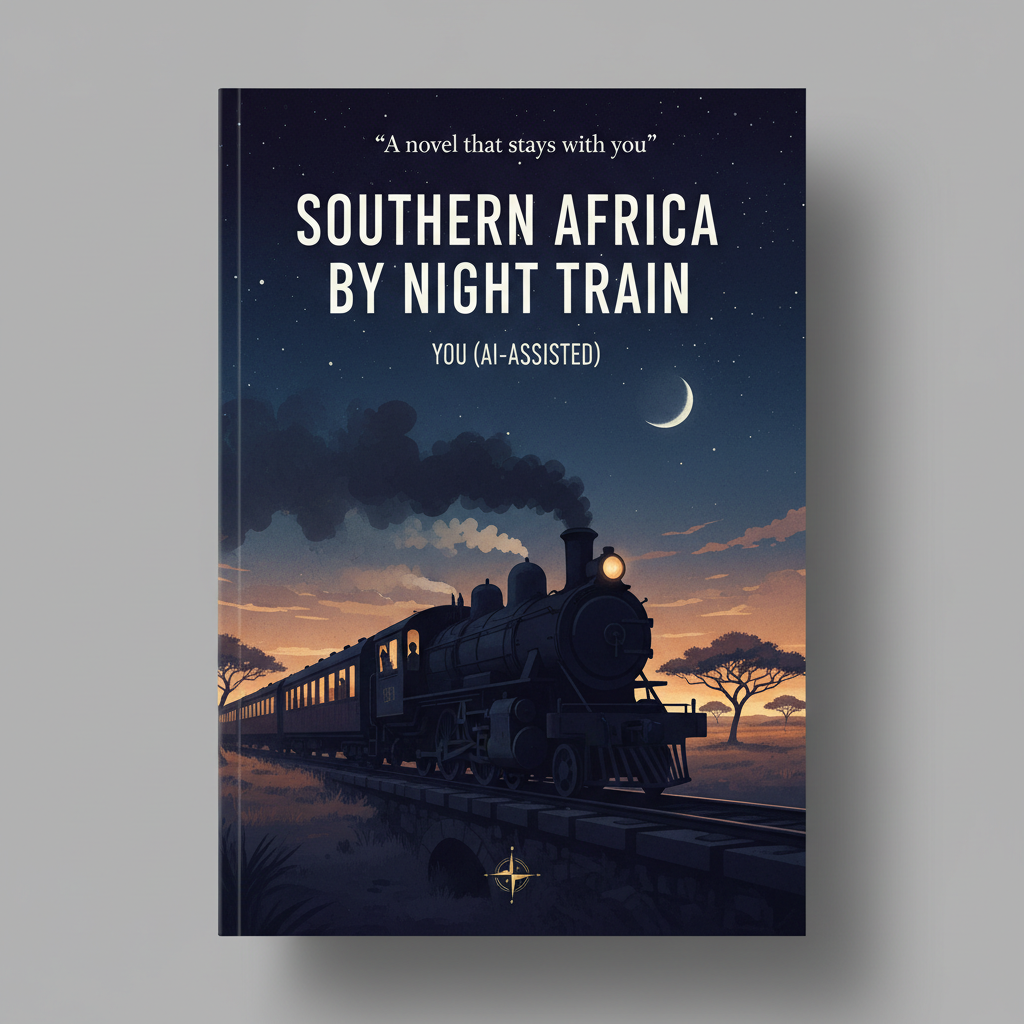
Synopsis
Embark on an atmospheric journey across Southern Africa aboard its historic night trains, where the continent reveals itself through the rhythmic lull of the rails, fleeting glimpses of dawn landscapes, and the intimate encounters of shared compartments.
Chapter 1: The Allure of the Iron Snake
The anachronistic rumble began, as it always did, in the deep-seated chambers of my imagination. Even as a child, while other kids dreamt of rocket ships and speedboats, my fantasies were tethered to the iron rails, the rhythmic *thump-thump-thump* of wheels on track, the fleeting glimpse of a world seen through a carriage window. It wasn't the destination that captivated me, but the journey itself, a meandering ribbon of discovery unspooling between departure and arrival. Night trains, in particular, held an almost mystical allure. There was something profoundly romantic about surrendering to the darkness, the world outside a blur of unseen landscapes and distant lights, while within, a miniature world of shared experiences unfolded, propelled forward by an unseen force.
This fascination wasn't some fleeting childhood fancy; it matured with me, morphing into a quiet obsession. I’d chased the ghost of the Orient Express across Europe, felt the bone-shaking rhythm of an overnight sleeper through the Peruvian Andes, and even endured the stoic silence of Japan's overnight expresses. Each journey reinforced a simple truth: the world revealed itself most authentically not in the hurried rush of an airplane or the isolated bubble of a car, but through the deliberate, unhurried cadence of a train. It was travel at human speed, allowing the landscape to breathe, to etch itself onto one’s consciousness rather than simply flashing past.
The notion of Southern Africa by night train had been a slow-growing seed, planted years ago during a particularly bleak winter in London. I’d been idly flipping through a dusty old geography book, the kind with thick, textured paper and halftone photographs that rendered distant lands almost mythical. A double-page spread, yellowed at the edges, depicted the mighty Victoria Falls, then a sepia-toned image of a steam locomotive, puffing defiantly across a vast, empty plain. The caption simply read: "Cape to Cairo Railway." The dream, though never fully realized, had sparked an ember. The sheer audacity of such an undertaking, traversing an entire continent by rail, resonated deeply.
Life, as it tends to do, intervenes. Responsibilities, commitments, the relentless pull of the familiar. But the ember never truly died. It glowed faintly, a persistent reminder of a road not yet taken, a whisper of adventure in the quiet hours. Then, in a year that felt particularly stale, a year of endless spreadsheets and predictable routines, the whisper grew into a shout. I found myself staring at a global map, my finger tracing arbitrary lines across the African continent. The old "Cape to Cairo" ambition felt too grand, too unwieldy, a romantic ideal from a bygone era. But a smaller, more focused journey? That felt achievable, tangible.
Southern Africa. The name itself evoked images of sprawling savannahs, ancient mountains, and a vibrant, often turbulent history. It wasn't a region I knew well, my previous travels having largely focused on Europe and parts of Asia. And that, in itself, was part of the appeal. To plunge into the unknown, stripped of preconceptions, receptive to whatever the continent chose to reveal.
The more I researched, the more the idea solidified. While the glorious age of the grand intercontinental railway journey might have faded, a surprising network of night trains still crisscrossed pockets of Southern Africa. There were the legendary, luxurious trains like Rovos Rail and The Blue Train, certainly, but also the more humble, utilitarian services, the ones that carried locals, goods, and the occasional intrepid traveler. These were the lines that truly called to me – the unpolished gems, the veins of a living, breathing continent. This wouldn't be a luxury tour; it would be an immersion.
The initial planning felt like assembling a complex jigsaw puzzle with missing pieces. Maps became my nightly companions, spread across my living room floor, annotated with scribbled notes, potential routes highlighted in vibrant markers. The internet, a blessing and a curse, offered a dizzying array of information, some up-to-date, much of it tantalizingly vague. Language barriers loomed, logistical hurdles multiplied, and the sheer scale of the distances involved was daunting.
Flights *into* the region were easy enough to book. It was the weaving *through* it that presented the challenge. My intention was to traverse South Africa, then push north into Namibia, Botswana, and Zambia, with a potential foray into Zimbabwe, all predominantly by rail. This meant meticulously cross-referencing train schedules – notoriously fluid in some parts of the continent – with border crossing regulations, visa requirements, and the ever-present question of safety. Each confirmed leg, each booked ticket, felt like a small victory.
My flat slowly transformed into an expedition planning center. Guidebooks, some dog-eared and well-loved from previous trips, others crisp and new, piled high on every available surface. A well-worn backpack, resurrected from a dusty corner, became the receptacle for an evolving array of essentials. A sturdy pair of hiking boots, a hat with a wide brim, several lightweight, quick-drying outfits – the practicalities of prolonged travel in a diverse climate. But then there were the less tangible, yet equally vital, items: a robust journal to capture fleeting thoughts, a good pair of binoculars for wildlife spotting, and a well-loved copy of *Cry, the Beloved Country*, its pages whispering of the land I was soon to encounter.
Friends, when I eventually divulged my grand plan, reacted with a mixture of awe, concern, and outright disbelief. "By train?" my sister asked, her brow furrowed with familiar anxiety. "Isn't it… dangerous?" I explained, for the tenth time, that yes, there were risks, as there were with any travel, but that with careful planning and an open mind, it could be an extraordinary experience. My parents, bless their hearts, simply worried about my diet. "Will you get enough vegetables?" my mother fretted, a familiar lament.
But it was Daniel, my eccentric, globe-trotting uncle, who truly understood. "Ah, the iron snake," he’d rumbled, eyes twinkling over a mug of lukewarm tea. "There's nothing quite like it. The world outside, a silent film. The world inside, a symphony of humanity. You'll see things, my dear, you'll feel things, that no other mode of travel can offer." His words, imbued with the wisdom of countless journeys, perfectly articulated the unspoken longing that had driven me to this point.
As the departure date loomed closer, a familiar cocktail of excitement and trepidation began to churn in my stomach. The meticulous planning, the hours poring over maps and schedules, had instilled a sense of control. But now, with the final tickets printed and the backpack packed, I was confronted with the vast unknown. What would these trains be like? What faces would I encounter? What stories would the Southern African landscape tell through the grimy panes of a carriage window?
The final goodbyes were a blur of promises and well-wishes. London, typically grey and bustling, seemed to shrink and fade as I made my way to the airport. The roar of the jet engines as I ascended felt almost like a betrayal of my chosen mode of transport, a necessary evil to bridge the vast oceanic gap. But even high above the clouds, my mind was already on the ground, on the distant glint of steel rails, on the rhythmic pulse that would soon become the soundtrack to my adventure.
My first destination: Cape Town. The starting point for many of the continent’s most iconic railway journeys. I imagined the vibrant port city, nestled beneath the majestic Table Mountain, a crucible of cultures, a gateway to the wild, open spaces beyond. From there, the plan was to weave my way inland, northward, following the unseen paths of history and industry, powered by the very same momentum that had once propelled intrepid explorers and burgeoning empires.
The plane began its descent, the blue expanse of the Atlantic giving way to a patchwork of green and ochre. I pressed my forehead against the cool window, my heart quickening. The air already felt different, charged with the promise of exotic scents and unfamiliar sounds. Below, the earth began to reveal its secrets, hinting at the vastness I was about to embark upon. I felt a surge of anticipation, a tingling sensation in my fingertips. The first whistle blow, the first jolt of the carriages – it wouldn't be long now. The iron snake awaited.
Chapter 2: Departure from Cape Town: The Shongololo Express
The morning light in Cape Town had a quality I’d come to recognise as a kind of gilded farewell. It painted the slopes of Table Mountain in shades of warm ochre and threw long, impossibly sharp shadows across the city as our taxi weaved through awakening streets. The air, crisp and carrying the faint, salty tang of the Atlantic, felt charged with an electricity that wasn't just anticipation; it was the thrum of a grand departure. Today, the concrete and glass of the city would give way to the polished brass and rich wood of the Shongololo Express, a name that rolled off the tongue like the ancient centipede it embodied, a creature designed to traverse great distances with rhythmic grace.
Our destination was Cape Town’s central station, a magnificent old edifice that still hummed with the ghosts of a thousand journeys past. Unlike the impersonal, often sterile hubs of modern air travel, this station felt like a living, breathing anachronism. High arched windows streamed light onto a checkered marble floor, and the air was thick with the mingled scents of coffee, polished wood, and something indefinable – the scent of departure, perhaps, or simply the accumulated aroma of a century of travellers.
There, nestled amongst the industrial grandeur of the platforms, sat the Shongololo Express. It wasn’t a sleek, futuristic bullet; it was a testament to an earlier era of travel, a rolling masterpiece of craftsmanship. Its forest-green carriages, emblazoned with a gold Shongololo logo, gleamed under the morning sun. Each window, framed by heavy curtains, promised intimate glimpses of a world yet to unfold. The anticipation tightened in my chest, a thrilling knot of excitement. This wasn't merely a mode of transport; it was a promise, a portal to the heart of the continent.
As we stepped onto the platform, a liveried attendant, impeccably dressed and radiating a quiet efficiency, greeted us with a warm smile and a hand outstretched for our luggage. His uniform, a subtle blend of colonial elegance and African motif, set the tone immediately. This was not merely a journey; it was an experience curated with meticulous attention to detail.
My first steps into the carriage were accompanied by a hushed reverence. The world outside, with its clamouring city sounds, receded, replaced by a quiet symphony of polished wood, brass fittings, and the subtle plushness of deep-pile carpets. The air, cool and faintly scented with old leather and something akin to cedar, was utterly delightful. This was the antithesis of the sterile, air-conditioned boxes of modern travel. Here, history breathed.
Our compartment, small but exquisitely appointed, felt like a private sanctuary. A narrow, perfectly made bed with crisp white linens stretched along one wall, a plush armchair nestled beside a large window, and a small, built-in writing desk hinted at the hours of contemplation and observation that lay ahead. The en-suite bathroom, a marvel of compact design, gleamed with chrome and porcelain. I ran a hand along the polished mahogany, feeling the cool, smooth grain beneath my fingertips. This was home for the next few days, a moving cocoon in which the world would unfold around us.
Stepping out into the corridor, I found it buzzing with a gentle hum of excited conversation. Fellow passengers, a diverse tapestry of backgrounds and nationalities, were slowly assembling, their faces alight with the same quiet wonder I felt. There was a couple from Scandinavia, their silver hair impeccably coiffed, their matching safari vests hinting at adventurous spirits. A boisterous group of Australians, already laughing and swapping stories, their accents ringing out good-naturedly. And a quiet, well-travelled woman from Japan, her camera already clutched in her hand, her eyes taking in every detail with an artist’s precision.
In the dining car, the tables were already set with gleaming silverware and crisp white tablecloths. A few early risers were sipping coffee, their voices a low murmur against the soft clinking of cups. The panoramic windows promised an unfolding spectacle, even before we’d moved an inch. This wasn’t just a dining car; it was a mobile theatre, its stage the vast, ever-changing landscape of Southern Africa.
The train’s departure wasn’t a jolt, but a gentle, almost imperceptible slide. A faint shudder ran through the carriage, a low rumble beneath our feet, and then we were moving. Slowly at first, the platform receding, faces waving from the station. The city, still veiled in that morning glow, began to drift past our windows. The jumble of industrial outskirts blurred, then sharpened into rows of brightly painted houses, children waving vigorously as we passed.
By mid-morning, Cape Town had begun to shed its urban skin. The vineyards of the Western Cape, impossibly green against the drier scrubland, began to stretch out in every direction. The sun, climbing higher, illuminated the undulating hills, painting them in hues of emerald and gold. My camera clicked, trying to capture the fleeting beauty, but it felt inadequate. Some sights, I realised, were meant to be absorbed, not just documented.
Lunch in the dining car was an elegant affair. Silver cloches were lifted to reveal beautifully prepared dishes, each a miniature work of art. The gentle sway of the train added a subtle rhythm to our meal, a soothing motion that enhanced the flavours of the fresh, local ingredients. Conversations flowed easily between tables, strangers united by the shared experience, the growing sense of camaraderie warming the air. We were all, in our own ways, pilgrims on a grand adventure.
After lunch, I retreated to the lounge car, a sumptuous space with deep leather armchairs and polished wooden tables. There, amidst the low hum of conversation and the clinking of glasses, I found myself drawn to the large observation windows. The landscapes shifted dramatically with each passing mile. Rolling green hills gave way to craggy, red-earth formations, then to wide, open plains stretching to the horizon. Small, dusty towns flashed by, their corrugated iron roofs shimmering in the heat.
The rhythm of the train became a kind of meditation. The steady *clack-clack* of the wheels on the rails, the gentle sway, the ever-changing panorama outside – it all lulled me into a state of contented detachment. The worries of the world, the demands of the everyday, began to recede, replaced by a simple, profound awareness of the present moment. This, I thought, was the true luxury of slow travel: the gift of time, and the space to truly *see*.
As afternoon bled into late afternoon, the sun began its gradual descent, painting the sky with increasingly vivid strokes of orange, pink, and deep purple. The Western Cape, which had welcomed us with its bright morning embrace, was now beginning to bid us farewell with a dramatic light show. The mountains, once a distant backdrop, now loomed closer, their rugged silhouettes sharply defined against the fiery sky.
I found myself back in our compartment, watching the world outside diminish into shades of twilight. The passing landscapes became more ethereal, their details softened by the fading light. A lone tree silhouetted against a bruised purple sky, a cluster of huts clinging to a hillside, the distant glimmer of a river snaking through the plains – each glimpse was a fleeting masterpiece.
The train, however, did not diminish with the light. As darkness deepened, the carriages became beacons of warmth and light. Lamps inside cast a soft, inviting glow, reflecting off the polished wood and brass. Voices carried more softly down the corridors, a comfortable murmur. The clinking of glasses from the dining car, the subdued laughter from the lounge, all contributed to the intimate atmosphere.
Dinner was served as the last vestiges of daylight surrendered to the vast African night. Outside, the world was a black canvas, punctuated only by the occasional distant light of a farmstead, or the sudden, piercing gleam of a star-filled sky. Inside, the meal was a celebration, the conversations growing richer, the bonds forged over shared experiences deepening.
Later, I stood by the window in the observation car, a single malt whisky warming my hands. The train forged ahead, a ribbon of light cutting through the impenetrable darkness. Above, the Milky Way spilled across the heavens like scattered diamonds, a breathtaking spectacle amplified by the isolation from city lights. I felt incredibly small, yet profoundly connected to something vast and ancient.
The night sounds of Africa began to assert themselves, a subtle counterpoint to the train’s steady rhythm. The distant cry of an unseen creature, the whisper of wind against the carriages, the occasional chirp of a nocturnal insect – they all conspired to create an immersive auditory landscape.
As I made my way back to our compartment, the soft glow of the corridor lamps guided my steps. The rhythmic sway of the train, now a familiar and comforting embrace, felt like a lullaby. Climbing into the narrow bed, I pulled the crisp white sheets up to my chin. The window, now a mirror reflecting the warm interior, occasionally offered a fleeting glimpse of a star or the fleeting shadow of a passing tree.
The first night on the rails. Cape Town was already a fading memory, swallowed by the miles. The Shongololo Express, my magnificent iron snake, was carrying me deeper into the heart of the continent, each gentle sway a promise of new dawns, new landscapes, and untold stories yet to unfold. Sleep came easily, a deep, restful surrender to the rhythmic pulse of the journey, wondering what wonders the first light would reveal as Southern Africa continued to unveil its secrets beneath the wheels of the night train.
Chapter 3: Between Deserts and Diamonds: Karoo Nights
The rhythmic sway of the train became a lullaby, a counterpoint to the distant hum of the carriage wheels on the track. When I stirred from a shallow sleep, the world outside my window was still painted in shades of charcoal and bruised plum. Gradually, a faint luminescence bled onto the horizon, a whisper of approaching dawn. It wasn't the fiery, theatrical sunrise I’d experienced over the Atlantic, but something more subtle, more ancient. It was the Karoo beginning to reveal itself.
The landscape unfurled slowly, a canvas of muted ochres and dun, stretching to unimaginable distances under an impossibly vast sky. This wasn’t a land of lush vibrancy but of stark, unyielding beauty. Thorn trees, gnarled and defiant, stood sentinel against the encroaching light, their silhouettes like tortured calligraphy against the emerging pale blue. Every ridge, every fold in the earth, seemed etched by eons of wind and sun, a testament to time itself. I pressed my face to the cool glass, breath misting faintly, trying to absorb every detail of this majestic desolation. There was a profound silence to it, even through the muffled sounds of the train – a silence that spoke of survival, of a deep-rooted resilience.
A tap on my compartment door pulled me back from my reverie. “Morning, madam. Coffee?” It was Thabo, one of the train’s attendants, his smile a warm beacon in the dim corridor. His uniform, despite the early hour, was immaculate, pressed creases a testament to his dedication.
“Perfect, Thabo. Thank you.” I took the steaming mug, the aroma of dark roast a welcome invitation. “Is this the Karoo we’re seeing?”
He nodded, a spark in his eyes. “Yes, madam. The heart of it. Some say it’s empty, but it is full of stories. Full of diamonds, too, they say.” He lingered for a moment, his gaze drifting towards the window, a faint wistfulness in his expression. “My grandfather worked the mines, just past Kimberley. Hard life, but it fed many families.”
His words resonated, adding another layer to the landscape. It wasn't just geological grandeur; it was a human story, etched into the very rocks. Later, as the sun climbed higher, casting the Karoo in a golden, almost brittle light, I found myself in the dining car, sharing breakfast with an elderly couple, Mr. and Mrs. Peterson. They were on their way to visit family in Johannesburg, a journey they undertook several times a year.
“This line, you know,” Mrs. Peterson began, her voice soft but clear, “it was built for diamonds, originally. And then gold. They laid these tracks across nothing for the promise of riches.” She gestured vaguely towards the window, where low-slung hills shimmered in the heat. “My great-grandmother came out from England to Kimberley, a young woman following her fiancé who was digging for stones. Imagine it, then. Dust, heat, and the wild hope of a fortune.”
Mr. Peterson, a man of few words but a kind smile, added, “And many, many men died for it. Not just in the mines, but building these very tracks. Malaria, snakebite, the sheer exhaustion. It was a brutal land to tame.”
Their conversation painted vivid pictures in my mind – of makeshift bustling camps springing up overnight, of men with sun-scorched faces and calloused hands sifting through earth, of the feverish glint of a newly unearthed diamond. The train, which had begun as a symbol of luxury and adventure, now felt like a living museum, its passage through the Karoo a continuation of a century-old narrative.
The day settled into a rhythm dictated by the train. Hours were spent watching the endless panorama. Sometimes, a solitary farmhouse would appear, a stark white sentinel against the ochre expanse, surrounded by nothing but the whisper of the wind. Other times, a cluster of sheep, mere specks against the vastness, would graze near a dusty waterhole. It was a landscape that invited contemplation, forcing one to slow down, to truly see.
In the late afternoon, I found myself in the observation car, the large panorama windows offering an uninterrupted view. The setting sun began its descent, bleeding hues of orange, then crimson, across the horizon. The Karoo transformed, shedding its daytime starkness for a softer, almost ethereal beauty. The distant mountains turned purple, their peaks silhouetted sharply against the fiery sky. Shadows lengthened, distorting shapes, creating an illusion of movement across the vast plains. It was a painter’s palette, constantly shifting, mesmerising in its silent grandeur.
A young woman, perhaps in her late twenties, sat across from me, a well-worn paperback open on her lap, though her gaze, like mine, was fixed on the kaleidoscope of the sunset. She had an intensity about her, a quiet confidence. Her name was Anya, and she was a geologist, heading to a research station in the Northern Cape.
“It’s beautiful, isn’t it?” she said, her voice soft, barely breaking the reverential hush of the car. “Most people think the desert is barren, but it’s alive. Every rock here tells a story of millions of years.”
“Thabo, one of the attendants, mentioned something about diamonds in this area,” I offered.
Anya smiled. “Oh, absolutely. The Karoo is geologically fascinating. It’s not just diamonds, though they are a significant part of its history. There are incredible fossil beds here, vast deposits of coal, and even traces of ancient volcanic activity. This land has seen it all.” She pointed to a jagged ridge in the distance. “That’s likely a dolerite dyke, an intrusion of igneous rock from ancient times, cutting across the sedimentary plains. It’s like reading the Earth’s autobiography, layer by layered history.”
Her passion was infectious. She spoke of seismic shifts, of ancient rivers carving paths through bedrock, of the incredible forces that had shaped this seemingly unchanging landscape. She also touched upon the environmental challenges the Karoo faced – drought, overgrazing, the constant push and pull between human activity and the delicate ecosystem. Her words added depth and intellectual curiosity to the aesthetic pleasure of the scenery.
As darkness finally swallowed the last vestiges of twilight, the real spectacle began. Above us, a boundless expanse of ink-black sky ignited with a million pinpricks of light. The Karoo’s notorious lack of light pollution meant the Milky Way unfurled overhead like a celestial river, a thick band of shimmering dust and stars. It was so vivid, so overwhelming, that it felt as though I could reach out and pluck a star from the velvet canvas.
The train, a gleaming silver serpent, cut through the inky blackness, its windows glowing warmly, reflecting the endless diamonds above. We were a tiny, self-contained universe, hurtling through the vastness, beneath a sky that felt both ancient and eternal. Conversations in the dining car softened to murmurs, hushed by the sheer majesty of the heavens. Glasses clinked, punctuated by the steady rhythm of the rails.
Later, returning to my compartment, I left my curtains open, letting the celestial display pour in. The dim glow from the corridor, combined with the occasional flash of a distant star, created a dreamlike atmosphere. I lay in my bunk, watching the constellations drift by, feeling utterly insignificant yet profoundly connected to something immense and beautiful.
The Karoo at night was not the stark, sun-baked desert of the day. It was a realm of profound mystery and quiet magic. Each star seemed to hold a secret, each distant glint on the horizon a whispered ancient tale. The train became a vessel not just through space, but through time, carrying us through the echoes of diamond rushes and geological epochs, under the watchful, glittering eyes of the universe.
I thought of Thabo’s grandfather, sifting for diamonds under similar skies, of Anya deciphering the Earth’s autobiography, and of the Petersons’ great-grandmother, gazing up at these same stars, dreaming of a new life. This was not just a train journey; it was an immersion into the very soul of a land, its history, its people, and its magnificent, starlit nights.
The gentle rocking of the carriage, the distant rumble that was now entirely ingrained in my subconscious, pulled me further into the tranquil embrace of sleep. But even as my eyelids grew heavy, I knew the image of that star-dusted Karoo sky would remain, etched into my memory like a precious gem. What other secrets would the next dawn reveal, as the train continued its relentless journey deeper into the heart of Southern Africa?
Chapter 4: Crossing Borders: Botswana and the Okavango
The rhythmic clatter of the wheels shifted, a subtle change felt more than heard, as if the rails themselves were announcing a new territory. I'd drifted in a half-sleep, suspended between the dreams of the Karoo and the nascent light seeping through the compartment's heavy curtains. A metallic clang, followed by a series of low hums and then a deceleration, jolted me fully awake. We weren't at a station, not in the traditional sense. The landscape outside, still shrouded in the deep blues of pre-dawn, offered only a glimpse of thorn scrub and the occasional silhouette of a distant, flat-topped acacia.
A gentle knock on the door. “Passport control, madam.”
My steward, Elias, his voice a low murmur, already had a small stack of blue South African passports tucked under his arm. I fumbled for mine, a sense of quiet anticipation settling over me. This was it. The border. Not the chaotic rush of an airport, nor the often-stark reality of a major highway crossing, but the hushed, almost reverential passage of an international boundary by rail, in the dead of night.
I handed over my passport, the gold lettering glinting faintly in the dim light of the corridor. Elias nodded, a comforting presence, and moved on down the carriage. The train remained motionless, a steel behemoth momentarily tethered to the earth. Through the window, I could make out a few figures moving about with lanterns, their beams slicing through the inky darkness, illuminating dust motes dancing in the cold air. The air itself felt different, or perhaps it was just my imagination, but it seemed to hold a promise, a whisper of something wilder, more untamed.
An hour later, perhaps less, the train gave a soft lurch. Another murmur of voices in the corridor, a final stamp of officialdom, and then the slow, deliberate grind of the wheels began anew. We were in Botswana.
The sun, when it finally hoisted itself above the flat horizon, was a tangerine orb, painting the sky in fiery hues that bled into soft rose and then a pale, ethereal blue. The landscape unfurled before me, less dramatic than the Western Cape's craggy peaks, less stark than the Karoo's desolate expanse, but imbued with a quiet, almost spiritual beauty. Here, the thorn trees grew taller, their branches spreading wide like open arms. The earth was a richer, redder hue, and the distant, low-lying hills were softened by a mantle of green.
There was a sense of space, an unfettered vastness that spoke of ancient lands and untouched wilderness. The villages we passed were sparse, a scattering of mud-brick rondavels with thatched roofs, often encircled by kraals where cattle grazed peacefully. Children waved from dusty paths, their smiles bright flashes against their dark skin.
Breakfast was served as we trundled northwards. Freshly brewed coffee, its aroma a welcome comfort, and plates laden with scrambled eggs, crispy bacon, and local fruit – papaya, mangoes, and sweet, juicy oranges. The conversation in the dining car was livelier than the previous night. There was an an undeniable buzz of excitement, a shared eagerness for what Botswana, and specifically the Okavango, might reveal.
“Can you feel it?” a woman from Boston, her silver hair pulled back in a neat bun, leaned across the table. Her name was Evelyn, and she was traveling with her husband, Robert, on their first African adventure. “The air, it’s… cleaner somehow. Wild.”
I nodded, spooning a piece of mango into my mouth. “It’s the approach. The delta’s pull.”
“Imagine,” Robert chimed in, “all that water, in the middle of a desert. It’s a miracle, isn’t it?”
The Okavango Delta, though we wouldn't be touching its shimmering waters directly from the train, was a pervasive presence. Its name hung in the air like a promise, a whispered legend. All discussions eventually circled back to it – the mokoro canoes gliding through lily-pad choked channels, the herds of elephant emerging from the Mopane woodlands, the roar of a distant lion carried on the evening breeze. It was the heart of Botswana, a pulsing, vibrant ecosystem that defied logic and captivated the imagination.
Our guide for this leg of the journey, a Motswana man named Thabo, whose gentle demeanor belied a deep knowledge of the land, confirmed the allure. He spoke of the Delta not as a place, but as a living entity, its breath the seasonal floods, its heartbeat the myriad creatures that called it home. He described the way the dry season slowly gave way to the miracle of the water, flowing from the Angolan highlands, transforming the arid landscape into a vast, intricate network of lagoons, islands, and floodplains.
“You won’t see the true Delta from here,” Thabo confessed, his voice soft, “but you will feel its spirit. The changes in the vegetation, the increase in birdlife. It all points to the water.”
And he was right. As the day progressed, the train journeyed through increasingly lush tracts of land. The Mopane trees, with their butterfly-shaped leaves, grew denser. Termite mounds, some as tall as small cars, dotted the landscape like ancient sentinels. Clusters of fan palms appeared, their broad fronds rustling in the gentle breeze that swept through the open windows of the train.
Birdlife, indeed, became abundant. Grey louries, with their distinctive "go-away" call, flitted between branches. Rollers, their plumage a riot of iridescent blues and purples, perched regally on overhead wires. And once, for a fleeting moment, I caught sight of a pair of ground hornbills, their massive black bodies and stark red wattles a striking contrast against the green.
The train itself took on a more relaxed rhythm. Without the constant threat of urban sprawl or the demands of a tight schedule, the journey felt unhurried, almost meditative. Afternoons were spent reading in the observation car, the wide windows framing an evergreen masterpiece. Evenings were for lingering over dinner, the clinking of cutlery and quiet conversation punctuated by the occasional call of a night bird from the darkened wilderness outside.
One evening, as twilight bled into night, I found myself drawn to the open platform at the very rear of the observation car. The air was cool and sweet, carrying the scents of damp earth and unseen blossoms. The stars, once again, put on a magnificent display, unwiped by city lights. The Southern Cross hung low, a familiar beacon, but above it, unfamiliar constellations glittered with an intensity I rarely witnessed.
The track stretched behind us, a silver ribbon vanishing into the inky blackness. The rhythmic clickety-clack of the wheels against the rails was a soothing lullaby, a constant reminder of our progress, however slow. It was a passage not just through geographical boundaries, but through time, a journey into the heart of a continent that held secrets both ancient and profound.
The notion of the Okavango Delta, vast and untamed, lingered in my mind. Although the train would carry us no closer than the fringes of its influence, its presence was palpable. I envisioned the myriad channels, the herds of animals, the sense of primal wildness that defined it. The train, for all its luxury and comfort, felt like a mere prelude, a whisper of the wonders that lay beyond the rails.
Later that night, tucked into my berth, the gentle swaying of the train lulling me towards sleep, I reflected on the border crossing. It wasn’t a dramatic event, no fanfare or elaborate rituals. Just a quiet pause, a bureaucratic formality in the darkness, and then the resumption of the journey into a new land. Yet, in that stillness, something profound had shifted. The air tasted different, the light held a different quality, and the spirit of the land seemed to lean in, sharing its ancient tales. We were no longer simply crossing a line on a map; we were entering a narrative, a grand and wild story that was only just beginning to unfold. The Okavango, unseen but undeniably present, was calling us deeper into its embrace. And tomorrow, a new leg of the journey would begin, taking us further into the heart of this extraordinary land.
Chapter 5: Zimbabwe's Fading Glory: Victoria Falls Line
The rhythmic clatter of wheels on worn tracks became a familiar heartbeat, a counterpoint to the distant call of an African fish eagle that seemed to follow us north. We had left the verdant fringes of Botswana behind, the wild, untamed spirit of the Okavango a vivid memory, and were now traversing a landscape that felt… heavier. This was Zimbabwe, a nation etched with the scars of time, its beauty tinged with a profound melancholy.
Our journey towards Victoria Falls wasn’t aboard the Shongololo Express any longer. That gilded serpent had slithered off on its own luxurious trajectory. We’d transitioned to a local service, a steel workhorse that looked as though it had witnessed generations of sunrises and sunsets over this land, its paint faded to a muted ochre, its windows streaked with the fine dust of countless journeys. This wasn't luxury travel; it was an immersion, a slow descent into the sinews of the country.
The carriages themselves, though well-maintained for their age, carried the scent of woodsmoke and old leather, an aroma that spoke of countless lives lived within their confines. The seats, once plush, were now smooth and shiny from years of friction. Yet, there was a dignity to it, a stoic resistance against the ravages of time. Each sway and shudder of the train felt deliberate, a conversation between steel and earth.
Through the window, the panorama unfolded like a tattered tapestry: vast, golden plains stretching to horizons hazed with heat, punctuated by clusters of resilient mopane trees. Their leaves, a particular shade of dusty green, seemed to hold the sunlight, even as the day began to wane. Occasional granite kopjes, rounded and ancient, rose abruptly from the flatlands, their surfaces glinting with mica, looking like forgotten sentinels guarding secrets only they knew.
We passed through small, forgotten stations, their names hand-painted on crumbling signboards, the platforms empty save for a lone vendor or two, their wares – bags of oranges, small carvings, bundles of sugarcane – laid out on hessian sacks. The children who waved to us from these remote outposts had eyes that held both curiosity and a deep knowing, their smiles quick and bright, their bare feet already accustomed to the scorched earth. They chased the train for a short distance, their laughter carried on the wind, a fleeting sound that quickly dissolved into the vastness.
One evening, as the sky bled from sapphire to violet, painting the clouds in impossible shades of rose and gold, I found myself in the dining car. It was less a "car" and more a compartment, with two long tables scarred by countless meals, and fixed, hard-backed chairs. The light was dim, powered by a flickering generator that hummed a low, constant tune. Yet, the food was a revelation. Stews rich with local spices, hearty pap (a thick maize porridge) that filled the stomach and soul, and fresh bread, still warm from the oven, bought from a village elder at a wayside stop.
Across from me sat an elderly woman, her face a roadmap of fine lines, her hands gnarled but steady as she peeled an orange. Her name was Agnes, and she was travelling to Bulawayo to see her grandson. Her English was slow but clear, seasoned with the cadence of Shona. She spoke of the land, of seasons that no longer brought predictable rains, of a time when the trains ran on time, always.
“This line,” she said, her gaze drifting to the window, where only the faintest slivers of light remained, “it used to sing. Steel birds flying. Now… now it murmurs.” Her voice held no bitterness, only a quiet acceptance, a deep reservoir of resilience. “But it still takes us where we need to go. Slowly, yes. But it takes us.”
Her words echoed the atmosphere of the train itself. It wasn't fast, it wasn't modern, but it was steadfast. It was a lifeline, connecting fragmented communities, carrying goods and people with a quiet determination. The carriages, despite their age, were immaculately clean, a testament to the pride of the staff who worked tirelessly, their uniforms crisp, their smiles genuine. They were the unsung heroes of this steel serpent, breathing life into a system that, elsewhere, might have long since collapsed.
One morning, the sun rising in a fiery blaze over the eastern plains, I joined Themba, the head conductor, for a cup of sweet, strong tea in his small compartment at the front of the train. He was a man with a booming laugh and eyes that crinkled at the corners, perpetually amused. His uniform, though old, was ironed to perfection, and his cap sat squarely on his head.
“Ah, good morning, my friend!” he boomed, gesturing to an empty space on the small bench. “Another day, another journey. The train, she never sleeps, you know.”
I sipped my tea, the warmth spreading through me. “It’s a beautiful journey,” I offered. “But I can’t help but notice… the infrastructure. It looks like it’s seen better days.”
Themba’s smile softened, a wistful shadow passing over his face. “Ah, yes. The tracks, the stations… they are old friends, these. Built by the Rhodesians, you know? Many years ago. They built them strong, I will give them that. But time… time is a relentless passenger.” He tapped his temple. “And the money, it does not flow as it used to. We do what we can. We keep her running.”
He spoke of the passion of his team, the engineers who nursed the aging locomotives, the mechanics who scavenged for parts, improvising, innovating, keeping the wheels turning against all odds. He described how they’d sometimes stop in the middle of nowhere, not for a scheduled stop, but to make a repair, the passengers stepping out into the cool evening air, waiting patiently, trusting in the crew’s ability to mend whatever had broken.
“It is not like the old days,” Themba admitted, his voice dropping to a near whisper. “When the tourists came in their droves, when the goods flowed freely. Now… now we carry hope. We carry people who have no other way.”
His words resonated deeply. This wasn't just a train; it was a symbol of resilience, a testament to the human spirit that refused to be broken. It was a metaphor for Zimbabwe itself – a nation grappling with its past, struggling with its present, but still moving forward, however slowly, however uncertainly, towards a future it hoped would be brighter.
The days blurred into a gentle rhythm of motion and observation. I spent hours at the window, watching the landscapes evolve, the faces change. I saw subsistence farms where families toiled under the fierce sun, their fields a patchwork of green and brown. I saw small villages where life seemed to unfold at a primordial pace, untouched by the frantic rush of the modern world. And everywhere, I saw people with courage in their eyes, who faced hardship with a quiet dignity.
As we chugged deeper into the country, the vegetation gradually thickened. The mopane gave way to more diverse woodlands, the air growing heavier, laden with the scent of damp earth and unseen blossoms. The heat, too, seemed to intensify, pressing down from a sky that daily deepened to an impossible blue. The anticipation of Victoria Falls began to build, a shimmering mirage on the horizon of my thoughts.
Then, one afternoon, there was a shift. Not just in the landscape, but in the air itself. A faint, almost imperceptible tremor, a hum that seemed to vibrate in the very bones of the train. The trees grew taller, their branches laced with vines. The scent of moisture, heavy and sweet, drifted through the open windows.
Themba appeared at my compartment door, his face alight with a knowing smile. "My friend," he said, his voice a low rumble, "Can you hear it?"
I looked at him, puzzled. "Hear what?"
He chuckled, a deep, resonant sound. "The smoke that thunders. We are close. Very close now.”
And then, I heard it. A low, persistent roar, like a distant storm gathering strength, a sound that grew steadily, vibrating through the floorboards, through the very air we breathed. It was a primordial sound, a whisper of immense power. And then, through the dense foliage of the riverine forest, a plume of mist rose, a shimmering cloud against the azure sky, reaching for the heavens. It was like seeing the breath of a sleeping giant, exhaling into the African afternoon.
Victoria Falls. The end of this long, winding journey, but the beginning of another wonder. The train slowed, its ancient brakes groaning in protest, the air thick with the roar, the mist, and the palpable excitement of the passengers. We had traversed a land of fading glory, a country that wore its heart on its sleeve, resilient and beautiful in its struggle. And now, we were arriving at its most magnificent jewel, a testament to the raw, untamed power of nature, a thunderous welcome that promised to wash away the dust of the journey and leave one breathless.
Chapter 6: The Roar of the Falls and the Call of the Wild
The rhythmic lullaby of the rails, a constant companion for weeks, had vanished. In its place, a low rumble, an almost imperceptible vibration that began in the soles of my feet and slowly climbed, a primal current flowing through my bones. We had disembarked not to another sterile platform, but to a world painted in shades of verdant green and a symphony of rushing water. The air, thick with humidity, carried the faint, earthy perfume of damp soil and ancient forests, a stark contrast to the dust-moted air of the train.
I followed the small group, our chatter muted, drawn irresistibly by the growing sound. It wasn’t a roar yet, not truly. More like the distant murmur of a thousand angry giants, a sustained, deep note that resonated deep within the chest. Sunlight, fractured by the dense canopy above, dappled the path ahead, illuminating iridescent spidersilk strung between branches and the emerald sheen of fern fronds. The path narrowed, winding through a tangle of ancient hardwoods, their roots coiling like sleeping pythons across the trail.
Then, a sudden clearing. And the world *opened*.
It was not a sight to be observed, but an experience to be consumed. A vast chasm, ripped from the earth, stretched before me, and into its gaping maw plunged an entire river. The Zambezi, swollen and furious, hurled itself over the precipice in a deafening, ceaseless cascade. The air was no longer merely humid; it was a deluge, a fine, cold spray that coated skin and hair in an instant, blurring the edges of the distant cliffs. Rainbows, full and impossibly vibrant, arced through the perpetual mist, shifting with every whisper of wind, like shy, ephemeral spirits dancing on the cataract.
The roar was now a physical presence, a vibrating wall of sound that swallowed all other noise. Conversations became shouts, laughter swallowed before it left the lips. It was the voice of raw, untamed power, a sound that bypassed the ears and vibrated directly against the soul. My eyes struggled to comprehend the scale, to reconcile the sheer volume of water with the precipitous drop. Thousands of tons of water, every second, plunging into that abyss, a continuous, thundering upheaval.
I stood transfixed at the Knife-edge Bridge, the spray chilling me to the bone even through my waterproof jacket. Below, where the river gathered itself after its mighty plummet, a roiling, churning cauldron of white foam seemed to boil eternally. The sheer force of the water carved into the basalt, a testament to geological time, to a ceaseless sculpting by an indifferent, ceaseless force. It humbled, it awed, it instilled a profound sense of insignificance in the face of such grandeur.
Later, away from the immediate deluge, as I walked the trails that skirted the gorge, the spray softened to a gentle mist. The roar became less oppressive, transforming into a constant, soothing hum in the background of the humid air. I found a quiet outcrop, shielded by thick vegetation, and simply sat. The sound of the falls pulsed, a vital heartbeat of the continent. Here, the train journey felt a world away, its intimate compartments and rhythmic sway a distant memory. This was vastness, wildness, an unfiltered breath of Africa.
A group of local children, their laughter bright and clear even over the falls’ distant murmur, chased each other along a sun-dappled path, their bare feet kicking up dust. Their joy was unburdened, their lives intertwined with this natural wonder in a way I, a fleeting visitor, could only glimpse. Vendors, their stalls heavy with carved wooden animals, intricate beadwork, and vibrant fabrics, offered their wares with a gentle persistence, their voices soft and melodic. The scent of roasting maize mingled with the petrichor from the spray, a surprisingly comforting blend.
I bought a small, intricately carved wooden elephant from an elderly woman, her hands gnarled with age, her eyes crinkling at the corners as she smiled. We exchanged a few words, a simple transaction of commerce and goodwill, but it felt like more. It was a connection, however fleeting, to the life that vibrated around this immense natural phenomenon. She spoke of the falls as a living entity, its moods changing with the seasons. "Always there," she said, her voice a low murmur, "always hungry."
The afternoon bled into evening, painting the sky in fiery hues of orange and purple. From a higher vantage point, the mist above the falls caught the last rays of the sun, glowing with an ethereal light. The air grew cooler, and the creatures of the night began to stir. The distant trumpeting of an elephant, a low, resonant call, drifted on the breeze from the nearby Zambezi National Park. Insects, newly awakened, began their chirping chorus.
Dining al fresco that evening, under a canopy of stars so bright they seemed scattered by a giant hand, I savored the taste of grilled bream, fresh from the river. The conversation around me, a mix of international accents, spoke of safari adventures, of close encounters with wildlife, of the sheer, untamed beauty of this corner of the world. But for me, the falls remained the focal point, its distant rumble a constant presence, a subliminal soundtrack to the night.
The next morning, determined to experience the falls from a different perspective, I opted for a short helicopter ride. Strapped in, the rotors beating a frantic rhythm above, we lifted into the sky. From this aerial perch, the full, awe-inspiring majesty of Victoria Falls, or Mosi-oa-Tunya – 'The Smoke that Thunders' – was laid bare. The Zambezi, a wide, serpentine ribbon of silver, flowed lazily until it reached the precipice, then exploded into that white, thundering curtain. The sheer scale was breathtaking, the narrow chasm a dramatic scar on the vast, green landscape. I could see the eternal plume of spray, rising hundreds of meters into the sky, visible for miles around, a misty beacon in the vast African expanse.
It was a perspective that solidified the falls’ place not just as a natural wonder, but as a geological marvel, a testament to the immense forces that shaped our planet. The deep fissures, the verdant islands clinging precariously to the lip of the falls, the labyrinthine gorges carved by millennia of water – it was all laid out like a magnificent, ancient map.
Back on solid ground, the hum of the helicopter replaced by the familiar thud of my own heartbeat, I spent the remaining hours exploring the local market. The vibrant energy was contagious. The rhythmic thump of a drum from a nearby performance, the rich scent of spices, the kaleidoscope of colors in the fabrics and crafts – it all contributed to an intoxicating sensory overload. I haggled good-naturedly for a wooden mask, its stylized features staring out with an ancient wisdom, a piece of this place to carry with me.
As the sun began its descent once more, painting the broad Zambezi with streaks of gold and crimson, I found myself walking along the riverbank, away from the immediate vicinity of the falls. Here, the river flowed with a serene power, wide and unhurried after its dramatic descent. A lone dugout canoe drifted slowly downstream, its occupant a silhouette against the setting sun. Hippos emerged from the water, their massive forms lumbering onto sandy banks, their guttural grunts echoing across the tranquil surface. Crocodiles, ancient and unmoving, basked on sun-warmed rocks, their eyes like chips of obsidian.
The contrast between the falls’ overwhelming power and the river’s quiet, purposeful flow was striking. Both were aspects of the same elemental force, but expressed in wildly different ways. It was a reminder of the nuanced beauty of nature, of its capacity for both thunderous drama and serene contemplaion.
The call came later, a reminder of the journey ahead. The train, my metallic cocoon, awaited. As I drove back towards the station, the faint, persistent rumble of the falls followed me, a lingering echo in my ears, a deep resonance within my spirit. It felt like leaving a vibrant, beating heart, a place where the pulse of the continent was almost palpably felt.
The air inside the compartment was still and quiet, once again infused with the subtle, comforting scent of polished wood and old leather. My backpack, heavier now with the wooden mask and the memory of the falls, rested on the berth. I gazed out the window at the receding darkness, waiting for the first shudder, the first clack of steel on steel, the first intimation that the iron snake was once again stirring from its slumber. The falls had been an interlude, a powerful immersion in the raw, untamed heart of Africa. Now, the rails beckoned, promising new landscapes, new encounters, and a return to the rhythmic, hypnotic embrace of the night train. Where would the rumble of the wheels take me next, and what other secrets would Southern Africa reveal from behind its whispered veil?
Chapter 7: Zambian Horizons: Lusaka by Sleeper
The rhythmic clack of the wheels against the rails was a familiar lullaby once more, a comforting counterpoint to the distant roar of the Falls, now fading into memory like a vibrant dream. We were northbound, deep into Zambia, the country itself a whispered promise of new horizons. This wasn’t the lavish embrace of the Shongololo Express, nor the melancholic yet grand carriages of Zimbabwe’s national line. This was Zambia Railways, a workhorse of a train, its faded maroon livery streaked with the dust of a thousand journeys, its breath a sigh of diesel and possibility.
My compartment was a humble affair, two bunks upholstered in a practical, worn blue fabric, a small, grimy window offering glimpses of a world rushing by in disjointed frames. The air, though stirred by a rusty overhead fan, was thick with the scent of woodsmoke and something vaguely metallic. I'd swapped the silver service of earlier legs for lukewarm bottled water and a perpetually optimistic sense of adventure. This was the true pulse of African rail travel, unvarnished and unapologetic.
Life on board quickly settled into a predictable rhythm. Mornings began with the scrape of metal against enamel as vendors passed through the carriages, their calls echoing down the corridor: "Tea, coffee!" or "Mandazi, fresh mandazi!" The fried dough, still warm and faintly sweet, became my breakfast staple, accompanied by a chipped mug of surprisingly strong, sweet tea. The sun, a brazen eye in the Zambian sky, would already be climbing, its rays slicing through the dust motes dancing in the corridor.
My fellow passengers were a diverse cross-section of Zambian life. There was the elderly woman across the aisle, her face a roadmap of wrinkles, perpetually knitting a brightly coloured shawl. Her fingers, gnarled with age, moved with surprising dexterity, the needles clicking a quiet counterpoint to the train's rumble. We exchanged polite nods and the occasional smile, a shared understanding passing between us through the universal language of travel. Further down, families huddled, their children wide-eyed and boisterous, occasionally spilling out into the corridor for spirited games of tag, their laughter ringing freely. Businessmen in crisp, if slightly rumpled, shirts tapped away on ancient laptops, their gazes fixed on the passing landscape but their minds clearly in the bustling markets of Lusaka or Ndola.
The landscape itself was a slow unfolding narrative. Initially, after leaving Livingstone, it was dominated by sparse bushland, thorny acacia trees casting sharp, narrow shadows. Then, as we chugged steadily north-east, the terrain began to soften, hinting at greater fertility. Baobab trees, ancient and stoic, stood sentinel against the sky, their branches like gnarled fingers reaching for the heavens. Their colossal trunks, scarred by time and weather, seemed to hold the secrets of centuries within their fibrous bark. Occasionally, a flash of iridescent blue – a lilac-breasted roller – would dart across my window, a vibrant splash of colour against the dusty greens and browns.
I spent hours gazing out, lost in the hypnotic blur. The world outside was a kaleidoscope of textures and hues, constantly shifting, never truly settling. Mud-brick huts with thatched roofs appeared and vanished, their smoke curling lazily into the vast sky. Children, often wearing oversized, faded clothes, would run alongside the tracks, waving furiously, their shouts swallowed by the train's roar. Their joyful abandon was infectious, and I found myself waving back, a momentary connection forged across the divide of steel and glass.
The train itself became a microcosm of Zambian society. Meals were a communal affair in the dining car, a cramped space with mismatched tables and chairs, but alive with conversation and the clatter of cutlery. Nshima, the staple maize porridge, alongside various stews of chicken, beef, or vegetables, was served with efficiency by jovial staff who seemed to know everyone by name. I quickly learned the art of eating nshima with my right hand, pinching off a small ball and dipping it into the rich, peppery sauces. The food was hearty and flavourful, a true taste of Zambian home cooking.
Evenings brought a different kind of magic. As the sun dipped below the horizon, painting the sky in fiery oranges and deep purples, a hush would fall over the carriages. Passengers would settle down, some reading by the dim glow of bare bulbs, others simply staring out into the velvet blackness. The air would cool, carrying with it the scent of distant fires, and the stars, free from the interference of city lights, would ignite the sky with an astonishing intensity. It was then, in the quiet intimacy of my compartment, that the true romance of the journey resonated most deeply. The rhythmic rock and sway of the train, the whistle’s mournful cry echoing across the vast, unseen plains, the distant murmur of voices – it all conspired to create a profound sense of rootedness, of belonging to something ancient and enduring.
One evening, I found myself in conversation with a young woman named Mwila. She was returning to Lusaka after visiting relatives in a rural village near Mazabuka. Her English was excellent, and she spoke with an easy grace. We talked about everything from the challenges of finding work in the city to the beauty of the Zambian countryside. She described how the landscape changed as one approached Lusaka, the rural villages giving way to more established towns, the scattered baobabs yielding to taller, denser woodlands.
"You'll see," she said, her eyes bright in the dim light of the carriage, "Lusaka is a city that breathes. It's busy, yes, but it has a spirit, a strength. And it is always growing." She spoke with a quiet pride that was both touching and illuminating. The train, for her, was not just a means of transport, but a conduit between her roots and her aspirations.
As the hours stretched on, the journey became less about the destination and more about the unfolding present. Each whistle stop was a burst of activity – vendors clambering aboard with trays of roasted groundnuts or bottles of Fanta, passengers disembarking in gusts of laughter and farewells, new faces joining the train’s transient community. The platforms, often unlit, were illuminated by the dancing flames of paraffin lamps held by enterprising sellers, casting long, wavering shadows. The shouts, the smells of grilled meat and sweet fruit, the cacophony of a temporary market – it was a sensory immersion, a vivid tableau of Zambian life.
I noticed the subtle changes Mwila had spoken of. The acacia thorn bushes gave way to more interspersed fields, patchwork quilts of cultivation hinting at agricultural activity. Houses, though still often of brick and thatch, appeared more frequently, clustered into small communities. Telephone poles, once a rare sight, became a more common fixture along the tracks, their wires sagging under the weight of connectivity. The air, though still carrying the scent of dust and diesel, now also held a faint tang of something urbanizing, a hint of the city’s impending embrace.
The final morning on the train to Lusaka dawned with a particular kind of light, softer, hazier, as if sifting through a thicker layer of dust in the atmosphere. The landscape outside the window now showed definitive signs of the capital’s proximity. More concrete structures, albeit still modest, began to appear. Roads, though often unpaved and rutted, ran alongside the tracks, carrying a growing stream of mini-buses and utilitarian vehicles. The distant hum of traffic began to seep through the closed window.
The mood on the train shifted subtly. An air of anticipation, a low hum of excitement, permeated the carriages. Passengers began to gather their belongings, adjusting their wraps and smoothing down their clothes. Children, perhaps tired of the unchanging confines of the train, pressed their faces against the windows, eager for the first glimpse of Lusaka.
Mwila, across the aisle, neatly folded her colourful chitenge, her face alight with an expectant smile. "Almost there," she said, catching my eye. "Lusaka."
The train slowed, its rhythmic clack giving way to a more deliberate, grinding protest. The whistle blew a final, drawn-out cry, a signal of arrival. I peered out my grimy window, eager to see what lay ahead. The first buildings of Lusaka emerged from the morning mist, a sprawl of low-rise structures, some brightly painted, others faded by the relentless sun. Palm trees, stoic and green, dotted the landscape, their fronds swaying gently in the nascent breeze.
It was not the dramatic entry of Cape Town, nor the wild majesty of the bush. It was an urban sprawl, a city awakening, already bustling with the energy of a new day. A symphony of unfamiliar sounds began to filter into the carriage: the distant blare of a taxi horn, the murmur of many voices, the clatter of goods being unloaded. The train shuddered to a final, definitive halt. The journey by Zambian sleeper was at an end, and Lusaka, with all its promises and complexities, lay before me. What would this bustling, growing city reveal of Zambia, a country bridging ancient traditions with modern aspirations? I stepped off the train, my senses alive, ready to discover.
Chapter 8: Malawi's Gentle Slopes: Tea Plantations and Lake Glimpses
The rhythmic clatter of wheels against steel had softened, losing the urgent tempo it adopted over the vast Zambian plains. Across the border into Malawi, the landscape had begun a slow, gentle ascent, shrugging off the flat expanse for a series of rolling undulations. Dawn broke not with a sudden explosion of color, but with a gradual seeping of light, painting the pre-dawn greys with a wash of pale emerald.
I pressed my face against the cool glass, the condensed breath quickly fogging the pane. Wiping it clear with the sleeve of my sweater, I saw it: miles upon miles of meticulously sculpted greenery. Tea. Neat rows of low, squat bushes, their leaves a uniform, vibrant emerald, stretched as far as the eye could see, clinging to the gentle slopes like a finely woven carpet. The air, even through the sealed window, seemed to hum with a subtle, earthy fragrance, a distant whisper of brewing leaves.
The train, a lumbering behemoth of steel and history, moved at a more contemplative pace here. It felt less like transportation and more like a slow, deliberate passage through a living landscape. I watched as women, their backs bowed under vast baskets, moved among the bushes, their hands a blur of practiced motion as they plucked the tender ‘two leaves and a bud’. Their brightly coloured chitenges – patterned wraps – stood out like exotic blooms against the uniform green. They appeared to move in a silent choreography, a dance performed for generations on these same slopes.
I found myself in the dining car later that morning, the aroma of strong, freshly brewed coffee finally rousing me fully. Sunlight streamed through the large windows, illuminating dust motes dancing in the air and casting long, shifting shadows across the linoleum floor. The Malawian steward, a man with a perpetually serene expression and a neatly pressed uniform, poured my coffee with a gentle hand.
“Good morning, Bwana,” he offered, his voice a soft murmur. “Sleep well?”
“Like a baby, thank you,” I replied, stirring a generous dollop of condensed milk into my mug. The coffee, rich and faintly bitter, was exactly what I needed. “The scenery is beautiful.”
He nodded, a faint smile playing on his lips. “Ah, yes. Our tea country. Much green. Much peace.” His gaze drifted out the window, a quiet pride in his eyes. “Soon, you will see the lake. Much blue.”
The promise of Lake Malawi hung in the air, a tantalizing whisper. I’d read about it, of course – the third-largest lake in Africa, a vast freshwater inland sea, home to a dazzling array of cichlids. But to see it from the slow vantage point of a train, to have its reveal preceded by these gentle, tea-clad foothills, felt like a proper pilgrimage.
The journey through the tea plantations had a meditative quality. The steady rhythm of the train, the endless green, the occasional glimpse of a small settlement – a cluster of mud-brick homes with corrugated iron roofs, children waving wildly at the passing carriages – all conspired to create a sense of profound calm. I spent hours simply staring out, letting my mind wander, the worries and demands of the world outside sliding away like discarded luggage.
In the afternoon, the tea plantations began to thin. The slopes grew steeper, more rugged, punctuated by outcrops of grey rock and groves of taller, wilder trees. The air grew perceptibly warmer, with a hint of humidity. The steward’s prediction proved true.
Slowly, almost imperceptibly at first, a shimmer appeared on the horizon. A distant, ethereal blue, blending with the haze of the sky. It grew, expanding with each turning of the wheels, until it became undeniable. A vast, impossibly blue expanse, stretching to meet the sky, fringed by a pale, sandy shoreline. Lake Malawi.
It was breathtaking. Not in the dramatic, explosive way of Victoria Falls, but with a quiet, immense beauty that stole your breath nonetheless. It felt ancient, primordial, a vast eye in the landscape. I watched, mesmerized, as the train began to curve, following the contours of the land, bringing the lake ever closer.
The track ran tantalizingly close to the shore in places, offering snatched glimpses of local life. Fishermen in wooden dugouts, their nets spread wide like delicate lace; women washing clothes in the shallows, their laughter carrying faintly on the breeze; children splashing in the gentle waves, their small figures silhouetted against the vastness of the water. It was a tableau of peaceful existence, an unspoiled intimacy with nature.
Later, I found myself in the communal lounge car, a space usually buzzing with conversation. Today, however, a hush seemed to have fallen. Most passengers were similarly glued to the windows, their gazes lost in the shimmering expanse of the lake. An elderly British couple, seasoned travelers with a map-creased copy of the Bradt guide open on their laps, smiled at me.
“Quite something, isn’t it, dear?” the woman, whose name I vaguely recalled as Eleanor, murmured. “Been meaning to see this for years. Never thought I’d do it by train.”
Her husband, Arthur, nodded, adjusting his spectacles. “They call it the ‘Lake of Stars’ at night, you know. Because of the fishing boats with their lanterns. Looks like constellations on the water.”
The thought sent a shiver of anticipation down my spine. The Lake of Stars. Another layer of magic to be unveiled by the cover of darkness.
As the sun began its descent, painting the western sky in hues of fiery orange and soft lavender, the lake transformed yet again. Its surface shimmered with a thousand golden scales, reflecting the dying light. The distant mountains across the lake, once hazy blue, sharpened into stark silhouettes. A profound sense of peace settled over me, a feeling of being utterly present, untethered from the usual flurry of thoughts and worries.
Dinner that evening was a quiet affair. The steward served a simple but delicious meal of chambo – a local tilapia-like fish from the lake – fried and accompanied by nsima, the staple maize porridge. It was food that tasted of the land, of the lake, fresh and unpretentious.
Night fell swiftly, as it often does in the tropics. The windows of the train, once frames for spectacular vistas, now became mirrors, reflecting the soft glow of the carriage lights. Disappointment, a fleeting shadow, touched me. I yearned for the promised Lake of Stars.
But then, as if on cue, the train curved sharply again. I pressed my face to the glass, shielding my eyes against the internal reflection. And there it was.
Not a single, grand illumination, but a scattering of small, pinprick lights, stretching across the vast blackness of the water. Each one a tiny universe, a solitary fisherman's hope, mimicking the stars above. It was a delicate, understated spectacle, far more poignant than any grand display could have been. The Lake of Stars, indeed. A silent, scattered constellation on the water’s surface, a testament to the quiet industry of those who lived by its bounty.
I lingered at the window for a long time, watching the lights ebb and flow with the gentle undulations of the water. The rhythmic rumble of the train seemed to meld with the vast silence of the night, creating a lullaby of movement and stillness. Malawi, the 'Warm Heart of Africa', had lived up to its name. It offered not grand pronouncements or dramatic flourishes, but a quiet, enduring beauty, a gentle unfolding of landscapes and lives.
As the train slowly pulled away from the immediate vicinity of the lake, the lights grew fewer, more distant, eventually consumed by the overarching darkness. I found myself feeling a profound sense of gratitude, for this slow journey, for the glimpses into lives lived harmoniously with the land, and for the unspoken poetry of a lake that mirrored the night sky. The rhythmic cadence of the rails had begun to change again, hinting at a new landscape awaiting us with the dawn, but the feeling of Malawi’s gentle embrace would linger, a warm ember carried within.
Chapter 9: Mozambique's Coastal Promise: Toward Nacala
The rhythmic clatter of the wheels, a familiar lullaby by now, took on a new cadence as we eased across the border into Mozambique. The air, thick with the scent of damp earth and something indefinable – a promise, perhaps – felt heavier, more humid. Gone were the undulating tea-clad hills of Malawi, receding into the haze of yesterday. Now, the landscape flattened, stretching out beneath an insistent, brassy sun. Palm trees, slender and elegant, began to punctuate the horizon with increasing frequency, their fronds rustling like whispered secrets.
A subtle shift in the train’s internal ecosystem mirrored the external change. The hushed, almost reverent tones of Malawi gave way to a livelier chatter, a Portuguese inflection weaving through the snatches of conversation spilling from neighbouring compartments. The aroma of strong, sweet coffee mingled with an insistent, savoury spice I couldn’t quite identify, drawing me from my window seat.
My compartment, a sanctuary of worn velvet and polished wood, had been home for so many nights, each one marked by the shifting tapestry outside the pane. Now, as the sun began its languid descent, painting the sky in fiery oranges and soft purples, I felt a familiar stirring of anticipation. Nacala. The coast. The ocean. The very words tasted of salt and freedom.
The journey had been a mosaic of landscapes, a panorama of desert and delta, savanna and slope. From the stark, breathtaking emptiness of the Karoo to the burgeoning green of Malawi’s highlands, each transition had been a gentle unfolding. But Mozambique felt different. Right from the faint whisper of its name on the timetable, it had presented itself as an entirely new chapter, a departure not just geographically, but atmospherically. The interior, with its vast plains and ancient mountains, held a gravitas, a deep, resonant silence. The coast, I imagined, would hum with a different energy, a lighter, more fluid rhythm.
I pressed my forehead against the cool glass, watching the shadows lengthen across fields of what looked like cassava, their broad leaves catching the fading light. Village compounds, clustered beneath massive mango trees, appeared more vibrant, the mud walls painted in brighter hues, laundry strung between houses flouting a defiance of colour. Children, their laughter like bells carried on the breeze, waved with a vigour that spoke of endless summer evenings.
A knock at the door, tentative yet firm, pulled me back. It was Maria, one of the train’s stewards, her face a canvas of deep laughter lines. She carried a tray, laden with small, sweet biscuits and a thermos of herbal tea. “Senhor,” she began, her Portuguese melodic, “you are well?”
I nodded, smiling. “Very well, Maria. Thank you.” I took a biscuit, its delicate sweetness dissolving on my tongue.
“Nacala tomorrow,” she announced, her eyes twinkling. “The sea, it calls, no?”
“It does,” I agreed, a genuine warmth spreading through me. “I’m looking forward to it.”
She lingered for a moment, her gaze drifting out the window, a wistful expression crossing her face. “It is a beautiful place, Nacala. Very tranquil. Muito bonito.” She patted my arm conspiratorially. “Always quieter, the ocean. Even in a city.”
Her words resonated, a confirmation of my own half-formed expectations. The quiet. The profound, elemental quiet of the sea, so distinct from the echoing silence of the land.
As the last sliver of sun dipped below the horizon, plunging the landscape into a velvety indigo, the train seemed to pick up pace, eager for its destination. The air within the carriage grew warmer, heavier, the fans whirring a constant, comforting drone. I found myself drawn to the open window, despite the increasing rush of wind. The scent of woodsmoke, mingled now with the faint, invigorating tang of salt, filled my nostrils.
This was it. The final approach. The culmination of weeks of relentless motion, a journey charted by rail, bound by timetables, yet freed by the endless unfolding of the world outside the pane. The night train, that magnificent iron snake, had carried me across an entire subcontinent, from the vine-laden slopes of the Cape to the vast waterways of Zambia, through the gentle hills of Malawi, and now, finally, towards the embrace of the Indian Ocean.
I recalled the previous leg, the gentle slopes of Malawi, the fleeting glimpses of its famed lake, a vast, shimmering inland sea that had hinted at the greater ocean beyond. That had been a taste, a whisper of what was to come. Now, the main event was drawing near.
The track, I noted, began to follow a more undulating course, rising and falling with the unseen contours of the land. It suggested proximity to a larger body of water, the kind that carved and shaped the very earth it touched. There were no more sprawling plains here, no distant mountains etched against the sky. Only a sense of growing enclosure, of the land folding in upon itself, embracing the coming sea.
The lights of small settlements blinked into existence, scattering like fallen stars in the growing darkness. These were not the sprawling, chaotic urban tapestries of the larger cities we had passed through. These were smaller, more intimate clusters, their glow softer, less insistent. They spoke of simpler lives, lives lived in rhythm with the tides, beneath the vast, star-dusted tapestry of the African night.
I imagined the ocean in the inky blackness beyond the rail-side scrub and the occasional cluster of huts. I pictured it stretching out, boundless and deep, its surface a restless mirror reflecting the constellations. In my mind’s eye, I saw the endless roll of waves, the white crests breaking against a shoreline I hadn’t yet seen. The image was vivid, almost tangible, born from a lifetime of longing for its embrace.
I retreated from the window as the chill of the deeper night began to seep in, pulling a lightweight blanket around my shoulders. The compartment felt smaller, more womb-like, as if preparing to deliver me to my destination. I lay on the berth, the gentle rocking of the train a familiar lullaby, and closed my eyes.
Sleep came easily, but it was a restless, dreaming sleep, full of swirling patterns of light and shadow, the constant hiss and clatter of the wheels now interwoven with the imagined crash of waves. I awoke suddenly, just before dawn, to a profound stillness. The train had stopped.
I pushed aside the curtain. Outside, the world was steeped in the blue-grey light of predawn. The air, when I cracked the window, was cool and smelled unmistakably of salt and damp sand. The sounds were different too. No longer the rhythmic clatter, but the distant, incessant whisper of something vast and powerful. The ocean.
I dressed quickly, my movements fuelled by an urgent excitement. The train was halted somewhere just outside Nacala proper, a temporary pause before the final approach into the station. I stepped out into the narrow corridor, where a few other early risers were already gathered, their faces alight with a similar expectation.
Through the window at the end of the carriage, I saw it then. Not the endless horizon I had imagined, but a shimmering, almost spectral light on the periphery of the still-dark landscape. A vast, dark expanse, crowned with the first blush of sunrise, reflecting a bruised and hopeful sky. And the sound now, undeniable, growing in intensity: the deep, resonant sigh of the waves, a timeless breath.
The train jolted, a low growl rumbling through its metal frame, and began to move again, slowly, deliberately. We crawled past scattered fishing boats, their outlines stark against the brightening sky, past small, ramshackle dwellings built close to the water’s edge. The air became even heavier with the scent of salt, of fish, of something wild and untamed.
And then, as a curve in the track opened up, the ocean revealed itself in its full glory. A vast, breathtaking expanse of cerulean blue, stretching to an impossibly distant horizon, merging seamlessly with the sky. Sunlight, still nascent, kissed the surface, turning it to liquid gold. White-capped waves, endless and rhythmic, broke against a long, curving stretch of pale sand.
It was more beautiful, more encompassing, than I had ever imagined. The journey’s end, and a new beginning. Nacala, with its promise of coastal tranquility and endless horizons, beckoned. The train, my faithful companion, slowed to a final, gentle halt. The wheels ceased their turning. The incredible, resonant quiet of my destination settled in, broken only by the timeless roar of the sea.
Chapter 10: Journey's End: Echoes of the Rails
Chapter 10: Journey's End: Echoes of the Rails
The final screech of the brakes was a whisper, a sigh of resignation rather than a triumphant declaration. Nacala. The name hung in the humid air, thick with the scent of salt and decaying mangrove, a stark contrast to the dust-laced wind of the Karoo or the crisp highland air of Malawi. The train, a faithful metallic serpent that had carried me across an entire continent, now stood dormant, its iron heart silenced, its rhythmic pulse stilled.
Stepping onto the platform felt both momentous and utterly ordinary. The sun, a brazen Mozambican orb, beat down with an intensity I hadn't felt since the early days near the Limpopo, burning away the last lingering chill of compartment air conditioning. Porters, a flurry of motion and melodic shouts, swarmed the disembarking passengers, their bright, patterned shirts a vibrant riot against the faded ochre of the station building. My own feet, accustomed to the gentle sway and subtle vibration of the carriage floor, now felt strangely heavy, connected to stationary ground in a way that seemed almost foreign.
I turned back to look at the train, a lingering shadow stretching down its length. Each carriage, scarred by countless journeys, held a universe of memories within its steel shell. The rattling windows that had framed a million sunrises and sunsets, the worn velvet of the seats that had cradled tired bodies, the shared tables that had hosted silent meals and raucous laughter – they all hummed with an invisible energy, the echoes of lives intertwined, however briefly.
It felt less like an arrival and more like an awakening from a long, complex dream. The rhythmic lull of the rails, the subtle clatter of the wheels over varying gauges, the distant mournful hoot of the horn – these had become the soundtrack of my existence for weeks. Now, in its absence, a profound silence descended, broken only by the mundane sounds of a bustling port city: the distant drone of a boat engine, the insistent bleating of a taxi horn, the chattering of market vendors.
Nacala itself, with its deep-water port and crumbling colonial architecture, offered a different kind of beauty, a weathered charm that spoke of centuries of trade and transient populations. But it was the silence of the tracks that resonated most acutely. It was the space where the train had been, the absence of its presence, that demanded reflection.
This journey hadn't been about reaching a destination; it had been about being in transit, about the profound beauty of movement itself. Southern Africa, I realized, was not a static map but a living, breathing entity, constantly shifting and revealing itself, layer by layer, under the cover of darkness. Each sunrise, ushered in by the gentle rocking of the train, had felt like a privileged unveiling of a new secret, a fresh canvas painted with the hues of a continent waking. From the stark, skeletal trees of the Karoo silhouetted against a bruised dawn sky, to the emerald explosion of Malawian tea plantations glistening with morning dew, each landscape had been a fleeting masterpiece, glimpsed from the unique vantage point of a railway carriage window.
But it was more than just the scenery. It was the tapestry woven with human threads. The shy smiles shared with a woman carrying her wares to market in Zambia, her basket balanced precariously on her head, her children asleep beside her on the bench. The robust laughter of the Mozambican businessman, sharing stories of his youth and the trials of navigating commerce across a vast nation. The quiet dignity of the train staff, their uniforms crisp, their service attentive, carrying the weight of the railway's history on their shoulders.
There was the old man in Botswana, his face a roadmap of wrinkles, who had spoken to me of diamonds and hardship, his voice a low rumble against the carriage’s gentle sway. The young couple in Malawi, holding hands across a small table, a shared future flickering in their eyes as the train carried them towards their new life. Even the silent acknowledgment with fellow solo travelers, a shared understanding of the quest for something more, something beyond the everyday. These were not just encounters; they were whispered connections, subtle affirmations of shared humanity, fleeting yet indelible.
Slow travel, they called it. A forgotten art in an age obsessed with speed. But on these night trains, time itself seemed to stretch and contract, unbound by the usual constraints. Hours melted into days, days into a seamless ribbon of experience. There was an inherent luxury in the lack of haste, in the forced contemplation. Without the constant distractions of the external world, the mind was free to wander, to digest, to absorb. The rhythm of the rails became a meditative chant, stripping away the superfluous, leaving only the essential.
I remembered the nights. Oh, the nights! There were the velvet black nights of the Karoo, where the train cut a solitary path through an ocean of stars, each one a diamond chip scattered on an infinite canvas. A sense of profound insignificance, coupled with an equally potent feeling of belonging, would wash over me, a tiny speck in a vast and ancient universe. Then there were the moon-drenched nights over the Zambezi escarpment, the landscape bathed in an ethereal silver light, the world transformed into a dreamscape. And most recently, the coastal nights of Mozambique, the air thick and warm, carrying the faint, intoxicating scent of the sea, signaling the journey’s end.
Each night, as the train carried me deeper into the heart of the continent, I felt as though I was shedding layers, peeling back the veneer of my own conditioned existence. The artificial constructs of modern life seemed to fall away, replaced by a more primal awareness. The vulnerability of traversing vast distances in the darkness, the reliance on the unseen track ahead, fostered a sense of trust in the journey itself, a surrender to the inevitable.
The unique perspective gained from experiencing a continent unfold under the cover of darkness was something I would carry with me always. To wake and see the world anew each morning, to witness the quiet transformation from night to day, from one landscape to another, without the jarring interruptions of airports or highways – it was a slow, deliberate unfolding, a gentle revelation.
As I walked away from the station, the sounds of Nacala beginning to assert themselves, I glanced back one last time. The train, my metallic companion, was fading into the distance, a long, quiet sentinel. Its journey was done, and so was mine, at least for now. But the echoes of its passage, the rhythmic lull, the whispers of shared stories, the kaleidoscopic images of a continent unveiled, would forever resonate within me. The train had not merely transported me across Southern Africa; it had transported me within myself, leaving an indelible mark, a quiet hum that would, I knew, always call me back to the rails.