Night Over Visby
By Mikael Löwgren
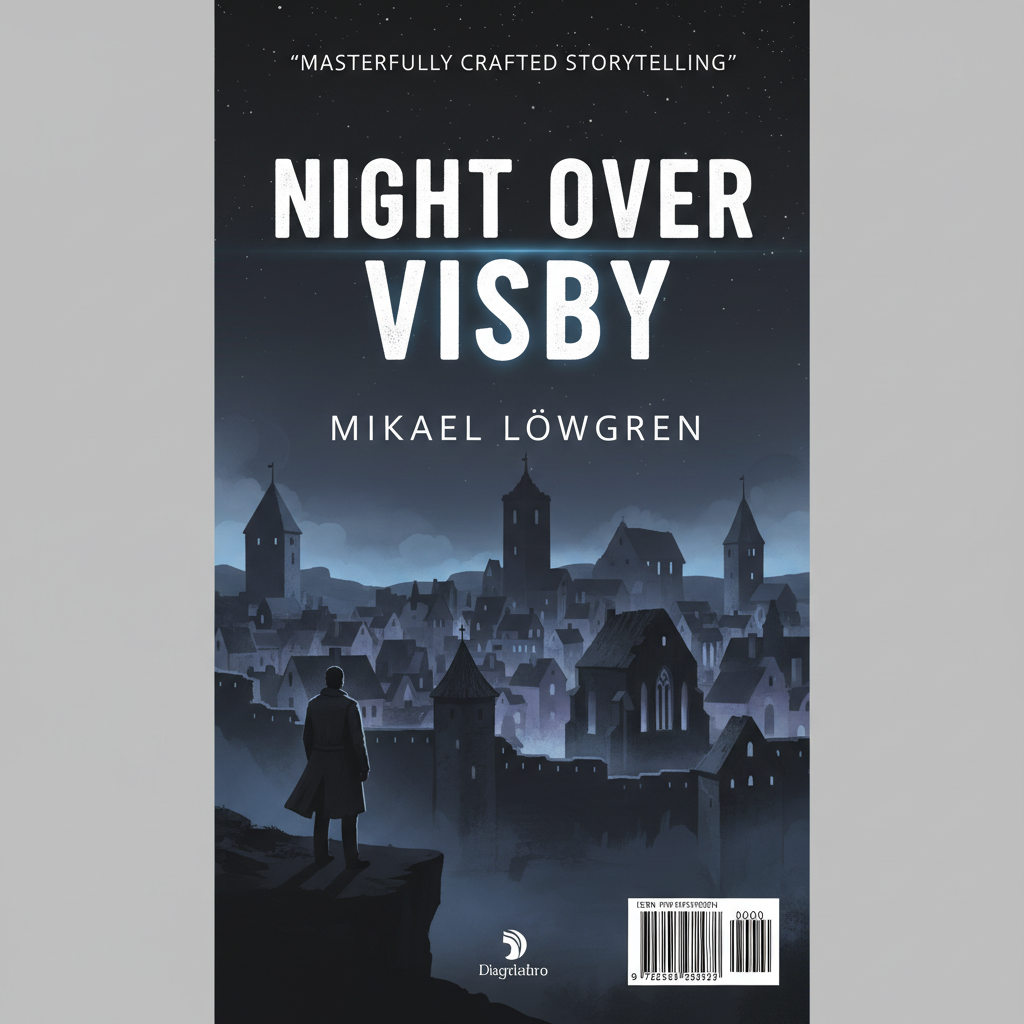
Synopsis
When a prominent politician is found dead during a high-stakes summit on the ancient island of Gotland, a jaded detective must confront the shadowy undercurrents threatening to drown the truth.
Chapter 1: The Arrival of Disquiet
The ferry’s horn rent the autumnal air, a mournful bellow that seemed to chase the last vestiges of sunlight from the steel-grey sky. Astrid Nilsson, her duffel bag slung over one shoulder, leaned against the railing, the chill wind whipping strands of dark hair across her face. Below, the Viking Line’s wake churned a frothy path through the darkening Baltic, carrying her away from the urban sprawl of Stockholm and the insistent hum of the Royal Swedish Police Headquarters. Visby’s ancient walls, a formidable embrace of limestone and history, rose from the water like a fossilized leviathan. They promised a different kind of peace, one carved from centuries of silence rather than imposed by bureaucratic quiet.
A week. That was the magic number she’d been allotted. Seven glorious days removed from the acrid scent of police tape and stale interrogation rooms. Seven days to forget the haunted eyes of victims and the hollow boasts of perpetrators. Gotland, especially in October, was supposed to be a balm. The island shed its summer skin of sun-drunk tourists and re-emerged as something more primal, more authentic. A place of windswept beaches, crumbling ruins, and the lingering scent of damp earth and pine. A place where even the ghosts were rumored to be more polite than their mainland counterparts.
She pulled her worn wool cardigan tighter, the scent of lavender from her grandmother's old chest clinging to the fibers – a small, comforting anchor in the vastness. The ferry shuddered as it began its slow turn towards the harbour. The cobblestone streets of Visby, slick with recent rain, would be waiting. The thought of a mug of strong coffee, a book, and the distant roar of the ocean outside the cottage window was a powerful sedative for the tremors that still occasionally ran through her after the last, particularly brutal case.
As the ferry docked with a groan of straining ropes and groaning metal, a thin drizzle began to fall, tiny pinpricks of ice on her face. The other passengers, a sparse crowd of islanders and a few determined off-season adventurers, bustled past her, eager to escape the biting air. Astrid, however, lingered, taking in the panoramic view of Visby. The spires of St. Mary’s Cathedral pierced the low-hanging clouds, its stone a deeper grey in the fading light. The ruins of St. Clemens and St. Nicholas, hollowed shells against the sky, stood sentinel, whispering tales of bygone eras and forgotten feuds. It was beautiful, undeniably so. But even beauty, Astrid knew, could hold a deeper current.
Her rental car, a practical, uninspiring Volvo, was waiting in the small lot just beyond the ferry terminal. The keys were tucked under the mat, as per the email instructions from the cottage owner, a pleasant-sounding woman named Ingrid. Astrid appreciated the unpretentiousness of it all. No fuss, no fanfare. Just the island.
The drive through the narrow, winding streets of the old town was a sensory immersion. The air, despite the damp, smelled crisp and clean, mingled with the faint, sweet decay of fallen leaves. Lamplight spilled from the windows of ancient houses, painting stripes of yellow across the wet cobblestones. She passed small artisanal shops, their windows displaying amber jewelry and knitted woolens, their doors now firmly closed for the season. A solitary cyclist, encased in waterproof gear, pedaled past, his head bowed against the elements.
Her cottage, a squat, stone structure with a surprisingly vibrant red door, sat on a quiet lane just outside the inner wall, overlooking a patch of windswept field that stretched towards the sea. Inside, it was exactly as advertised: cozy, a little rustic, and filled with the scent of beeswax and old wood. A small fireplace was already laid with birch logs, a promise of warmth to come. She dropped her bag, kicked off her sturdy walking boots, and sighed, a long, drawn-out exhalation that seemed to release a week’s worth of tension.
She brewed a strong pot of coffee and carried it to the small window seat, watching the last slivers of light vanish behind the heavy clouds. The sea, a restless grey expanse, churned ominously. Tonight, she would simply *be*. No reports to file, no interviews to conduct, no grim facts to meticulously piece together. Just the island, and the quiet.
Her phone, however, vibrated with a jarring insistence against the wooden sill. The screen glowed, illuminating a familiar name: Calle Holm. Her immediate supervisor. Astrid felt a familiar tightening in her stomach. Calle rarely called unless it was urgent, or terrible. Usually both.
She pressed answer, her voice betraying a hint of resignation. "Holm. To what do I owe the dubious pleasure? I thought I was off-grid."
Calle’s voice, usually a booming instrument, was surprisingly subdued. "Astrid. Good. You're there. Look, I know it's your holiday, and I'm really sorry to do this, but…"
Astrid closed her eyes, bracing herself. "But what, Calle? Has the entire city of Stockholm spontaneously combusted?"
"No, nothing like that. It's… Gotland. There's a development." A pause. "The Prime Minister. And the Minister of Foreign Affairs. They're coming to Visby."
Astrid’s eyes snapped open. "What? Now? Why? I thought that summit was scheduled for next spring."
"It was. But something's shifted. Highly classified, apparently. They've fast-tracked it. Something about urgent talks with European energy consortiums. The island's going to be a beehive, Astrid. Security is going to be tighter than a drum. Every available officer is being recalled. Special Branch, Säpo… even some of our own."
The quietude of her cottage seemed to shrink, the looming presence of the ancient walls suddenly feeling less like a comforting embrace and more like a claustrophobic cage. Her week of peace, it seemed, was already dissolving.
"So, what does this have to do with me, Calle? I'm on leave." The words sounded hollow, even to her own ears. She knew, deep down, what was coming.
"Technically, yes. But you're *on* the island, Astrid. And frankly, your reputation precedes you. Visby's local police force, bless their hearts, they're good with bicycle thefts and domestic disputes, but a high-stakes international summit? With all the security implications? This is above their paygrade. Säpo will be handling the VIP protection, of course, but should anything… unexpected… happen, having a seasoned detective like you on hand, even unofficially, would be a huge asset."
Astrid pushed a hand through her hair, a sigh escaping her lips. "By 'unexpected,' do you mean a complete breakdown of global diplomacy, or a body in a ditch?"
Calle cleared his throat, a sure sign of discomfort. "Let’s just say, we're hoping for neither. But with the current geopolitical climate, and the sensitivity of these energy talks… the pressure is immense. And you know how it is. These kinds of events, they attract all sorts of attention. The good, the bad, and the utterly unhinged."
She was silent, listening to the wind howl around the cottage. The prospect of peace was already receding, replaced by the familiar prickle of anticipation, the low thrum of dread. The thought of rubbing shoulders with polished politicians, their smiles too wide, their promises too slick, made her stomach clench. But the alternative – turning her back on a potentially volatile situation, knowing she was capable of helping – gnawed at her. It was the curse of her profession. The burden of an attuned sense of impending crisis.
"When does this circus arrive?" she finally asked, her voice flat.
"Tomorrow morning. The Prime Minister's delegation. The main summit starts on Wednesday. It’s a closed-door affair, in one of the private estates just outside the city walls. They’ve locked down the entire area."
"So, my peaceful strolls along the beach are out, then?"
"Pretty much, I'm afraid. Look, Astrid, I'm not officially recalling you. But if you could just… keep your ears open. Be aware. Maybe even offer a friendly face to the local boys if things get hairy. It would mean a lot."
"A friendly face," Astrid repeated, a wry smile touching her lips. "My friendly face is usually reserved for the faces of witnesses who finally decide to crack."
Calle actually chuckled. "Exactly. Just… don't go looking for trouble, Astrid. It usually finds you."
"Trouble usually has my address on speed dial, Calle," she muttered, before ending the call.
She sat in the dim light of the cottage, the coffee growing cold in her mug. The wind outside picked up, rattling the windowpanes, a mournful song that echoed the sudden shift in her own internal landscape. Her week of quietude, her carefully constructed wall against the grime of her everyday life, had crumbled with two short sentences.
The Prime Minister. On Gotland.
The island, which had seemed so welcoming and serene just an hour ago, now felt… different. The ancient walls, once a symbol of protection, now felt like an enclosure. The narrow streets, once quaint, now seemed ripe for ambush. The whispers of history, once charming, now seemed to carry a darker edge, a premonition.
She walked over to the fireplace and struck a match, the small flame struggling against the damp air before catching on the kindling. The wood crackled, a small, defiant warmth spreading into the room. She watched the flames dance, their light playing tricks with the shadows in the corners of the room.
Her mind, despite her best efforts to quiet it, was already whirring. A political summit of such magnitude, suddenly fast-tracked, hidden away on an ancient island known more for its peaceful summers than its strategic importance. The secrecy, the urgency… it all pointed to something far weightier than just energy talks. And with weight, came pressure. With pressure, came cracks.
She had arrived seeking stillness, a respite from the human turmoil that defined her work. But the stillness, she realised, was merely a veneer. Beneath it, the island pulsed with a different kind of energy now. An unfamiliar tension, like a string drawn too taut, vibrating with an unspoken threat.
Astrid picked up her discarded walking boots, their sturdy leather a comforting weight in her hands. She set them by the fireplace, their soles still bearing traces of Stockholm’s grime. She wouldn't be leaving them idle for long. The island would not provide the peace she craved. Instead, it was offering something else. A challenge.
And Astrid Nilsson, Detective Inspector, had never been one to shy away from a challenge. The night had fallen completely now. Outside, the wind howled, a relentless, primal sound. And somewhere, within the ancient heart of Visby, the first seeds of disquiet were already being sown. She could feel it, a cold prickle at the back of her neck, a familiar tightening in her gut. Her peace was over. The game, it seemed, had already begun.
Chapter 2: The Summit's Shadow
The ancient limestone ramparts of Visby, usually a silent testament to centuries past, now hummed with a different kind of energy. Delegates, their faces etched with the weight of nations, spilled from sleek black cars, each vehicle a brief glint in the overcast morning. The sky, a bruised purple-grey, seemed to press down on the town, mirroring the solemnity of the occasion. This wasn't merely a summit; it was the ‘Baltic Accord,’ a carefully orchestrated ballet of diplomacy and power, all unfolding within the medieval embrace of Gotland.
Astrid, her sensible boots scuffing on the cobblestones near the main congress hall, watched the procession with a clinical detachment. A thin drizzle had started, just enough to slick the ancient stones and add a shimmering sheen to the array of polished shoes and government-issue eyewear. The air, usually redolent with the scent of salty sea and damp earth, was now sharp with car exhaust and an artificial perfume of expensive fabrics. Each politician, handler, and aide moved with a practiced grace, a public performance honed through years of scrutiny. But Astrid, with her detective’s eye, saw beyond the veneer. The smiles were too wide, the handshakes a fraction too firm, the glances exchanged between security personnel a touch too wary. Beneath the veneer of statesmanship, something felt brittle.
Plainclothes officers, their eyes scanning the rooftops and alleyways, merged with the throngs of legitimate tourists and curious locals. Astrid spotted a few familiar faces from the mainland police force, their postures rigid even under casual jackets. The island, her sanctuary, had been transformed into a temporary fortress. Every entrance to the conference venues, particularly the historic St. Nicolai ruin where the plenary sessions were to be held, was barricaded with metal gates and stern-faced guards. Sniper spots had been identified, routes meticulously planned, and contingency measures rehearsed down to the last syllable.
A television crew, huddled under a large black umbrella, filmed a reporter attempting to look authoritative while battling a rogue gust of wind. Her voice, thin and reedy, spoke of "historic opportunities" and "regional stability," words that felt hollow against the rising tension in Astrid's gut. She’d seen enough political theatre to know that behind every grand pronouncement lay a labyrinth of unspoken agendas and fragile alliances.
She pulled her wool coat tighter, the damp cold seeping into her bones. Her initial plan for a quiet week of sea air and historical contemplation had evaporated like the morning mist. Now, she was an observer in a theatre she hadn’t bought a ticket for, and the play had barely begun. The island, usually so slow, so deliberate in its rhythm, was now a coiled spring.
A familiar figure, taller than most in the crowd, detached himself from a knot of security officials near the temporary press area. He moved with a quiet authority, his gaze sweeping the surroundings with an almost predatory efficiency. Detective Tomas Berg. Astrid hadn't seen him since a joint task force operation two years ago, a grim affair in Stockholm that had left them both with a bitter taste in their mouths and a shared understanding of unspoken horrors.
He spotted her, a flash of recognition warming his usually serious features. A small, almost imperceptible nod passed between them before he navigated the growing crowd, his face betraying nothing of his purpose.
"Astrid Nilsson," he said, his voice a low rumble above the distant murmur of the crowd. He didn't offer a hand, a typical Berg gesture – always direct, never superfluous. "Last I heard, you were planning to disappear into the Sarek mountains with a good book."
Astrid allowed herself a faint smile. "Life has a way of rerouting one's plans. And you, Berg? On international liaison duty, I presume? A long way from the chaos of Stockholm’s underworld."
He gave a short, humourless laugh. "Chaos has a funny way of following the money, and the influence. This ‘Accord’ has both in spades." He paused, his sharp eyes scrutinizing the entrance to St. Nicolai, where the first of the major delegates were now being ushered inside. "It's quieter here, in theory. But the stakes are higher, precisely because of that perceived calm."
He lowered his voice, stepping closer, instinctively creating a small bubble of privacy amidst the public spectacle. "Word circulated last week, quietly, about a specific threat. Not an open one, nothing traceable to any known group. More a whisper, a shadow stretching from someone's past."
Astrid felt a familiar prickle of anticipation. This was the kind of information that hummed beneath the surface, the kind that Berg, with his network of informants and his nose for trouble, always seemed to uncover. "A specific delegate, then?"
Berg nodded, his gaze still fixed on the church entrance. "None other than Lars Gunnarsson. Our esteemed Minister of Trade."
The name hung in the damp air between them, heavy with significance. Lars Gunnarsson was a political star, a man whose ambition was as sharp as his intellect. He had orchestrated much of the framework for this very Accord, pushing for bolder economic integration in the Baltic region. He was also known for making enemies as easily as he made headlines.
"Whispers of what, exactly?" Astrid pressed, her detective’s instincts now fully engaged. The cold forgotten, replaced by a growing internal heat.
"Not a direct assassination threat, not in the way one might expect from a disgruntled extremist group," Berg explained, his voice almost a murmur. "More… a threat to his reputation. To him personally. Something that would dismantle him from the inside out, rather than a bullet. Something that would ruin his career, his legacy." He finally turned his gaze to Astrid, his eyes holding a familiar intensity. "And they say it was tied to this summit. That whatever was planned, was to culminate here, against the backdrop of Visby's ancient walls."
Astrid felt a chill, deeper than the drizzle, run down her spine. A threat against reputation, against legacy, could be far more insidious, far harder to guard against, than a physical attack. It was a weapon of psychological warfare, designed to unravel a man piece by fragile piece.
"Who was making the threats?" she asked, her voice low.
Berg sighed, a puff of condensed breath in the cold air. "That's the problem. The source was… elusive. A coded message on a dark corner of the internet, then a burner phone dropping a single, ambiguous warning. Nothing solid enough for a full-scale investigation, not without causing unnecessary panic among the delicate egos involved in this charade." He gestured vaguely at the official cars still arriving. "But my people, and a few contacts in SÄPO, felt it was significant enough to keep a very close eye on Gunnarsson. Without him knowing, of course."
The irony was not lost on Astrid. The very security meant to protect him could not protect him from a ghost in his past, from a truth waiting to be unearthed. The beautiful, historic setting, meant to inspire cooperation and peace, suddenly felt like a stage set for a very private, very public destruction.
"And how is Gunnarsson handling the pressure?" Astrid asked, picturing the Minister's confident, almost arrogant public persona.
Berg offered another mirthless chuckle. "He's radiating 'unflappable statesman' as usual. But I’ve seen him pace his hotel room floor at midnight. He has a shadow, Astrid. A fear he’s trying to outrun. And someone, somewhere, knows exactly what it is."
He checked his watch, a heavy, utilitarian model. "I need to get back inside. Plenary session starts in fifteen minutes. Just thought you should know, given your… unexpected presence here. And your reputation for seeing patterns others miss."
Astrid felt a knot tighten in her stomach. Her peaceful retreat had indeed been hijacked. The island air, usually so cleansing, now felt heavy with foreboding. The whispers of the past, the secrets of powerful men, were starting to intertwine with the ancient stones of Visby. And in the heart of it all, a threat, formless and unseen, waited for its moment to strike. The summit had begun, but the true game, the one played in the shadows, felt like it was only just about to start.
Chapter 3: A Life Extinguished
The second day of the Baltic Accord dawned under a sky the color of bruised plums. Rain, fine and persistent, slicked the ancient cobblestones of Visby, reflecting the muted glow of the streetlights that still burned in the early hours. Astrid, emerging from a restless sleep filled with the phantom ache of old cases, pulled her cardigan tighter against the damp chill that seeped through the hotel’s stone walls. The planned morning walk was out, replaced by the contemplation of a lukewarm coffee and a stale pastry. A fitting start, she thought, to a day already weighted with unspoken anxieties.
She was halfway through the coffee, the bitter taste a welcome jolt, when the first sirens began to keen. Not the distant, mournful wail of an ambulance on its way to a minor accident, but the urgent, rising shriek of emergency services converging on a crucial point. It sliced through the muffled quiet of the hotel like a surgeon’s scalpel. Then came the thud of heavy boots in the corridor above, followed by a low, urgent murmur of voices, too hushed to decipher but laced with an undeniable tension.
Astrid pushed her half-empty cup aside. Her muscles, accustomed to a different kind of vigilance, were already tensing. The knot of unease that had been tightening in her stomach since Tomas’s ambiguous warning now threatened to strangle her. She didn’t need an official announcement. She knew, with the chilling certainty of experience, that something had gone terribly wrong.
A sharp rap on her door made her jump. It was a young hotel staffer, her face pale, eyes wide and darting. “Detective Nilsson?” she stammered, twisting her apron in her hands. “They… they asked for you. Upstairs. Room 312.”
“Who asked?” Astrid’s voice was calm, a practiced professional cadence that belied the surge of adrenaline now coursing through her veins.
“The police. Inspector Rask, I think. He said it was urgent.” The girl didn't wait for a reply, scuttling back down the hallway as if pursued by a phantom.
Astrid grabbed her jacket, the familiar weight of her badge holder a reassuring presence in her pocket. The hotel corridors, usually echoing with the polite murmurs of guests off to breakfast, were now eerily silent, save for the hum of the ventilation system and the distant, increasingly frantic chatter from the upper floors.
Room 312. She knew that number. Lars Dahlgren, the Minister for European Affairs, the key negotiator Tomas had mentioned, was staying there. A cold dread seeped into her bones.
When she reached the third floor, the hallway was a hive of controlled chaos. Two uniformed officers stood guard outside 312, their faces grim. A plainclothes detective, a man she recognized vaguely from mainland briefings, was speaking urgently into a walkie-talkie, his brow furrowed with distress. The air was thick with the metallic tang of fear and something else, something cloying and sickly sweet.
“Nilsson, thank God you’re here,” Inspector Rask, a burly man with fading red hair and a perpetual scowl, turned from the door. His usual bluster was gone, replaced by a hollow-eyed weariness. “We have a situation. A bad one.”
He nodded towards the room. “Minister Dahlgren. Dead.”
The words hung in the air, heavy and final. Astrid felt a familiar dull throb behind her eyes, the prelude to a long day, or week, or month. “Initial assessment?” she asked, her gaze sweeping over the scene, taking in the hushed urgency, the way the uniformed officers kept glancing at the closed door.
Rask’s mouth thinned. “Natural causes, they’re saying. Heart attack, likely. The hotel doctor was first on scene before the paramedics rolled in.” He gestured impatiently at the door. “But something doesn’t sit right. He was, what? Fifty-five? Fitter than most men half his age. And he was due to open the next session in less than an hour.”
Astrid didn't reply immediately. She stepped towards the door, the subtle shift in Rask's demeanor, the tremor in his voice, speaking volumes. He wasn't convinced, and neither was she. Natural causes, during a high-stakes summit, involving a crucial delegate? It was too convenient, too neat. Her gut, that unshakeable compass honed by years of walking through the wreckage of human lives, screamed foul.
She pushed past Rask, entering the room. The air was still, oppressive. The curtains were drawn, casting the spacious suite in a perpetual twilight, but streaks of grey light managed to punch through the gaps, illuminating motes of dust dancing in the stillness.
Lars Dahlgren lay on his back in the center of the plush, king-sized bed. His eyes were wide open, staring blankly at the ornate ceiling, a look of profound surprise frozen on his otherwise ashen face. A thin line of dried blood, almost imperceptible, traced a path from the corner of his nose. His hands, usually so animated in official photographs, lay limply on the pristine white duvet, one palm up, the other clenched loosely.
Two paramedics were methodically packing away their equipment, their movements subdued, almost reverent. A hotel doctor, a young woman with a shell-shocked expression, stood by the window, her back to them, staring out at the rain-streaked medieval town.
Astrid walked slowly around the bed, her gaze analytical, taking in every detail. No struggle. No overturned furniture. No signs of forced entry. The room was meticulously tidy, almost sterile. A half-finished glass of water sat on the bedside table next to a copy of *Dagens Nyheter*, still folded to the financial section. A half-eaten Danish pastry lay on a plate, mocking the tragic stillness of the man beside it.
She knelt by the bed, her eyes tracing the lines of Dahlgren’s face. His skin was cold to the touch when she gently placed two fingers against his neck, confirming what she already knew. A faint purplish discoloration was beginning to bloom beneath his jawline, a sign of lividity – the blood pooling under gravity. No obvious external injuries, nothing to suggest a violent struggle.
Her eyes flicked to the thin line of dried blood from his nose. Epistaxis. Not uncommon in sudden cardiac events, but still, a detail. She leaned closer, her nose wrinkling slightly. A faint, almost imperceptible aroma lingered in the air, something earthy, like withered leaves, but with an underlying sharpness, like a cleaning agent. Or something chemical. She couldn’t quite place it.
“Doctor,” Astrid said, her voice cutting through the silence. The hotel doctor flinched, turning slowly. Her name tag read: Dr. Eva Lindgren.
“Yes, Inspector?” Dr. Lindgren’s voice was hoarse.
“What time was he discovered?”
“Around 07:15. His assistant, a young man named Karlsson, came to wake him for the morning briefing. He couldn't get a response, so he used his master key.”
“And you were called immediately?”
“Yes. I was in the lobby, preparing for the morning briefing for the delegates. They keep me on standby during these events. I confirmed death on arrival. Checked for a pulse, listened for breath sounds. Nothing.” Dr. Lindgren wrung her hands. “I informed the hotel general manager, and he contacted the police. My preliminary assessment was acute cardiac arrest. His medical history, that I'm aware of, indicated no prior heart conditions, but these things can happen suddenly, especially under stress.”
Astrid nodded slowly, her eyes still scanning the opulent room. “Any medications on the bedside table? Anything unusual?”
“No. Just an empty water glass,” Dr. Lindgren confirmed, her gaze falling to the glass Astrid had already noted. “I didn’t move anything, of course, just examined the patient.”
“Right.” Astrid stood up. “Thank you, Doctor. We’ll need a full report, of course. And his medical records.”
She turned to Rask, who was now speaking in hushed tones to the uniform officers. “Rask, I want Tomas Berg here. And forensics. And a full sweep of this room, not just for prints. I want anything, everything. Every surface, every fiber. Every pixel on his phone and laptop. And I need to see the toxicology report as soon as the autopsy is completed.”
Rask’s eyebrows shot up. “Astrid, the hotel doctor already-“
“I don’t care what the hotel doctor said,” Astrid interrupted, her voice gaining a steely edge. “My gut tells me this isn’t a heart attack, Rask. Not here. Not now. Not like this. And when my gut speaks, it’s usually right.” She met his gaze, her eyes unwavering. “Dahlgren was a key player in this summit. He had enemies politically, I’m sure. And let’s not forget the whispers Tomas mentioned yesterday. This is not natural. This is a crime scene until proven otherwise.”
Rask hesitated for a moment, then sighed, running a hand over his thinning hair. “Alright, Nilsson. You’re the big city detective. But if this turns out to be nothing…”
“It won’t be nothing,” Astrid cut him off. “Now get Tomas here. He knows the political landscape better than I do. And get a perimeter established. This entire floor is off-limits. Get everyone accounted for from Dahlgren’s delegation. And no one, I mean *no one*, leaves this hotel until we clear it.”
The urgency in her voice spurred Rask into action. He barked orders into his radio, his earlier weariness replaced by a renewed sense of purpose. The previously contained chaos in the hallway escalated into a controlled whirlwind of activity. More police officers arrived, their presence a stark contrast to the medieval charm of the hotel. The quaint, peaceful island of Gotland, usually a haven of tranquility, was now undeniably a crime scene.
As the forensic team, summoned from the mainland, began to set up their elaborate equipment, transforming the elegant hotel room into a sterile laboratory, Astrid stepped back, her gaze falling once more on the silent figure of Lars Dahlgren. A respected politician, a man of power and influence, now reduced to a cold, still form on a bed. What had transpired in these quiet hours before dawn? What dark currents had flowed through the hallowed halls of this summit, strong enough to extinguish a life?
The rain outside intensified, drumming a relentless rhythm against the windowpanes, a mournful accompaniment to the unfolding tragedy. The ancient walls of Visby, which had witnessed centuries of human drama, now held a fresh secret, a chilling echo of the darkness that could lurk beneath the veneer of civility. Astrid knew this was just the beginning. The truth was buried here, under layers of carefully constructed pretense, and she had a grim feeling it would prove as treacherous and unforgiving as the stormy Baltic Sea itself. The hunt for it had just begun. And the storm, she sensed, was far from over.
Chapter 4: Whispers and Alibis
The air in Dahlgren’s suite still clung to the metallic tang of dried blood, a stark contrast to the perfumed condolences that had filled the press briefing downstairs. Astrid ran a gloved hand over the cool, polished surface of the bedside table, the indentation from what was likely a displaced alarm clock still visible in the dust. Berg, meanwhile, was meticulously cataloging the contents of a brief bag splayed open on the mahogany desk, his movements precise, almost surgical.
"Coroner's initial assessment suggests cardiac arrest, given his history," Berg said, his voice flat, not looking up. "No apparent signs of struggle, no forced entry."
Astrid snorted, a low, dismissive sound that was barely audible above the hum of the forensics team in the next room. "And yet, here we are, Berg. A minister, dead in a secured hotel room during an international summit. Natural causes would be far too convenient, wouldn't it?"
He finally met her gaze, a flicker of something she recognized as shared skepticism in his eyes. "My thoughts exactly, Nilsson. A cardiac event during a critical negotiation? The conspiratorial whispers alone could fell a government."
This was it, then. The unspoken acknowledgment that they were now a unit, two cogs in the grinding machinery of an investigation that would likely stretch far beyond Visby’s ancient walls. The mainland authorities, in their wisdom, had decided a joint effort was prudent, blending local knowledge with external impartiality. Astrid felt a familiar tightening in her gut, a blend of dread and grim satisfaction. This was where she belonged, sifting through the wreckage of human lives, searching for the truth.
They moved through the hotel’s hushed corridors like spectres, the polished marble reflecting their serious faces. The Grand Hotel, usually a bastion of discreet luxury, now felt like a gilded cage, every plush carpet concealing secrets, every silent door holding its breath. The initial interviews, conducted by a harried local inspector before Astrid and Berg had officially taken the reins, had been cursory at best, focused on confirming Dahlgren’s identity and alerting next of kin. Now, the real work began.
Their first stop was the temporary summit office set up in one of the hotel’s smaller conference rooms. It smelled of stale coffee and printer toner. Dahlgren’s aide, a young man named Elias Holm, looked as if he hadn't slept in days, his sharp suit rumpled, his eyes red-rimmed. He sat hunched over a laptop, surrounded by scattered documents, a ghost amidst the detritus of a suddenly halted career.
"Mr. Holm," Berg began, his tone surprisingly gentle. "We understand this is a difficult time. Thank you for speaking with us again."
Holm pushed a hand through his already disheveled hair. "It's a nightmare. The Minister… he was a force. This summit, it was his baby. All those months of negotiation, down the drain." His voice cracked on the last word.
"When was the last time you saw Minister Dahlgren alive?" Astrid asked, cutting straight to it.
Holm hesitated, his gaze drifting to the window, where the grey Visby sky promised more rain. "Last night. Around ten-thirty, maybe eleven. We had a final review of the morning’s agenda. He was… frustrated, but in good spirits. He’d made a breakthrough on… well, sensitive fishing quotas. He was confident we'd sign today."
"Did he seem ill? Complain of anything?" Berg asked, watching Holm’s face carefully.
"No, not at all. He had his usual nightcap – a small whisky – and then headed to his room. Said he needed to clear his head for the morning. That was it."
"And you went to your room immediately after?" Astrid pressed.
Holm shook his head. "No. I… I stayed up for a while, making some adjustments to the presentation. Didn't get to bed until after two, maybe three. The usual summit grind, you know?" He offered a weak, apologetic smile.
Astrid made a note. Late night. Opportunity. "Anyone else with you at that hour, Mr. Holm?"
"No, unfortunately not. Just me and the endless revisions." He shrugged helplessly.
They then moved on to the other key figures present at the summit, the delegates, each a leader or high-ranking official from a different Baltic nation. The interviews were conducted with an underlying current of diplomatic formality, each answer a carefully constructed edifice, designed to reveal as little as possible.
There was Kristina Söderberg, the stern Swedish Minister for Foreign Affairs, whose proximity to Dahlgren both professionally and personally (rumours of a past, brief entanglement had always circulated in political circles) made her an obvious starting point. She stood ramrod straight, her tailored suit impeccable, even at this hour.
"I saw Lars at the reception dinner," she stated, her voice crisp and unyielding. "We discussed the ongoing negotiations, specifically the clauses pertaining to shared maritime surveillance. He seemed… stressed, as we all were. But nothing to suggest ill health."
"What time did you leave the reception, Minister Söderberg?" Berg inquired, his eyes unblinking.
"Around midnight. I had a rather persistent headache. I retired to my room directly."
"And did anyone accompany you? Or see you depart?" Astrid asked.
Söderberg’s lips thinned. "I am perfectly capable of navigating a hotel corridor alone, Inspector. No, I went up by myself. My security detail was outside my door for the remainder of the night."
A quick check with the security detail would confirm that, Astrid thought. A convenient, albeit rigid, alibi.
Next was Minister Sergei Rostov, the blustery Russian delegate, whose booming laugh and expansive gestures were now replaced by a subdued, almost resentful silence. He sat across from them, hands clasped on the table, his eyes darting between Astrid and Berg.
"Dahlgren was a stubborn man," Rostov grumbled, "but honest. A rare quality these days. We disagreed, often vehemently, but I respected him."
"When did you last speak with him, Minister?" Astrid asked, her voice calm, a low counterpoint to Rostov’s gruffness.
"Last night. After the formal dinner. We had a private discussion, a final push on the energy pipeline agreements. It did not go as I wished, frankly. He would not compromise." Rostov sighed, a gusty sound. "I left him around ten. He was with his aide, Holm."
"And after that, Minister?" Berg leaned forward slightly.
"I had planned to continue working, but my own aide, Anatoli, was feeling unwell. I saw him back to his room, settled him, then went to my own. I was asleep by eleven-thirty. Anatoli can confirm I was there, we spoke later when he woke with a headache."
Another alibi, another witness. The pieces of the jigsaw puzzle were beginning to fall into place, but none of them quite fit the shape of a murder.
It was during their interview with a young cleaning staff member, a shy girl named Elara, that the first crack appeared in the carefully constructed facade of the night. Her hands, usually deft with a dust cloth, now twisted nervously in herlap. She spoke in hushed tones, her eyes wide with fear.
"I was doing the late shift," she whispered, her gaze fixed on the floor. "Cleaning the conference rooms on the third floor, near the delegates' suites. It was… after midnight, I think. Maybe closer to one."
Astrid exchanged a glance with Berg. This was later than anyone else had reported being out and about.
"And what did you see, Elara?" Astrid prompted gently, trying to soothe the girl’s obvious distress.
"I was in the corridor, pushing my cart," she continued, her voice gaining a fraction of strength. "The light was dim. I saw… a man. Near Minister Dahlgren’s room."
"Can you describe him?" Berg asked, a newfound sharpness in his tone.
Elara squeezed her eyes shut, as if trying to conjure the image more clearly. "Tall. Dark clothes. He had a hood, I think. Or maybe a cap pulled low. I couldn't see his face properly. He was just… standing there. In the shadows near the door."
"Was he going in or coming out of Dahlgren’s room?" Astrid pressed, her heart beginning to beat a little faster.
"Neither, really. He just… moved away quickly when he heard my cart. Like he didn't want to be seen. He went down the service stairs."
"Did you recognize him?" Berg asked. "From the summit staff? Or any of the delegates?"
Elara shook her head, tears welling in her eyes. "No. I… I never saw him before. And he moved so fast. It was just a shape, a shadow."
"Why didn't you report this, Elara?" Astrid’s voice was firm but not accusatory.
The girl chewed on her lip. "I thought… it was probably just someone going to their room. Or maybe a security guard. I didn't think anything of it until… until this morning." She gestured vaguely in the direction of Dahlgren’s suite. "When I heard what happened."
They left Elara, her words hanging in the air like a cold mist. A shadow. A figure in dark clothes, lurking near Dahlgren’s door hours before his death, then vanishing into the service stairs. This was no casual passerby. This was their first real lead, a dissonant chord in the carefully composed symphony of high-stakes politics and diplomatic niceties.
Back in their temporary incident room, a cramped office usually reserved for hotel management, Astrid spread out a floor plan of the third floor. Berg already had his laptop open, scanning the hotel’s security footage from the previous night, though with a grim expression.
"The cameras in the main corridors cover the guest room doors," he explained, pointing to various circles on the floor plan, "but the service stairwells are a blind spot. A deliberate choice, apparently, for ‘guest privacy.’" He snorted derisively.
"Convenient," Astrid muttered, tracing the path Elara described. "So, our phantom could have accessed the stairwell and been anywhere within minutes, unseen."
They stared at the cold, hard facts laid out before them. Dahlgren, a man of power and influence, dead. His aide, Elias Holm, working late, providing a solitary alibi. Kristina Söderberg, with her tight-lipped efficiency and a security detail she swore by. Sergei Rostov, boisterous and perhaps frustrated, but with a witness to his early retreat. And now, Elara’s shadowy figure, moving like a whisper through the opulent halls, a harbinger of something far more sinister than a simple heart attack.
The bureaucratic complexities of an international investigation were already rearing their ugly heads. Calls had to be made, official requests filed, every action scrutinized by governments keen to protect their own. Astrid could already feel the heavy hand of political interference beginning to settle. But the whispers Elara spoke of, the dark shape that melted into the shadows, that was the truth they needed to uncover, irrespective of the inconvenient truths it might expose.
Outside, the Visby night was beginning to deepen, painting the ancient city walls in inky shades. The wind, carrying the scent of salt and impending rain, whistled through the narrow streets. Astrid felt a familiar, unsettling thrill as she looked at the map, at the carefully marked "X" denoting Dahlgren's room. The game had begun, and Visby, with all its history and secrets, was about to reveal its darker side.
Chapter 5: The Deeper Current
The clang of metal instruments on a sterile tray was the first sound Astrid registered, a harsh punctuation mark in the otherwise hushed autopsy suite. The air, thick with the scent of disinfectant and something else, something metallic and cloying, clung to her clothes, to her hair. Dr. Lundgren, his perpetually weary eyes magnified behind wire-rimmed glasses, gestured vaguely towards the screen displaying a dizzying array of chemical compounds.
“No struggle,” Lundgren stated, his voice a low drone, almost swallowed by the ventilation hum. “No external marks beyond what’s expected. Cardiac arrest as previously… suggested.” He paused, a thin smile playing on his lips, a macabre acknowledgment of their shared suspicion. “But not, as they say, of natural causes.”
Astrid leaned closer, her gaze sweeping over the intricate graphs and molecular structures. This was Lundgren’s domain, a language she understood only in its grim conclusions. “Poison?” she asked, though she already knew the answer. Her gut, a reliable oracle in these matters, had twisted with a sour certainty the moment she’d seen Dahlgren’s unnaturally placid face.
“Indeed. And a rather elegant one, if one can apply such a term to homicide.” Lundgren tapped a gloved finger on a particular peak on a chromatogram. “A rare alkaloid. Derived from the *Helleborus Niger*, commonly known as the Christmas Rose. Extremely potent. Difficult to detect without specific indicators.” He looked up, meeting her eyes. “Even I almost missed it. A subtle cardiac depressant. It mimicked a heart attack perfectly. A dose small enough to be effective, large enough to be fatal, yet not so large as to leave obvious traces.”
Astrid felt a cold knot tighten in her stomach. This wasn't some desperate, clumsy act. This was planned, executed with chilling precision. “How was it administered?”
Lundgren shrugged, peeling off his gloves with a soft snap. “That’s the beauty, or rather, the terror of it. Odorless, tasteless in small quantities. A drop in a drink, a smear on a piece of fruit. The toxicology report suggests absorption through the digestive system, consistent with oral ingestion.” He paused, his expression grave. “Within an hour of death, perhaps less, depending on Dahlgren’s metabolism that evening.”
An hour, Astrid thought, her mind replaying the previous night’s timeline. An hour that placed the poisoning squarely within the window of opportunity when Dahlgren had been alone in his room, or with very few, very trusted individuals. This wasn’t some random, opportunistic attack. This was deliberate, insidious.
“Any specific counter-indicators we should look for?” Astrid asked, already picturing the search.
“None that would be obvious to the casual observer,” Lundgren replied. “It would be fully metabolized, leaving behind only the cardiac failure. Forensically, it’s a phantom.” His voice dropped. “Someone wanted to ensure this looked like an unavoidable tragedy. Someone who knew their toxins.”
Back at the temporary police headquarters, a hastily commandeered conference room at the Visby Congress Centre, the news of the confirmed poisoning settled over them like a shroud. Tomas ran a hand through his already disheveled hair, his usual easygoing demeanor replaced by a grim resolve.
“Christmas Rose,” he repeated, as if tasting the words. “I suppose that rules out your average thug with a grudge.”
“It points to someone sophisticated, someone with access to specific knowledge, or someone who hired such a person,” Astrid countered, flipping through her notes. She scribbled down "Helleborus Niger," the Latin an alien scrawl amongst her usual shorthand. “Who knew Dahlgren’s habits? His vulnerabilities?”
“Everyone and no one, it seems,” Tomas sighed, gesturing to the sprawling whiteboard covered with names, arrows, and cryptic circles. “We’ve been digging into Dahlgren’s life, both political and personal. It’s a swamp, Astrid. Deeper than the Baltic at its worst.”
They’d divided their tasks. While Astrid oversaw the forensic follow-up and the meticulous reconstruction of Dahlgren's final hours, Tomas had delved into the man himself. And what he found was less a revered politician and more a lightning rod of controversy.
“His energy policies alone could fill a book of grievances,” Tomas began, tapping a red marker against a scrawled "Energy Lobby" on the board. “He was pushing hard for this ‘Baltic Green Grid’ initiative. Solar, wind, geothermal. Big investments, big contracts. And he was notoriously tough on fossil fuels. Made powerful enemies.”
Astrid recalled the news from her brief overview of the summit’s agenda. The ‘Baltic Green Grid’ was the flagship project, touted as a monumental step towards regional energy independence and sustainability. “And who stood to lose the most?”
Tomas ticked off names on the board with his marker. “The usual suspects. Old money, vested interests in oil and gas, coal. Some of the biggest players in Northern Europe. We’ve got preliminary financial disclosures from his office – thick as a dictionary. And guess what? Several of the companies that would be marginalized by his policies, or who were lobbying against them, have representatives here at the summit. Officially, as observers or ‘stakeholders’.”
“An opportunistic target, then,” Astrid murmured, thinking of the anonymous tip they’d received about threats to Dahlgren. “Or a calculated one.”
“Calculated down to the molecule, it seems,” Tomas agreed, his jaw tight. “Then there’s his personal life.” He picked up a thick file, its contents spilling out slightly. “Dahlgren, for a man so outwardly prim and proper, had a rather…colourful private existence.”
Astrid raised an eyebrow. “Details?”
“Divorced five years ago. Bitterly. Ex-wife got a substantial settlement, but apparently still held a grudge, accusing him of various infidelities and financial improprieties during their marriage. He had a mistress, apparently, a PR consultant linked to one of the energy conglomerates he was trying to sideline. A rather messy affair that ended abruptly a few months ago after the woman threatened to go public.”
“A jilted lover with possible ties to an interested party,” Astrid mused, a flicker of something familiar in her eyes. Love, or its bitter inverse, was a potent motivator for murder, often overlooked in the glare of grander conspiracies.
“Exactly,” Tomas affirmed. “And then there’s this.” He slid a printed bank statement across the table. “An offshore account, registered in the Cayman Islands. Deposited sums in the past year, in amounts too irregular to be salary. All payments made from various shell corporations. We’re working to unmask them, but it’s slow going.”
Astrid picked up the statement, her eyes narrowing at the six-figure sums. “Bribery? Blackmail?”
“Or payment for services rendered,” Tomas suggested. “Perhaps he wasn’t quite as green as he preached. Or perhaps he was being paid to push through certain aspects of the Green Grid that benefited specific players, under the guise of environmentalism.”
The layers were peeling away, revealing not a straightforward political assassination, but a complex tapestry of self-interest, betrayal, and hidden agendas. The motive for murder, once murky, was now multiplying.
“The cleaner, Lena,” Astrid suddenly interjected, remembering the woman’s nervous recounting in the previous day’s interview. “She saw a shadowy figure near Dahlgren’s room. What did she say again? Tall. Dark coat. ‘Moved like a shadow’.”
Tomas tapped a finger on the whiteboard next to “Cleaner’s Statement.” “Still doesn’t give us much. Half the delegates here wear dark coats. It’s autumn, after all.”
“But perhaps it’s someone who wanted to be seen, but not identified,” Astrid countered, her mind piecing together fragments. “Or someone known to Dahlgren, for whom a quick, surreptitious visit wouldn’t raise an alarm, but who wouldn’t want their presence publicly noted.”
“So, someone with an alibi for the time of death, who could have slipped in before the toxicology window, and then slipped out,” Tomas concluded. “Or someone who placed the poison and then disappeared into the night, relying on the delayed effect. And the *Helleborus Niger* gives us that delay. A perfect alibi, if you time it right.”
The thought of someone moving through the stately corridors of the hotel, a vial of deadly poison in their pocket, sent a shiver down Astrid’s spine. It was a cold, calculated act, devoid of passion, fueled by something far more dangerous: profit, or power, or both.
“And the local element?” Astrid prompted, glancing at the map of Visby tacked to the wall, a few red pins marking the hotel, the Congress Centre, and Dahlgren’s last known movements.
Tomas hesitated. “This is where it gets… delicate. Dahlgren had history with Gotland. He spearheaded the government’s push for a large-scale wind farm development off the coast a few years back. Met with fierce local opposition. Environmental groups, fishermen, tourism operators. They argued it would destroy the marine ecosystem, ruin the landscape, drive away tourists. Dahlgren pushed it through anyway. There were protests, a few arrests. Bad blood, to put it mildly.”
Astrid chewed on her lip. “So, old grievances resurfacing. A local with a long memory and a deep-seated resentment? Someone who sees this as justice for past wrongs?”
“It's a possibility we can’t ignore,” Tomas confirmed. “A few of the more vocal opponents of that wind farm are still active, still deeply involved in local politics. Some even have family members working at the hotel, or affiliated with the summit in auxiliary roles.”
The image of the shadowy figure from the cleaner’s statement returned to Astrid. A local, perhaps, someone who knew the hotel’s back passages, its vulnerabilities. Someone who could blend in and then vanish.
“This isn’t just about a politician’s death, is it?” Astrid murmured, leaning back in her chair, the weight of the investigation pressing down on her. “It’s about everything Dahlgren touched. Every policy, every enemy, every dollar. It’s a deeper current, pulling us into something far grander than a simple dispute.”
Tomas nodded, a grim acknowledgement. “Someone wanted to silence him. And they went to extreme lengths to make sure the message was delivered, quietly and effectively. The question now is, who benefits the most from that silence? And who knew not just *how* to do it, but *when*.”
As the evening light faded, casting long shadows across the ancient rooftops of Visby, the silence in the conference room grew heavy, punctuated only by the scritch of Astrid’s pen and the rustle of papers. The Christmas Rose. A beautiful, deceptive killer. It was a stark reminder that beneath the quaint charm of Gotland, beneath the polished veneer of international diplomacy, lay a murky, dangerous world. And Astrid knew, with a chilling certainty, that they had only just begun to dive into its depths. The current was pulling them, and it felt cold and unforgiving.
Chapter 6: Island Secrets
The gravel spat beneath the tires of Astrid’s rental car, a thin, persistent rain glazing the windscreen with a sheen that promised nothing good. The road, barely more than a track ribboning through gnarled pine forests, hugged the island’s northern coast. She’d left the ancient walls of Visby far behind, the cobblestones and tourist shops replaced by windswept fields and crumbling stone fences. The air, crisp and biting, carried the sharp tang of salt and decay – a scent that always reminded her of secrets.
The lead had been a whisper, really, dredged from Dahlgren’s meticulously maintained digital calendar. A recurring entry, cryptically labeled “Kustbandet,” with no specific appointment, just a location pin pointing to an obscure fishing village called Stenvik. A place so remote it barely registered on tourist maps. Why would a minister, especially one as rigid and public as Dahlgren, make regular, unscheduled trips to a place like this?
Stenvik emerged from the gray-green landscape like a forgotten dream. A cluster of weathered wooden houses, their eaves bleached by sun and salt, huddled around a small, stony harbor. Fishing boats, their nets neatly stacked, swayed gently on the bruised water. No tourists, no modern conveniences – just the raw, unpolished grit of a life lived on the edge of the sea. It felt like stepping back a century.
Astrid parked the car by the deserted quay. The silence was profound, broken only by the mournful cry of gulls and the rhythmic lap of waves against the rocks. She pulled her wool coat tighter, the damp cold seeping into her bones. The village was eerily quiet. Curtains twitched in some of the windows, she was sure of it, but no one emerged. The island’s legendary reticence was already making itself known.
She spotted the only obvious sign of public life: a small, dark building with a faded sign above the door – “Fiskaren’s Krog”. A pub, then. A place where tongues might loosen with ale and the sun’s absence.
Inside, the air was thick with the smell of stale beer, brine, and something indefinably old. A single grizzled man with a walrus mustache polished a glass behind the bar, his movements slow and deliberate. Two other men, faces as weathered as the timbers of the pub, sat hunched over amber liquids at a corner table. They didn’t look up as Astrid entered, but she felt their eyes on her, sharp as fish hooks.
“Good afternoon,” Astrid said, her voice cutting through the thick silence. She walked to the bar, choosing a stool. “Coffee, please. Black.”
The bartender grunted, setting down the glass with a soft clink. He moved with the unhurried grace of someone accustomed to long, empty hours. He poured a mug of strong, dark coffee, the aroma a welcome warmth in the chilled air.
“You’re not from around here,” he stated, his voice a low rasp, more observation than question.
“No,” Astrid replied, taking a slow sip. The coffee was bitter but comforting. “I’m a visitor, from Visby. My name is Astrid Nilsson.” She offered her hand across the bar.
The bartender hesitated for a fraction of a second, then his rough, calloused hand met hers. “Olof.” His grip was surprisingly firm.
She gestured vaguely. “Nice village you have here, Olof. Very… traditional.”
He grunted again, wiping down the already clean bar. “Been here for generations. Nothing much changes.”
“I’m actually here looking for some information,” Astrid continued, modulating her tone, keeping it light. “I’m investigating something, and a name kept coming up in connection to Stenvik. A Mr. Lars Dahlgren.”
The mention of Dahlgren’s name was like a stone dropped into still water. The two men at the corner table stiffened, their hushed conversation dying. Olof’s hand paused in its wiping. A ripple of tension spread through the small room, palpable and immediate.
“Dahlgren?” Olof repeated, his voice flatter now. No change in expression, but a subtle hardening around his eyes. “Can’t say I know anyone by that name.”
Astrid met his gaze directly. “He was a politician. Minister Dahlgren. He visited Stenvik quite often, I understand.”
A snort came from the corner table. “A politician? Here? What would a politician want with Stenvik?” one of the men muttered, his voice thick with contempt.
“Perhaps you’d know. He was interested in… local matters,” Astrid pressed, her gaze sweeping between the three men. “Something about the future of the island, maybe?”
Olof finally looked away, focusing on a spot just behind Astrid’s head. “Future of the island,” he repeated, almost a whisper. “He had his own ideas about that, didn’t he?” He lifted a bottle of locally brewed schnapps from a shelf under the bar, meticulously dusting it.
“And what were those ideas, Olof?” Astrid asked, leaning slightly forward.
He poured himself a small glass, bypassing Astrid, and tossed it back with a practiced flick of the wrist. “Development. ‘Progress’, he called it. The kind of progress that ruins places like this.” His gaze, when it returned to her, was cold, resentful.
“He was advocating for the deep-water port expansion, wasn’t he?” Astrid probed. She'd read about it in Dahlgren's briefing notes – a controversial project slated for the island's eastern coast, promising jobs and economic growth but threatening pristine marine ecosystems.
Olof slammed his hand down, not hard enough to shatter glass, but enough to make the bottles on the shelf clink. “That abominable project! He wanted to tear up the seabed, pollute our waters, just so some foreign shipping company could save a few kronor!” His voice rose, the quiet resentment turning into open anger. The two men in the corner muttered in agreement.
“So you knew him, then,” Astrid stated, a small victory.
Olof glowered. “We knew of him. He’d come here, sometimes alone, sometimes with a retinue of his city folk, trying to convince us that his ‘progress’ was good for us. Trying to buy us off.” He spat the last words.
“He was meeting with someone here, wasn’t he?” Astrid pressed gently, sensing the wall was beginning to crack. “Not all his visits were public or official, were they?”
The second man from the corner table, a gaunt man with bright, intelligent eyes, pushed his chair back and slowly stood. “He was meeting with *us*,” he said, his voice calmer than Olof’s, but no less firm. “Or, rather, our group.”
Astrid turned to him. “And what group is that?”
“The Visbyfjord Preservation Society,” he replied, his shoulders squaring. “We’re an environmental group. Strictly local. We’ve been fighting against that port expansion for years. Dahlgren came here because he knew we had strong connections in the fishing community, and he needed their support, or at least their neutrality, to push his plan through.”
“So, you were opposed to him,” Astrid confirmed.
“Bitterly opposed,” Olof interjected, his voice still edged with anger. “He was a threat to our way of life, to the very survival of this village.”
Astrid studied the gaunt man. “And your name is?”
“Karl Andersson,” he said. He had a dignity about him, despite the rough setting. “I’m the chairman of the society.”
“And you met with Dahlgren, here, at this pub?”
Karl nodded. “Sometimes here, sometimes at the old lighthouse keeper’s cottage, just down the coast. He thought he was being discreet. He wasn’t.” A faint, almost bitter smile touched his lips. “Everyone knows everything in Stenvik. Always has.”
“What was the nature of these meetings?” Astrid asked. “Negotiations? Arguments?”
“Both,” Karl replied, taking a step closer to the bar, his gaze meeting Astrid’s. “He wanted to sweeten the deal. Offered grants for sustainable fishing, retraining programs. Anything to get us to back down. But we weren’t interested in his crumbs.”
“And Dahlgren’s demeanor?”
“He was… persistent,” Karl recalled, a thoughtful frown creasing his brow. “But also, strangely, agitated at times. More so in the last few months. He seemed under immense pressure.”
“Did he ever mention anything specific, any threats, any other issues not related to the port?”
Karl hesitated, glancing at Olof. Olof just shrugged, a clear invitation for Karl to speak. “He mentioned something, once. Not directly, but it was clear he was worried. Something about ‘powerful forces’ moving behind the scenes, both for and against his projects. He hinted that the port wasn’t just about economics; it was about something far larger. He referred to it as ‘the grand design’.”
“The grand design?” Astrid repeated, a familiar chill creeping up her spine. This wasn't the first time she'd heard a vague reference to a larger, more sinister scheme connected to Dahlgren.
“He seemed to think he was a pawn in a much bigger game,” Karl explained. “He said he deeply regretted some of the alliances he’d made, or been forced to make, in his career. He wouldn’t elaborate.”
“When was your last meeting with him?”
“About a week before the summit,” Karl stated. “It was after dark. He was agitated. Said he had information that could blow the whole thing wide open, but he specifically said he couldn’t share it with us. He looked almost afraid.”
“Afraid of what?”
Karl shook his head. “He wouldn’t say. Just that if anything happened to him, we should make sure his work wasn’t forgotten. His ‘true’ work, he called it. Not the port, but something else entirely.”
Astrid felt a prickle of unease. Dahlgren, regretting his alliances, afraid for his life, talking about a “true work” and a “grand design.” These were not the words of a man contemplating natural retirement.
“This information he had,” Astrid pressed, “did he give you any indication of what it concerned, or where to find it?”
Karl sighed, running a hand through his thinning hair. “No. He was very vague. Just kept repeating, ‘they’ll try to bury it all, but the truth always finds a way out.’ It was all very dramatic, almost theatrical. We thought he was just trying to win us over, or scare us into silence.”
“And did he?”
“No,” Karl said plainly. “We told him we would fight him to the bitter end, port or no port. He left shortly after.”
Astrid studied the faces in the pub – Olof, Karl, and the other fisherman who had remained silent throughout the conversation, his eyes fixed on her. They held a deep-seated distrust, a stubborn independence that generations of outsiders had failed to break. They were not easily swayed, not easily intimidated.
“Did anyone else know about these meetings?” she asked. “Anyone from Visby? Or from his staff?”
Karl considered. “He always came alone, or with a single driver he seemed to trust. Never anyone from his ministry. He seemed quite paranoid about keeping these visits quiet.”
“Were there any other visitors, perhaps? Strangers lingering around Stenvik during his visits?” Astrid asked, a speculative note in her voice.
Olof grunted. “Always strangers around these days. Boats coming and going. But nothing out of the ordinary, not that we noticed.” His eyes, however, flitted briefly to the window overlooking the harbor.
Astrid followed his gaze. One particular boat, a sleek, modern yacht, stood out among the fishing trawlers. It was far too opulent for a local, and too large to belong to a regular tourist. Its hull was dark, almost black, and its polished chrome gleamed even in the dull light.
“That boat,” Astrid said, pointing subtly. “Is that new?”
Olof scoffed. “Been there a few weeks. Belongs to some rich city-folk, I suppose. Comes and goes. Never seen the owner, though. Always seems to be empty when it’s docked.”
“Empty, or deliberately un-manned?” Astrid murmured.
A new thread, then. A silent, watchful boat in a remote harbor, coinciding with Dahlgren’s secret meetings. And the vague, unsettling words about “powerful forces” and a “grand design.” It felt like the pieces of a larger, more complicated puzzle were slowly beginning to surface, their edges sharp and dangerous.
Astrid finished her coffee, the bitter taste a perfect counterpoint to the growing unease in her stomach. “Thank you, Olof. Thank you, Karl. This has been… informative.” She left a few kronor on the bar, more than enough for the coffee.
As she walked out into the biting wind, she felt their eyes on her back. The island had given up a little of its secret, but guarded it still. The wind whipped her hair across her face, mirroring the confusion in her mind. Dahlgren wasn't just a political target, but a man caught in a web far more intricate than simple policy disputes. A fear for his life, a secret "true work," and a mysterious boat in a quiet harbor. The truth, like the rising tide, was clearly trying to find its way in. And something, or someone, was desperate to keep it out.
Chapter 7: The Reckoning
The salt-laced air, usually a balm, felt like a rasp against Astrid’s throat as she drove back from the fishing village. The silence, thick and resistant, had clung to her like the sea mist. Questions, like restless gulls, wheeled in her mind. Dahlgren, the powerful minister, and a clandestine affair in a tucked-away hamlet? It didn’t quite fit the pristine image he’d projected. Yet, the hushed tones of the villagers, their eyes darting away from hers, spoke volumes of unspoken entanglements.
Back in Visby, the cobbled streets were now a theatre of flashing blue lights and hushed conversations. The police cordon around the hotel stretched further, a tangible manifestation of the terror that had seeped into the ancient town. Astrid located Tomas in a makeshift incident room set up in a conference hall, the air thick with stale coffee and the hum of monitors.
“Anything?” she asked, her voice raspy.
Tomas, hunched over a laptop, gestured to a young woman, no older than twenty, perched awkwardly on a plastic chair in the corner of the room. Her shoulders were hunched, a tangled mass of dark hair falling over her tear-streaked face.
“This is Elina Svensson,” Tomas said, his voice low, a flicker of something unreadable in his eyes. “She just walked in.”
Astrid’s gaze sharpened. Elina. The name echoed faintly from the whispers in the fishing village, a young activist connected to the environmental group. The pieces, still fragmented, were beginning to align.
Elina finally looked up, her eyes, wide and bloodshot, held a frantic, cornered animal quality. “I… I need to talk to someone,” she stammered, her voice barely a whisper. “It’s about Lars.”
Astrid pulled up a chair opposite Elina, settling in, her presence a solid, calm anchor in the swirling chaos. “Take your time, Elina. We’re here to listen.”
Elina wrung her hands, a nervous tic. “I… Lars and I… we had an affair.” The words tumbled out, rushed and breathless, as if a dam had burst. “It started months ago. He said he was unhappy, that his wife didn’t understand him.” A bitter, humorless laugh escaped her. “The usual story, I suppose.” Her eyes dropped to her hands, tracing the lines on her palms as if searching for answers there.
Astrid let the confession hang in the air, the unvarnished truth of it stark against the polished veneer of Dahlgren’s public life. “And what happened here in Visby?”
“He called me,” Elina continued, her voice gaining a fragile strength. “Said he needed to see me. It was… complicated. He was under so much pressure with the summit. He wanted to talk, to… confide.” She shuddered, a full-body tremor. “I met him the night before… before it happened. He was agitated, really strung out.”
Astrid leaned forward, her voice gentle but firm. “What was he agitated about?”
Elina hesitated, her gaze flicking nervously to Tomas, then back to Astrid. “He was worried. He said… he said someone was trying to blackmail him. About our affair, yes, but also about something else. Something bigger.” Her voice dropped to a barely audible whisper. “He said his career, his entire life, was at stake.”
A cold knot tightened in Astrid’s stomach. Blackmail. This was no longer just about a dead politician and a secret affair. This was far uglier. “Did he say who?”
Elina shook her head, tears welling in her eyes again. “No. Not directly. But he was meeting someone. He said he had to straighten things out. He was desperate.” She gripped her knees, knuckles white. “I… I overheard something.”
“Overheard what, Elina?” Astrid’s voice was steady, encouraging.
“I was waiting for him,” Elina said, her breath catching. “He had a suite in the hotel, not the one he was officially listed in. He said it was for ‘discreet meetings.’ I was in the sitting room, and he was in the next room, with the door ajar. He was arguing with someone. A man.”
Astrid’s pulse quickened. “Can you describe him? The voice?”
Elina closed her eyes, concentrating. “Deep voice. German accent, I think. Very… authoritative. Demanding.” She opened her eyes, a fresh wave of fear washing over her face. “They were shouting. The man was threatening him. Saying he had evidence. Something about… environmental impact reports. Something about making everything public if Lars didn’t cooperate.”
Astrid exchanged a quick, meaningful glance with Tomas. Environmental impact reports. Dahlgren’s controversial policies. The energy lobby. It all began to coalesce into a chilling picture. “Did you hear anything specific about these reports? A company name? A project?”
Elina wracked her memory, her brow furrowed. “I… I think so. Something about a new gas pipeline. Or a refinery. I just remember Lars saying, ‘But the data was manipulated! My signature was forged!’ And the other man… he just laughed. Said, ‘A signature is a signature, Minister. And your reputation, along with a few other things, will be in tatters.’”
The air in the room seemed to crackle with the weight of Elina’s words. A forged signature. Manipulated data. This wasn’t just blackmail; it was criminal conspiracy, reaching into the highest echelons of power.
“How long did this argument go on?” Tomas asked, his voice crisp, taking notes furiously.
“It felt like an eternity,” Elina whispered. “Then Lars came storming out. He saw me. He was furious, not at me, but at the situation. He just said, ‘Get out, Elina. Get out of here now. You need to be safe.’ He looked terrified.”
“Did you see the other man?” Astrid pressed, her gaze unwavering.
Elina shook her head, a fresh wave of tears cascading down her cheeks. “No. I just heard his voice. I fled. Lars… he told me he would handle it. He said he was going to expose them, if they wouldn’t back down. He said he had his own leverage, something he had been holding onto for years.” Her voice dropped to a barely audible whisper. “He promised me he would make it right. For everyone. And then…” She choked on a sob, burying her face in her hands. “And then he was dead.”
The fear radiating from Elina was palpable, chilling. “Why did you wait until now to tell us this, Elina?” Astrid asked, her tone gentle but firm.
Elina lifted her head, her eyes wide and wet. “Because I’m scared,” she confessed, her voice trembling. “Really scared. Lars… he warned me. He said if anything happened to him, it wouldn’t be an accident. He said I should be careful, that they wouldn’t hesitate to silence anyone who knew too much. And I know too much, don’t I?”
Her gaze pleaded with Astrid, desperation etched across her features. “I’m afraid they’re coming for me too.”
A cold dread seeped into Astrid’s bones. This wasn’t just about the truth; it was about survival. Elina had walked into their net, vulnerable and terrified, holding a raw, unfiltered piece of a monstrous puzzle. The stakes had just soared, beyond Dahlgren’s political future, beyond a mere murder. This was about a ruthless network, willing to kill to protect their secrets. And Elina, a young woman caught in the crosshairs, was now their most critical witness, and their most vulnerable.
Astrid met Tomas’s gaze across the room. The implication was clear. Elina needed protection, immediately. The quiet village, the secret affair, the manipulated reports, the German accent, the gas pipeline… a chilling tapestry of corruption and murder was unfolding before their eyes. The identity of the blackmailer, the architect of Dahlgren’s demise, was still shrouded in shadow, but the motive, sharp and brutal, was finally beginning to solidify. And the hunt for a killer had just become a race against time.
Chapter 8: Unraveling the Web
The air in the small conference room of the Visby Hotel felt heavier than the grey, overcast sky outside, pressing down on Astrid and Berg as they watched Erik Svensson, the delegate Elina had named. He sat across from them, hands clasped so tightly they seemed glued together, his knuckles white against his tanned skin. The expensive suit, impeccable only hours before, now seemed to sag, mirroring the slump in his shoulders. Every flick of his eyes, every bead of sweat that trickled down his temple, spoke volumes before a single word was uttered.
"Mr. Svensson," Astrid began, her voice calm, a stark contrast to the tremor she felt beneath her own sternum. She watched him flinch, a subtle twitch at the mention of his surname. "We understand you had a rather… spirited conversation with Minister Dahlgren shortly before his death."
He cleared his throat, the sound rough and dry. "Conversations of that nature are common at summits, Inspector. Disagreements over policy are par for the course." His voice, though attempting to be steady, had a faint tremor, like a fragile teacup rattling on a saucer.
Berg, ever the pragmatist, leaned forward, his elbows on the polished table. "This wasn't about policy, was it, Mr. Svensson? This was personal. This was about money."
Svensson’s carefully constructed façade cracked. A vein pulsed visibly in his neck. He swallowed hard, his gaze darting between the two detectives, as if searching for an escape route in the sterile room. The smell of disinfectant mixed with the faint, metallic scent of fear.
"I don't know what you're talking about," he mumbled, but the conviction had seeped out of his tone, leaving behind a hollow echo.
Astrid slid a printout across the table. It was a single page, detailing a series of transactions, an intricate web of offshore accounts and shell companies that all traced back to a specific energy consortium. The same consortium that stood to gain billions from the Baltic Accord’s proposed infrastructure projects. Erik Svensson, it appeared, wasn't just a delegate; he was a very well-paid puppet.
"These are your accounts, Mr. Svensson," Astrid said, her voice dropping to a near whisper, yet carrying the weight of an accusation. "Millions funnelled through various intermediaries. All tied directly to the Northern Lights Energy Group. Very generous, wouldn't you say, for mere policy adjustments?"
Svensson’s face, already pale, now took on an ashen quality. His eyes fixated on the names and numbers on the page, the intricate tapestry of his deception laid bare. He knew. He recognised every single digit. The silence in the room stretched, thick and suffocating, until the only sound was the distant cry of a seagull, mocking his trapped desperation.
"Dahlgren found out, didn't he?" Berg pressed, his voice low, a rumbling undertone. "He was going to expose you. Expose all of it."
A guttural sound escaped Svensson's throat, a strangled sort of whimper. He pushed himself back from the table, knocking his chair slightly. "He was a fool! A sanctimonious, self-important fool! Always prattling about integrity, while dipping his own hands into every cookie jar he could find!"
The words tumbled out, a torrent of bitter resentment, revealing the festering wound of his fear. The mask had finally crumbled. He rubbed his temples, his gaze unfocused, as if reliving those final, desperate moments with Dahlgren.
"He called me," Svensson confessed, his voice barely audible now. "That evening. Drunk. Obnoxious. He’d found something, hadn't he? A ledger, a damn digital trail. Said he had all the proof. Said he would expose me, expose the whole goddamn network, if I didn't back his amendment." He laughed, a short, sharp bark devoid of mirth, more like a sob caught in his throat. "He thought he had me, you see. Thought he could leverage me for his own petty political gains."
Astrid met Berg’s eyes. Elina had spoken of blackmail. It seemed Dahlgren was playing a much dirtier game than they had initially suspected. The righteous crusader had been a façade, as so often is the case in the upper echelons of power.
"So you eliminated the threat," Astrid stated, not asking a question.
Svensson shook his head violently, his expensive hair now disheveled, strands falling across his forehead. "No! Not like that! I'm not a murderer. I just… I couldn't let him do it. My career, my reputation, everything would be ruined. My family… they would be ruined." His voice cracked, the desperation real now, raw and exposed. "The Northern Lights Group… they're not a company one crosses lightly, Inspector. They have ways."
"Ways of protecting their investments, you mean," Berg interjected dryly.
Svensson looked up, his eyes wide and pleading. "I panicked. I just… I called someone. Someone who owed me a favour. A local contact. I just wanted Dahlgren… silenced. To put a stop to his threats. To retrieve the evidence." He wrung his hands, his breath coming in ragged gasps. "I didn't want him killed, I swear it. I just wanted the problem… to go away."
The confession hung in the air, a chilling echo of his fear-driven decision. The distinct smell of expensive cologne and fear now mingled in the air like a noxious fume.
"A local contact?" Astrid pressed, her voice sharp, cutting through his self-pity. "Who?"
Svensson hesitated, his gaze dropping to the table once more. The weight of his impending ruin seemed to press down on him, making him sag further into the chair. He glanced up, his eyes holding a haunted, hunted look. "A man name Rune. Rune Karlsson. He… handles things for certain people on the island. Not always in a delicate manner."
Rune Karlsson. The name resonated with an unpleasant familiarity. Astrid had seen it in old police reports, a local enforcer, a man who dealt in threats and intimidation, whose sphere of influence stretched surprisingly far across Gotland’s underbelly. He wasn't a stranger to violence, though murder had never directly been linked to him before. The pieces were slotting into place, forming a far grimmer picture than a simple personal vendetta. This was not just about Svensson's desperation; it was about powerful interests, using local muscle to eliminate an inconvenient truth.
"Where can we find this Rune Karlsson?" Berg asked, his tone leaving no room for negotiation.
Svensson finally looked up, resignation etched across his features. He swallowed hard, his voice barely a whisper. "He runs a small, private club on the docks. The 'Sea Serpent's Lair.' Mostly for… discerning clientele. And for handling certain… discrete matters." He took a shaky breath. "He made it clear that if Dahlgren continued, the consequences would be severe. He also mentioned that the higher-ups were watching. My words were taken as a directive."
Astrid’s mind raced. Rune Karlsson. The Sea Serpent’s Lair. A club shrouded in whispers and rumours. The ancient island might seem idyllic on the surface, but underneath, the currents ran dark and deep. It was a world she was only beginning to scratch the surface of. Svensson was merely a loose thread in a much larger, more dangerous tapestry.
"You said Dahlgren had evidence," Astrid prompted. "A digital trail, you called it. What did he do with it?"
Svensson shook his head, a fresh wave of panic washing over him. "I don't know! That was the key, wasn't it? If we could get that, then… then none of this would have happened. Rune assured me he would retrieve it. He said he’d make sure everything was cleaned up. Completely."
Cleaned up. A chilling euphemism for a brutal murder. Astrid felt a cold knot tighten in her stomach. The poison, so subtle, so professionally administered. This wasn’t Rune Karlsson’s usual modus operandi of blunt force. Someone else was involved, someone far more skilled, far more discreet. Rune was simply the orchestrator of the dirty work, under instruction. This entire operation reeked of a professional hit, meant to silence Dahlgren and make his death appear natural.
"Did you pay Rune in advance, Mr. Svensson?" Berg asked, his pen poised over his notepad.
Svensson nodded weakly. "A sum was transferred to an account he controls. A small installment. The rest was conditional on… the situation being resolved."
The situation being resolved. The euphemisms were relentless, a shield against the ugly reality of what he had unleashed.
"And how much was this 'small installment'?" Astrid asked, her voice laced with an icy precision.
Svensson stammered, then gave a figure that made Berg whistle softly under his breath. It was a substantial amount, far more than Rune Karlsson usually commanded for mere intimidation. This, too, spoke of a deeper involvement, a more sophisticated operation.
“Someone else delivered the poison, didn't they, Mr. Svensson?” Astrid concluded, her eyes boring into him. “Rune Karlsson isn’t a chemist. He’s a thug. He hired someone, didn’t he? Someone with connections to those ‘higher-ups’ you mentioned. Someone who knew how to make it look like a heart attack.”
Svensson’s gaze flickered, a fresh wave of terror washing over him. He opened his mouth, then closed it again, a silent denial fighting a desperate truth that shone in his eyes. The implication hung heavy in the air. He hadn't just hired a local enforcer; he had unknowingly (or perhaps wilfully ignorantly) unleashed a professional killer connected to the very powerful interests he so desperately sought to protect.
The true orchestrators remained in the shadows, their hands clean, their motives steeped in millions. Svensson was just the desperate lever they had pulled. He was a convenient pawn, now exposed and trembling, a weak link in a much stronger chain.
Leaving Svensson slumped in his chair, a broken puppet, Astrid and Berg walked out into the hotel corridor. The air felt cooler here, but the weight of what they had just uncovered clung to them like the Visby fog.
"So this Rune Karlsson," Berg mused, rubbing his chin. "Our boy is just the middleman, then. A hired gun, or rather, a hired hand to hire the gun."
Astrid nodded, her gaze fixed on the ornate tapestry hanging on the wall, a depiction of Visby's medieval past. "Exactly. Svensson was desperate, foolish. He gave the order, but the kill itself was precise, professional. That poison wasn't bought at the corner shop." She paused, her eyes narrowing. "The Northern Lights Group. They don't just own politicians; they own specialists. Specialists in making problems disappear, discreetly."
The island, so small, so deceptively quiet, held more dangerous secrets than she had ever imagined. The Sea Serpent's Lair. Rune Karlsson. The digital evidence Dahlgren had held. This was a web far more intricate, more venomous than a single, desperate act. And they were about to step into its heart.
"We need to move quickly," Astrid said, her voice sharp with renewed purpose. "Before Rune Karlsson decides to clean up another loose end. And this time, it might be us."
Chapter 9: The Storm's Eye
The bell tower of St. Karin’s ruin, a skeletal finger against the bruised twilight, marked the enforcer’s desperate trajectory. Each cobblestone beneath his worn boots seemed to mirror the frantic rhythm of his heart, a relentless drum against his ribs. He was a phantom now, a hulking shadow threading the narrow arteries of Visby’s inner town, past the slumbering artisan shops and the hushed courtyards. The air, crisp with the scent of damp stone and fallen leaves, did little to cool the sweat prickling his brow, nor did it quell the gnawing terror in his gut. He was a fisherman, built for the open sea and the brutal honesty of the waves, not for this labyrinth of ancient walls and whispered secrets.
His name was Gunnar, though few dared to use it without a tremor in their voice. A name carved from the very rock of Gotland, sturdy and hard, but now, it felt fragile, easily shattered. Astrid had seen the fear in his eyes, even as he’d tried to swagger past Berg at the café. A cornered animal, that was Gunnar. And cornered animals were dangerous.
She’d left Berg to secure the perimeter, a task he grumbled about but executed with meticulous efficiency. This was her prey now, her negotiation. Gunnar knew the old town like the back of his calloused hand, every hidden alcove, every decaying archway, every shadowed passage. But so did she. Astrid had walked these streets in sun and storm, in joy and sorrow, her senses honed by years of watching and listening, years of understanding the subtle nuances of human fear.
She followed the tell-tale signs: a scuffed boot mark near a moss-covered step, the faint whiff of cheap tobacco clinging to the ancient limestone, the unnatural stillness of a street that should have echoed with the evening’s last cicadas. He was weaving through the alleys, a tactic designed to shake any pursuer, to blend into the evening’s encroaching gloom. But Astrid moved with the silence of a hunter, her footsteps absorbed by the forgiving earth, her breath a steady rhythm.
She passed the rose gardens, their late-season blooms exhaling their last fragrant sigh, then ducked under a heavy archway leading into a smaller, forgotten square. The air here was colder, heavier, trapped by the towering gables of medieval houses. A single, flickering streetlight cast long, dancing shadows, making the old stone walls seem to breathe.
And there he was. Gunnar, hunched against the weathered timber of a blacksmith’s old workshop, his broad back a rigid line of tension. He clutched a heavy wrench, its dull metal glinting faintly in the weak light. His eyes, when they met hers, were wild, a desperate glint that promised violence.
“Gunnar,” Astrid said, her voice calm, a low murmur that seemed swallowed by the vast silence of the square. She kept her hands open, visible, a gesture of non-aggression that felt almost comical given the circumstances. “It’s over.”
He didn’t answer, only shifted his weight, digging the wrench deeper into the palms of his hands. The air thrummed with unspoken threats, with the residual currents of a life lived on the fringes.
“Dahlgren’s dead, Gunnar,” she continued, stepping slowly, deliberately, into the square, narrowing the distance between them. “And the man who paid you to do it, he’s talking. He’s telling us everything.”
A flicker of something—disbelief, then pure, primal rage—crossed his face. “Lies,” he spat, the word rough, torn from his throat. “He wouldn’t. He promised.”
“Promises given in blood rarely hold up when the tide turns,” Astrid countered, her gaze unwavering. She didn’t need to tell him who ‘he’ was. They both knew. The delegate, the man with the clean hands and the dirty money.
“He said it was just a scare,” Gunnar insisted, his voice rising, betraying the panic beneath the bluster. “Just to rough him up. Make him see sense.” The wrench trembled in his grip. The lie was flimsy, a child’s excuse. He knew it. Astrid knew it.
“And then Dahlgren ended up dead, Gunnar,” Astrid pressed, her voice a relentless tide against his crumbling composure. “Did you poison him with that wrench? Is that your special touch?” Sarcasm, just a hint, designed to sting, to provoke.
He winced, the words finding their mark. His face, usually a mask of hardened indifference, contorted. “He fought back,” he stammered, the confession leaking out, a crack in his carefully constructed facade. “The bastard… he wouldn’t listen. He just kept *laughing* at me. Called me an island rube. Said I was nothing.” The memory seemed to ignite a fresh wellspring of fury. His knuckles were bone-white around the wrench.
Astrid let the silence hang, heavy and suffocating. The confession, though incomplete, was a tremor through the earth. “And the poison, Gunnar?” she asked, her voice softer now, almost coaxing. “Was that the delegate’s idea too? Or did you freelance on that part?”
He flinched. His eyes darted around, searching for an escape that wasn’t there, pinned under the unyielding weight of her gaze. “It was… he had it,” Gunnar mumbled, shrinking in on himself. “Said it was quick. Clean.”
“Clean?” Astrid scoffed, a sharp, disbelieving sound. “Nothing about this is clean, Gunnar. You killed a man. And you let someone else take the fall, didn’t you? The cleaner. The hotel staff. Anyone but you.”
His shoulders slumped. The wrench, once a weapon of defiance, now seemed to drag him down. “He said… he said it would look like an accident. That no one would suspect. Just another heart attack.” The words tumbled out, a torrent of shame and fear, mixed with a desperate attempt to justify. “He showed me how. Pinprick, he called it. Small. Undetectable.”
He looked up at her, his eyes pleading, no longer threatening. “I didn’t mean to kill him. Not like that. I just… I just wanted to shut him up. For the island. For what he was doing to us. The fishing grounds. The pollution. He didn’t care. None of them cared.”
The island. Always the island. The fierce, protective love the locals held for their patch of ancient earth. It sometimes curdled into resentment, into suspicion, into a violent rejection of anything they perceived as an outside threat. Dahlgren, with his sleek suits and his mainland policies, had been perceived as a deep and fundamental threat.
Astrid took another step, closing the gap until she was just a few feet away. The wrench was still in his hand, but its power had drained away, replaced by the crushing weight of his confession. “He used you, Gunnar,” she stated, her voice devoid of judgment, just the stark, undeniable truth. “He used your anger, your love for this island, to get what he wanted. To silence a man who knew too much. And in doing so, he made you a murderer.”
Gunnar let out a guttural sound, a mixture of despair and rage and something akin to a sob. He saw it now, clear as the moonlight breaking through the clouds above them. The elegant trap. He, the island rube, had been played. A pawn in a game he hadn’t even understood until it was too late.
Slowly, his broad shoulders shaking, he lowered the wrench to the cobblestones. It clanged dully, a sound of surrender echoing through the ancient square. The fight had gone out of him, replaced by a hollow exhaustion.
“The others,” Astrid said, her voice now a firm, professional command. “The ones who wanted Dahlgren gone. Who knew about the delegate’s plan. Tell me everything. Who else is involved in this conspiracy?”
Gunnar raised his eyes, now devoid of their earlier defiance, and looked at Astrid, truly looked at her for the first time. He saw not just a cop, but a woman standing firm in the gathering darkness, her face etched with a quiet, resolute strength. A woman who understood the island’s whispers, even if she wasn’t from here. He saw in her gaze a glimmer of something that might, just might, offer him a path out of the shadows.
“It’s bigger than you think,” he rasped, his voice hoarse, broken. “Much bigger. They’re everywhere, Astrid. In the council. In the businesses. The ones who stand to lose everything if the truth about Visby’s dark heart ever comes out.”
The wind, a colder breath now, swirled around them, rustling the dry leaves in the corners of the square. It carried with it the distant sound of church bells, a mournful knell against the backdrop of the ancient city. A storm had been gathering, not just in the sky, but beneath the island’s picturesque surface. And Gunnar, a broken piece of driftwood in its turbulent waters, had just opened the floodgates. The truth, finally unleashed, promised to drown them all. And Astrid, standing in the storm’s eye, could only brace herself for the deluge.
Chapter 10: Dawn Over the Walls
The last lingering tendrils of fog, stubbornly clinging to the ancient limestone walls, began to dissipate with the first hesitant blush of dawn. A fragile calm descended upon Visby, a quiet so profound it felt alien after the tumultuous days. The staccato bark of police radios had finally ceased, replaced by the rhythmic hush of waves breaking against the eastern shore. The last of the apprehended, a hulking figure whose desperation had been almost palpable, had been bundled into a waiting van, his face, etched with a grim resignation, illuminated briefly by the flashing blue light before vanishing into the swallowed darkness. The storm, both literal and metaphorical, had passed, leaving behind a silence that was less peaceful and more… hollow.
Astrid leaned against the cold, rough stone of the old city wall, the chill seeping through her thick wool coat, a welcome anchor against the dizzying unraveling of the past days. Her gaze drifted over the rooftops of Visby, the terracotta tiles now catching the pale light, promising a new day. But the innocence of this island, she knew, had been irrevocably tainted. It was a bruise beneath the skin of its fairytale facade, a shadow that no amount of sunlight could fully erase. The medieval grandeur, once a source of quiet awe, now felt like a stage set where a grim drama had played out, its beauty almost a mockery of the darkness it had harbored.
The scent of pine mingled with the faint, metallic tang of the sea – a smell Astrid had come to associate with Gotland, a place that had, in such a short time, imprinted itself on her very being. She closed her eyes, the familiar ache of exhaustion settling deep in her bones. Sleep felt like a distant, unattainable luxury. Her mind, however, refused to quiet, replaying fragments of the investigation: the shocked stillness of Dahlgren’s suite, the furtive glances of the delegates, the chilling certainty in Elina’s voice, the raw fear in the enforcer’s eyes when she had finally cornered him, not in a dark alley, but beneath the quiet, judging gaze of the cathedral’s soaring spire.
Tomas had found her there, a mug of steaming coffee steaming in his gloved hands. He didn’t need to ask if she wanted one; he simply extended it, and Astrid gratefully wrapped her cold fingers around the warmth. The bitter liquid tasted of a certain victory, albeit a costly one.
“They’re all secured,” he said, his voice low, almost hoarse. “The delegate, his local muscle. Even Elina’s been taken to a safe house. Her statement is… extensive.” He paused, taking a slow sip. “Looks like we tied it all up.”
Astrid nodded, her gaze still fixed on the horizon, where the sea stretched endlessly, a vast, indifferent canvas. “For now,” she murmured, the words barely a whisper against the burgeoning wind. “These threads always lead to others, don’t they? A tangle that never quite unravels completely.”
Tomas sighed, a sound heavy with weariness. “Sometimes, a partial unraveling is all we get. The truth is a messy thing, Astrid. Rarely clean, never simple.”
He was right, of course. Her years on the mainland had taught her that much. Justice was often a mosaic, incomplete tiles stubbornly refusing to fit, leaving gaps for doubt and questions that lingered long after the handcuffs clicked shut. The grand political summit, designed to forge alliances and build bridges, had instead unearthed a festering nest of greed, betrayal, and violence. Dahlgren, the victim, had been far from an innocent lamb; he had played in the shadows, and ultimately, the shadows had consumed him. The environmental cause, noble in its intent, had been twisted and exploited, exposing the dark undercurrents that pulsed beneath the polished surface of international politics.
The wind picked up, whipping strands of hair across Astrid’s face, and she pulled her scarf tighter. The sea, once a soothing presence, now seemed to mirror the turbulence within her. What had begun as a forced detour from the relentless grind of city crime had become a stark reminder that darkness knew no geographical boundaries, no sanctuary. Even in a place as seemingly idyllic as Visby, with its ancient walls and charming rose gardens, the human capacity for cruelty and avarice could bloom with grotesque efficiency.
Later that morning, the summit itself ended, not with the triumphant pronouncements of unity and progress, but an abrupt, understated cancellation. The official reason cited was ‘unforeseen circumstances,’ a polite euphemism for murder and scandal. The delegates, their faces grim and uncommunicative, some visibly rattled, others radiating a carefully cultivated indifference, departed in a flurry of black cars, escorted by a heightened police presence. The air of importance that had hung over the city just days before had evaporated, replaced by a palpable eagerness to escape, to put the tainted island behind them.
Astrid watched them go from a discreet distance, a spectator to the hurried dismantling of a grand illusion. It was an echoing tableau from her own experiences: the quick retreat of power when faced with the uncomfortable realities it often created. The truth, once exposed, was a dangerous, inconvenient thing.
Her bags were packed, waiting downstairs in the small, charming hotel that now felt less quaint and more like a silent witness. The departure ferry was scheduled for late afternoon. She had a flight back to Stockholm early tomorrow, and the thought of returning to the familiar concrete jungle, away from the watchful gaze of the sea, offered a curious mix of relief and a strange melancholy. Gotland had gotten under her skin in a way she hadn’t expected.
Tomas joined her for a quick lunch at a small, unassuming café near the harbor, the kind of place that usually catered to local fishermen and artists, not weary detectives solving international crimes. The proprietor, a woman with kind eyes and a face weathered by the island’s winds, served them a robust fish soup and strong coffee.
“You’ve done good work, Astrid,” Tomas said, pushing a crust of dark bread around his bowl. “Came in, cut through the BS, and got results. Not many could do that, especially with all the political heat.”
Astrid met his gaze. “You were invaluable, Tomas. Knew the landscape, knew the people. I couldn’t have done it without you.” And it was true. His quiet tenacity, his deep understanding of the island’s intricate social fabric, had been crucial. He understood the unspoken rules, the subtle resentments, the centuries-old pride that often made islanders wary of outsiders.
A small smile touched his lips. “Just doing my job. Though, I admit, this one was a bit more… exciting than the usual sheep rustling or drunken brawls.” He chuckled humorlessly. “I don’t think Visby will forget this summit anytime soon.”
She knew she wouldn’t. The scent of the sea, the feel of the ancient stones under her fingertips, the echo of the gulls’ cries, and the unsettling realization of the fragility of peace, even in the most picturesque of settings – these would stay with her. She had come to Gotland seeking a respite, a quiet autumn escape, and instead, had walked straight into a maelstrom.
As the ferry pulled away from the Visby harbor, the ancient walls slowly receded into the fading afternoon light. The rose-tinted hues of the sunset began to bleed across the sky, painting the silhouette of the city against a canvas of soft purples and oranges. It was a breathtaking sight, a postcard perfect image. But Astrid knew the picture now held a different meaning. It was beautiful, undeniably so, but marred by the indelible stain of what lay beneath its surface.
She stood on the deck, the cold wind whipping around her, the salt spray a sharp sting on her lips. She watched Gotland shrink, becoming a distant, jagged line on the horizon. The weight of its secrets, the whispers of hidden agendas, the grim echoes of a life extinguished – she carried them with her, an invisible burden alongside her duffel bag. Stockholm, with its familiar chaos, now seemed less like a burden and more like a return to a known, if often brutal, reality. The island had offered a glimpse into a different kind of darkness, one woven into the very fabric of its beauty, and Astrid, detective and observer, had borne witness to it all. The night over Visby had ended, but its shadows, she knew, would linger long after the dawn had broken.