Islands Without Cars
By Mikael Löwgren
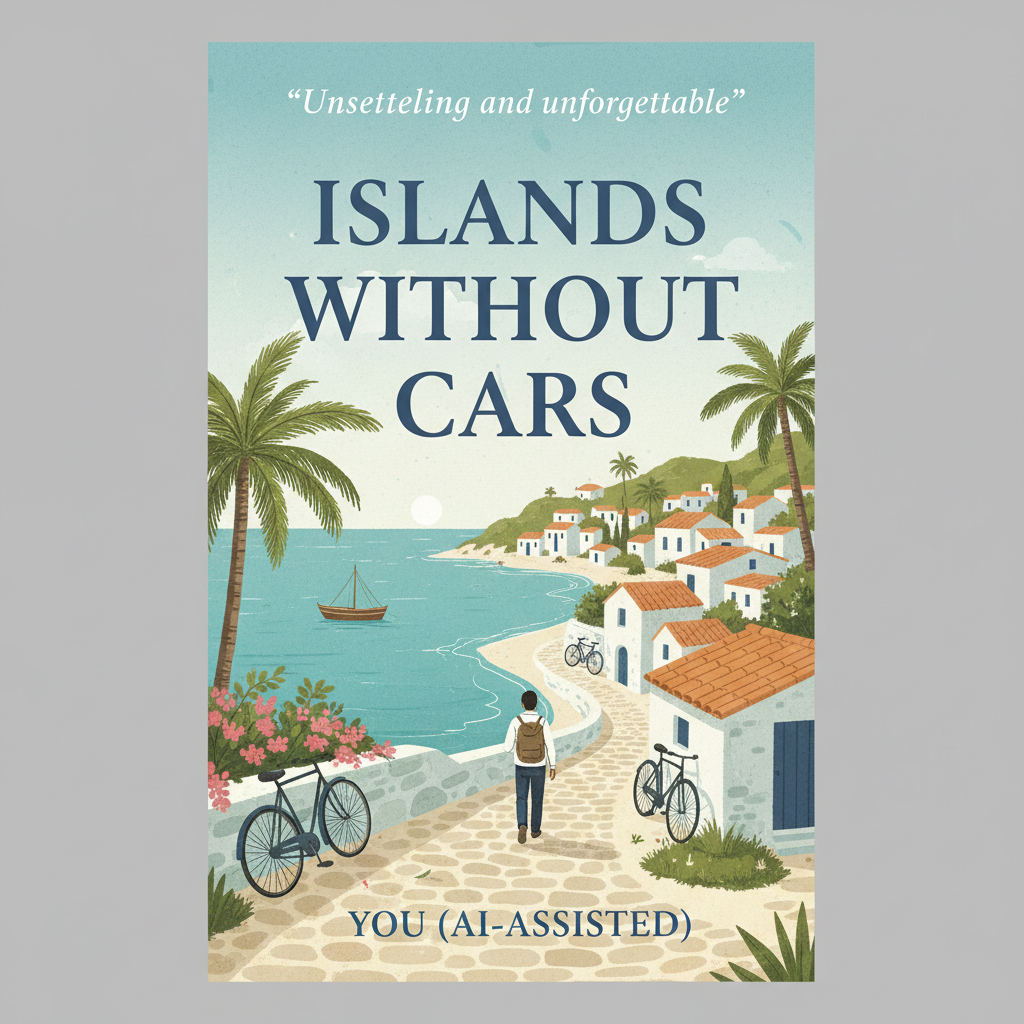
Synopsis
Journey through car-free European islands reveals how a slower pace of life profoundly reshapes community, time, and personal connection.
Chapter 1: The Quest for Quiet Shores
The insistent thrum of the city was a constant companion, a low-frequency hum that vibrated through the very soles of my feet. Even behind the thick, double-glazed window of my apartment, the sound was a phantom limb, an ingrained sensation. It was the rhythm of countless engines, a relentless current of human endeavor, and lately, it had begun to feel less like life and more like a slow, insistent drain.
I’d catch myself staring blankly at the blur of traffic, the endless procession of polished steel and flashing lights, and a hollow ache would settle in my chest. My days, too, felt like a series of increasingly urgent accelerations, punctuated by abrupt jolts to a halt. Emails stacked up like miniature gravestones, meetings bled into one another, and the simple act of walking to the corner store felt like navigating an obstacle course of hurried pedestrians and impatient delivery vans. The world, it seemed, was perpetually in a hurry, and I, unwillingly, was in tow.
It wasn't a sudden epiphany, more of a creeping realization, like moss clinging to a damp stone. I remembered a conversation with an elderly aunt, her voice raspy with age and a lifetime of gentle observations. "You know," she'd mused, stirring honey into her tea, "there's a whole world out there that still knows how to be quiet." I'd smiled, nodded, and promptly forgotten her words amidst the clamor of the everyday. But now, they echoed with a new resonance. Quiet. What did that even *feel* like anymore?
The idea for a different kind of journey wasn't born from a grand plan, but from a flicker of frustration during a particularly harrowing commute. A sudden, unexpected lane change brought me within inches of a brightly painted delivery truck. Horns blared, tempers flared, and for a fleeting moment, I imagined a world without them. A world… without cars.
The thought, initially absurd, lingered. It snagged on something deep within me, a longing I hadn’t fully articulated. I spent the rest of that day, and many subsequent ones, nursing the nascent seed of an idea. What if I could escape the relentless machinery of modern life, even for a short while? What if I could trade the roar of engines for the whisper of the wind, the blare of horns for the call of a seagull?
My evenings, once filled with the muted glow of a screen or the pages of a book, began to be consumed by a new kind of research. The internet, that vast and often cacophonous repository of information, surprisingly yielded treasures of tranquility. I typed in variations of "islands without cars Europe," and a trickle, then a stream, then a veritable flood of possibilities emerged.
The images began to paint a picture more vivid than any travel brochure. Narrow, cobbled paths, worn smooth by centuries of foot traffic and the occasional donkey cart. Houses, whitewashed and terracotta-roofed, clinging to sun-drenched hillsides. Azure waters lapping against shores unmarred by gasoline fumes. The faces of islanders, sun-creased and calm, gazing out at horizons that stretched, unbroken, to meet the sea.
I discovered the Aeolian Islands of Italy, particularly Stromboli, where the only vehicles were a handful of electric carts for essential services, and the rhythm of life was set by the rumblings of the active volcano. I read about Hydra in Greece, famous for its ban on motorized vehicles, its sole mode of transport being meticulously cared-for donkeys and their handlers. The Danish island of Læsø, with its thatched-roof houses and vast, empty beaches, offered a different kind of quiet – wind-swept and expansive. Even closer to home, car-free pockets of the German North Sea islands beckoned with their unique charm.
Each island, a distinct jewel, promised a variation on the same theme: a slower pace, a simpler existence, a forced reconnection with the fundamental act of walking. It wasn't about deprivation, I quickly realized, but about liberation. Liberation from the insistent demands of speed, from the necessity of navigation through a motorized world, from the constant background noise that had become an invisible shroud around my senses.
I imagined arriving at a harbor, not to the organized chaos of a bustling port with honking taxis and exhaust fumes, but to the gentle rocking of fishing boats and the murmur of conversation in an unfamiliar tongue. My luggage, I decided, would be minimal. A single backpack, perhaps, to be carried on my shoulders, a tangible commitment to the lightness of my intended journey. No wheels, no engines, just the steady rhythm of my own two feet.
The idea of walking everywhere, even with a backpack, felt almost revolutionary in a world obsessed with efficiency. It would mean slowing down, truly slowing down. Paying attention to the undulations of the path, the texture of the stone beneath my soles, the scent of wild herbs crushed underfoot. It would mean arriving somewhere, not in a rush, but with the quiet satisfaction of having truly traversed the distance.
I began to visualize the small moments: the morning light filtering through the window of a simple guesthouse, the smell of fresh bread from a village bakery, the taste of salt on the air as I walked along a deserted beach. I pictured conversations with locals, not rushed exchanges at turnstiles or ticket counters, but lingering chats over coffee in a sun-dappled square, perhaps even in broken English or clumsy hand gestures.
This wasn't just a vacation, I understood. It was an experiment. An expedition into a forgotten way of being. In my hurried, modern life, I often felt fragmented, my attention pulled in a thousand directions. I hoped these islands, devoid of the very thing that so often dictated my schedule, would offer a chance to reintegrate, to become whole again.
The practicalities slowly began to take shape. Flights to gateway cities, ferry schedules that felt more like invitations than strict timetables. Finding accommodation that embraced the car-free ethos – small, family-run establishments, often with charmingly uneven floors and windows that opened directly onto the village square. I wasn't looking for luxury; I was looking for authenticity, for a place that had remained largely untouched by the relentless push of progress.
One evening, while poring over a faded map of the Cyclades, my finger tracing the outline of a tiny, uninhabited islet, I felt a tremor of excitement, a genuine thrill that had been absent from my life for too long. It wasn’t the thrill of anticipation for grand adventures or exotic excursions. It was the thrill of quiet possibility, of a blank slate.
This journey, I realized, was not about reaching a specific destination as much as it was about embracing the journey itself, about allowing the absence of haste to reshape my perceptions. It was about discovering how much I could shed, both physically and mentally, and what would remain when the noise finally faded.
The city outside my window continued its restless murmur, but now, it felt a little more distant. The constant thrum was no longer quite so insistent. In its place, I could almost hear the whisper of waves, the distant bray of a donkey, the soft rustle of leaves in a Mediterranean breeze. The quest for quiet shores had begun to resonate, not just in my mind, but in my very soul. And the first step, I knew, would be to leave the familiar, insistent roar of the highway behind. The open sea, and the promise of stillness, beckoned. —
Chapter 2: Arrival on Hydra: A Symphony of Hooves and Footfalls
The ferry, a behemoth of white paint and roaring engines, coughed its last great sigh as it nudged the concrete jetty. A throng of bodies, a cacophony of languages, surged forward, eager to disembark. I followed the human current, my backpack feeling heavier with each step, a silent promise of the miles ahead. The ramp lowered with a hydraulic hiss, a grating sound that seemed to mock the quiet I was seeking. Then, with a collective shuffle, we were on Hydra.
The first thing that struck me wasn’t a sight, but a sound – or rather, the *lack* of one. The engines of the ferry, thankfully, were already fading, replaced by a symphony of gentle clatter. It was the rhythm of hooves on cobblestones. A parade of donkeys, laden with luggage, supplies, and sometimes even tired children, trotted past. Their breath plumed in the mild morning air, and the jingle of their bridles was a sweet, metallic whisper. Each footfall was a soft thud, a counterpoint to the insistent chirping of cicadas that had already begun their morning chorus from the cypress trees clinging to the hillsides. No sputtering engines, no honking horns, no screeching tires. Just the measured tread of beasts of burden and the syncopated rhythm of human footsteps.
The air itself felt different. Clean. Crisp. It carried the faint, briny scent of the Aegean Sea, mingling with the sweeter, earthier notes of wild herbs baking under the pale sun. The light here was gold, washing over the neoclassical mansions that hugged the horseshoe-shaped harbour, their terracotta roofs glowing like embers. Boats, bobbing gently, wore coats of sun-bleached paint – cerulean, emerald, crimson – their masts reaching towards the impossibly blue sky like slender fingers.
I stood for a moment, simply breathing and listening. The frantic pace of the ferry’s unloading faded into the background. My shoulders, braced for the usual assault of urban noise, slowly began to relax. This was it. The island without cars.
My initial steps were tentative. The cobblestones, worn smooth by centuries of hooves and feet, were uneven, demanding attention. Each stone was a small, cool pebble beneath my hiking boots. The streets themselves were narrow, twisting pathways, more like ancient streams carved into the hillside than planned arteries. They were built for passage, not speed.
A woman, her silver hair pulled back into a neat bun, effortlessly navigated the winding path ahead of me, a wicker basket overflowing with fresh bread perched on her arm. Her stride was confident, her gait unhurried. A young boy, no older than seven, zoomed past on a scooter, his laughter echoing off the whitewashed walls. He didn't swerve to avoid imagined traffic; he simply weaved, a carefree human shuttle.
I watched a string of donkeys being led by a sun-weathered man with a kind smile etched into the corners of his eyes. They carried monumental suitcases, strapped precariously to their backs, swaying gently with each step. The man greeted passersby with a nod and a murmur of "Kalimera," his voice raspy but warm. There was an unspoken understanding, a shared acknowledgment of each other's presence in this dance of slow motion.
My small guesthouse, 'The Azure Haven,' was tucked away up a labyrinthine alleyway. My rudimentary Greek, usually a source of mild embarrassment, felt more welcome here. "Parakalo? Pou einai...?" I’d ask, pointing vaguely at my phone map, and receive patient, sprawling directions, often accompanied by a gesture towards a distant church bell tower or a flash of bougainvillea. It wasn’t about efficiency; it was about the interaction.
The climb to my room was a series of steps, ever upwards. My calves, accustomed to the flat surfaces of city pavements, began to protest. But with each rise, the view unfurled further, revealing more of the hidden coves and the endless expanse of the Aegean. From my small balcony, I could truly appreciate the silence. The distant murmur of the harbour, the faint bleating of a goat somewhere on the hills, the occasional barking of a dog – these were sounds that punctuated the silence, not broke it.
Later that afternoon, after unpacking my modest belongings and allowing myself the luxury of a long, cool shower, I ventured out again. The sun had climbed higher, painting the town in bolder strokes of light and shadow. The air was warmer now, carrying the aroma of frying fish and strong Greek coffee. Tavernas, their blue and white checkered tablecloths fluttering gently, spill out onto the cobblestones. Cats, sleek and watchful, weaved between the legs of diners, hoping for a dropped morsel.
I found a quiet corner table at a small ouzeri, its proprietor a plump, jovial man with a formidable mustache. He spoke no English, and I, even less Greek, but we communicated with smiles and gestures. He brought me a small carafe of retsina, its resinous scent surprisingly pleasant, and a plate of fat, green olives. The retsina, cool and sharp, cut through the heat of the day. The olives burst with briny flavour.
I watched the world pass by. A group of elderly men, their faces tanned and weathered, played backgammon with a fierce intensity, the click of the dice against the wooden board a rhythmic counterpoint to the distant chime of the church bells. Children chased each other, their shrieks of joy echoing and then quickly fading into the quiet hum of the island. A solitary artist, perched on a stool, meticulously captured the play of light on a brightly painted fishing boat.
What struck me most was the pace. There was no urgency. Conversations unfolded slowly, punctuated by sips of coffee or languid gestures. People lingered. There was time for observation, for reflection. Nobody seemed to be rushing to be somewhere else. The destination was simply the next breath, the next moment.
I noticed how social interactions were shaped by this unhurried rhythm. Without the insulation of a car, people were forced into closer proximity. They shared paths, they made eye contact, they exchanged greetings. A polite "Kalimera" or "Yiasas" wasn't just a formality; it was an acknowledgment of shared space, shared existence. A small nod of respect.
That evening, as the sun dipped below the horizon, painting the sky in fiery oranges and soft purples, I made my way to a viewpoint high above the town. The harbour lights began to twinkle into existence, mirroring the stars that were slowly emerging in the deepening indigo sky. Below, the donkey bells, softer now, tinkled like tiny wind chimes in the evening breeze.
I saw a young couple walking hand-in-hand, their silhouetted figures moving gracefully up the steep rise. They weren't talking, but their closeness, their shared silence, spoke volumes. A group of friends shared a bottle of wine on a terrace, their laughter carrying on the still air. Everyone seemed connected, part of a larger, gentle tapestry.
The absence of cars didn't just remove noise; it removed an invisible barrier. It stripped away a layer of detachment, forcing a re-engagement with the immediate environment and, by extension, with its inhabitants. The world here felt more vivid, more immediate, because there was nothing to mediate the experience. Every scent, every sound, every touch of the breeze on my skin was amplified by the surrounding quiet.
I thought back to the frantic rush of my life before this journey, the constant blare of car horns, the distant rumble of traffic, the suffocating presence of exhaust fumes. Here, on Hydra, that entire sensory landscape was absent. In its place was a quietude that wasn't empty, but full. Full of life, full of history, full of the slow, steady pulse of a community that moved at the speed of human connection.
As the last sliver of sunlight vanished, leaving only the soft glow of the moon, I realised that the island had already begun to work its subtle magic. The muscles in my shoulders, which had been perpetually tense, had finally softened. The incessant chatter of my mind, usually a chaotic whirlwind of to-do lists and anxieties, had quieted. I felt a sense of peace settling over me, deep and undeniable. This wasn't merely a lack of noise; it was a profound sense of presence, an invitation to simply *be*. And as I stood there, under the vast, star-dusted canopy, listening to the murmuring rhythms of Hydra, I knew this was only the beginning.
Chapter 3: Sark's Unhurried Pace: Discovering Community in the Absence of Engines
The ferry to Sark was a small, stout vessel, dwarfed by the choppy grey waters of the English Channel. It tossed and rolled with an earnest determination, the low thrum of its engine a steady counterpoint to the complaints of gulls above. From the deck, the island emerged slowly from the mist, a jagged silhouette against the brightening sky, looking for all the world like a forgotten emerald jewel. Stepping ashore at Creux Harbour was less an arrival and more an immediate recalibration of all senses. The air, bracing and cool, carried the briney tang of the ocean mixed with something else, something earthy and warm – the scent of horses.
No roar of revving engines assaulted the ears, no impatient blare of a horn. Instead, a chorus of gentler sounds embraced the dock: the rhythmic creak of ropes, the slosh of water against the boat’s hull, and the soft, almost contemplative clip-clop of hooves on stone. A line of horse-drawn carriages, their polished wood glinting, stood ready to meet the new arrivals. They weren't ornate tourist traps, but workhorses, sturdy and practical, their drivers bundled in tweed and oilskin, their faces etched with the kind of calm that only a life lived at a different pace can confer.
I chose a carriage painted a cheerful sea-foam green, its velvet seats surprisingly plush. The driver, a woman with eyes the colour of the sea and a smile that crinkled the corners, introduced herself as Maggie. Her horse, a broad-backed mare named Bess, snorted softly as Maggie clucked, and we set off, leaving the small harbour behind.
The road, if it could be called that, was a narrow ribbon of dirt and gravel, winding steeply upwards. Hedgerows, thick with wildflowers and gnarled ancient trees, pressed in on either side, creating a tunnel of green that filtered the sunlight into dappled patterns on the ground. The only other traffic we encountered was a handful of bicycles, their riders offering a cheerful wave or a nod as they pedalled past. There was an unspoken camaraderie in these fleeting encounters, a shared understanding of the unhurried rhythm that governed this place.
"You'll get used to it," Maggie remarked, her voice a low murmur above the gentle jingle of Bess's harness. "The quiet, I mean. It takes some folk a day or two to properly hear it, past the buzz they bring with 'em from the mainland."
She was right. My ears, accustomed to the constant hum of distant traffic even in the quietest corners of my city flat, slowly began to discern layers of sound I had almost forgotten existed: the rustle of leaves, the persistent chirrup of unseen insects, the distant bleat of a sheep, and the ever-present, soothing sigh of the wind.
My small guesthouse, "The Elm Tree," was a whitewashed cottage nestled amongst a cluster of similar dwellings, its garden a riot of roses and lavender. Unloading my single backpack felt almost ceremonial, a private moment of shedding the weight of the outside world.
The days on Sark unfolded with a grace I hadn't known was possible. Without the exigency of hurried appointments or the temptation of quick, anonymous transport, every interaction felt more substantial. Getting from one place to another wasn't a means to an end, but an experience in itself. A walk to the village shop for a loaf of bread could easily stretch into an hour, punctuated by conversations with other islanders tending their gardens or simply sitting on a bench, watching the world drift by.
One afternoon, I found myself attempting to fix a perpetually flat bicycle tire outside the shop. My efforts, clumsy and largely ineffective, quickly drew the attention of Mr. Henderson, the shopkeeper, a man whose spectacles always seemed perched precariously on the end of his nose.
"Having a spot of bother there, are we, dear?" he asked, his voice softened by a thick Channel Island burr. Before I could adequately explain my mechanical ineptitude, he had disappeared inside, only to re-emerge moments later with a well-worn toolbox.
"Here, let an old hand have a look," he said, taking the wheel from my fumbling fingers. He worked with a quiet efficiency, his movements precise and practiced. As he patched the inner tube, he recounted tales of the island, of storms that swallowed the horizon and harvests that burst from the rich soil. He spoke of neighbours helping neighbours, of lending a hand with a wayward sheep or a broken fence, not out of obligation, but as an ingrained part of life.
"It's just how it is here," he shrugged, wiping grease from his hands with a scrap of cloth. "We all rely on each other. No big fancy machines to do everything for us, you see. If someone needs a lift for their weekly shop, you put it on the back of your cart. If a fence needs mending, you grab a hammer. It's not a burden, it's… well, it’s just living."
His words resonated deeply. On Sark, the absence of cars didn't just slow life down; it actively fostered a palpable sense of interdependence. When the local pub, The Barley Mow, needed fresh barrels of ale from the ferry, it wasn't a delivery truck that brought them up the winding lane, but a team of carthorses, often accompanied by a couple of volunteers from the village. Children weren't ferried to school in SUVs, but walked, cycled, or were sometimes given a lift in a neighbour's carriage, their laughter echoing across the fields.
One evening, a thick sea fog rolled in, blanketing the island in a damp, silent shroud. I was walking back from dinner at a friend's cottage, the path barely visible, when I heard the distinct ring of a bicycle bell approaching. A figure materialized out of the mist, a local fisherman I'd met at the pub, Mr. Priaulx, his face weathered and kind.
"Lost your way, a bit?" he asked, his voice unexpectedly close. "Can't see a foot in front of ya, can ya? Hop on, I'll take ya to your lane."
He didn't wait for an answer, simply motioned to the back of his sturdy bike, which, I now noticed, was fitted with a small, makeshift seat over the rear wheel. I awkwardly perched myself, holding onto his shoulders, and he pedalled slowly, carefully, through the dense fog, his bell ringing intermittently to warn any unseen pedestrians. The journey was short, but the gesture was immeasurable. It was a simple act of shared responsibility, a man looking out for his community, not because it was his job, but because it was simply *done*.
The natural rhythm of giving and receiving help was woven into the fabric of Sark life. There was no shame in asking for assistance, and no expectation of immediate reciprocation. It was a circular economy of kindness, where a small favour today might be repaid weeks later in a completely different form – a share of a bountiful vegetable harvest, a hand with a difficult repair, or simply a warm cup of tea and a listening ear.
Even the local doctor, Dr. Smith, made his rounds on a bicycle, his medical bag strapped to the front. I encountered him once, pedalling along a narrow lane, his white coat flapping gently in the breeze. He waved, a friendly smile on his face. He knew his patients not just by name, but by their gardens, their pets, the state of their fences. His visits were not fleeting consultations, but often extended to a cup of tea and a discussion about the weather, a testament to the slower, more personal connections fostered by the island's unique circumstances.
The absence of internal combustion engines meant that the landscape itself remained largely undisturbed by the intrusion of human machinery. The winding roads, carved by generations of horse-drawn carts and foot traffic, felt organic, part of the land rather than imposed upon it. The air, crisp and clean, tasted of wild herbs and sea spray. Even at night, the silence was profound, broken only by the hoot of an owl or the distant murmur of the waves.
My initial weariness of hurried existence began to truly recede. My internal clock, once dictated by deadlines and digital alerts, started to sync with the sun's arc and the tides' ebb and flow. Time expanded, unfurling like a slow-motion film. There was space for contemplation, for long walks along the rugged cliffs, for idle conversations that drifted pleasantly from one topic to another.
One blustery afternoon, I sat on a bench overlooking La Coupée, the dramatic, narrow causeway that links Sark to Little Sark. Below, the waves crashed against the rocks with a primal force. A young woman, her face flushed from cycling, stopped her bike beside the bench and offered me half of her homemade shortbread. We sat in comfortable silence for a while, sharing the sweet, buttery treat, watching the gulls wheeling overhead. She told me she had grown up on Sark, left for a few years to experience the "outside world," and ultimately returned.
"It just gets into your blood, this place," she said, gesturing vaguely at the expansive view. "The quiet. The knowing everyone. The feeling that you're part of something… smaller, but stronger, somehow. You don't get that on the mainland, not anymore. Too many cars, too many people rushing past each other, never really seeing each other."
She packed her bike and pedalled away, leaving me with her words and the lingering taste of shortbread. The absence of cars on Sark was more than just a logistical detail; it was a foundational principle that shaped the very spirit of the community. It necessitated reliance, fostered patience, and cultivated an intimate knowledge of one's neighbours and one's surroundings. It wasn't an escape from modernity, but an alternative, a living testament to a different way of being, where connection was not a luxury, but an absolute necessity.
As the days turned into weeks, I felt a subtle but profound shift within myself. The constant feeling of being ‘behind’ or ‘missing out’ that often gnawed at me in the city began to dissipate. There was no ‘fast track’ here; everyone moved at the same gentle pace. The urgency that had defined so much of my life felt increasingly alien, like a relic from a different era. The island didn’t demand that I hurry, but rather encouraged me to linger, to observe, to simply *be*.
Leaving Sark felt like extracting myself from a warm, comforting embrace. The small ferry, once again, bounced on the waves, carrying me back towards the distant thrum of the modern world. But something had changed within me. The echoes of hooves on stone, the friendly waves from passing cyclists, the genuine kindness of strangers, had imprinted themselves deeply. The quiet of Sark spoke not of absence, but of presence – the presence of a community intimately connected, resilient, and profoundly human. And as the island receded into the Channel mist, I knew I carried a piece of its unhurried heart with me, a seed of possibility for how life could be lived, and how much we had perhaps forgotten.
Chapter 4: Venice: A Labyrinth of Water and Steps
The vaporetto juddered to a halt, a gentle sigh of hydraulics escaping as its nose nudged the worn stone steps. The Grand Canal, a liquid ribbon of shimmering blues and greens, stretched before me, reflecting the ancient ochre and terracotta facades like a Monet painting brought to life. On Hydra, it was the bray of donkeys; on Sark, the clip-clop of hooves. Here, the symphony was subtler: the lapping of water against stone, the distant murmur of voices echoing off palazzo walls, and the rhythmic dip-and-pull of a gondolier's oar. Venice, an island city in the truest sense, and car-free by design, not by rustic charm or ancient decree, but by sheer, watery necessity.
Stepping off the boat, the air immediately felt different. Thicker, perhaps, imbued with the scent of damp stone, salt, and something subtly sweet, like old wood and roasted coffee. My boots found purchase on uneven flagstones, worn smooth by centuries of footsteps. There was no main road here, no pavement to delineate pedestrian from vehicle. The entire city was a pedestrian zone, a sprawling, intricate dance floor where the only vehicles were of the aquatic variety.
I pulled my small wheeled suitcase, its wheels an almost blasphemous sound against the quiet historical fabric, along the narrow *calle*. It was a futile gesture; within fifty yards, I encountered my first set of steps. And then another. And then a small bridge arching elegantly over a sliver of canal, requiring me to lift the case, its weight a sudden, jarring reminder of my earthly possessions. This wasn't a place for wheels, no matter how small. This was a place for hands, for feet, for the rhythm of walking and the strength of one’s own body.
My accommodation, a tiny room with a Juliet balcony overlooking a quiet canal in Castello, felt like a secret. Finding it had been an adventure in itself, a testament to Venice’s charmingly bewildering layout. Each turn into a new *sotoportego* – a covered passageway burrowing beneath buildings – felt like stepping into a new dimension, the light shifting, the air cooling. The Google Maps blue dot often spun in frustrated circles, unable to reconcile the labyrinthine reality with its neat grid. But this disorientation was not frustrating; it was an invitation. An invitation to lean into the lostness, to trust intuition, to simply *be* in the flow of the city.
The first full day was a baptism in stone and water. I walked. I walked until my calves ached in a way they hadn’t since my backpacking days, my neck craning to catch glimpses of architectural details high above the crowds. I crossed countless bridges, their worn stone arches acting as natural speed bumps, forcing a momentary pause, a chance to gaze down at the emerald water, often thick with gliding gondolas, their black forms sleek and silent, like elegant water beetles.
One such bridge led me to a small *campo*, a square bathed in the soft morning light. A baker was arranging glistening trays of *sfogliatella* in his window, the aroma of citrus and pastry warm and intoxicating. A group of elderly women, dressed in sensible cardigans despite the growing warmth, sat on a bench, their conversation a soft, melodic ripple of Italian. A child chased pigeons, their wings a sudden, noisy flurry against the serene backdrop. There were no car horns, no roaring engines breaking the spell. The dominant soundtrack was human: voices, laughter, the rhythmic clatter of plates from a nearby cafe, and always, the distant, hypnotic slosh of water. This absence was not a void, but a profound presence. It allowed the subtle textures of life to emerge.
I found myself pausing, not just to consult a map, but to simply absorb. The way the light played on the rough plaster of a centuries-old wall, revealing shades of rose and ochre I’d never noticed in photographs. The intricate ironwork of a balcony, each delicate curl a testament to forgotten craftsmanship. The muffled clang of a bell tower, its deep tones vibrating through the very stones beneath my feet. This wasn't merely sightseeing; it was an archaeological dig of the senses, unearthing layers of history simply by moving through the city at a human pace.
One afternoon, I surrendered to the quintessential Venetian experience: a gondola ride. Slipping into the plush velvet seat, the gondolier, a man with kind eyes and a weathered face, pushed off with a practiced grace. His oar, a long, elegant extension of his arm, dipped into the water, propelling us silently into a smaller canal, a shadowy artery off the tourist-choked Grand Canal. Here, the world narrowed. The palazzi loomed higher, their ancient foundations disappearing directly into the green water. Laundry lines stretched between buildings, a colourful testament to everyday life playing out above our heads.
The gondolier spoke little, but what he did say was imbued with a quiet pride in his city. He pointed out erosion lines on a building, explaining the centuries of high water, the ongoing battle with the very element that sustained Venice. He hummed a gentle tune, his voice low and comforting, as we glided beneath a low bridge, its stone belly cool and dark. Without the distraction of traffic, the constant vigilance required on a busy road, I felt my focus sharpen. I noticed the tiny mosses growing on the brickwork, the way the light fractured into a thousand green shards on the canal surface, the subtle creak of ancient beams overhead. It was a meditation in motion, a deeper engagement made possible by the absence of speed.
"It is a city that teaches patience," the gondolier finally said, his voice a soft rasp. "You cannot rush here. The bridges, the water… they decide the speed. And it is good, no?"
I nodded, feeling the truth of his words deep within me. On Hydra, the donkeys set the rhythm. On Sark, the horse and carriage. Here, it was the infinite twists and turns, the hundreds of bridges, the very nature of water itself, dictating a pace both slower and more deliberate. It wasn't just a physical slowness, but a mental one. My mind, usually a chaotic filing cabinet of to-do lists and future anxieties, felt unburdened, allowed to simply observe and absorb.
Exploring Venice on foot, away from the main thoroughfares, became my ritual. I discovered *campielli* no bigger than a living room, graced with a single wellhead and ringed by silent, shuttered windows. I found tiny bookstores tucked away, their shelves overflowing with ancient volumes, the air thick with the scent of aged paper. I stumbled upon hidden gardens, oases of green bursting forth from crumbling walls, their bright flowers a startling contrast to the muted tones of the city. These were the true veins of Venice, the places where everyday life continued, largely untouched by the selfie sticks and tour groups.
I stopped for an afternoon spritz in a quiet *bacaro*, finding a small table that cantilevered precariously over a narrow canal. The bittersweet orange of the Aperol, the fizz of prosecco, the gentle clinking of glasses – it all added to the sensory tapestry. A lone rowboat drifted past, its occupant a young woman casually balancing a large bag of groceries on her lap. It was a common sight, transportation woven into the very fabric of existence, not an addition or an afterthought. The lack of cars didn't just remove a nuisance; it fundamentally redefined how people lived, worked, and interacted with their environment. Deliveries arrived by boat, rubbish was collected by boat, ambulances and police used boats. The water wasn't a barrier; it was the highway.
As evening approached, the city transformed again. The crowds thinned, particularly away from San Marco. The lamp light glowed warmly on the slick cobblestones, reflecting in puddles left by the day’s occasional shower. The air grew cooler, carrying the faint, alluring scent of pasta and seafood from unseen kitchens. Wandering back towards my room, the silence was profound, broken only by the distant, mournful cry of a bell and my own footsteps.
I leaned against a centuries-old stone parapet, gazing out over a quiet canal. The water, mirror-smooth, reflected the distant constellations above. For all its beauty and romantic allure, Venice was also a city of constant adaptation, a testament to human ingenuity in the face of nature’s relentless embrace. And the absence of cars, far from being a quaint novelty, was its very lifeline. It forced a connection, a slower, more deliberate dance with a city constantly in flux. It presented its own challenges – the lifting of luggage, the endless steps, the occasional floods – but in doing so, it peeled away the layers of modern convenience, revealing a deeper, more profound engagement with place. It made you work for your understanding, and in that effort, lay its true magic. As the canal water lapped gently against the foundations below, I realised that every step taken, every bridge crossed, every silent glide on a gondola had chipped away at my own inner noise, leaving a quiet, receptive space. And I was ready for more.
Chapter 5: Embracing the Slow: Transformation on Giethoorn
The hum of an engine, a distant, forgotten drone. Here in Giethoorn, the air was a tapestry woven with the gentle splash of a punt pole, the distant quack of a mallard, and the whisper of reeds rustling against ancient wooden bridges. After the stone lanes of Hydra, the soaring cliffs of Sark, and the grand, echoing canals of Venice, Giethoorn felt like a secret garden finally unfurling its petals. It was a place painted in greens and blues, where water was not just a conduit but an embrace, flowing around every cottage, under every arching bridge, a liquid mirror reflecting the soft Dutch light.
My arrival had been quintessential Giethoorn. The bus dropped me at the edge of the village, a threshold marking the clear boundary between the hurried world and this watery haven. From there, a small electric whisper-boat, piloted by a sun-creased man named Hans, had glided me through narrow waterways, past thatched-roof farmhouses draped in flowering clematis and roses. Each home seemed to rise directly from the water's edge, its garden stretching towards the reflections, a vibrant riot of color against the placid surface. No roads, only canals. No cars, only boats. It was as if the village itself had decided to recline, to breathe slowly.
On my first morning, I found myself drawn to a small, rickety wooden bridge, one of dozens that arched gracefully over the canals. Below, a family of ducks paddled with an almost comical seriousness, their ducklings trailing in an obedient line. I leaned on the weathered railing, my gaze unfocused, simply watching the water ripple. I had planned my day with the usual urban precision: a visit to the museum, a boat tour, perhaps sketching by the church. But as the sun climbed higher, warming my skin, the rigid structure of my mental itinerary began to soften, to dissolve like sugar in tea.
There was no need for haste. Everywhere I looked, people moved with an unhurried grace. Children, their laughter echoing across the water, navigated small _punters_ with surprising dexterity, their poles dipping rhythmically. Elderly couples, seated on benches overlooking the canals, savored cups of coffee, their conversation a low murmur, punctuated by comfortable silences. Even the shopkeepers, accustomed to the gentle flow of tourists, rarely rushed a transaction. Each interaction felt extended, a moment to be lived rather than simply passed through.
I discovered that the lack of cars here didn't just slow down travel; it slowed down *time itself*. Without the urgent thrum of an engine hinting at destinations to be reached, appointments to be kept, the very concept of "getting somewhere" seemed to lose its sharp edges. Movement became less about covering distance and more about the act of moving itself.
One afternoon, I decided to rent a _fluisterboot_, a 'whisper boat,' so named for its silent electric motor. Hans, who rented them out of his small, charming shed nestled amongst weeping willows, gave me a brief, cheerful lesson. "No hurry, eh?" he said, his eyes crinkling at the corners. "Just follow the canals. If you get lost, just go straight. You'll find your way back."
His words, simple as they were, contained a profound truth about Giethoorn. There was no wrong turn, only a longer journey. I pushed off from the small dock, the boat barely disturbing the glassy surface of the canal. The motor whirred softly, a sound like a contented sigh. I felt a lightness I hadn't realized I was missing, a lifting of the perpetual deadline that seemed to hum beneath the surface of my consciousness in the outside world.
I spent hours drifting. Past immaculate gardens bursting with hydrangeas and fuchsias, past small, private jetties where bicycles leaned casually, past the open windows of homes from which the scent of baking bread would sometimes waft. I saw a woman tending her roses from a tiny rowboat, her straw hat shading her face. I waved to a group of friends sharing a bottle of wine on a picnic blanket by the water’s edge, their bare feet dangling in the cool canal. Everyone seemed to exist in a state of tranquil observation, of being utterly present.
My own perception of time began to loosen its grip. I found myself lingering. A particularly vibrant splash of orange petunias would catch my eye, and I would allow the boat to drift, absorbing the color, the interplay of light and shadow on the petals. I watched a heron perch motionless on a post, a statue of feathered patience, then dip its long beak into the water with a lightning strike. These moments, once fleeting observations, now became tiny universes, expanding to fill the unhurried space around them.
The internal monologue, a constant companion in my former life, began to quiet. The urge to plan, to analyze, to categorize, receded. Instead, I simply *was*. I felt the sun on my skin, the gentle sway of the boat, the faint, earthy scent of the canal water. My senses, long dulled by the onslaught of urban stimuli, sharpened. The chirping of a myriad of unknown birds became distinct, the subtle shifts in the breeze carried different whispers.
Even my interactions with others took on a different quality. When you meet someone on foot or in a boat, there's no metal barrier, no glass to separate you. A wave is direct, a smile unmediated. I found myself striking up conversations with perfect strangers, not out of obligation or necessity, but out of a genuine, unhurried curiosity. I asked a man about his meticulously tended bonsai trees, and he spent a good twenty minutes explaining the subtle art of their care. I complimented a woman on her extraordinary window boxes, and she invited me to stand on her bridge for a better view, recounting the history of her family's house.
These were not exchanges hurried by the pressure of time, but rich, unfolding narratives. They were connections formed in the quiet spaces between one moment and the next, nurtured by the shared understanding that there was nowhere else anyone needed to be.
One evening, as dusk painted the sky in hues of lavender and rose, I sat on the small terrace of my guesthouse, overlooking a particularly wide bend in the canal. The soft glow of interior lights began to appear in the scattered houses across the water, mirroring the stars that were just beginning to prickle the deepening sky. The air grew cooler, carrying the faint scent of woodsmoke.
I thought of my life before this journey – the frantic dashing from one meeting to the next, the constant checking of my phone, the pervasive sense of never quite having enough hours in the day. It was a life lived at high speed, like perpetually viewing the world through a car window, everything a blur. Here, in Giethoorn, the window had not just been lowered, it had been removed entirely. I was in the landscape, not just passing through it.
The transformation was profound, and surprisingly subtle. I wasn't just observing slow living; I was becoming it. My steps were softer, my gaze more expansive. My breathing felt deeper, more rooted. The anxious knot that often resided in my stomach had unravelled, replaced by a calm, quiet hum. It wasn't just a physical slowdown; it was a deceleration of the mind, a re-calibration of priorities.
The unexpected joys emerged from this quietude. The joy of a perfectly brewed cup of coffee savored without interruption. The joy of seeing a child's face light up as they successfully navigated their punt under a low bridge. The joy of the setting sun casting long, shimmering reflections on the water, a masterpiece painted anew each evening. These were not grand epiphanies, but gentle revelations, each one a testament to the richness found when the unnecessary rush is stripped away.
I realized then that the "treasure" I had been seeking on these car-free islands wasn't just peace, or quiet, or a different way of travel. It was a deeper connection. A connection to the natural world, undisrupted by engine noise. A connection to community, nurtured by shared spaces and unhurried interactions. But most importantly, it was a connection to myself – to the quiet, observant part of me that had been drowned out by the relentless tempo of modern life.
As the moon cast its silver path across the canal, I felt a deep sense of gratitude. Giethoorn, the village of whispers and waterways, had not just offered me a glimpse into a slower pace of life; it had allowed me to step fully into it, and in doing so, to rediscover a forgotten rhythm within my own heart. The world outside this watery embrace still existed, I knew, with its demands and its deadlines. But something fundamental had shifted within me, a recalibration that I suspected would linger long after I had left these gentle shores. The question now was, how would this newly found rhythm fare when confronted with the insistent beat of the world beyond?
Chapter 6: Echoes of Silence: Returning with New Eyes
The ferry horn sounded, a low, mournful bellow that cut through the still morning air of Giethoorn. It wasn’t a jarring sound, not like the blare of a city bus, but a resonant hum that seemed to vibrate in my very bones, a gentle punctuation mark to the end of a long, unfolding sentence. The mist still clung to the reeds along the canal banks, shrouding the little wooden bridges in a gentle, ethereal veil. My rucksack, lighter in spirit than when I first slung it over my shoulder months ago, felt comfortably worn against my back.
I watched the last of Giethoorn fade into the mist from the deck of the ferry, the iconic thatched roofs shrinking to dollhouse proportions. There was no lump in my throat, no cloying sadness, just a quiet sense of something rich and complete. The islands, each a distinct note in a symphony of slowness, had played their final chord. Hydra, Sark, Venice, Giethoorn – they now existed not just as places on a map, but as landscapes etched deeply onto the map of my own understanding.
The journey back was a gradual re-entry. The hum of the ferry engine, then the distant rumble of traffic as we neared the mainland, each sound a faint siren song calling me back to the world I’d left behind. It was a world I’d deliberately escaped, a world of perpetual motion and urgent deadlines, of notifications pinging and sirens wailing. And now, I was an emissary from a quieter realm, carrying the whispers of islands where time moved with the tides, and life unfolded at the pace of a donkey’s hoof or a punt pole's push.
I found myself noticing things I hadn’t before. Or rather, I noticed them *differently*. The frantic scurry of commuters on the train platform wasn’t just a blur; I saw the individual anxieties etched on their faces, the subtle shifts of shoulders hunched against invisible burdens. The symphony of city sounds, once a relentless assault, now separated into distinct layers: the distant drone of planes, the nearby murmur of conversations, the rhythmic click of heels on pavement. My ears, once accustomed to filtering out the noise, now seemed to embrace it, yet held onto a quiet inner chamber, a sanctuary built during those weeks of relative silence.
The ‘echoes of silence’ wasn’t just a poetic phrase; it was a physical sensation. It was the space between thoughts, the unhurried breath I now took, the way my gaze lingered a moment longer on a blooming window box or a child’s outstretched hand. The islands had given me the gift of attention – not just attention *to* something, but the *capacity* for it. They had stripped away the urgency, the compulsion to rush, and allowed the world to present itself in its own good time.
My first few days back home were a gentle experiment in re-integration. I tried to walk as much as possible, choosing the longer route through the park instead of the shortcut along the busy road. The leaves crunched underfoot, a familiar sound, yet somehow richer, more detailed than I remembered. I found myself instinctively slowing my pace, matching it to the ambling rhythm forged on narrow Venetian alleys and Giethoorn footpaths. It felt almost rebellious, this deliberate slowness in a world that championed speed.
One afternoon, I sat in a bustling coffee shop, the clatter of cups and the low roar of conversation swirling around me. Before, I would have been swallowed by it, my thoughts fragmented, my attention scattered. But now, I felt a calm anchor within. I observed the barista’s practiced movements, the delicate latte art, the way a young couple across the room leaned into each other, their laughter soft and genuine amidst the din. I wasn't just *in* the moment; I was fully, consciously *present* within it. It was like seeing in high definition after years of blurred vision.
"You look different," my friend, Sarah, remarked a few days later, her eyes narrowing as she studied me over a shared plate of pasta. "More… settled. Like you finally found that quiet you were looking for."
I smiled, a genuine, unhurried smile. "I think I learned how to carry it with me," I replied, twirling a strand of tagliatelle onto my fork. "The quiet, I mean. It’s not something you go *to* anymore, so much as something you discover *within*."
We talked for hours, not in the rushed, fractured way we often did, jumping from topic to topic, but with a lingering depth. I shared stories of the donkey trails of Hydra, the horse-drawn carriages of Sark, the silent glide of a gondola in Venice, the peaceful drift of a punt in Giethoorn. I didn't embellish or exaggerate; the simple truth of those experiences was vivid enough. And as I spoke, I noticed her own shoulders soften, her gaze become more attentive. Perhaps, I thought, these echoes of silence were subtly contagious.
The greatest challenge, I knew, would be maintaining this newfound equilibrium amidst the relentless demands of my old life. The emails would still pile up, the deadlines would still loom, the siren song of ‘efficiency’ would still whisper its temptations. But I had a secret weapon now: the memory of those islands, a vivid collection of sensory experiences.
When the urge to rush seized me, I’d close my eyes and feel the uneven cobblestones of Hydra beneath my feet, hear the jingle of donkey bells. When the world felt overwhelming, I’d recall the vast, star-dusted sky above Sark, the profound silence broken only by the chirping of crickets. When I felt disconnected, I'd remember the shared laughter with a Venetian gondolier, or the knowing nod from a Giethoorn local as our boats passed.
It wasn't about completely abandoning the modern world; that would be impossible, and perhaps even undesirable. It was about creating pockets of slowness, intentional pauses within the rush. It was about cultivating mindful attention, choosing where to direct my energy, and learning to say no to the incessant clamor that demanded it all.
I started a small ritual each morning. Instead of immediately reaching for my phone, I would make a cup of tea. I’d watch the steam curl upwards, inhale the earthy scent, feel the warmth of the mug in my hands. And for those few minutes, I would simply *be*, allowing the silence of the nascent day to seep in, a quiet communion before the world awoke in earnest. It was a tiny act of rebellion, a small victory for slowness.
The islands had taught me that community wasn’t just about proximity; it was about shared vulnerabilities and mutual support, forged in the absence of a quick escape. I found myself reaching out to neighbours more, offering a hand, lingering for a chat. I joined a local community garden, literally putting my hands in the earth, feeling the tangible connection to something larger than myself. These small interactions, once easily overlooked, now held a profound significance, echoing the interdependence I’d witnessed on Sark.
My perception of time had radically shifted. It was no longer a linear, finite entity to be conquered and subdivided, but a fluid, expansive element. The islands had shown me that time, when unburdened by haste, could stretch and deepen, allowing for richer experiences and more meaningful connections. I now approached tasks with a deliberate focus, finding that completing one thing well, without rushing to the next, often led to greater satisfaction and even, ironically, greater productivity in the long run.
The most profound shift, perhaps, was the understanding that these aren't just islands *without* cars, but islands *with* something else entirely. With more connection, more quiet, more mindful living. The absence of something disruptive created a space for something beautiful to flourish. And I realized that I, too, could cultivate such spaces within my own life, even in the heart of a city.
The journey had concluded, the physical distance between myself and the car-free havens now vast. Yet, the landscapes within me had been forever altered. The echoes of silence lingered, a gentle hum in the background of my everyday life, a constant reminder of the profound wisdom found in slowness, in community, and in the simple, unhurried unfolding of time itself.
And as I settle back into the rhythm of my old life, infused with the quiet understanding of my new one, I wonder: how many others, caught in the relentless current of modern living, might also find solace in the gentle whisper of these car-free shores? And what would they discover, not just about the world, but about the depths of their own capacities, when the engines finally fall silent?