Bitter Roots, Broken Earth
By @fenk
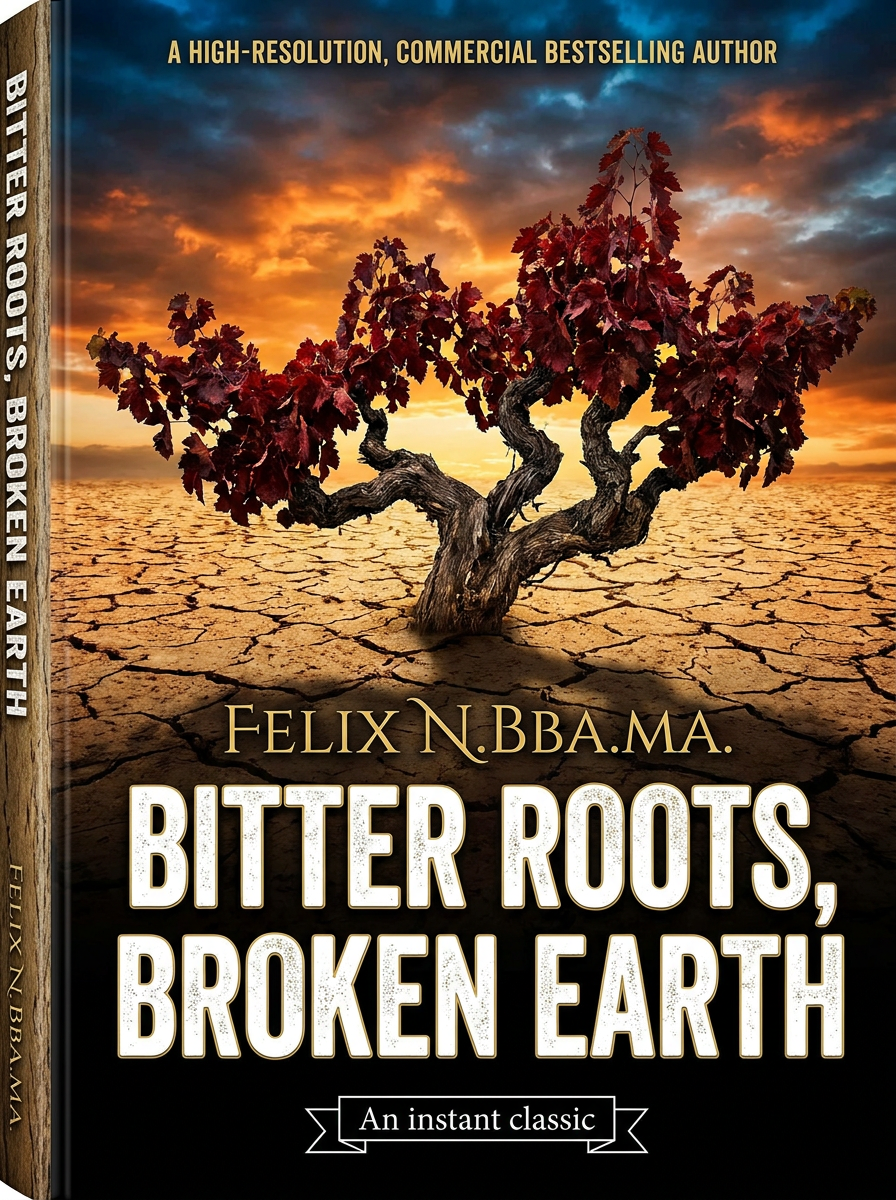
Synopsis
Ten years of manipulation by a well-meaning but misguided brother is exposed, shattering Julian and Eden's fragile reconciliation. As they grapple with Henry's betrayal and the devastated vineyard, they must unearth deeper truths and confront the 'bitter root' of their past to forge a future, or ris
Chapter 1: The Unveiling Storm
The scent of damp earth and crushed grapes still clung to Eden, a phantom echo of the storm and the kiss that had almost, almost, promised absolution. But the smell was soured now, curdled by the acrid tang of betrayal. Henry’s journal lay open on the old pine table, a silent, damning witness. Its pages, filled with neat, looping script, had bled poison into the very air of Vineyard’s End, contaminating everything.
Julian stood opposite her, hands clenched into fists that trembled not from rage, but from a grief so profound it seemed to vibrate the very floorboards beneath their feet. The storm outside had died to a mournful whisper, but an even more violent tempest raged in his eyes – a maelstrom of confusion, fury, and a bottomless, gut-wrenching hurt. His face, usually a study in controlled emotion, was stripped bare, ravaged. The raw intensity of his pain was a physical thing, eclipsing her own simmering resentment, making her feel almost an interloper in his personal apocalypse.
“He… he thought he was protecting us,” Julian choked out, the words ripped from him as if each one tore a fresh wound. His voice was a rasp, barely audible above the drumming of his own blood. “Protecting us from… from ourselves.” He laughed then, a short, sharp bark devoid of humor, a sound that made the hairs on Eden’s arms prickle. “From a love he deemed too messy, too inconvenient for his grand design.”
Eden flinched, the accusation in his tone a whiplash. “Julian, I didn’t know…”
“Didn’t know?” He took a stumbling step forward, his eyes, usually the color of a stormy sea, now flat and dead, devoid of all light. “You didn’t know his pronouncements, his ‘wise counsel,’ were all engineered? That he played us like marionettes, pulling strings he’d tied a decade ago?” He gestured wildly at the journal, its pages catching the dim light from the single oil lamp. “He *confessed* it, Eden. He saw us, saw *us together*, and decided we weren’t… good enough. Not for Vineyard’s End. Not for his precious legacy.”
The words were a hammer blow, not just to her, but to the very foundation of Julian’s world. Eden saw it then, truly saw it. This wasn’t just about their broken past; it was about the shattering of his entire perception of his brother. Henry, the steadfast, the righteous, the one who had always held the family together, was revealed as a puppet master, a manipulator, a man who had loved them with a twisted, suffocating possessiveness. The betrayal was absolute, leaving Julian adrift on an ocean of incomprehension.
“He said,” Julian continued, his voice softer now, dangerous in its quietness, “that you were too… flighty. Too ambitious. That I was too… lost. That we would ruin each other, ruin *this*.” His hand swept vaguely around the room, encompassing the old house, the land beyond. “He convinced me, Eden. He painted you as the siren, the one who would drag me from my art, from my duty. And he painted me to you, didn’t he? The reclusive artist, too damaged to love.”
Eden felt a cold dread spread through her. He was right. Henry had indeed woven a narrative, subtle at first, then increasingly overt, that had chipped away at her conviction, making her doubt Julian’s feelings, then her own worth. She remembered the dismissive comments, the carefully placed ‘concerns’ about Julian’s temperament, his inability to handle the pressures of a relationship. She had dismissed them at the time as a brother’s worry, a protective instinct. Now, they were shards of glass, piercing her memory.
“I… I believed him, Julian,” she admitted, her voice cracking. The confession was a bitter pill. She had been so sure of her own strength, her own judgment, but Henry had found the cracks, the insecurities that had always lingered beneath her confident exterior. He had exploited them with surgical precision. “He was so convincing. He always seemed to know best.”
“He knew best?” Julian’s head snapped up, his eyes flashing with a renewed inferno. “He knew best to destroy our lives? To steal a decade from us? To make us strangers, then force us back together under false pretenses just so he could… what? Watch from the grave as his grand experiment unfolded?” He slammed his fist onto the table, the old wood groaning in protest. The journal leaped, its pages fluttering like frightened birds. “He was a monster, Eden. A goddamn monster disguised as a benefactor.”
The ferocity of his words, the raw, unvarnished hatred in his tone, chilled her to the bone. This wasn't the Julian she knew, not the Julian she had been slowly, tentatively, falling back in love with. This was a man utterly broken, his moral compass spun wildly off course by the revelations. The depth of his brother’s deceit had not only destroyed their past but had also poisoned the very foundation of his identity. Henry, his brother, his confidante, his only remaining blood, was gone, replaced by a ghost of manipulation.
Eden felt a strange, unsettling blend of guilt and indignation. Guilt, for her own gullibility, for allowing herself to be swayed. Indignation, for being so thoroughly, so cruelly, played. But paramount was the stark, horrifying realization that Julian’s pain dwarfed hers. His grief was a vast, dark chasm, and she, unknowingly complicit in the charade, felt as if she stood precariously on its precipice.
The room was silent save for the drip, drip, drip of water from the eaves outside, each drop a tiny hammer blow against the quiet. Julian stood frozen, arms hanging loosely at his sides, his gaze fixed on nothing, seeing everything. He looked like a man who had suddenly found himself walking on air, the ground beneath him having vanished without a trace. His entire life, the narrative of his family, his relationships, his art – all of it was now suspect, tainted by the bitter truth.
“What was it all for, Eden?” he whispered, his voice dangerously hollow. “What was the point of any of it?”
The question hung in the air, a poisoned chalice. And Eden, looking at the wreckage of Julian Vance, knew that the storm outside was nothing compared to the one that had just been unleashed within them. The unveiling was complete, and the storm had only just begun.
Chapter 2: Echoes in the Mud
The wind, a mournful banshee in Chapter One, had moved on, leaving behind a silence that was heavier, more oppressive than any storm. It was the silence of a tomb, a quiet that reverberated with the unspoken and the deeply felt. The vineyard, once a vibrant tapestry of green and gold, was now a tableau of devastation, a landscape scarred and broken. Vines, ripped from their trellises, lay like dismembered limbs in the mud. The air, still thick with the smell of damp earth and crushed leaves, carried a faint, cloying sweetness – the scent of shattered grapes, fermenting prematurely, a morbid perfume of ruin.
Julian walked among the wreckage, his boots sinking into the sodden ground with a squelch that echoed the churning in his gut. The anger that had burned so hot in the house now smoldered, a subterranean fire threatening to erupt. It wasn't just Henry's betrayal, though that was the bitter core of it. It was the absolute, unadulterated *mess* of it all. The physical destruction mirrored the internal chaos, and Julian, a man who thrived on order and control, felt himself teetering on the brink of an abyss.
He hadn’t slept. Not really. The few hours he’d spent in a fitful doze had been plagued by nightmares: Henry’s face, contorted into a grotesque, knowing smile, whispering justifications; Eden, her eyes wide and accusing, a silent condemnation. He’d woken with a gasp, the taste of ash in his mouth, and the desperate need to *do* something. Anything.
The vineyard became his battlefield, his penance. He attacked the fallen vines with a savage intensity, his hands, usually so precise in their delicate work, now tearing at the tendrils, yanking at the rootstock. He worked without a plan, without a thought, just a primal urge to destroy the destruction, to impose his will on the chaos. His movements were jerky, almost violent, each pull and snap a release of the coiled fury within him. The mud splattered his clothes, caked his hair, but he barely noticed. It was a physical manifestation of the filth he felt, the grime of deceit that had seeped into every corner of his life.
He knew Eden was there. He could feel her presence, a quiet hum at the periphery of his awareness, like a ghost in the periphery of a vision. She moved with a different rhythm, a methodical, almost ritualistic pace. While he tore, she mended. While he raged, she observed. He heard the distant clatter of tools, the soft scrape of a shovel. He imagined her, her brow furrowed in concentration, her hands, once so intimately entwined with his, now tending to the wounded earth.
The thought brought a fresh wave of bitterness. Eden. She was part of this. Not in the malicious, calculating way Henry had been, but in a way that felt almost worse. Her compliance, her quiet acceptance of Henry’s manipulations, had allowed this rot to fester. He remembered her words, her desperate plea for understanding, her admission of being caught in Henry’s web. But understanding felt like a luxury he couldn't afford, not when the very ground beneath his feet felt like quicksand.
He paused, leaning against a broken trellis, his chest heaving. The sky was a bruised purple, promising more rain. A shiver, not from the cold, ran down his spine. He looked out at the desolation, and for the first time, a flicker of something beyond anger pierced through him – a profound, bone-deep despair. This wasn't just a vineyard; it was their legacy, their future, their intertwined history. And it was broken.
Eden found a strange comfort in the methodical rhythm of repair. Each fallen stake re-driven, each twisted wire straightened, was a small victory against the overwhelming tide of destruction. The physical labor was a balm, a way to channel the frantic energy that pulsed beneath her skin. Unlike Julian, who seemed to be wrestling with the very earth, she sought to coax it back to life, to tend to its wounds with a quiet reverence.
She understood Julian's rage. She had seen it in his eyes, felt it in the tremor of his voice when he’d confronted her. And she knew, with a certainty that chilled her to the bone, that a part of that rage was directed at her. It was a bitter pill to swallow, but she accepted it. She *had* been complicit. She had allowed Henry’s narrative to become her own, had let him dictate the terms of her relationship with Julian, all under the guise of ‘protection.’
The morning after the storm, after Julian had stormed out of the house, a silent, furious specter, Eden had walked the vineyard alone. The devastation had hit her with a physical force, a punch to the gut. The broken vines, the scattered grapes, the overturned barrels – it was a mirror to her own shattered world. But amidst the ruin, she saw something else: resilience. The earth, though wounded, held the promise of renewal. And in that promise, she found a fragile hope.
She started with the irrigation lines, carefully rejoining severed pipes, her fingers numb with cold and concentration. The work was tedious, repetitive, but it kept her mind from spiraling into the abyss of guilt and regret. She thought of Henry, his meticulously kept journal, his carefully constructed web of lies. She tried to reconcile the loving, protective brother she had known with the manipulative puppeteer revealed in those pages.
It was like trying to hold smoke. The image of the Henry she’d believed in kept dissolving, replaced by the chilling portrait of a man obsessed with control, a man who had loved Julian so fiercely that he’d broken him in the process. He had genuinely believed he was doing the right thing, she was sure of it. That was the most terrifying part. His intentions, twisted as they were, had sprung from a place of love. A love so possessive, so misguided, that it had become a poison.
She straightened, wiping a streak of mud from her cheek with the back of her hand. Her gaze drifted towards Julian, a dark silhouette against the bruised sky. He was still at it, a whirlwind of furious energy. She saw the strain in his shoulders, the rigid set of his back. He was punishing himself, she realized, as much as he was punishing the vineyard. He was punishing himself for not seeing, for blindly trusting his brother, for the decade he had lost.
A pang of empathy, sharp and unexpected, pierced through her. He was hurting, deeply. And she, in her own way, was a constant reminder of that hurt. She wondered if he would ever forgive her. If *she* would ever forgive herself.
She moved towards a cluster of young vines, still clinging tenuously to their stakes. They were fragile, vulnerable, much like her own sense of self. She began to carefully tie them, her movements gentle, almost reverent. Each knot she tied was a small act of faith, a whispered prayer for healing.
The air grew heavy, the sky darkening further. The first drops of rain began to fall, fat and cold, splattering on the leaves, on the mud, on her face. Julian didn't stop. He seemed to welcome the rain, letting it wash over him, perhaps hoping it would cleanse him of the bitter residue of betrayal.
Eden watched him, a knot of worry tightening in her stomach. He was pushing himself too hard, physically and emotionally. He looked utterly spent, a raw nerve exposed to the elements. She knew he wouldn’t listen to her if she tried to intervene, not now. The chasm between them felt too wide, too deep to bridge with mere words.
She continued her work, the rain soaking her hair, plastering it to her scalp. The methodical nature of it grounded her, prevented her from succumbing to the despair that threatened to engulf her. She focused on the immediate, the tangible. The rain washed away the mud, but not the scars. Not yet.
As the day wore on, the light began to fade, casting long, distorted shadows across the ravaged vineyard. Julian finally stopped, his movements slow and heavy. He stood for a long moment, his head bowed, rain streaming down his face, indistinguishable from tears. He looked utterly defeated, a man stripped bare.
Eden's heart ached. She wanted to go to him, to offer comfort, to bridge the silence that had grown between them like a thorny hedge. But she held back. He needed space, she knew. He needed to grapple with this on his own terms.
He turned eventually, his eyes, dark and haunted, sweeping across the landscape, then settling on her. There was no recognition there, no warmth, only a profound weariness, and something else – a flicker of resentment, quickly veiled.
He didn't speak. He simply turned and walked away, his shoulders slumped, disappearing into the deepening twilight. Eden watched him go, a cold emptiness settling in her chest. The rain intensified, blurring the edges of the ruined vineyard, blurring the lines between hope and despair.
She remained for a while longer, the rain a steady drumbeat against the earth, a mournful dirge for what was lost. The mud, churned by Julian’s furious work, by her own methodical efforts, was a tangible representation of their predicament. It was the bitter earth, scarred and broken, but still holding the promise of roots, if only they could find a way to plant them again.
She thought of Henry, again. His face, smiling from a faded photograph on the mantelpiece in the house, a carefully constructed image of benign authority. The man who had orchestrated their lives, believing he was saving them from themselves. He was gone now, his manipulative presence replaced by the echoing silence of his absence. But the echoes of his actions, the reverberations of his carefully laid plans, still vibrated through every inch of their lives, through every broken vine, every clod of mud.
The ‘bitter root’ of their past, the logline had said. She understood it now, with a chilling clarity. It wasn't just Henry's manipulation. It was the unspoken resentments, the unaddressed fears, the decades of unspoken truths that had allowed his manipulations to take root and flourish. They had all been complicit, in their own ways, in the silence, in the avoidance, in the comfortable illusion of a perfect family.
She looked at her mud-caked hands, the calluses forming on her palms. They were the hands of a worker, a survivor. And she would survive this, she vowed. She would fight for this land, for this life, for the possibility of a future, even if it meant doing it alone. But a part of her, a small, stubborn part, still clung to the hope that Julian would find his way back, that they could unearth the deeper truths together, and somehow, against all odds, forge a new path from the bitter earth. The rain continued to fall, a relentless weeping, washing away the surface dirt, but leaving the deeper wounds exposed, raw, and aching. The night promised to be long, and cold, and full of echoes.
Chapter 3: Silas's Quiet Wisdom
The air hung heavy with the scent of wet earth and something else, something acrid and metallic, like old blood. It clung to the leaves, still dripping from the storm’s violent passage, and settled in the hollows of the vineyard, a silent, pervasive reminder of what had been lost. Julian, a silhouette against the bruised morning sky, moved among the broken trellises and uprooted vines like a man possessed by a restless spirit. His hands, gnarled and stained with mud, worked with a frantic energy, tearing at the debris, clearing the tangled wreckage with a grim determination that bordered on self-flagellation. He hadn’t spoken a proper word to Eden since the confrontation, his grief a barbed wire fence he’d erected around himself, sharp and impenetrable.
Eden watched him from the porch, a mug of lukewarm coffee clutched in her hands, its steam long since dissipated. Her own grief was a quieter, more insidious thing, a dull ache that had burrowed deep into her bones. Henry’s journal had laid bare a decade of carefully constructed illusions, and the ensuing storm had torn down the physical manifestation of their life together. She felt a profound weariness, a sense of being adrift in a sea of broken promises and unspoken truths. The vineyard, once a symbol of their shared dreams, now lay in ruins, a mirror reflecting the devastation within them.
She saw Silas then, emerging from the dense woods that bordered the property, his figure stoic and unhurried even as the morning chill bit at the air. He was an old man, older than the oldest vine, with eyes that held the deep, knowing stillness of ancient rivers. He’d been a constant presence on the vineyard for as long as Eden could remember, a silent sentinel, always there, always observing. He carried a gnarled walking stick, its wood polished smooth by years of use, and his worn denim jacket seemed to absorb the shadows around him. He moved with a reverence for the land, his footsteps light despite his age, as if he understood the earth’s fragile memory.
Silas approached Julian first, his gaze sweeping over the ravaged rows, then settling on the younger man’s hunched form. Julian didn’t acknowledge him, continuing his furious work, his breath coming in ragged gasps. Silas simply stood there, a silent, unmoving presence, until Julian, perhaps sensing the weight of his gaze, finally paused, his shoulders heaving.
“Morning, Julian,” Silas’s voice was a low rumble, like distant thunder, carrying with it the grit of the earth and the wisdom of years. He didn’t raise his voice, yet it cut through the air, demanding attention.
Julian grunted, a noncommittal sound that could have meant anything. He wiped a smear of mud from his forehead with the back of his hand, his eyes still fixed on the twisted wreckage before him.
“Hard winds,” Silas observed, his gaze tracing the path of destruction. “Always are, when something’s been held too tight for too long.”
Julian stiffened, his head snapping up. His eyes, usually a warm hazel, were now cold and clouded, like a winter sky. “It was a storm, Silas. Just a damn storm.”
Silas’s lips, thin and chapped, curved into a faint, almost imperceptible smile. “Storms, they don’t just happen, Julian. They brew. They gather. They wait for the right moment to break what’s been built on shaky ground.” He paused, letting the words hang in the air, heavy and resonant. “This land, it remembers. It remembers the careful hands that tended it, and it remembers the hands that tried to force it.”
Julian turned away, resuming his frantic clearing. “What are you talking about, Silas? Are you going to start talking about ‘the spirit of the land’ again? My brother manipulated us for ten years, and now the vineyard’s ruined. That’s all there is to it.”
Silas’s gaze softened, a flicker of something akin to pity in their depths. “Henry, bless his misguided heart, he only ever saw the surface, Julian. He saw the vines, the grapes, the yield. He never saw the roots. Never saw what was choking them.” He took a step closer, his voice dropping to a near whisper. “Grief, Julian, it’s a funny thing. Sometimes it’s a storm that rips everything apart. And sometimes, it’s a slow poison that seeps into the soil, killing things from the inside out.”
Julian stopped, his hands frozen on a broken trellis. He looked at Silas, his eyes narrowed, a spark of something raw and exposed flickering within them. “What are you saying?”
Silas met his gaze, unflinching. “I’m saying that Henry’s betrayal, as you call it, is a symptom, not the disease. It’s a crack, not the earthquake. The earthquake, Julian, that’s been rumbling under this land for a long, long time.”
He then turned, his gaze sweeping over to where Eden stood, still and silent on the porch. She felt a prickle of unease, as if he could see not just her, but the unspoken anxieties that coiled within her. Silas began to walk towards her, his movements slow and deliberate, leaving Julian staring after him, a strange mix of anger and confusion etched on his face.
As Silas approached, Eden felt a peculiar mix of apprehension and a strange, almost desperate hope. She’d always found solace in his quiet presence, in the way he seemed to understand things that others missed.
“Morning, Eden,” he said, his voice as gentle as the rustle of dry leaves. He looked at her, his eyes taking in her tired posture, the faint shadows beneath her eyes. “You look like you’ve been wrestling ghosts.”
Eden managed a weak smile. “Something like that, Silas. More like a whole graveyard of them.”
Silas nodded, his gaze lingering on the devastation of the vineyard. “Graveyards, they’re not just for the dead, child. They’re for the living too. A place where we bury what we can’t bear to look at, what we can’t bear to speak.”
He leaned against the porch railing, his walking stick propped beside him. “This land, it’s got a long memory. It remembers the good harvests, the laughter. But it also remembers the tears, the arguments whispered in the dark, the hopes that withered before they could bloom.” He paused, his eyes fixed on a twisted vine, its once vibrant leaves now brown and brittle. “Henry, he was trying to protect you both. In his own way. He saw the cracks, you see. He just tried to patch them with lies, instead of letting them breathe.”
Eden’s breath caught in her throat. “But why, Silas? Why did he think we needed protecting from each other? From the truth?”
Silas turned his ancient eyes to her, a profound sadness in their depths. “Because the truth, Eden, it’s often a bitter root. And sometimes, we’d rather live with a pretty lie than pull up the ugly truth and face what’s underneath.” He gestured with his chin towards Julian, who was now moving with a slower, more deliberate pace, his anger seemingly tempered by Silas’s words. “He’s hurting. More than he lets on. More than he even knows.”
“I know he is,” Eden whispered, her voice thick with unshed tears. “But he won’t let me in. He won’t talk about it. He just… he just works.”
Silas’s gaze was piercing. “Work is a good distraction, child. A way to feel like you’re doing something, when what you really need to do is *feel* something. But the ground, it remembers. And what’s buried, eventually, it always finds a way to the surface.” He reached out, his gnarled hand gently touching a leaf from a nearby potted plant, its edges already browning. “You can prune the dead leaves, but if the root’s diseased, the plant will still die.”
Eden looked at him, a sudden, chilling understanding dawning on her. “Are you saying… are you saying Henry’s manipulations aren’t the real problem? That it’s something else?”
Silas nodded slowly. “Henry’s actions, they were a consequence, not a cause. He saw the silence between you two, the things left unsaid, the wounds left unhealed. He saw the way you both clung to the past, to what you thought you had, and he tried to keep it from crumbling. But you can’t build a future on a foundation of unexamined pain.” He let out a long, slow sigh, the sound like wind through dry grass. “This land, it holds the memory of every joy, every sorrow. And it holds the memory of what you both lost, long before Henry ever started weaving his tangled web.”
He looked from Eden to Julian, who was now leaning against a fallen oak, his head bowed. “You two, you’re like two ancient trees, growing side by side, their roots intertwined beneath the soil. But somewhere along the way, something grew between those roots, something that started to choke them. Henry, he tried to pull it out, but he didn’t know how. So he just tried to cover it up, hoping it would go away.”
Eden felt a cold dread seep into her. She thought of the unspoken resentments, the small slights that had festered over the years, the way they’d both retreated into their own corners after certain arguments, leaving things unresolved, unaddressed. She thought of the unspoken fears they’d both carried, the ones they were too afraid to voice, even to each other.
“What was it, Silas?” she asked, her voice barely a whisper. “What was the bitter root?”
Silas’s eyes, ancient and wise, held hers. “That, child, is a question only you and Julian can answer. It’s buried deep. Deeper than Henry’s journal, deeper than the storm’s damage. But until you dig it up, until you face it together, this land, and your lives, will never truly heal.” He pushed off the railing, his gaze sweeping over the ravaged vineyard once more. “This land, it tells its stories. And sometimes, the stories are hard to hear. But you have to listen. You have to listen to what the earth is trying to tell you.”
He turned then, his figure receding into the dappled light of the woods, leaving Eden alone with the echo of his words and the vast, silent devastation of the vineyard. His cryptic observations, like seeds planted in fertile ground, had begun to sprout, pushing her to look beyond the immediate pain of Henry’s betrayal, to confront the deeper, more insidious rot that had been festering beneath the surface of their lives. She looked at Julian, still and solitary against the backdrop of ruin, and a new kind of fear, colder and more profound, began to take root within her. The storm had ripped away the layers, and now, exposed and vulnerable, they were left to face the true nature of the ground they stood on, a ground not just broken by the storm, but poisoned by the bitter roots of their own unaddressed past.
Chapter 4: The Ghost of the Studio
The air in Henry’s studio was thick with the ghost of him. Not a spectral form, but the lingering scent of turpentine and oil paint, the faint metallic tang of old canvas, the very dust motes dancing in the shafts of weak afternoon light that pierced the grimy windows. Julian pushed the heavy oak door open, the groan of hinges a mournful sigh, and stepped inside, his boots scuffing on the paint-spattered floor. It felt less like a room and more like a mausoleum, a shrine to a life that had, in its final act, detonated everything around it.
He hadn’t been in here since the funeral, a blur of polite condolences and averted gazes. Before that, it had been a place of easy camaraderie, of Henry’s booming laughter and the clink of glasses as they’d discussed art and life, often with Eden perched on a stool, her smile a beacon. Now, the silence was absolute, pressing in on him, amplifying the frantic beat of his own heart.
His gaze swept over the familiar chaos. Easels stood like skeletal sentinels, canvases stacked against the walls like silent witnesses. There were unfinished works, half-formed images that seemed to writhe with unspoken intentions, and completed pieces, their vibrant colors muted by the film of dust. Each painting was a fragment of Henry’s soul, a piece of his artistic journey, but now, Julian saw them through a prism of betrayal, every brushstroke imbued with a sinister undertone.
He walked slowly, his fingers tracing the rough texture of a canvas depicting an ancient oak, its gnarled branches reaching towards a storm-darkened sky. Henry had loved trees, had seen in their enduring strength a metaphor for life itself. Now, Julian saw only the twisted roots, the hidden decay. He moved past landscapes of the vineyard, the familiar rows of vines rendered with an almost reverential beauty, past still lifes of forgotten objects, each one a testament to Henry’s meticulous eye.
Then he saw it. The portrait of Eden.
It stood on an easel in the center of the room, draped with a thin, pale sheet. Julian approached it with a dread that was both magnetic and repellent. He reached out a hand, his fingers trembling slightly, and pulled the sheet away.
Eden stared back at him, or rather, a partial Eden did. Her face was almost complete, her eyes, those striking emerald pools, captured with an unsettling intensity. Her lips, usually so expressive, were held in a soft, enigmatic curve, a hint of a smile that never quite materialized. Her hair, a riot of auburn curls, flowed over her shoulders, but beneath her neck, the canvas was bare, only the preliminary charcoal lines outlining the graceful curve of her collarbone, the nascent swell of her breast. It was a study in arrested motion, a beauty frozen on the cusp of revelation.
A cold knot tightened in Julian’s stomach. This wasn’t just a portrait; it was a testament to Henry’s obsession, a monument to the twisted affection that had driven his manipulations. He remembered Henry talking about it, years ago, when he’d first started. “She’s a challenge, Jules,” he’d said, a glint in his eye. “Impossible to capture fully. Too much light, too much shadow.” Julian had dismissed it as artistic hyperbole then, but now, the words echoed with a sinister resonance. *Too much light, too much shadow.* Henry had sought to control both, to sculpt Eden into his own idealized vision, even if it meant extinguishing her true self.
Julian traced the unfinished lines of her neck with a hesitant finger. He saw not just Eden, but the ghost of his own fears reflected in the canvas. He had always been so careful with her, so afraid of breaking her, of tarnishing her inherent brightness. Had his own reticence, his own inability to fully claim her, created the very vacuum Henry had so eagerly filled? Had he, in his desire to protect her, unwittingly pushed her into the arms of the very person who would ultimately suffocate her?
He remembered a conversation with Henry, years ago, after one of Eden’s art shows. Julian had been proud, ecstatic even, but Henry had been… critical. “Her work lacks a certain… depth, Jules,” he’d said, swirling his wine. “It’s pretty, yes, but it doesn’t quite *sing*.” Julian had bristled, defending Eden’s vibrant, joyful pieces. Now, he wondered if Henry’s critique had been less about art and more about control, a subtle chipping away at Eden’s confidence, making her more reliant on *his* artistic judgment, *his* guidance.
He moved away from the portrait, a sickening realization blooming in his chest. He hadn’t just been blind; he had been a willing participant in his own deception. He had allowed Henry to be the protector, the guide, the older brother who knew best, because it had been easier than confronting his own vulnerabilities, his own fears of inadequacy.
His gaze fell upon a stack of smaller canvases, tucked away in a corner. He pulled them out, one by one. They were sketches, mostly, quick studies of Eden. Eden laughing, her head thrown back, a strand of hair falling across her face. Eden reading, her brow furrowed in concentration. Eden in the vineyard, her hands stained with earth. But as he went deeper into the stack, the sketches became more… intense. Eden sleeping, her face serene, almost vulnerable. Eden in profile, her gaze distant, a hint of sadness in her eyes. And then, one that made his breath catch: Eden, her eyes wide, almost fearful, looking directly out of the canvas, as if caught in a moment of surprise, or perhaps, dread.
The sketches weren’t just studies of a subject; they were a chronicle of a growing obsession. Henry hadn’t just been painting Eden; he had been *watching* her, dissecting her, trying to understand the inner workings of her soul, not to celebrate it, but to possess it.
Julian felt a cold rage begin to simmer within him, a bitter counterpoint to the grief that had consumed him since Henry’s death. This wasn’t just about the journal, about the carefully constructed web of lies. This was about Henry’s intrusion into the most intimate corners of Eden’s being, a violation that transcended the physical.
He stumbled back, knocking over a jar of brushes. They clattered to the floor, scattering across the dusty wood. He didn’t bother to pick them up. His mind raced, replaying conversations, reinterpreting gestures, seeing Henry’s subtle manipulations everywhere. The way he’d always been there for Eden, the way he’d offered unsolicited advice on her art, the way he’d subtly undermined Julian’s efforts to connect with her on a deeper level. It was a slow, insidious poisoning, a masterpiece of psychological warfare.
He looked around the studio again, but now it was different. The art was no longer just art. It was evidence, a catalog of Henry’s twisted affection, a monument to his control. The vibrant colors now seemed garish, the meticulous details, obsessive. The very air felt heavy with the weight of unseen eyes, a silent judgment.
Julian sank onto a paint-splattered stool, burying his face in his hands. The truth was a sharp, jagged shard in his gut. He hadn’t just lost his brother; he had lost his perception of reality. Henry hadn’t just been a manipulator; he had been a predator, albeit one cloaked in the guise of love and protection. And Julian, in his blind trust and his own unspoken fears, had left Eden vulnerable to his predations.
He lifted his head, his eyes scanning the room, searching for something, anything, that might offer a different perspective. His gaze landed on a small, leather-bound sketchbook tucked beneath a stack of canvases. He pulled it out, his fingers brushing against the worn cover. It was Henry’s personal sketchbook, the one he rarely showed anyone.
Julian opened it, his heart pounding in his chest. The first pages were filled with quick studies of the vineyard, of the changing seasons, of the light playing on the leaves. But then, interspersed with these, were more sketches of Eden. Not finished portraits, but raw, unfiltered images. Eden crying, her face contorted in anguish. Eden looking lost, her eyes vacant. Eden, her hands clasped in prayer, her shoulders hunched. These weren’t the idealized images Henry had shown the world. These were raw, intimate glimpses into her pain, her vulnerability.
And beneath one of these sketches, in Henry’s familiar, elegant script, was a single, chilling phrase: *“Her brokenness is my masterpiece.”*
The words hit Julian like a physical blow, knocking the wind from his lungs. *Her brokenness is my masterpiece.* It wasn’t just a statement; it was a confession. Henry hadn’t just sought to protect Eden; he had sought to *break* her, to mold her into the perfect, dependent subject for his art, for his life. The manipulation wasn’t just a misguided attempt at love; it was a calculated act of destruction, designed to keep her tethered to him, forever.
Julian dropped the sketchbook as if it were burning his hands. It landed with a soft thud on the floor, its pages splayed open, revealing the grotesque truth. He felt a wave of nausea wash over him, a cold sweat breaking out on his forehead. This was beyond anything he had imagined, beyond the journal, beyond the storm, beyond the ruined vineyard. This was a violation of the soul, a systematic dismantling of Eden’s spirit.
He looked at the unfinished portrait of Eden again, her enigmatic smile now seeming less like a hint of joy and more like a mask, a fragile shield against the world, against Henry. And against him.
He had to tell Eden. He had to show her this, this final, damning evidence of Henry’s depravity. But how? How could he tell her that the man she had loved, the man who had been her rock, her confidante, had secretly reveled in her pain, had actively sought to cultivate her brokenness?
He stood up, his legs unsteady, and walked towards the portrait. He stared at her face, at those emerald eyes, and for the first time, he saw not just Henry’s artistic vision, but the unspoken terror in her gaze, the subtle plea for help that he had been too blind, too self-absorbed, too afraid to see.
The studio, once a sanctuary of art, now felt like a crypt, the air heavy with the stench of betrayal. Julian knew, with a chilling certainty, that he could never look at Henry’s art, or at Henry himself, in the same way again. The ghost of his brother would forever haunt this space, a chilling reminder of the darkness that had lurked beneath the surface of their lives. And he, Julian, had been a silent accomplice, a willing participant in the unmaking of the woman he loved.
***
Meanwhile, in the quiet solitude of the vineyard house, Eden moved through the motions of her day, a hollow ache in her chest. The memory of Henry’s last words, the frantic, desperate plea in his voice, replayed in her mind like a broken record. *“Protect her, Jules. Promise me you’ll protect her.”*
Protect her from what? From Julian? From herself? Or from the truth?
She sat at the kitchen table, a half-empty mug of tea growing cold in her hands, and stared out at the rain-soaked vines. The storm had passed, leaving behind a landscape of bruised greens and muddy browns, a reflection of her own internal turmoil.
She had tried to make sense of Henry’s journal, to find some thread of logic, some spark of misplaced love that would explain his actions. But the words were a tangled mess, a convoluted narrative of self-justification and fear. He had seen himself as her savior, her protector, but in doing so, he had become her jailer.
The image of Henry, his face contorted in anguish, his hand reaching out to her in that final, desperate moment, haunted her. He had been drowning, not just in the storm, but in his own delusions, his own twisted affection. And she, in her naive trust, had been pulled into the undertow.
She thought of the years she had spent under his influence, the subtle guidance, the gentle nudges, the way he had always seemed to know what was best for her. She had mistaken his control for care, his possessiveness for devotion. How could she have been so blind?
A wave of shame washed over her, hot and stinging. She had been complicit, in her own way. She had allowed him to define her, to shape her choices, to be the arbiter of her artistic endeavors. She had leaned on him, relied on him, and in doing so, had relinquished a part of herself, a part she was only now realizing she might never fully reclaim.
She picked up a small, smooth river stone from the windowsill, turning it over and over in her fingers. Silas had given it to her, a few days ago, telling her it held the memory of the river, of the earth. She found a strange comfort in its cool, unyielding surface.
Silas’s words echoed in her mind, too. *“The land remembers, Eden. And so do we. But memory can be a bitter root, if we don’t tend to it.”*
What was the bitter root in her? Was it her own fear of independence, her reluctance to stand fully on her own two feet? Was it her need for external validation, her hunger for approval that Henry had so expertly exploited?
She closed her eyes, picturing Henry’s face, not as the kind, loving brother-in-law she had known, but as the man revealed in the journal: manipulative, controlling, desperate. The transformation was jarring, like watching a familiar landscape warp and distort into something grotesque.
His final pleas, his desperate attempt to control their future even as he lay dying, were the hardest to reconcile. He had wanted Julian to protect her, to continue his legacy of control, perhaps. Or perhaps, in his final moments, a sliver of genuine care had broken through the delusion, a desperate wish for her happiness, however misguided.
She didn’t know. She might never know. And that uncertainty was a torment in itself.
She stood up and walked to the window, pressing her forehead against the cool glass. The vineyard stretched out before her, a silent testament to endurance. The vines, though battered, would recover. The earth, though scarred, would heal. But could she? Could Julian? Could *they*?
She thought of Julian, holed up in Henry’s studio. She knew he was grappling with his own demons, his own shattered perceptions of his brother. She knew his pain was as raw and searing as her own, perhaps even more so, for he had not only lost a brother but had also lost the man he thought his brother was.
Their reconciliation, so fragile, so tentative, had been shattered by Henry’s ghost. The bitter root of their past, of their unspoken fears and unresolved conflicts, had been exposed, raw and bleeding. And now, they had to decide: would they let it fester, poisoning everything, or would they, together, find a way to unearth it, to heal the earth, and to heal themselves?
The rain began to fall again, a soft, persistent drizzle, mirroring the slow, steady drip of tears that finally escaped Eden’s eyes. The ghost of Henry, it seemed, was not content to merely haunt the studio. He had seeped into every corner of their lives, a silent, pervasive presence, demanding that they confront the darkest truths, not just about him, but about themselves. The storm, it seemed, was far from over. It had merely shifted, from the external world to the internal landscape of their broken hearts.
Chapter 5: First Frost, First Crack
The air, thin and sharp as a surgeon’s scalpel, bit at Eden’s exposed skin. It was barely dawn, the sky a bruised purple at the horizon, but the temperature had plummeted overnight. A sudden, unseasonable frost, the kind that could wipe out a season’s worth of labor in a single, silent assault. She stood at the edge of the lower vineyard, the tendrils of her breath misting in the frigid air, her gaze sweeping over the rows of vines, each leaf now edged with a delicate, deadly filigree of ice.
It was a cruel twist, a final, mocking gesture from a universe that seemed intent on stripping them bare. After the storm, after the revelations, after the slow, agonizing process of picking up the pieces, this. The remaining grapes, those that had survived the tempest, now hung heavy and vulnerable, a silent plea against the impending doom.
A movement to her left. Julian. He emerged from the faint pre-dawn gloom, a silhouette against the lightening sky, his shoulders hunched against the cold. He carried a thermos, steam curling from its spout, and two thick mugs. He didn’t look at her, his eyes fixed on the frosted vines, the same grim determination etched on his face that she’d seen there since Henry’s journal had exploded their lives.
“Silas called,” he said, his voice rough with cold and something else, something that scraped at the edges of her own frayed nerves. “Said it was coming. Should’ve listened.”
Eden didn’t respond. She felt a familiar prickle of resentment. The constant self-recrimination, the relentless burden of blame he carried, it was suffocating. She’d spent the last few weeks watching him, a broken man in a broken landscape, trying to fix everything with sheer brute force, as if physical labor could stitch together the gaping wounds in their past.
He offered her a mug. She took it, her fingers curling around the warmth, a small comfort in the biting cold. The coffee was black, strong, and bitter – just like everything else.
“We need to cover them,” she said, her voice flat. “The lower rows first. The cold settles there.”
He nodded, a curt, almost dismissive gesture. “Already thinking about it. No point in standing here gawking.”
He moved then, a restless energy propelling him towards the shed where the frost blankets were stored. Eden followed, the ground crunching under her boots, the silence between them thick and suffocating. It wasn’t the comfortable silence of shared understanding, but the heavy, strained quiet of two strangers forced into an uneasy alliance.
They worked in tandem, their movements practiced, almost instinctive from years of shared seasons. The heavy tarpaulins, stiff with cold, were unwieldy, catching the wind like sails. They wrestled with them, pulling them over the delicate vines, securing them with twine and rocks. The physical exertion was a welcome distraction, a way to channel the raw, vibrating tension that pulsed between them.
But the silence couldn’t hold forever.
“You’re still blaming yourself, aren’t you?” Eden finally said, her voice cutting through the crisp air as they struggled with a particularly stubborn blanket.
Julian paused, his hands gripping the rough canvas. He didn’t look at her, his jaw tight. “What else is there to do?”
“There’s accepting it. There’s moving forward.”
He scoffed, a short, humorless sound. “Easy for you to say. You didn’t spend a decade believing your brother was a saint, only to find out he was a puppet master pulling all the strings.”
The words, sharp and laced with an old, familiar bitterness, stung. Eden felt a flare of anger. “And I suppose I just sat back and let him do it? I suppose I had no agency in any of this?”
He finally turned, his eyes, dark and shadowed, meeting hers. “You knew, didn’t you? You knew he was interfering, even then. You just… didn’t stop him.”
The accusation hung in the air, heavy and undeniable. A truth she’d buried deep, a truth she’d refused to acknowledge even to herself. She’d seen the subtle manipulations, the whispered suggestions, the way Henry had always seemed to be in the right place at the right time to sow seeds of doubt. But she’d been so young, so caught up in the whirlwind of their love, so eager to believe in a narrative that absolved her of any responsibility.
“I was scared,” she admitted, the words tasting like ash in her mouth. “Scared of losing you. Scared of what Henry would do if I challenged him directly. He was… persuasive.”
Julian let out a short, harsh laugh. “Persuasive. That’s one word for it. Another would be ‘master manipulator.’ And you fell for it, just like I did.”
“And you didn’t?” she shot back, her own anger rising. “You just blindly followed your brother’s advice, no questions asked? You never once considered that maybe he wasn’t acting in your best interest? You never once thought about *my* feelings, *my* desires?”
He flinched, a subtle tightening around his eyes. “He was my brother. My only family. I trusted him. How could I not?”
“Because you were so quick to believe the worst of me!” Her voice cracked, the raw emotion she’d been holding at bay finally breaking through. “When he told you I was getting restless, that I was looking for an escape, you just accepted it. You didn’t even ask me.”
The memory, like a shard of glass, pierced through the years. The way he’d distanced himself, the subtle coldness that had crept into their interactions, the unspoken accusations in his eyes. She’d tried to talk to him, to understand, but he’d built a wall around himself, a silent fortress of resentment.
“He told me you were talking about leaving,” Julian said, his voice surprisingly quiet now, the anger replaced by a deep, aching sadness. “About your art, about the city. He said you felt trapped here, with me, with the vineyard.”
“And you believed him?” she whispered, the old wound throbbing anew. “Without even asking me if it was true? Without considering that maybe I loved you, loved this place, but also wanted to pursue my passion?”
He turned away, pulling at the frost blanket with renewed ferocity. “He made it sound so plausible. He knew your dreams, Eden. He knew your ambitions. And he twisted them, used them against us.”
“And you let him!” she cried, a fresh wave of tears stinging her eyes. “You were so busy idolizing your brother, so consumed by your own insecurities, that you couldn’t see the truth. You couldn’t see *me*.”
The words hung in the frigid air, heavy with accusation and regret. They were no longer talking about Henry’s betrayal, but about their own. Their own blindness, their own failures, their own contributions to the slow, agonizing death of their love.
He stopped working, his back to her, his shoulders rising and falling with ragged breaths. The silence returned, but this time it was different. It wasn’t the strained quiet of strangers, but the raw, aching silence of a wound laid bare.
“I was afraid,” he finally said, his voice barely a whisper, carried on the cruel wind. “Afraid of not being enough. Afraid of losing you to something bigger, something more exciting than this… this life I could offer you.”
Eden felt a pang in her chest, a sudden, unexpected wave of empathy. She’d always seen his anger, his withdrawal, but rarely the vulnerability beneath it. The truth was, they had both been scared. Scared of loss, scared of failure, scared of not being enough. And Henry, with his insidious charm and his twisted sense of protection, had expertly exploited those fears.
“I was afraid too, Julian,” she said, her voice softer now, stripped of its earlier ferocity. “Afraid of being swallowed whole by someone else’s dream. Afraid of losing myself.”
He turned then, his eyes meeting hers, and for a fleeting moment, she saw not the angry, broken man, but the Julian she had loved, the artist with a soul as deep and complex as the earth he tended.
“We both made mistakes,” he said, his voice hoarse. “We both let him in. We both… contributed to this mess.”
It wasn’t an apology, not exactly. But it was an acknowledgment, a fragile crack in the impenetrable wall of his self-blame. And in that moment, under the brutal assault of the first frost, Eden felt a tiny, almost imperceptible shift.
They continued their work, the unspoken understanding hanging between them, a fragile thread connecting them in the cold. The frost blankets, once a symbol of their individual struggles, now became a shared burden, a collaborative effort to protect what remained.
As the sun finally broke through the clouds, casting a pale, watery light over the vineyard, they stood side-by-side, their breath still misting in the air, but the tension between them had subtly eased. The last of the lower rows were covered, the vulnerable grapes tucked away beneath their protective shrouds.
The battle against the frost was far from over. There would be more work, more vigilance, more sleepless nights. But for the first time in weeks, they had faced a common enemy, not just the weather, but the ghosts of their past, and had found a way to stand together, even if only for a fleeting moment.
As they walked back towards the farmhouse, the silence that fell between them was different. It wasn’t the heavy, suffocating quiet of resentment, but a worn, weary silence, punctuated by the crunch of their boots on the frosted ground. It was the silence of two people who had just picked at an old wound, a painful but necessary act.
Julian stopped at the edge of the porch, looking back at the vineyard, now a patchwork of dark green vines and pale grey blankets. “We’ll know by mid-morning,” he said, his voice flat. “If it held.”
Eden nodded, her gaze following his. The fate of the harvest, and perhaps their own, hung in the frigid balance. But something had shifted between them. The rigid lines of blame had blurred, replaced by a shared understanding of their individual roles in the unraveling. Henry’s manipulation had been a catalyst, a bitter root, but the broken earth had also been tilled by their own hands, their own fears, their own unspoken resentments.
The first frost had not only threatened the grapes; it had cracked open something in them, something long buried, revealing the raw, unvarnished truth of their shared history. And in that raw, exposed space, a faint, almost imperceptible seed of something new, something tentative, had been planted. Whether it would wither in the cold or find the strength to bloom remained to be seen. But for now, they had faced the truth, and for the first time in a long time, they were facing it together.
Chapter 6: The Bitter Root Unfurled
The air, already thin with the chill of the premature frost, crackled with something far more volatile as Julian slammed the cellar door shut. The sound echoed through the silent stone, a physical punctuation mark to the fragile truce they’d maintained during the frantic harvest. Eden flinched, not from fear, but from the sheer, unadulterated anger radiating off him like heat from a forge.
“We saved what we could,” she said, her voice a little too steady, a little too precise. She hated how her voice always did that when she was trying to hold herself together. It was a betraying calm, a thin veneer over a churning sea.
Julian turned, his eyes, usually the deep, contemplative blue of a summer sky, now storm-dark and flashing. “Saved what we could? *Saved*? Eden, we’re barely treading water. This entire goddamn vintage is compromised. And it’s all… it’s all a bitter, festering mess.” His hand swept out, encompassing not just the cellar, but the entire, broken world outside.
“And whose fault is that, Julian?” The question, sharp and unexpected, hung in the air, a challenge she hadn’t fully intended to issue, but one that, once spoken, felt undeniably right.
He scoffed, a harsh, dismissive sound that scraped against her nerves. “Whose fault? Are you seriously asking that? After everything? Henry’s journals, the lies, the manipulation… it’s all laid out, plain as day. He orchestrated every goddamn thing.”
“He did,” Eden conceded, her voice softening slightly, but the steel beneath remained. “He absolutely did. But he wasn’t the only one with a shovel, was he?”
Julian’s jaw tightened. “What the hell is that supposed to mean?”
“It means,” she took a step closer, forcing him to meet her gaze, to confront the uncomfortable truth she was about to lay bare, “that Henry poured gasoline on a fire that was already smoldering. He took advantage of cracks that were already there, fissures in our foundation that *we* created, Julian. Not him.”
The silence that followed was thick, suffocating. Julian stared at her, his expression a mixture of disbelief and dawning, unwelcome recognition. He opened his mouth, then closed it, his brow furrowed in a way that spoke of a battle raging within.
“You think… you think I wanted this?” he finally managed, his voice hoarse, a raw edge of pain cutting through the anger. “You think I wanted to lose you, to lose everything we built? To have my own brother gut me like a fish?”
“No,” Eden said, her voice gentler now, laced with a weary sorrow. “No, I don’t think you wanted any of that. But you also didn’t fight for it, did you? Not really. Not when it mattered.”
The words struck him, a direct hit. He recoiled, as if physically slapped. “I fought for it! I fought for you! I loved you, Eden, with every fiber of my being. You think I just walked away?”
“You retreated,” she countered, her own pain now surfacing, a quiet ache that had festered for a decade. “You always retreated. When things got hard, when we disagreed, when I challenged you… you’d pull back, recede into your art, into your own head. You’d build walls, brick by brick, until I couldn’t reach you anymore.”
He stared at her, his mouth slightly agape, the anger slowly draining from his face, replaced by a profound, unsettling vulnerability. “That’s… that’s not fair. I was trying to protect us. To protect *you*.”
“From what, Julian?” she asked, her voice rising now, the carefully constructed calm beginning to fray. “From *me*? From my ambition? My desire to grow, to learn, to make this vineyard something more than just your family legacy? You saw my drive as a threat, not a partnership. You saw my ideas as an intrusion, not an enhancement.”
His eyes dropped, unable to hold her gaze any longer. “I… I was afraid. Afraid of losing control. Of losing *you* to something bigger than us. I saw how consumed you became, how you poured all your energy into the vines, into the business. I thought… I thought you were leaving me behind.”
The confession, raw and hesitant, hung between them, a fragile, unexpected offering. Eden felt a pang of something akin to pity, mixed with a familiar frustration. “And I saw your fear as a cage, Julian. A cage you were building around me, around us. You wanted me to be content, to be small, to be… your muse, your quiet partner, while you were the visionary. And I couldn’t be that. I couldn’t shrink myself to fit into your vision of me.”
“I didn’t want you to shrink!” he protested, his head snapping up, a flash of defensiveness in his eyes. “I wanted you to be happy. To be safe. This world, this business… it can be brutal, Eden. I saw what it did to my father. I didn’t want that for you.”
“So you decided for me?” she challenged, her voice sharp. “You decided what was best, what was safe, what would make me happy? You decided that my passion, my drive, my desire to build something of my own… was a danger to be contained?”
He flinched, the accusation hitting its mark. “I… I suppose I did. I was arrogant. I thought I knew best. I thought I could shield you from the harsh realities, from the disappointments, from the inevitable failures. And then Henry… Henry just amplified it all. He told me I was right to be cautious, right to protect you from yourself.”
Eden felt a cold knot tighten in her stomach. “And I let him. I let him fill my head with doubts about you, about your commitment, about your ability to ever truly see me as an equal. He told me you were too set in your ways, too traditional, too afraid of change. He told me you’d never truly let me lead.”
The confession hung in the air, heavy with unspoken regret. They stood there, two broken figures in the cold cellar, the ghostly scent of fermenting grapes a stark reminder of their shared past, their ruined present.
“So we both played our part,” Julian said, his voice flat, devoid of its earlier heat. “We both allowed ourselves to be manipulated. We both had our own fears, our own insecurities, our own ways of trying to control the narrative. Henry just… he just knew exactly which buttons to push, didn’t he?”
“He did,” Eden agreed, a bitter taste in her mouth. “He saw our weaknesses, Julian. He saw your fear of losing control, and my fear of being stifled. He saw your tendency to retreat, and my tendency to push. And he exploited every single one of them.”
She walked slowly towards a stack of empty crates, her fingers tracing the rough wood. “I remember… I remember when we first started working on the expansion plans. I was so excited. I had all these ideas, all these projections. And you… you’d nod, you’d listen, but then you’d find a reason to delay, to reconsider, to ‘temper our expectations.’ I started to believe Henry when he whispered that you didn’t trust my judgment, that you saw me as a flighty dreamer.”
Julian closed his eyes, a pained expression on his face. “And I remember Henry telling me that you were getting too big for your britches, that you were forgetting whose name was on the deed, that you were going to bankrupt us with your grand schemes. He’d point out every little setback, every minor delay, as proof that I was right to be wary.” He opened his eyes, meeting hers. “He fed us both the poison we were already susceptible to, didn’t he? He didn’t create the doubt, he just nurtured it until it choked everything else out.”
“The bitter root,” Eden murmured, the phrase from Silas’s cryptic wisdom echoing in her mind. “It wasn’t just Henry. It was us. Our inability to communicate, to truly hear each other, to trust in our shared vision even when it felt like we were pulling in different directions. We both wanted to control our shared destiny, but we did it by trying to control each other, or by retreating when the control slipped.”
Julian walked to the dusty, cobwebbed window, looking out at the faint, ghostly outline of the vineyard under the pale moonlight. The frost had melted, leaving the vines slick and glistening, like tears on a weathered face. “I wanted to protect you from the pain I’d seen my mother endure, watching my father pour his life, his soul, into this land, only to be crushed by a bad season, a bad market. I saw her heartbreak, and I swore I’d never let you experience that.”
“And I wanted to prove myself,” Eden confessed, her voice barely a whisper. “To myself, to my family who never quite understood my passion for this place, and… to you. I wanted to show you that I wasn’t just a pretty face, that I could be a partner, an equal, a force in my own right. And when you held back, when you hesitated, I saw it as a judgment, a dismissal of my capabilities.”
The air in the cellar, once heavy with accusation, now hummed with the quiet hum of shared vulnerability. The anger had receded, replaced by a profound, almost aching understanding. They had both been so lost in their own narratives, their own fears, that they hadn’t seen the other’s struggle.
“So, what now?” Eden asked, the question hanging in the air, fragile and uncertain. “We’ve laid it all bare. The bitter roots of our own making. Does that change anything? Can we… can we unearth them, Julian? Or are they too deeply embedded?”
He turned from the window, his gaze sweeping over her, a new kind of intensity in his eyes. It wasn’t anger, or even the wounded pride from earlier. It was something deeper, more complex – a mixture of regret, hope, and a terrifying sense of what they had lost, and what they still stood to lose.
“I don’t know,” he admitted, his voice rough. “But I know this. We can’t go back. Not to the way things were before Henry, not to the way we were with each other. That version of us… it was always destined to crack, wasn’t it? Henry just sped up the inevitable.”
Eden nodded slowly. “He did. We were both so busy trying to protect our own fragile egos, our own carefully constructed visions of what our lives should be, that we stopped seeing each other. We stopped listening.”
He took a hesitant step towards her, then another, until he was standing just a few feet away. The silence stretched, filled only by the distant drip of condensation from the cellar pipes. “I was a fool, Eden. A proud, arrogant fool. I let my fear blind me. I let Henry’s words feed my insecurities. And I hurt you. I pushed you away when I should have held you closer.”
Her eyes, still wary, searched his. His confession, so utterly devoid of his usual self-protective bluster, was disarming. It peeled back layers of resentment she hadn’t realized she was still carrying.
“And I,” she began, her voice trembling slightly, “I let my ambition, my need to prove myself, overshadow the love I had for you. I stopped seeing your fear as a sign of vulnerability, and started seeing it as a weakness, an obstacle. I let Henry’s whispers convince me that you weren’t strong enough, brave enough, to truly be my partner in this.”
A profound sigh escaped Julian’s lips, a sound of release, of a burden finally shared. He reached out, his hand hovering for a moment, then gently cupped her cheek. His touch was hesitant, almost reverent, a stark contrast to the angry slams and sharp words of moments before.
“We both screwed up, didn’t we?” he said, a faint, rueful smile touching his lips. It was the first genuine smile she’d seen on him in weeks, perhaps even months.
“Spectacularly,” Eden agreed, a watery chuckle escaping her. A tear, unbidden, traced a path down her cheek, and Julian’s thumb gently wiped it away.
“So, the bitter roots,” he repeated, his gaze fixed on hers, a new kind of resolve hardening his features. “We acknowledge them. We understand how they poisoned us. Now, do we let them continue to choke us out, or do we try to dig them up, however painful that might be?”
The question hung in the air, a terrifying, exhilarating proposition. It wasn’t a promise of easy forgiveness, or a magical solution to their ravaged vineyard or their shattered trust. It was an invitation to a different kind of battle, a battle for their future, fought not against Henry’s ghost, but against the ghosts of their own making.
Eden looked into Julian’s eyes, seeing not just the pain, but a glimmer of something she hadn’t dared to hope for – a genuine desire to understand, to rebuild, to truly see *her*. And in that moment, despite the ruins around them, despite the bitter taste of their confessions, a tiny, defiant spark ignited within her.
“Dig them up,” she said, her voice firm, unwavering. “However painful. We dig them up, Julian. Together.”
His grip tightened on her cheek, his thumb tracing the line of her jaw. His eyes, no longer storm-dark, held a raw, vulnerable hope that mirrored her own. The air in the cellar, once charged with anger, now thrummed with a fragile, terrifying promise. The first step, the hardest step, had been taken. The bitter root had been unfurled, exposed to the cold, harsh light, and for the first time in a decade, they both saw it for what it truly was. And in that shared seeing, a new, tentative possibility began to bloom.
Chapter 7: A Canvas of Scars
The studio, usually a sanctuary of measured light and quiet industry, had transmogrified into a battleground. Julian, a man possessed, moved through it like a ghost haunting his own house, his movements jerky, almost violent. The air, thick with the acrid bite of turpentine and the cloying sweetness of linseed oil, felt heavy, as if the very molecules were struggling to contain the storm brewing within him. He hadn’t slept, not properly, since the argument with Eden, not since the bitter root had been yanked, screaming, from the soil of their past.
He worked on instinct, a primal urge to externalize the churning chaos inside him. These weren’t the carefully planned, meticulously executed landscapes that had once defined his art. These were raw, visceral explosions of color and form, born of a desperate need to translate the unspeakable into something tangible, something he could confront, even if he couldn’t yet comprehend it.
The first canvas was a brutal depiction of the vineyard after the storm. Not the picturesque, sun-drenched rows he usually painted, but a gnarled, skeletal wasteland. The vines, usually vibrant with life, were rendered in twisted, broken strokes of ochre and burnt umber, like splintered bones reaching for a sky the color of a bruise. Mud, thick and cloying, seemed to ooze from the canvas, a sickly, viscous brown that stained everything it touched. He’d used his palette knife with a furious abandon, scarring the surface, tearing at it as if he could rip out the betrayal embedded in the very earth.
He didn't stop there. The next canvas, larger, more ambitious, was a terrifying self-portrait. Not of his face, but of his soul. It was a fragmented landscape of jagged edges and splintered light, a place where shadows stretched long and distorted, and the sun, when it appeared, was a sickly, jaundiced disc. He painted eyes, dozens of them, staring out from the darkness, accusing, grieving, lost. Henry’s eyes. Eden’s eyes. His own, reflected in the shattered shards of a broken mirror. He painted the sensation of drowning, of being pulled under by an unseen current, the cold, suffocating grip of a hand around his throat. Fear, raw and unadulterated, bled from every stroke.
He barely ate, barely slept. The days blurred into a continuum of desperate creation. His hands, usually so steady, trembled with a nervous energy that fueled his relentless work. He’d tear through tubes of paint, mixing colors on the palette with a reckless abandon, ignoring the usual rules of composition and balance. This wasn't art for exhibition; this was art for survival.
Eden found him there, late one afternoon. The scent of turpentine had permeated the entire house, a chemical ghost that clung to every surface. She’d heard the strange, guttural sounds emanating from the studio for days – the scraping of the palette knife, the furious daubing of brushes, the occasional, almost animalistic groan that escaped his lips. She’d hesitated, hovering at the threshold, a silent sentinel to his suffering.
Today, however, the silence from the studio had been different. A heavy, almost palpable stillness had descended, replacing the frenetic sounds of creation. A knot of apprehension tightened in her stomach.
She pushed the door open slowly, the old wood groaning in protest. The sight that greeted her was both horrifying and mesmerizing. Canvases, dozens of them, leaned against every available surface, some still wet, others already drying, their surfaces a testament to the raw, unbridled emotion that had birthed them. The studio was a riot of color and despair, a visual cacophony that assaulted the senses.
Julian stood before the largest canvas, his back to her, his shoulders slumped, his head bowed. He held a brush loosely in his hand, but he wasn’t painting. He was simply staring, a man utterly spent, utterly broken.
The canvas he faced was the most disturbing of all. It was a depiction of their argument, the one that had ripped open the old wounds and exposed the bitter root. But it wasn’t a literal representation. It was a maelstrom of swirling grays and blacks, punctuated by violent slashes of crimson and electric blue. Two figures, barely discernible, seemed to be tearing at each other, their forms distorted, their faces screaming silent accusations. Around them, tendrils of darkness reached out, grasping, suffocating, like the twisted roots of a malevolent plant. And in the center, a gaping void, an emptiness that swallowed all light, all hope.
The air in the studio was thick with unspoken grief. Eden felt a cold dread seep into her bones, a recognition of the depth of his pain. She saw her own fear, her own complicity, reflected in the fractured landscape of his soul.
She didn't speak. What could she say? Words felt inadequate, clumsy things that would only shatter the fragile silence. Besides, Julian wasn't in a place where words could reach him. He was lost in the labyrinth of his own making, wrestling with demons only he could see.
She moved slowly, cautiously, as if approaching a wounded animal. Her gaze swept over the other paintings, each one a testament to his torment. The vineyard, a skeletal ruin. The self-portrait, a fragmented scream. The storm, a swirling vortex of destruction. She saw the rage, the fear, the profound sense of loss that had driven his hand. And beneath it all, a vulnerability that tore at her heart.
She recognized the truth in his art, an unflinching honesty that bypassed the carefully constructed facades they both wore. He wasn’t trying to impress anyone; he was simply trying to survive. This was his cry for help, his desperate attempt to make sense of the senseless.
She stopped beside him, her presence a quiet ripple in the heavy air. He didn’t flinch, didn't acknowledge her. His gaze remained fixed on the canvas, lost in its depths. His hair, usually meticulously styled, was disheveled, falling across his forehead in damp strands. There were dark smudges of paint on his cheek, on his shirt, on his hands. He looked utterly exhausted, as if he’d been fighting a war and lost.
She reached out, her hand hovering for a moment, then gently, almost imperceptibly, she placed it on his arm. His muscles were tense, coiled tight, but he didn't pull away. A tremor ran through him, a subtle shiver that spoke of the raw nerve endings exposed beneath his skin.
He still didn't look at her, but she felt a subtle shift in his posture, a slight softening of the rigid lines of his back. It was a small thing, but to Eden, it was everything. It was a crack in the dam, a hesitant acknowledgment of her presence.
She squeezed his arm gently, a silent offering of comfort, of understanding. She didn’t try to fix him, didn’t try to offer platitudes. She simply stood with him, a quiet anchor in the storm of his grief.
The studio, once a place of vibrant creation, now felt like a tomb, albeit one filled with the echoes of a tortured soul. The scent of paint, once a source of comfort, now carried the heavy weight of his despair.
Minutes stretched into an eternity. The silence between them was not empty, but full, brimming with unspoken truths, with shared pain, with the fragile hope that perhaps, just perhaps, they could find their way back from the brink.
Finally, he stirred. A deep, ragged sigh escaped his lips, a sound that seemed to come from the very core of his being. He slowly turned his head, his eyes, bloodshot and weary, meeting hers. There was no anger there, no recrimination. Only a profound, aching sadness.
His gaze lingered on her face, searching, as if trying to find something he’d lost. She met his gaze steadily, refusing to flinch, refusing to look away. She let him see her own pain, her own guilt, her own desperate desire to understand.
He didn’t speak, but his eyes held a question. *Do you see it? Do you understand?*
She nodded, a small, almost imperceptible movement. *Yes,* her eyes conveyed. *I see it. I understand.*
It was a non-verbal understanding, a communication that transcended words, reaching into the deeper currents of their shared history. She saw the truth in his art, the raw, unflinching depiction of their shattered world, and she recognized the intensity of his pain. And in that recognition, a fragile bridge began to form between them, built not of words, but of shared suffering.
He turned back to the canvas, his hand still holding the brush, but his stance was different now. Less rigid, less despairing. The tension in his shoulders seemed to ease, just a fraction. He still looked utterly exhausted, but there was a flicker of something else in his eyes, a faint ember of resilience.
She continued to stand beside him, her hand still on his arm, a silent promise of support. The studio remained a canvas of scars, a testament to the devastation they had endured. But in the quiet understanding that passed between them, a tiny seed of hope was planted, a fragile sprout pushing through the bitter earth. It was not a solution, not an absolution, but it was a beginning. A recognition that even in the deepest despair, there was still the possibility of connection, of shared solace, of a path forward, however uncertain. The air still smelled of paint and despair, but now, faintly, almost imperceptibly, there was a hint of something else – the faint, clean scent of a new canvas, waiting to be filled.
Chapter 8: The Weight of Inheritance
Ms. Periwinkle arrived like a harbinger of winter itself, her sensible tweed coat and tightly coiled grey hair a stark counterpoint to the vibrant, if damaged, hues of Vineyard’s End. The air, already crisp with the promise of colder days, seemed to hum with an added tension under her presence. She had the air of a woman who dealt in finalities, and today, those finalities were destined to reshape the very ground Julian and Eden stood upon.
They met in the study, a room that had once felt like a sanctuary, now heavy with the ghosts of Henry’s meticulous order and the unsettling scent of old paper. Julian sat stiffly in Henry’s worn leather armchair, his hands clasped, the knuckles white. Eden perched on the edge of a velvet settee, her gaze flitting between Julian’s rigid profile and Ms. Periwinkle’s unreadable face. The lawyer, with a practiced grace that belied the weight of her news, set a slim briefcase on the polished mahogany desk.
“Thank you both for making time,” Ms. Periwinkle began, her voice dry and precise, like the rustle of autumn leaves. “As you know, I am here to finalize the reading of Henry Thorne’s will and to discuss the execution of his estate.”
Julian grunted, a low, guttural sound that spoke volumes of his lingering resentment. Eden merely nodded, her heart a tight knot in her chest. They had endured enough readings of Henry’s last wishes, enough carefully crafted pronouncements that had, until recently, seemed so benign. Now, each clause felt like a potential trap.
Ms. Periwinkle opened the briefcase, pulling out a sheaf of documents bound in a thick blue folder. “Henry was… a man of foresight,” she said, pausing, as if searching for the right, diplomatic word. “And, as we have discussed, his provisions for Vineyard’s End were quite extensive.”
She cleared her throat, adjusting her spectacles. “As per the primary terms of the will, the ownership of Vineyard’s End, including all land, property, and assets associated with the vineyard and winery, is to be jointly bestowed upon Julian Thorne and Eden Maxwell.”
A cold wave washed over Eden. Jointly. The word hung in the air, a delicate, yet unbreakable chain between them. Julian shifted, a muscle ticking in his jaw. He had expected this, of course. It was the natural progression of Henry’s grand design. But knowing it intellectually was one thing; hearing it formally declared, the legal ironclad, was another entirely.
“However,” Ms. Periwinkle continued, her eyes scanning the document, “Henry, in his characteristic manner, included several… conditions.”
Eden’s breath hitched. *Conditions.* Of course. Henry wouldn’t simply hand over the reins. He had to exert his influence from beyond the grave, pulling their strings with an invisible thread.
“The first condition,” Ms. Periwinkle read, her voice devoid of emotion, “stipulates that for the first five years of this joint ownership, neither party may sell their share of Vineyard’s End without the express written consent of the other. Furthermore, should one party wish to sell after this five-year period, the other party retains the right of first refusal at a fair market valuation determined by an independent appraisal.”
Julian let out a sharp, incredulous laugh. It was a harsh, bitter sound that cracked the stillness of the room. “He’s still trying to tie us together,” he muttered, more to himself than to anyone else. “Even in death.”
Eden felt a strange mix of exasperation and a perverse understanding. Henry, in his twisted way, truly believed he was doing what was best for them, for the vineyard. He saw them as two halves of a whole, incomplete without the other, and he had simply ensured they couldn’t escape his vision.
“The second condition,” Ms. Periwinkle continued, unfazed by Julian’s outburst, “relates to the active management of the vineyard. Henry’s will states that for the initial three years of joint ownership, both Julian Thorne and Eden Maxwell must actively participate in the operational management of Vineyard’s End. This includes, but is not limited to, decision-making regarding viticulture, winemaking, marketing, and financial planning. Failure to demonstrate active participation, as determined by an independent arbiter appointed by the estate, could result in a forfeiture of one’s ownership share, which would then revert to the other party.”
The silence that followed was thick and suffocating. Eden’s mind reeled. *Active participation.* It wasn’t enough to simply own it; they had to *work* it, *together*. Henry had engineered a forced collaboration, a continuation of the very dynamic he had spent a decade manipulating.
Julian pushed himself out of the armchair, his movements jerky. He walked to the window, staring out at the rain-streaked panes, his back to them. “He wanted to make sure we couldn’t just walk away,” he said, his voice low and strained. “He wanted to force us to fix what he thought he’d broken.”
“He wanted to ensure the vineyard’s legacy,” Ms. Periwinkle corrected gently, though her tone remained professional. “Henry was deeply devoted to this land, to the wine. He believed that only with both of your unique talents could Vineyard’s End truly flourish.”
Eden closed her eyes, picturing Henry in his studio, meticulously planning every brushstroke, every detail. He had applied the same obsessive dedication to their lives, to this will. He truly thought he was a benevolent architect, not a puppeteer.
“And what if we refuse?” Eden asked, her voice barely a whisper. “What if we can’t… or won’t… meet these conditions?”
Ms. Periwinkle offered a slight, almost imperceptible shrug. “The will is quite clear. Should both parties fail to meet the conditions, the vineyard and all its assets would be liquidated, and the proceeds donated to various agricultural charities, as stipulated in a separate clause.”
The air went out of Eden’s lungs in a rush. Liquidation. The thought was a physical blow. The vineyard, the land that had been in Henry’s family for generations, the very earth that had witnessed their love and their unraveling, reduced to mere capital, distributed to strangers. It was a fate worse than any bitterness or resentment.
Julian turned from the window, his face grim. His eyes, usually so intense, held a haunted quality. He understood the implications as well as she did. The vineyard was more than just a business; it was a living entity, a repository of history, of dreams, of Henry’s very soul. To let it be sold off, piece by piece, would be a betrayal of everything.
“There’s one more clause,” Ms. Periwinkle said, her voice softer now, as if she sensed the shift in the room’s atmosphere. “A personal one.” She reached into the folder again, pulling out a single, smaller envelope. “This was to be given to you both, jointly, only after the primary terms of the will had been disclosed.”
She handed it to Eden, who took it with trembling fingers. The paper was thick, cream-colored, and sealed with a familiar wax stamp – Henry’s personal crest, a stylized grapevine. Julian moved closer, peering over her shoulder as she broke the seal.
Inside was a single sheet of paper, folded once. Henry’s elegant, looping script filled the page.
*My Dearest Julian, My Beloved Eden,*
*If you are reading this, then the first steps of my final design have been set in motion. I know, Julian, you will likely be furious. And Eden, you will undoubtedly feel the weight of my continued interference. Forgive me, if you can, for I acted out of a love so profound it warped my judgment. I saw two souls destined for greatness, for each other, and I feared the world, and your own stubbornness, would tear you apart. I believed, foolishly perhaps, that I could mend the cracks, prevent the fractures. I see now the folly of my ways, the damage I have wrought.*
*But even in that folly, I held a truth: Vineyard’s End, this land, this wine, needs you both. It is a part of you, and you are a part of it. My greatest regret is that I did not trust you to find your way back to each other, to this place, on your own terms. I tried to force the bloom, and in doing so, I bruised the petals.*
*This vineyard is your inheritance, yes, but it is also a living testament to all that we shared, all that we lost, and all that might still be. It holds the echoes of our laughter, our arguments, our dreams. I ask you, not as a condition, but as a plea from beyond the veil: Do not let it die. Do not let my mistakes be its undoing. Find in each other the strength and the forgiveness that I, in my arrogance, tried to engineer.*
*The ‘bitter root’ I spoke of in my journal, the one I tried to prune, was not just your estrangement, but my own fear – fear of solitude, fear of loss, fear that my legacy would wither. I ask you to tend to it now, to nurture the good, and to excise the truly bitter parts that I inadvertently planted.*
*My final wish, my true inheritance to you both, is not a property or a fortune, but a chance. A chance to heal, to rebuild, to remember the love that once blossomed here, and to let it grow anew, unburdened by my shadow.*
*With profound regret, and eternal hope,*
*Henry*
Eden finished reading, her hand trembling so violently the paper rustled. Julian stood beside her, his breath coming in ragged gasps. The words, Henry’s familiar voice echoing from the page, were a balm and a fresh wound all at once. The anger, so potent moments before, began to dissipate, replaced by a profound, aching sadness.
“He knew,” Julian whispered, his voice hoarse. “He knew he’d messed up.”
“He loved you,” Eden replied, her own voice thick with unshed tears. “He loved us both. In his own, terribly misguided way.”
Ms. Periwinkle, sensing the shift, rose from her chair. “I will leave you to discuss this. My office will prepare the necessary paperwork for your signatures. Please let me know if you have any further questions.” She gathered her belongings, her movements quiet and respectful. As she reached the door, she paused. “Henry was a complicated man. But his intentions, however flawed, were always rooted in a deep affection for you both, and for this land.” With a soft click, she was gone, leaving them alone in the silence of the study, surrounded by Henry’s ghosts and the weight of his final, manipulative plea.
Julian sank back into the armchair, burying his face in his hands. Eden stood frozen, the letter clutched tight. The conditions of the will, once infuriating, now felt less like a cage and more like a challenge. Henry hadn’t just tied them to the vineyard; he had tied them to each other, forcing them to confront the very core of their shared history, their fractured present, and their uncertain future.
The vineyard, ravaged by the storm, bleeding from its own wounds, now demanded their joint attention, their combined strength. It was a mirror, reflecting their own brokenness, and offering, perhaps, a chance at repair.
“What do we do?” Eden asked, her voice barely audible.
Julian lifted his head, his eyes red-rimmed. He looked at her, truly looked at her, perhaps for the first time since Ms. Periwinkle had arrived. The raw pain in his gaze mirrored her own. “He’s still trying to orchestrate our lives,” he said, but the anger had softened, replaced by a weary resignation. “But this time…” He trailed off, looking around the room, at the shelves filled with Henry’s books, the framed photographs of thriving vines, the scent of old wood and dried ink. “This time, he’s given us a choice, too.”
“A choice between saving the vineyard… or letting it die,” Eden finished, the truth of it a cold, hard lump in her throat.
The thought of Vineyard’s End being torn apart, its legacy scattered to the winds, was unbearable. It was more than just property; it was a living history, a testament to generations of labor and love. It was the backdrop to their own story, however messy and painful that story had become.
Julian pushed himself up, walking to the desk. He picked up the copy of the will Ms. Periwinkle had left behind, his fingers tracing the legal jargon. “Five years minimum,” he muttered, “three years of active participation. He’s forcing us to live here, to work here, together.”
“He’s forcing us to talk,” Eden corrected, her gaze fixed on the letter. “To deal with everything. He’s forcing us to face the bitter root, as he called it.”
The silence stretched between them, heavy with unspoken questions. Could they do it? Could they put aside the hurt, the betrayal, the decade of manipulated distance, and work together? Could they rebuild not just the vineyard, but something between themselves, something real, something that wasn't dictated by Henry's ghost?
The wind howled outside, a mournful sound that seemed to echo the turmoil within. The rain began to fall again, a steady, rhythmic drumming against the windowpanes. It was a baptism, perhaps, or a cleansing.
Julian finally spoke, his voice low, almost a whisper. “He said he bruised the petals. He said he planted bitter parts.” He looked at her, his eyes searching, vulnerable. “He was right. And we… we let him.”
Eden nodded slowly, the confession a shared burden. They had both been complicit, in their own ways. Julian, in his withdrawal, his inability to see beyond his grief for his parents. Eden, in her quiet acceptance, her fear of rocking the boat, her eventual flight. Henry had simply exploited the weaknesses that already existed.
“So, what now?” Eden asked again, the question hanging in the air, heavier than before.
Julian walked to the window, his hand resting on the cold glass. He looked out at the rain-swept vineyard, at the rows of damaged vines, at the desolate landscape. It was a scene of devastation, yes, but also of resilience. The earth, even when broken, still held the promise of new growth.
“We fix it,” he said, his voice firming, a new resolve hardening his features. He turned to face her, his gaze unwavering. “We fix the vineyard. And we figure out… what else we can fix.”
Eden met his gaze, a flicker of something akin to hope stirring within her. It was a fragile thing, born from the ashes of betrayal and the weight of an impossible inheritance. But it was there. The bitter root of their past was exposed, laid bare by Henry’s final act. Now, they had to decide if they would let it fester, or if they would finally, truly, begin the arduous, painful work of pulling it out, one painful tendril at a time. The vineyard, and their own intertwined destiny, depended on it.
Chapter 9: Beneath the Surface
The ledgers were a labyrinth of neat, precise script, Henry’s meticulous hand a cruel counterpoint to the chaos they documented. Julian, hunched over the heavy oak desk in what had once been Henry’s study, felt a familiar ache behind his eyes, a phantom pressure that mimicked the weight of the past. Eden, across from him, ran a slender finger down a column of figures, a frown deepening the lines between her brows. The air in the room, usually thick with the scent of old paper and dust, now carried a faint, metallic tang of unease.
“He invested heavily in… what is this, ‘alternative energy solutions’?” Eden murmured, her voice laced with a disbelief that bordered on awe. “Solar panels for the entire property, a geothermal system for the cellar… all speculative, all financed by the vineyard’s operating capital.”
Julian slammed a fist, lightly, on the ledger. “He was playing God, Eden. Not just with our lives, but with the very land itself. He saw himself as some kind of visionary, above the mundane realities of profit and loss.” He gestured to a series of invoices for a complex, custom-built irrigation system, designed to draw water from an aquifer Henry had personally commissioned to be surveyed. “This wasn’t about efficiency; it was about control. About bending nature to his will, just as he tried to bend us.”
They had been at it for days, sifting through the layers of Henry’s financial machinations, each revelation a fresh wound. The initial shock of his betrayal had given way to a grim determination to understand the full scope of his misguided ambition. What they found was a tapestry woven with threads of grandiosity and an almost pathological need to ‘improve’ everything he touched, often at great financial risk to the very thing he claimed to protect.
Eden pushed a stray strand of hair from her face, her eyes still scanning the dense pages. “And these legal documents… a series of easements, purchase options on adjacent land, all under shell corporations. He was systematically trying to expand Vineyard’s End, to create some kind of… agricultural empire.” Her voice trailed off, a note of bewilderment in it. “But why? The vineyard was already struggling. He was bleeding it dry with these ventures.”
Julian picked up a sheaf of papers, a legal contract for a land purchase that had never fully materialized, the ink still crisp and black. “Because he couldn’t stand anything being less than perfect, Eden. He saw a flaw, a weakness, and he had to fix it, even if it meant destroying it in the process. He couldn’t just let things *be*.” The words hung in the air, weighted with the unspoken accusation that Henry’s perfectionism had extended to their relationship, to their lives.
He remembered Henry, years ago, meticulously pruning a struggling vine, his brow furrowed in concentration, muttering about the ‘lazy growth’ and the ‘unproductive branches.’ He’d seen it then as a passion, a dedication. Now, he saw it as a symptom, a relentless drive to impose his ideal vision onto a world that stubbornly refused to conform.
A sudden chill permeated the room, despite the late afternoon sun filtering through the study window. It wasn't just the cold of the old house; it was the cold dread of understanding.
Eden looked up, her gaze meeting Julian’s, a shared flicker of dawning comprehension passing between them. “He was overcompensating,” she whispered, the words barely audible. “For something. Something he felt was lacking, something he couldn’t control.”
Julian nodded slowly, the pieces beginning to click into place with an unnerving precision. “He always had to be the one in charge, didn’t he? The one with the answers, the one who knew best. He couldn’t tolerate weakness, not in himself, and certainly not in others.” He thought of his own artistic struggles, the periods of self-doubt that Henry had always, subtly, dismissed or ‘helped’ him overcome with an almost suffocating certainty.
The thought brought a bitter taste to Julian’s mouth. Henry hadn’t just been manipulating them; he had been constructing an elaborate facade, not just for the world, but for himself. A facade of unwavering competence, of benevolent foresight.
A soft knock at the door startled them both. Silas stood in the doorway, his weathered face unreadable, a tray with two steaming mugs in his hands. “Thought you two might need something warm,” he said, his voice a low rumble. He placed the mugs on the desk, the rich aroma of herbal tea filling the air.
“Thank you, Silas,” Eden said, her voice a little strained.
Silas’s gaze lingered on the scattered ledgers and legal documents. “Digging deep, are we?” he asked, his eyes, usually so distant, holding a rare intensity.
Julian leaned back in his chair, running a hand through his hair. “We’re trying to understand the full extent of Henry’s… vision. It’s more complex than we imagined. He was buying up land, investing in these grandiose schemes…”
Silas walked further into the room, his movements deliberate, his eyes scanning the shelves of books, the framed photographs. He stopped before an old, sepia-toned picture of a stern-looking man and woman, their faces unsmiling, their posture stiff. “The Vance family,” he murmured, his voice softer than usual. “Julian’s grandparents. Henry’s too, of course.”
Julian glanced at the photograph, an old familiar ache stirring in his chest. His memories of his grandparents were vague, tinged with a sense of formality and distance. He knew they had been strict, traditional, but Henry had rarely spoken of them.
Silas turned, his gaze fixed on Julian, then on Eden. “There’s a story, you know. Not one Henry liked to tell.” He paused, as if weighing the words, the memory. “Silas never was one for gossip, but some things… some things need to be aired out, like a musty old blanket.”
Eden looked at Julian, a silent question in her eyes. Julian, sensing the gravity of the moment, nodded. “Go on, Silas.”
Silas took a deep breath, his gnarled hands clenching and unclenching. “Your grandfather, Julian, he was a proud man. A hard man. He built this vineyard up from nothing, with his own two hands and a will of iron. But he had a… a blind spot, you could say. When it came to his son.”
Julian felt a jolt. His father. Another figure shrouded in a quiet mystery. Henry had always presented their father as a tragic figure, a brilliant but troubled artist who had died too young, leaving Henry, the older brother, to shoulder the burden of the family legacy.
“Your father, he wasn’t like his own father,” Silas continued, his voice a low, almost confidential tone. “He was a dreamer. An artist, like you, Julian. He wanted to paint, to write, to see the world. But your grandfather… he saw it as weakness. As a shirking of duty.”
Julian felt a cold knot tighten in his stomach. He’d always felt a kinship with his father, a quiet understanding of his artistic temperament, but Henry had always subtly steered him away from dwelling on it, focusing instead on the practicalities of the vineyard, of his own burgeoning talent.
“He tried to force your father into the business,” Silas went on, his eyes distant, lost in the past. “Tried to beat the art out of him, with work, with expectations. Said he wasn’t ‘man enough’ to carry on the Vance name, to run the land. Called his art ‘frivolous,’ a waste of time.”
Eden gasped softly, her hand flying to her mouth. Julian felt a wave of nausea. The words, echoing across generations, struck a chord of chilling familiarity. He had heard similar sentiments, albeit cloaked in Henry’s more polished language, about his own art, about his own choices.
“Your father… he fought back, in his own way,” Silas said, a hint of admiration in his voice. “He tried to prove himself, to earn his father’s respect. He worked himself to the bone, trying to be the son his father wanted, but he never gave up his art. He’d hide his sketches, his poems, in the cellar, in the old barn.”
Julian’s mind flashed to Henry’s meticulous organization, his control over every aspect of their lives, every memory. Had Henry been trying to erase this narrative, to rewrite their family history?
“And your grandmother,” Silas continued, his gaze drifting to the photograph again, “she was caught in the middle. She loved her son, but she was afraid of her husband. She saw the pain, but she couldn’t stop it. She just… endured.”
A profound sadness settled over the room, heavy and suffocating.
“One day,” Silas said, his voice dropping to a near whisper, “your father had an exhibition. A small one, in a gallery in the next town over. He hadn’t told his father. He wanted it to be a surprise, a triumph. He wanted to show him that he could be both. A son of the land, and an artist.”
Silas paused, a deep sigh escaping his lips. “Your grandfather found out. Someone told him. He went to that gallery, in a rage. He stood in front of your father’s paintings, and he… he tore them down. Every single one. Said they were a disgrace, an embarrassment to the family name.”
The air crackled with the unspoken horror of the scene. Julian felt a cold sweat break out on his forehead. He could almost see it, the fury in his grandfather’s eyes, the devastating humiliation of his father.
“Your father… he never painted again after that,” Silas said, his voice thick with a grief that spanned decades. “He just… withered. He took to the bottle. And he died not long after, a broken man.”
The silence that followed was absolute, filled only with the ragged sound of their breathing. Julian stared at the photograph, seeing not just his grandparents, but the ghost of his father, the echo of his own struggles.
“Henry… he saw it all,” Silas finally said, his eyes now fixed on Julian. “He was just a boy, but he saw the whole thing. The fight, the destruction of the paintings, his father’s slow decline. He watched his father, a man he loved, be crushed by a man he feared.”
The revelation hit Julian with the force of a physical blow. Henry’s relentless pursuit of control, his insistence on perfection, his dismissal of anything he deemed ‘frivolous’ or ‘unproductive’ – it wasn’t just about his own insecurities. It was a desperate attempt to prevent a replay of the past. He hadn’t just been trying to protect Julian from the world; he had been trying to protect him from the fate of their father, from the perceived weakness that had led to his downfall.
“He tried to be everything his father wasn’t,” Eden murmured, her voice filled with a terrible understanding. “Strong, decisive, in control. He tried to build an empire, to make the Vance name synonymous with success, so no one could ever call it weak again.”
Julian felt a profound, unsettling pity for Henry, a complex emotion he hadn’t thought himself capable of. Henry’s manipulation, his betrayal, suddenly seemed less like pure malice and more like a desperate, misguided attempt to fix a broken legacy, to protect his younger brother from a perceived threat that had haunted him since childhood. He had been trying to shield Julian from the very vulnerability he himself had witnessed destroy their father.
“He saw your art, Julian,” Silas said, his gaze piercing. “He saw your love for it, and he saw the echoes of your father. He didn’t want you to suffer the same fate. He thought he was saving you, by trying to control you, to steer you away from what he saw as a dangerous path.”
The words hung in the air, heavy with the weight of generations of pain and misunderstanding. Henry’s actions, once so clear in their malevolence, now twisted into a tragic, distorted form of love. The ‘bitter root’ wasn't just their own individual flaws; it was woven into the very fabric of the Vance family, a legacy of fear, control, and a desperate need for approval.
Julian looked at Eden, his eyes reflecting the depth of his new understanding. Henry hadn't just manipulated them; he had been a product of his own manipulation, a prisoner of a past he desperately tried to rewrite. The vineyard, the land, their lives – they were all just canvases for his desperate attempt to paint a different, stronger narrative. And in doing so, he had almost destroyed the very things he sought to protect.
The financial woes, the legal complexities, the grand, unsustainable schemes – they were all symptoms of a deeper wound, a generational trauma that had festered beneath the surface, finally erupting into their lives. They had to unearth not just Henry’s secrets, but the roots of the family’s pain, if they ever hoped to cultivate a future that wasn't poisoned by the bitter earth of their past.
Chapter 10: The Unfinished Symphony
The air in Henry’s studio had always been thick with the ghosts of turpentine and linseed oil, a scent that now mingled with something else – a faint, almost imperceptible whisper of dust and decay. Eden, her hands gloved against the chill that seeped from the floorboards, knelt beside the forgotten trunk. It wasn’t a grand chest, merely a scarred, leather-bound box that looked as though it had been shunted from attic to attic, a refugee from a hundred forgotten histories.
She’d found it tucked away in the deepest recess of a built-in cupboard, behind a stack of canvases that Henry had deemed “unworthy.” The irony wasn’t lost on her. Henry, ever the arbiter of worth, had hidden away something of his own.
The latch, stiff with disuse, gave way with a protesting creak, a sound that echoed unnervingly in the silent studio. Inside, nestled amongst yellowed sketchbooks and a collection of dried paintbrushes, lay a stack of sheet music. Not the kind she expected – not the classical pieces he’d occasionally hummed, nor the popular tunes that drifted from the radio. These were handwritten, the staves meticulously drawn, the notes a delicate script that spoke of painstaking care.
Her fingers, despite the gloves, traced the faded ink. The titles, scrawled in Henry’s precise hand, were unfamiliar, yet resonated with a strange, melancholic beauty: “Winter’s Lament,” “The Unseen Current,” “Whispers of the Old Earth.”
Eden pulled out the top-most sheaf, the paper brittle and thin. It was a piano composition, intricate and demanding, far beyond anything she knew Henry to be capable of. She’d always seen him as a man of order, of logic, of the tangible. His art, while expressive, had a certain controlled precision to it, a deliberate hand. But this… this was different. This was raw emotion, transcribed into a language she barely understood, yet felt deeply.
She unfolded another, then another. Each piece was a fragment of a larger, unspoken narrative. There were themes of longing, of solitude, of a quiet desperation that clawed at the edges of the melodies. It was a portrait of a Henry she had never known, a man hidden beneath layers of carefully constructed composure.
A sudden draft, a phantom breath of cold air, brushed against her cheek. She shivered, pulling a moth-eaten blanket from the studio’s old armchair around her shoulders. The silence of the room, usually a comfort, now felt heavy, pregnant with untold stories.
She remembered Henry as a child, his small hands surprisingly adept at drawing, his mind always whirring with ideas, plans. He’d never shown an interest in music beyond a polite appreciation. Yet here, in these faded pages, was the undeniable evidence of a profound, secret passion.
She found a small, leather-bound journal tucked beneath the last stack of compositions. Its pages, unlike the music, were filled with spidery script, Henry’s thoughts laid bare.
*“The notes are the only place I can truly speak,”* one entry read, dated years before the first stirrings of the vineyard’s troubles. *“The world outside demands a performance, a face. But here, on these staves, the truth finds its voice, however discordant.”*
Eden’s breath caught in her throat. The truth. Henry’s truth. The bitter root that Silas had spoken of, not just in their family, but within Henry himself.
Another entry, later, more desperate: *“They say music is the language of the soul. Mine, it seems, is a symphony unfinished, a melody forever seeking its resolution. I try to conduct, to control the tempo, but the orchestra plays its own tune, defiant and wild.”*
She could almost hear his voice, the quiet intensity, the underlying frustration that had always simmered beneath his calm exterior. He had tried to conduct their lives, too, to orchestrate their happiness, convinced he knew the score better than they did. And in doing so, he had silenced their own melodies.
The thought, though painful, brought with it a strange sense of clarity. His manipulation, his misguided protection, wasn’t just about them. It was a desperate attempt to bring order to his own internal chaos, to finish a symphony that he felt was spiraling out of control.
She remembered the conversations, the arguments, the quiet resentments that had festered between them. She remembered her own anger, raw and righteous, when Julian had first revealed the depth of Henry’s interference. But now, looking at these delicate compositions, at these vulnerable confessions, a different emotion began to stir within her.
Grief. Raw, unadulterated grief.
It wasn't just for the Henry she thought she knew, the brother who had always been there, a steady, if sometimes suffocating, presence. It was for the Henry she had never known, the artist, the melancholic soul who had poured his deepest yearnings into these silent symphonies.
She thought of Julian, locked away in his own studio, painting his anger, his betrayal. Would he understand this? Would he see the hidden depths of the man who had torn their lives apart, and in doing so, perhaps torn his own apart too?
The compositions were complex, layered, full of dissonance and harmony. They were not simple, pretty tunes. They were the sound of a troubled mind, a yearning heart, struggling to express itself in a world that demanded a different kind of performance.
She found a particularly poignant piece titled “The Unseen Current.” It was marked with frantic annotations in the margins, almost illegible in their haste. *“The current pulls, relentless. I try to swim against it, to control its flow, but it is stronger, always stronger. It carries me where it wills, and I am merely a leaf upon its surface.”*
A leaf. Henry, the man who had always striven for control, who had built his life on the illusion of mastery, had felt himself to be a leaf upon a current. The image was devastating in its vulnerability.
Eden closed her eyes, the brittle paper rustling in her hands. She had hated him. She had been furious. She had felt betrayed to her core. And all those feelings were still there, like jagged shards in her heart. But now, another layer had been added, a softening, a deepening.
She saw him, not just as the manipulator, but as the man who had hidden his truest self, his most vulnerable self, behind a carefully constructed façade. He had orchestrated their lives because he couldn’t orchestrate his own internal symphony. He had tried to control them because he couldn’t control the “unseen current” within himself.
The studio grew darker as the afternoon waned, the last slivers of sunlight painting the dust motes in the air with a golden hue. Eden sat there, surrounded by the echoes of Henry’s secret life, the silent music swirling around her.
She picked up another journal, a smaller, less formal one, tucked into the back of the trunk. This one was filled with sketches, quick charcoal impressions of the vineyard, of the old house, of Julian, and of her. But these weren’t the polished, almost idealized portraits he usually painted. These were raw, unflinching, almost brutal in their honesty.
There was a sketch of Julian, head bent over a canvas, his brow furrowed in concentration. But the lines were harsher, the shadows deeper, hinting at a turmoil Henry must have observed, a pain he perhaps recognized in himself. And there was one of her, younger, laughing, but with a subtle hint of sadness in her eyes, a shadow that Henry had seen, even when she herself hadn’t acknowledged it.
He had seen them, truly seen them, in a way she hadn’t realized. And perhaps, in his own twisted way, he had tried to protect those vulnerabilities he perceived.
A wave of exhaustion washed over her, the emotional weight of the discovery pressing down. She had been so consumed by her own anger, by Julian’s grief, by the practicalities of the vineyard’s ruin, that she hadn’t allowed herself to fully mourn Henry. Not the Henry who had been her brother, her protector, however flawed.
But now, with these hidden fragments of his soul laid bare, the grief began to assert itself. It wasn’t a clean, straightforward grief, but a complex tapestry woven with anger, regret, understanding, and a profound, aching sadness for what might have been.
She remembered Silas’s words, echoing from an earlier conversation: *“Sometimes, the bitter root isn’t just in the soil, Eden, but in the heart. And sometimes, it takes a storm to unearth it.”*
Henry’s bitter root. His inability to express his deepest self, his fear of vulnerability, his desperate need for control. It all coalesced into a clearer, albeit still painful, picture.
She carefully gathered the sheet music, the journals, the sketches, placing them back into the trunk. This wasn’t just a collection of forgotten possessions; it was a legacy, a testament to a life lived in shadow, a heart that had yearned for expression but had found it only in secret.
As she closed the lid, the soft click reverberated in the quiet studio. The air, though still cool, felt less heavy now. The ghosts, perhaps, had found a voice.
She stood, stretching her stiff limbs, and walked to the window. The vineyard, though still scarred, was bathed in the soft, fading light of dusk. The vines, though pruned back, held the promise of new growth, a testament to resilience.
She knew this discovery wouldn't magically erase the pain, or mend the broken trust between her and Julian. It wouldn’t bring Henry back, or undo the damage he had wrought. But it offered something else: a deeper understanding, a more compassionate lens through which to view the man who had shaped so much of her life.
And perhaps, just perhaps, this understanding would be the first true step towards healing, towards unearthing not just Henry’s bitter root, but their own, and allowing something new, something stronger, to grow in its place. The unfinished symphony of Henry’s life, though silent, had finally found its audience. And in its melancholic beauty, it had given Eden a different kind of peace. A peace born not of forgetting, but of a more complete, more human, remembrance.
Chapter 11: Building Anew
The air still carried the faint, metallic tang of the storm, a phantom scent clinging to the damp earth. But beneath it, a new fragrance was beginning to unfurl – the rich, dark perfume of turned soil, of life stirring beneath the surface. Eden knelt, her fingers brushing the cool, damp loam, a quiet hum of satisfaction rising in her chest. The rows of young vines, carefully replanted, stretched out before her, slender green promises reaching for the sun. The scars of the tempest were still visible, etched into the broken trellises and the gouged earth, but they were fading, slowly, beneath the steady, unyielding hand of renewal.
Julian, a smudge of charcoal on his cheek, walked the perimeter of the replanted section, a large sketchbook clutched in his hand. He wasn't just observing; he was seeing. Eden watched him, a familiar flutter in her stomach, a warmth that had been absent for so long. He paused, his head cocked, his gaze sweeping over the landscape, then his hand moved, quick and decisive, across the page. He was sketching the flow of the land, the way the light fell, the potential of it all. It was a language she understood, a silent conversation they had always shared, even when they’d been miles apart.
The truce they’d struck was fragile, a delicate filigree spun from shared grief and the stark necessity of survival. It wasn't love, not yet, not in the incandescent, all-consuming way it had once been. It was something deeper, perhaps, something more enduring: a mutual respect for the land, for the work, and for the complicated, scarred individuals they had become. Henry’s ghost still lingered, a pervasive chill in the sunniest corners, but his influence was waning, replaced by the insistent, demanding rhythm of the earth itself.
“These new rows,” Julian said, his voice quiet, almost meditative, as he approached her. “They need something… a sense of journey, not just a grid.”
Eden looked up, pushing a stray strand of hair from her eyes. “They’ll grow. They’ll find their own way.”
He shook his head, a faint, almost imperceptible smile touching his lips. “But we can guide them, can’t we? Like an unfinished symphony. Henry’s music… it wasn’t just about the notes, was it? It was about the spaces between them, the silence that gave them meaning.”
She considered his words, a strange resonance echoing in her memory. Henry’s compositions, those melancholic, half-formed melodies, had indeed been full of yearning, of unspoken desire. “What do you have in mind?”
Julian knelt beside her, turning the sketchbook to face her. The page was alive with lines and shadows. He had sketched a series of low, winding stone walls, not for protection, but for definition, for beauty. They curved gently, following the natural contours of the land, leading the eye, drawing it deeper into the heart of the vineyard. Interspersed with the walls were clusters of native wildflowers, carefully chosen for their resilience and their subtle hues – deep purples, earthy reds, the muted gold of late summer.
“The walls will act as a kind of rhythm section,” he explained, his finger tracing a sinuous line. “They’ll ground the eye, give it something to follow. And the wildflowers… they’ll soften the edges, add a layer of wild beauty, a contrast to the cultivated rows. It’s about creating an experience, Eden, not just a product.”
Eden stared at the drawing, a slow warmth spreading through her. It wasn’t just a practical design; it was art. It was Julian, pouring his soul into the land, transforming the ravaged earth into a canvas. “It’s beautiful,” she said, her voice a little breathless. “But… the cost?”
He met her gaze, his eyes holding a familiar intensity. “We’ll use local stone. Silas knows where to find it. And the wildflowers… we can gather seeds, propagate them ourselves. It’s not about extravagance, Eden. It’s about intention. It’s about breathing life back into this place, in a way that’s true to its spirit. And to ours.”
His last words hung in the air, a delicate bridge between the practical and the deeply personal. *To ours.* It was an acknowledgment, a quiet vow. They were rebuilding the vineyard, yes, but they were also rebuilding something within themselves, something that Henry’s machinations had sought to destroy.
The following weeks were a blur of purposeful activity. Silas, with his quiet strength and uncanny knowledge of the land, became an invaluable ally. He helped them source the stone, teaching them the ancient art of dry-stacking, how to fit each irregular piece into a seamless whole, a testament to enduring patience. Julian, his artistic eye keen, oversaw the placement, ensuring each curve and angle contributed to the overall flow. He became a sculptor, shaping the very earth.
Eden, meanwhile, immersed herself in the practicalities of the vineyard, her hands calloused, her mind sharp. She studied soil samples, researched drought-resistant rootstock, and meticulously planned the irrigation system. But she also found herself drawn to Julian’s vision, learning the names of the wildflowers he chose, understanding the delicate balance he sought between cultivation and wildness. She started sketching too, not with Julian’s artistic flair, but with a practical eye, mapping out the flow of water, the patterns of sunlight and shade.
One afternoon, as they were clearing a patch of stubborn weeds near the new stone wall, Julian paused, wiping sweat from his brow. “Remember that old gnarled oak, near the creek bed?”
Eden nodded. “The one with the split trunk. We used to climb it.”
“I was thinking,” he mused, his gaze distant, “we could build a small bench there. A place to sit, to watch the sunset over the valley. It’s a natural focal point, a place of quiet contemplation.”
She looked at him, surprised by the sentiment. It was a small thing, a simple addition, but it spoke volumes. It wasn’t about efficiency or yield; it was about creating beauty, about carving out spaces for peace and reflection. “I like that,” she said, a warmth blossoming in her chest. “A place to remember… and to dream.”
He caught her gaze, and for a fleeting moment, the years melted away. She saw the boy she had loved, the artist with a soul as wild and beautiful as the land itself. The pain was still there, a deep, abiding ache, but it was interwoven now with threads of hope, of shared purpose.
The physical labor was grueling, a constant reminder of the storm’s devastation, but it was also cathartic. Each stone laid, each vine planted, each weed pulled, felt like a small victory, a step towards reclaiming their lives, not just the vineyard. They worked side by side, often in silence, their movements synchronized, a silent dance of cooperation. The unspoken tensions that had simmered for so long began to dissipate, replaced by a comfortable rhythm, a shared understanding.
One evening, as the sun dipped below the horizon, painting the sky in fiery hues, they sat on the newly built bench near the old oak. The air was cool, carrying the scent of pine and damp earth. The stone wall, now complete, snaked gracefully through the vineyard, catching the last rays of light. The first wildflowers, hardy and vibrant, were beginning to unfurl their petals, splashes of color against the rich green.
“It’s coming alive again,” Eden murmured, her voice soft.
Julian nodded, his arm resting on the back of the bench, close enough that she could feel the warmth of his skin through her shirt. “It always does. The land remembers. It heals.”
“Do we?” she asked, her voice barely a whisper, the question hanging in the twilight.
He was silent for a long moment, the only sounds the rustle of leaves and the distant cry of an owl. “We’re trying,” he finally said, his voice rough with emotion. “We’re laying new foundations, Eden. On scarred earth, yes. But foundations nonetheless.”
He turned to her then, his eyes dark and intense in the fading light. “Henry… he tried to control everything, didn’t he? Even our feelings. He painted us into a corner, thinking he knew what was best. But we’re not characters in his play anymore. We’re the authors of our own story now.”
It was a profound statement, an acknowledgment of their agency, of the bitter lessons they had learned. Henry’s betrayal, while devastating, had also been a crucible, forging a new understanding between them. They had been forced to confront their own weaknesses, their own complicity, the ways in which they had allowed themselves to be manipulated. And in that confrontation, they had found a new kind of strength, a resilience born of shared hardship.
“And what kind of story will it be?” she asked, her heart beating a little faster.
He reached out, his fingers brushing against hers, a fleeting, electric touch. “One of truth, I hope. One of honesty. And one where we learn to communicate, really communicate, without fear of judgment.” He paused, his gaze searching hers. “No more bitter roots, Eden. Only growth.”
The air thrummed with unspoken emotion. The physical act of rebuilding the vineyard had become a metaphor for their own reconstruction. Each stone laid, each vine planted, was a conscious act of healing, a deliberate choice to move forward, not forgetting the past, but integrating it, learning from it. The scars would remain, etched into the landscape and into their souls, but they would no longer define them.
He stood up, pulling her gently to her feet. “Come on,” he said, his voice soft, “let’s walk the new path. See how it feels.”
They walked slowly, side by side, the new stone wall a tangible representation of their shared vision. The setting sun cast long shadows, blurring the edges of the vineyard, making it seem vast and endless. As they reached the end of the newly planted section, Julian stopped, turning to face her.
“This land,” he said, his voice imbued with a deep reverence, “it’s always been about more than just grapes. It’s about legacy. About what we leave behind.”
Eden looked at him, truly seeing him, not just the artist, not just the man who had loved her, but the man who had been broken and was now, slowly, painstakingly, putting himself back together. And she realized that she, too, was doing the same.
“What do you want to leave behind, Julian?” she asked, her voice barely a whisper.
He reached out, his hand gently cupping her cheek. His thumb brushed over her skin, a feather-light touch that sent shivers down her spine. “A testament to resilience,” he said, his voice thick with emotion. “A place of beauty. And… a future, Eden. A future built on something real, something honest.”
His gaze dropped to her lips, and for a long moment, the world held its breath. The air crackled with anticipation, with the weight of unspoken words, of a decade of longing and regret. The memory of Henry, for the first time, felt truly distant, a fading echo in the face of the burgeoning life around them.
Then, slowly, deliberately, he leaned in. His lips, soft and tentative at first, brushed against hers. It wasn't the passionate, all-consuming kiss of their youth. It was something deeper, more profound. A kiss of acknowledgment, of forgiveness, of a promise whispered on the wind. It was the taste of new beginnings, of hope rising from the scarred earth, of two souls, broken but not shattered, choosing to build anew.
In that moment, under the vast, star-dusted sky, Eden knew that the bitter roots of their past had not been entirely severed. But they had been unearthed, examined, and understood. And now, on the hallowed ground of Vineyard’s End, they were planting new seeds, seeds of truth and collaboration, seeds that, with time and care, would grow into something beautiful, something enduring. The future, uncertain as it was, no longer felt like a threat. It felt like a canvas, waiting for their shared brushstrokes.
Chapter 12: The First Bud
The air, for weeks, had carried the damp, earthy scent of winter’s retreat, a lingering promise that felt too fragile to truly believe. Then, almost imperceptibly, a shift. A subtle softening of the light, a barely-there warmth in the breeze that whispered through the skeletal vines. Spring, after the brutal, unforgiving winter, was finally unfurling its slow, hesitant fingers across Vineyard’s End.
Eden felt it first, as she always did. A primal hum beneath her boots, a burgeoning energy in the soil that called to her. She’d walked the rows each morning, a ritual born of anxiety and hope, scanning the gnarled wood for any sign, any whisper of life. The grafted vines, those fragile, hopeful sutures on the old, scarred rootstock, were her particular obsession. They were the future, the testament to their stubborn refusal to surrender.
Today, something was different.
The sun, bolder now, sliced through the morning mist, painting the vineyard in hues of silver and nascent green. A robin, fat and brazen, hopped along a row, its song a defiant declaration. Eden knelt beside a young Riesling graft, her breath catching in her throat. There it was. A tiny, almost imperceptible swelling, a pale green knob pushing through the bark. The first bud.
It was so small, so unassuming, yet in that moment, it felt monumental. A miracle. A testament to life’s relentless insistence, even after devastation. A tear, unbidden, pricked her eye, blurring the bud into a shimmering jewel.
She wanted to shout, to dance, to weep with relief. But a quiet reverence settled over her instead. This wasn’t a moment for grand pronouncements. This was a fragile beginning, a whispered promise.
Julian found her there, still kneeling, her hand hovering protectively over the bud. He’d seen the way she’d moved these past weeks, a restless energy mixed with a quiet dread. He knew what she was looking for.
He approached silently, his boots crunching softly on the gravel path. The early morning light caught the silver threads in his dark hair, giving him an almost ethereal quality. He carried a small sketchpad, smudged with charcoal, a familiar extension of his hand.
Eden didn't startle. She knew he was there, had felt his presence before he made a sound. It was an unspoken understanding that had slowly, cautiously, begun to re-establish itself between them. A different kind of connection, forged not in passion or shared history, but in the quiet, desperate work of rebuilding.
"Look," she whispered, her voice thick with emotion, tilting her head towards the bud.
Julian knelt beside her, his long frame folding with an unexpected grace. He peered closely, his artist's eye immediately discerning the delicate curve, the vibrant green pushing against the brown. A slow smile, soft and genuine, spread across his face. It was a smile she hadn't seen in years, one that reached his eyes and chased away the shadows that had clung to them for so long.
"The first bud," he murmured, his voice a low rumble. "A tenacious little bastard."
Eden laughed, a soft, joyful sound that felt foreign and wonderful in the quiet morning. "Just like us, I suppose."
He looked at her then, his gaze lingering. The lines of fatigue were still etched around her eyes, but today, they were softened by hope. Her usually tightly bound hair had escaped in a few tendrils, catching the light like spun gold. She looked undeniably beautiful, not in the polished way of the past, but in the raw, resilient way of someone who had faced the storm and found a way to stand.
"Yes," he agreed, his voice barely a whisper. "Just like us."
The silence that followed wasn't awkward or heavy, but comfortable, filled with the unspoken understanding that flowed between them like an underground spring. They sat there for a long time, side by side, watching the bud, feeling the world slowly awaken around them.
It was a stark contrast to the previous year, when every interaction had been a minefield, every word a potential weapon. The memory of Henry’s journal, of the storm, of the bitter arguments that had ripped through them like a wildfire, still lingered. But now, it felt like a distant echo, a scar that had finally begun to fade into the landscape of their shared history.
"I still think about him," Eden confessed, breaking the silence, her voice soft. "Henry. Especially when I see something beautiful like this. He would have loved it."
Julian nodded, his gaze still fixed on the bud. "He would have tried to control it, too. To make it grow faster, bigger, better than any other bud." A wry, sad smile touched his lips. "He always wanted to perfect everything, even nature itself."
"He meant well," Eden said, a familiar ache in her chest. It was easier to say now, easier to believe. The anger, once a raging inferno, had cooled to a persistent ember. "He just… didn't know how to let go."
"He didn't know how to truly love," Julian corrected, his voice tinged with a deep, almost ancient sorrow. "Not without trying to cage it, to shape it into his own ideal. He thought he was protecting us, but he was just… suffocating us."
The truth of his words hung in the air, heavy and undeniable. They had both, in their own ways, been complicit in their suffocation. Eden, by allowing Henry to dictate her choices, her fears. Julian, by retreating into his art, by allowing his own insecurities to be fanned into a raging inferno by Henry’s subtle manipulations.
"We were so young," Eden murmured, almost to herself. "So easily swayed. So vulnerable."
"And so afraid," Julian added, turning to look at her again. His eyes, usually guarded, held a vulnerability she hadn't seen in him since before Henry’s death. "Afraid of failing, afraid of losing each other, afraid of… everything."
He reached out, his hand hovering for a moment before gently covering hers. His touch was warm, reassuring, a stark contrast to the cold grip of their past. It wasn't a passionate touch, not yet, but a connection, a shared acknowledgement of the pain they had both endured, and the slow, arduous journey they were embarking on.
"We allowed him to be the root," Eden said, her voice barely a whisper, "the bitter root that poisoned everything."
Julian squeezed her hand. "But we’re grafting new life onto it, aren't we? We're choosing to cultivate something different. Something… honest."
Honesty. It was a word that had been conspicuously absent from their lives for so long. Henry’s manipulations had been built on a foundation of carefully constructed half-truths and well-meaning deceptions. And before that, their own youthful insecurities had led them to withhold, to obscure, to protect themselves from perceived hurt.
"It's hard," Eden admitted, looking at their joined hands. "To unlearn all of that. To trust that honesty won't… won't shatter everything again."
"It might," Julian said, his gaze steady, unwavering. "But if it does, at least it will be real. At least it will be our own choice, our own pain, our own truth. Not something dictated by another."
He paused, then continued, his voice low and thoughtful. "Silas was right, you know. About the land remembering. About the roots. We had to dig deep, uncover the rot, before we could even think about growing anything new."
Eden thought of the long hours they had spent in the vineyard, not just pruning and grafting, but digging, turning the soil, aerating it, preparing it for new life. It had been back-breaking work, but also strangely therapeutic. Each shovelful of earth, each rock unearthed, felt like a small victory, a cleansing.
"And now," she said, looking back at the bud, "we have this. A tiny, fragile promise."
"A promise we have to nurture," Julian replied, his thumb gently stroking the back of her hand. "With care. With patience. And with a hell of a lot of honesty."
He stood then, pulling her gently to her feet. The sun was higher now, warming their faces. The vineyard, once a place of anguish and despair, felt imbued with a quiet, undeniable sense of hope.
"Come," he said, still holding her hand. "Let's go tell Silas. He’ll appreciate this."
As they walked, side by side, towards the farmhouse, Eden felt a lightness she hadn't experienced in years. The weight of Henry’s manipulations, the crushing burden of their shared trauma, still existed, but it no longer defined them. It was a part of their history, a bitter root they had acknowledged and, with painstaking effort, begun to heal.
The path ahead was still uncertain. The vineyard was far from fully recovered. Their relationship, too, was an intricate tapestry of fragile threads, still susceptible to fraying. But for the first time in a long time, Eden felt a cautious optimism. They were choosing to cultivate a future together, not out of obligation or shared trauma, but out of a mutual respect, a burgeoning understanding, and a shared, tenacious hope.
The first bud was just that – the first. Many more would follow, some strong, some weak. Some would blossom, some would wither. But the act of choosing to nurture it, to believe in its potential, was the true triumph. It was the beginning of their own honest harvest, sown in the scarred earth, tended with care, and rooted, finally, in the truth of their own making. The bitterness, perhaps, would always be a part of their story, a ghost in the soil. But now, amidst the bitter roots, a new, sweet wine was beginning to ferment. And it tasted, already, of resilience. And of love. A quiet, steadfast, and deeply earned love.
Chapter 13: Harvest of Truths
The sun, a benevolent eye in the vast blue, beat down on Vineyard’s End, illuminating the vibrant tapestry of green that now stretched across the rolling hills. A year had spun its relentless cycle since the storm, since the raw, festering wounds of betrayal had been laid bare. A year since the ground beneath their feet had felt less like earth and more like a shifting, treacherous quicksand. Now, standing amidst the rows of trellised vines, heavy with the promise of a bountiful vintage, Julian and Eden felt the familiar thrum of the land beneath their boots, but this time, it was a rhythm of renewal, not ruin.
The air hummed with the industrious drone of bees and the distant, rhythmic chug of the harvesting machinery. The scent of ripe grapes, earthy and sweet, mingled with the faint, metallic tang of the autumn air, a promise of the cool months to come. Eden ran a hand along a plump cluster of Pinot Noir, the berries a deep, bruised purple, dusted with a fine bloom. Her fingers, once stained with the mud of devastation, now bore the indelible marks of growth – calluses from pruning shears, faint lines etched by sun and soil.
Julian stood beside her, his silhouette long and lean against the afternoon light. His hair, once perpetually falling into his eyes, was now often pulled back, revealing the sharp, intelligent planes of his face. The haunted look that had shadowed his gaze for so long had softened, replaced by a quiet intensity, a deep-seated peace that resonated with the land around them. He’d traded the furious, almost destructive work ethic for a steady, purposeful dedication, his hands, once solely accustomed to the delicate dance of brush on canvas, now equally adept at the rougher, more physical demands of the vineyard.
“They’re perfect, aren’t they?” Eden murmured, her voice a low, contented hum.
Julian nodded, his eyes sweeping across the verdant expanse. “More than perfect. They’re… a testament.”
A testament to what, they both understood without needing to articulate. A testament to their stubborn refusal to be broken, to the arduous, often painful, process of reconstruction. Not just of the vineyard, but of themselves, and of the fragile, precious thing that had grown between them.
The landscape, Eden’s canvas, was a living testament to her artistry. Where once the land had been scarred, now it flowed with a natural elegance. The new pathways, edged with carefully chosen native plants, wound through the vineyards like arteries, leading to small, artfully placed seating areas where one could pause and simply *be*. The old, crumbling outbuildings had been subtly integrated, their rustic charm enhanced, not erased. It was a place of quiet beauty, a sanctuary forged from the crucible of their shared trauma.
Julian’s touch was evident too, woven into the very fabric of Vineyard’s End. The new tasting room, built from salvaged stone and reclaimed wood, was a masterpiece of rustic modernism, its interior walls adorned with his newer works. No longer the raw, anguished canvases of a year ago, these paintings pulsed with a vibrant, almost joyous energy. They depicted the vineyard in all its seasons, the play of light and shadow on the vines, the rugged beauty of the surrounding hills, and, often, a solitary figure, sometimes male, sometimes female, rendered with an almost spiritual reverence for the earth. They were not merely paintings; they were meditations, visual poems of resilience and renewal.
Their relationship, too, had blossomed in the fertile ground of honesty and shared purpose. The bitter roots of their past had been meticulously unearthed, examined, and, finally, understood. The arguments, the accusations, the raw confessions that had marked their difficult journey had, in a strange, alchemical way, purified the air between them. They had learned to communicate, not just with words, but with the subtle language of shared glances, the warmth of a hand on a shoulder, the unspoken understanding that flowed between two people who had faced hell together and emerged, not unscathed, but undeniably stronger.
“Silas is already down by the lower block,” Julian observed, his voice pulling Eden from her reverie. “Said the sugars were peaking.”
Eden smiled, a genuine, unburdened smile that reached her eyes. “He’s been like a kid on Christmas morning all week. I think he loves this harvest more than any other.”
“He has reason to,” Julian said, a subtle shift in his tone. “We all do.”
They started walking, their steps falling into a comfortable rhythm. The air was thick with the scent of earth and sun, a fragrance that had once been synonymous with despair, but now spoke only of hope. As they moved, Eden gestured towards a newly planted patch of lavender that bordered the main path. “The bees are loving the new lavender. And it’s keeping some of the pests away from the younger vines.”
“Your design,” Julian acknowledged, his eyes tracing the gentle curve of the path. “It’s remarkable, Eden. You’ve brought so much life back to this place, not just in the grapes, but in the very soul of the land.”
Her gaze met his, and in her eyes, he saw not just appreciation, but a deep, abiding respect. “And your art,” she countered softly, “it’s given it a voice. A story to tell beyond the grapes.”
Their individual passions, once separate and distinct, now intertwined seamlessly. Her landscape designs often inspired his paintings, and his artistic eye helped her to see new patterns, new symmetries in the natural world. It was a beautiful symbiosis, a testament to how two disparate creative forces could not only coexist but flourish by nourishing each other.
They reached the lower block, where Silas, his weathered face alight with a fierce joy, was already supervising the first pickers. His movements, though slower with age, were still precise, imbued with a lifetime of experience. He looked up as they approached, a wide, toothless grin spreading across his face.
“Well, look at you two,” he boomed, his voice raspy with age and a lifetime of shouting over machinery. “Standing here like you own the place. And by God, you do. Every last vine.”
Eden laughed, a clear, bell-like sound. “We’re just here to admire your handiwork, Silas.”
“My handiwork?” he scoffed, waving a dismissive hand. “This ain’t my handiwork, lass. This is *yours*. Both of ya. You two, you dug deep. You pulled up the bitter roots, and now… now you’re reaping the sweet.” He gestured broadly at the laden vines. “Never seen a crop like it. Never seen a vineyard more alive.”
His words, simple and direct, resonated with a profound truth. The ‘bitter roots’ they had confronted – Henry’s manipulation, their own insecurities, their inability to communicate, the long-buried family secrets – had been painful to unearth. But the act of digging, of exposing them to the harsh light of truth, had also created space for new growth.
Julian’s gaze found Eden’s, and in his eyes, she saw the echoes of their journey. The raw fury of that first confrontation, the isolation, the desperate attempts to rebuild, the painful confessions, the shared moments of quiet understanding. They had faced the ghosts of the past, not just Henry’s, but their own, and in doing so, had finally laid them to rest.
“He’s right,” Julian said, his voice low, meant only for her. “Silas always is.”
Eden reached out, her hand finding his, her fingers intertwining with his. The touch was familiar, comforting, a silent affirmation of the bond they had forged. It wasn’t a relationship built on grand romantic gestures or fleeting passions, but on something far more enduring: shared struggle, mutual respect, and a deep, unwavering commitment to each other and to the life they were building. It was a love that had been tempered in fire, a love that had grown from the ashes of betrayal and despair.
They stayed for a while, watching the pickers, the air alive with the murmur of voices and the rustle of leaves. The sun began its slow descent, painting the sky in hues of orange and purple. As the light softened, Julian turned to Eden.
“There’s something I want to show you,” he said, his voice holding a hint of excitement.
He led her away from the busy lower block, up a winding path through a section of older, gnarled Zinfandel vines that had somehow survived the storm. The air here was quieter, more intimate. They reached a small, secluded clearing that overlooked the entire valley, the setting sun casting long shadows across the landscape.
In the center of the clearing, perched on a sturdy stone pedestal, was a sculpture. It was a new piece, one Eden hadn’t seen before. Carved from a single piece of dark, ancient oak, it depicted two figures, intertwined, their forms flowing into each other, their faces turned towards the sky. Their roots, deep and powerful, were visible at the base, anchoring them to the earth. It was raw, powerful, and undeniably beautiful.
Eden gasped, her breath catching in her throat. “Julian… it’s… incredible.”
He stood beside her, his gaze fixed on the sculpture, a quiet pride radiating from him. “It’s called ‘The Harvest of Truths’,” he said, his voice barely above a whisper. “It’s for us. For everything we’ve been through. For everything we’ve built.”
She reached out, her fingers tracing the smooth, cool wood of the sculpture. The figures were distinct, yet inseparable, their strengths and vulnerabilities woven into a single, cohesive whole. It was them. Their story, etched in wood.
“The roots,” she murmured, her voice thick with emotion. “They’re so strong.”
“They had to be,” Julian replied, turning to face her, his eyes warm and direct. “To hold us, to ground us, when everything else was falling apart.” He reached out, his hand gently cupping her cheek. “We faced the bitter roots, Eden. We pulled them up, one by one. And now…” He paused, his thumb stroking her skin. “Now we’re harvesting the truths. The truth of who we are, apart, and who we are, together.”
The setting sun cast a golden glow on their faces, illuminating the depth of emotion in their eyes. There were no grand pronouncements of love, no dramatic declarations. Their love had grown beyond such superficialities. It was a quiet, profound understanding, a deep-seated respect, a shared history of pain and triumph that had forged an unbreakable bond.
“We did it, Julian,” she whispered, her voice trembling slightly. “We really did it.”
He leaned in, his lips brushing against hers, a soft, tender kiss that spoke volumes. It was a kiss of gratitude, of shared victory, of a future stretching out before them, built on the solid foundation of honesty and unwavering commitment.
As the last rays of sunlight dipped below the horizon, casting the vineyard in a soft, ethereal twilight, they stood there, hand in hand, watching the stars begin to prick the darkening sky. The air was cool now, carrying the faint, sweet scent of the ripening grapes. The harvest was well underway, a promise of abundance after a long, arduous journey.
Vineyard’s End was no longer a place haunted by ghosts or shadowed by betrayal. It was a living, breathing testament to resilience, to the enduring power of truth, and to the quiet, profound love that had grown from the bitterest of roots. Julian and Eden, standing together, rooted as firmly as the ancient vines around them, knew that their story was far from over. But the next chapters, they understood, would be written not in the ink of sorrow, but in the vibrant hues of a harvest reaped with honesty, forgiveness, and a love that had finally found its truest, most beautiful form. The earth, once broken, was now whole. And so were they.