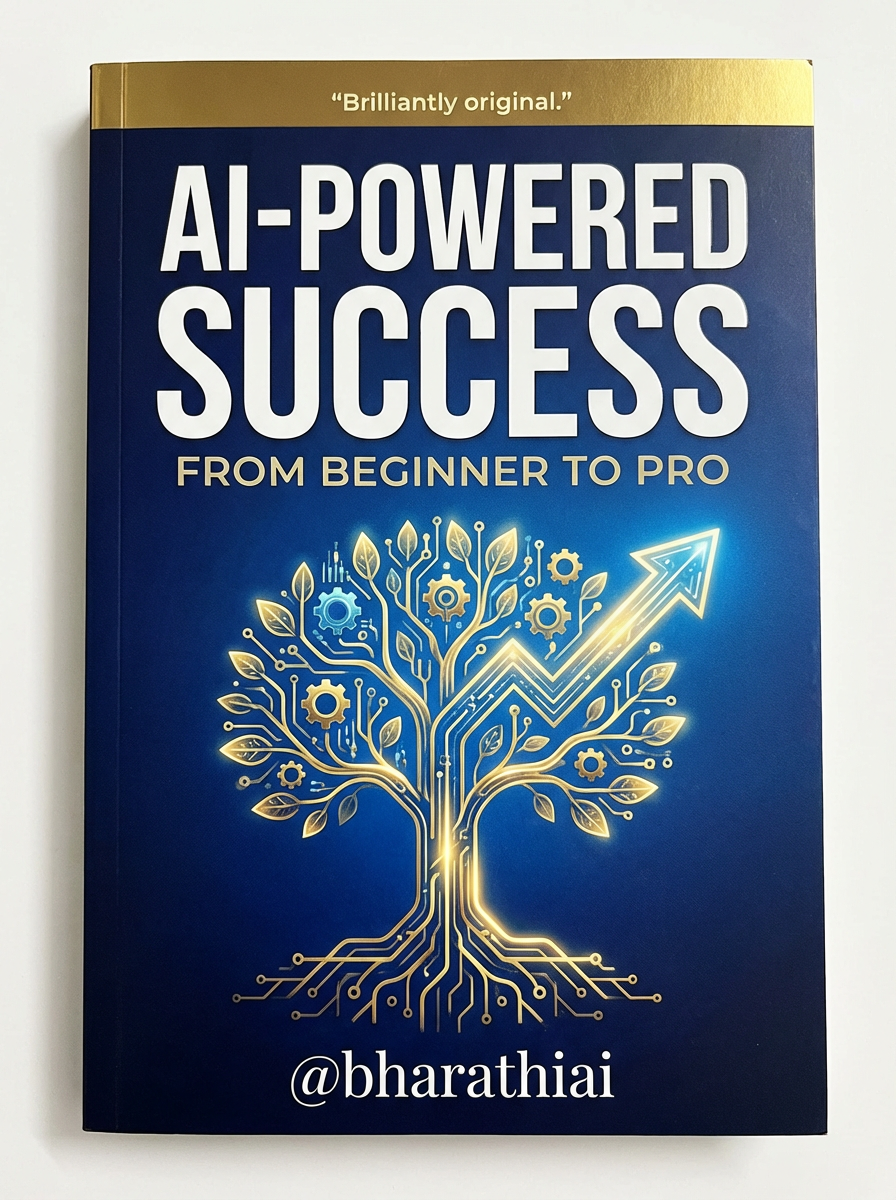
AI-Powered Success: From Beginner to Pro
By @bharathiai
Synopsis
In an era increasingly shaped by artificial intelligence, this book serves as a vital guide for students, job seekers, and young professionals. It demystifies AI, offering practical, actionable strategies and real-world examples to empower readers to harness AI tools for career advancement, enhanced
Chapter 1: The Inevitable AI Revolution: Why You Must Adapt Now
The year is no longer merely a numeric designation; it is a demarcation. The world, as it was understood, has undergone a fundamental, irreversible alteration. A silent, algorithmic tide has swept across the landscape of human endeavor, reshaping industries, redefining occupations, and reimagining the very nature of work itself. To pretend otherwise is to engage in a willful blindness, a dangerous indulgence in nostalgia that the modern age can ill afford. This is not a prediction of the future, but an observation of the present. The Artificial Intelligence Revolution is not arriving; it is here, a ubiquitous, often invisible, force whose implications are as profound as the invention of the printing press or the advent of electricity. To navigate this new terrain without an understanding of AI is akin to attempting to cross a vast ocean without a compass, or to build a structure without a blueprint. It is an exercise in futility, destined for obsolescence.
The echoes of Luddite resistance are faint but persistent, a whisper from a bygone era when technological progress was met with the smashing of looms. Such overt opposition is rare now, replaced by a more insidious form of resistance: ignorance. There is a pervasive misconception, a comforting but perilous fable, that AI is the exclusive domain of specialist engineers, cloistered in their laboratories, or the playground of tech giants with limitless resources. This fallacy, if left unchallenged, will prove to be the undoing of countless individuals and enterprises. The truth, stripped of its comforting illusions, is stark: AI literacy is no longer a niche skill; it is a cornerstone of professional relevance, a prerequisite for success in an economy fundamentally recalibrated by intelligent machines.
Consider the pervasive murmurs of unease, the anxieties about job displacement, the fear of being rendered obsolete by a silicon brain. These anxieties are not unfounded, but they are often misdirected. The true danger lies not in AI itself, but in the failure to adapt to its presence. Bharat, an AI architect and a mentor of considerable insight, often articulated this with forceful clarity. “The machine,” she would contend, in her characteristic measured tone, “does not discriminate. It cares not for your credentials, your past successes, or your established methods. It operates on data, on logic, on efficiency. To ignore it, or to fear it without understanding it, is to surrender your agency in the unfolding narrative of the 21st century.”
The world, she would explain, had entered an era of algorithmic optimization. From the mundane, such as the predictive text on a mobile phone, to the monumental, like the formulation of complex financial strategies, AI is the underlying, invisible engine. It shapes our recommendations, influences our purchasing decisions, and increasingly, dictates the very flow of information we consume. To dismiss AI as merely a tool for automation is to misapprehend its true nature. It is a nascent intelligence, capable of learning, adapting, and even creating. Its impact is not limited to isolated sectors; it is a systemic transformation, rippling through every facet of modern life.
For the student, for the job seeker, for the young professional embarking upon a career, this reality presents both a profound challenge and an unparalleled opportunity. The challenge lies in shedding preconceived notions, in embracing a mindset of continuous learning, and in understanding that the traditional parameters of education and employment are being rapidly redrawn. The opportunity, conversely, is immense: to harness the power of AI to amplify individual potential, to achieve unprecedented levels of productivity, and to unlock novel avenues for income generation and wealth creation.
Imagine Arjun Sharma, a diligent student, poring over stacks of textbooks, meticulously crafting essays, and dedicating countless hours to research. His dedication is commendable, his intellect sharp. Yet, in an age where AI-powered research assistants can synthesize vast oceans of information in a fraction of the time, and sophisticated language models can aid in structuring and refining complex arguments, Arjun’s traditional methods, while valuable for foundational understanding, risk becoming inefficient. Bharathi, observing Arjun’s efforts, would counsel him not to abandon the rigour of human intellect, but to augment it. “The machine,” she would explain, “is not a replacement for your critical thinking. It is an extension of it. Do you believe that employing a more efficient tool diminishes the quality of the craftsman’s work? Or does it allow him to create more, and to create with greater precision?”
Similarly, consider Priya Rao, a determined job seeker, meticulously tailoring her resume for each application, painstakingly researching companies, and rehearsing interview responses. Her effort is admirable, her ambition palpable. But in a landscape where Applicant Tracking Systems (ATS) sift through resumes with algorithmic precision, and AI-powered platforms offer personalized interview coaching and skill gap analyses, Priya’s manual efforts, while necessary, can be significantly enhanced. Bharathi would remind Priya, with a gentle but firm tone, that “The competition is no longer merely human against human. It is human with AI against human without AI. Which side would you rather be on?”
And then there is Sanjay Gupta, an innovator at heart, brimming with entrepreneurial spirit. He has ideas, visions for businesses that could revolutionize markets. But the traditional hurdles of market research, product development, and customer acquisition are formidable. In an AI-powered world, the barriers to entry for such endeavors are lowered significantly. AI can analyze market trends, generate preliminary business models, even assist in the creation of product prototypes and marketing content. “The entrepreneurial landscape,” Bharathi would often remark to individuals like Sanjay, “is no longer confined by the limitations of human scale. It is now bounded only by the imagination, and the willingness to leverage the tools available.”
These examples are not hypothetical constructs, but rather reflections of real transformations occurring with increasing velocity. The individuals who recognize this shift, who embrace the necessity of AI literacy, are the ones who will not merely survive but thrive in the coming decades. This is not a matter of choice; it is a matter of imperative. The alternative is to be left behind, to witness the opportunities of the new economy float by, inaccessible to those who cling to outdated paradigms.
The concept of “AI literacy” itself requires elucidation. It is not about becoming a backend developer, capable of coding neural networks from scratch. While such expertise is invaluable, it is not the universal standard for adaptation. Rather, AI literacy, as Bharathi would define it, encompasses a practical understanding of how AI works at a conceptual level, a familiarity with the various AI tools and applications available, and, crucially, a discerning awareness of AI’s capabilities and limitations. It requires the ability to identify problems that AI can solve, and to formulate effective prompts and strategies for leveraging AI tools in daily work and personal life. It demands a critical perspective, an understanding that while AI is powerful, it is also a reflection of the data it is trained on, susceptible to biases and inaccuracies. Dr. Eleanor Vance, a data ethics expert whose insights Bharathi frequently referenced, often stressed the profound importance of this critical perspective. “The algorithms,” Dr. Vance would caution, “are not inherently neutral. They are artifacts of human intention, and human data. To employ them without understanding their provenance and potential pitfalls is to wield a powerful tool blindly.”
The implications of AI are not merely economic; they are societal. The fundamental structures of work, leisure, and even human interaction are undergoing subtle but profound shifts. The nature of problem-solving is changing, as AI assists in generating solutions to complex challenges that were once beyond human analytical capacity. Creativity itself is being redefined, as AI collaborates with artists, writers, and musicians to produce novel works. This is not a dystopian vision of machines superseding human intellect, but a transformative partnership, where human ingenuity is amplified and extended by artificial intelligence.
To adapt, therefore, is not merely to learn new software. It is to cultivate a new mindset. It is to embrace adaptability as a core competency, to understand that the skills valued today may be augmented or even superseded tomorrow. It is to recognize that the human capacity for critical thinking, for empathy, for abstract reasoning, and for ethical judgment – those uniquely human attributes – become even more precious in an age of abundant artificial intelligence. AI can process data, but it cannot yet encapsulate the nuanced understanding of human emotion, the complexity of moral dilemmas, or the profound capacity for imaginative leaps. These, Bharathi would insist, are the domains where human value will not just endure, but flourish.
This book, therefore, serves not as an alarmist proclamation, but as a practical guide. It is designed to demystify the complex world of Artificial Intelligence, to strip away the jargon and the sensationalism, and to present a clear, actionable pathway for individuals seeking to thrive in this new landscape. It acknowledges the challenges but focuses relentlessly on the opportunities. It is a roadmap for navigating the inevitable, for transforming apprehension into empowerment, and for equipping you, the student, the job seeker, the young professional, with the tools and the understanding necessary to become not just an observer, but an active, successful participant in the AI-powered economy.
The chapters that follow will delve into the practicalities. We will explore the fundamental concepts of AI without requiring a degree in computer science. We will examine specific AI tools and applications that can immediately enhance your productivity, creativity, and career prospects. We will provide real-world examples, much like those of Arjun, Priya, and Sanjay, demonstrating how individuals are already leveraging AI for tangible success. We will address the ethical considerations, grounding our exploration in a framework of responsible and beneficial AI use, drawing upon the wisdom of experts like Dr. Eleanor Vance.
The journey ahead is not an intellectual luxury; it is a professional necessity. The time for passive observation is over. The time for adaptation, for embracing the transformative power of AI, is now. In the words of Bharathi, whose pragmatic wisdom permeates these pages: “The revolution will not wait for you. But if you choose to engage, if you choose to understand, then you will discover that the future is not something to be feared, but something to be shaped.” Let us begin that shaping, together.
Chapter 2: Demystifying Artificial Intelligence: The Core Concepts
The fog of propaganda and sensationalism often obscures the true nature of artificial intelligence. It is presented alternately as a harbinger of utopian abundance or as an impending cataclysm, a silent benefactor or an omnipotent oppressor. Such extremes, while dramatic, serve only to confuse, to alienate those who genuinely seek understanding. Our task, then, is to strip away this veil, to look upon the core concepts of AI not as arcane mysteries but as intelligible mechanisms. For as Bharathi AI would impress upon her most attentive students, ignorance is not bliss; it is a vulnerability in an age increasingly defined by algorithms.
"Before one can command a tool," Bharathi’s clear voice might resonate, "one must first comprehend its fundamental design. Consider AI not as a singular entity, but as a vast, interconnected landscape of technologies, all striving toward a common, if sometimes varied, objective: to replicate, and often to enhance, facets of human intelligence."
This perspective is crucial. AI, in its simplest formulation, is a branch of computer science dedicated to creating machines capable of performing tasks that typically require human intelligence. This includes learning, problem-solving, decision-making, perception, and understanding language. It is not, as some fear, a conscious entity plotting world domination, nor is it a magical genie granting every wish. It is, at its essence, a sophisticated form of automation, albeit one capable of self-improvement and adaptation.
To speak of "AI" generically is akin to speaking of "transportation" without distinguishing between a bicycle, a train, and an airplane. Each serves a purpose, each operates on distinct principles, yet all fall under the grand umbrella. Within AI, such distinctions are vital for understanding its capabilities and limitations.
The initial, broadest division lies between **Narrow AI (ANI)** and **General AI (AGI)**. Narrow AI, also known as Weak AI, is what we encounter daily. It is a system designed and trained for a specific, singular task. Bharathi would often illustrate this with familiar examples. "When your smartphone recognizes your face, that is Narrow AI. When a recommendation engine suggests a movie based on your viewing history, that is Narrow AI. When a self-driving car navigates a street, albeit complexly, it is still doing a specific task within defined parameters." These systems are proficient, often superhuman, at their designated functions, but they possess no broader consciousness, no ability to transfer their learning to an entirely different domain. A chess-playing AI cannot suddenly write a symphony, nor can a facial recognition system deduce the meaning of a philosophical text. Its intelligence is, as the name suggests, narrow.
Arjun, with his initial apprehension about technology, might inquire, "So, it’s just very smart software then? Not, like, sentient beings?"
Bharathi would nod, a faint, encouraging smile gracing her lips. "Precisely, Arjun. For now. The concept of **General AI (AGI)**, sometimes called Strong AI, is where the lines blur and the true science fiction begins. This envisions a machine with human-like cognitive abilities across the board – capable of reasoning, problem-solving, learning from experience, understanding complex ideas, adapting to new situations, and even experiencing consciousness or emotion. This is the AI of films like *2001: A Space Odyssey* or *Her*. It is, at present, purely theoretical. No such system exists, and whether it ever will, and how, remains a subject of intense debate and research."
The distinction is critical, serving as a bulwark against the hyperbolic narratives that regularly distort public perception. Most of the AI discussed in policy papers, business strategies, and indeed, within this book, pertains to Narrow AI and its ever-expanding capabilities.
Beneath the umbrella of Narrow AI, lies a constellation of methodologies, each distinct in its approach to simulating intelligence. Three foundational concepts, however, serve as cornerstones for the majority of modern AI applications: **Machine Learning (ML)**, **Deep Learning (DL)**, and **Natural Language Processing (NLP)**.
**Machine Learning**, a subset of AI, is arguably the engine driving much of the current revolution. "Think of it this way," Bharathi might explain, "Traditional programming instructs a computer explicitly: 'If X, then do Y.' Machine learning, however, teaches the computer to learn from data. Instead of being explicitly programmed for every scenario, it develops its own rules or models by analyzing vast amounts of information."
This learning process can manifest in several key forms:
1. **Supervised Learning:** This is the most common paradigm. Here, the machine is trained on a dataset that is "labeled." Each data point comes with its correct answer. "Imagine teaching a child to identify fruits," Bharathi would suggest. "You show them pictures of apples and say, 'This is an apple.' You show them oranges and say, 'This is an orange.' Over time, the child learns to distinguish between them without being explicitly told every single feature. Supervised learning works similarly. We feed the algorithm thousands of images labeled 'cat' or 'dog,' and it learns to identify patterns, features that differentiate the two, eventually being able to classify new, unseen images accurately." This method is the backbone of spam filters, image recognition software, and predictive analytics.
2. **Unsupervised Learning:** In contrast, unsupervised learning deals with unlabeled data. The machine is left to find patterns, structures, and relationships within the data on its own. "Here, you give the child a pile of mixed fruits and ask them to sort them into groups that seem similar," Bharathi would elaborate. "You don't tell them the categories; they discover them – by color, by shape, by texture. Unsupervised learning excels at tasks like customer segmentation, anomaly detection (spotting unusual activity in a network), and data compression." It helps in discovering hidden insights without preconceived notions.
3. **Reinforcement Learning:** This method is perhaps the closest approximation to how humans learn through trial and error. An agent (the AI) learns by interacting with an environment, performing actions, and receiving rewards or penalties based on the outcomes. "Consider teaching a dog a trick," Bharathi would posit. "When it performs correctly, you give it a treat. When it doesn't, you withhold the treat. Over time, the dog associates the correct action with the reward. Reinforcement learning trains AI systems in a similar fashion, guiding them towards optimal behaviors in complex environments." This is the technology behind AI playing sophisticated games like chess or Go, and it holds immense promise for robotics and autonomous systems.
Priya, ever focused on practical applications, might interject, "So, if I wanted an AI to help me optimize my resume, which kind of learning would that be using?"
Bharathi would consider the question. "Likely supervised learning initially. It would be trained on a dataset of successful resumes and corresponding job descriptions, learning what elements correlate with success. Then, reinforcement learning could be layered on – if the AI suggests changes that lead to more interview calls, it gets a 'reward,' refining its advice further."
The next layer of understanding arrives with **Deep Learning**. "Deep Learning," Bharathi would clarify, "is not a fundamentally different concept from machine learning; rather, it's a specific approach within machine learning. It uses artificial neural networks with multiple layers – hence 'deep' – allowing them to learn from vast amounts of data and perform complex pattern recognition."
Imagine a vast network of interconnected nodes, or 'neurons,' organized in layers. Each neuron processes a small piece of information and passes its output to the next layer. The 'deepness' refers to the number of these hidden layers between the input (e.g., an image) and the output (e.g., identifying what's in the image). These networks are exceptional at uncovering intricate patterns that are invisible to the human eye or simpler algorithms.
"This is the technology behind groundbreaking advancements like highly accurate facial recognition, speech translation, and generative AI capable of creating new text, images, or music," Bharathi would explain. "The more data these networks are exposed to, the more refined and powerful their analytical capabilities become. It's why self-driving cars, for instance, have made such immense strides; they feed deep learning algorithms with endless streams of sensory data." The power of deep learning lies in its ability to automatically learn features from raw data, rather than requiring human engineers to painstakingly define them.
Finally, we arrive at **Natural Language Processing (NLP)**. "The ability to communicate effectively," Bharathi would emphasize, "is a cornerstone of human intelligence. NLP is the branch of AI dedicated to enabling computers to understand, interpret, and generate human language in a valuable way."
This is not a trivial task. Human language is filled with ambiguities, nuances, sarcasm, and context-dependent meanings. A single word can have multiple meanings, and the order of words drastically alters interpretation. NLP aims to bridge the gap between human language and computational understanding.
"Think of the sheer complexity," Bharathi might elaborate. "When you ask a virtual assistant a question, it uses NLP to parse your speech into text, understand your intent, retrieve relevant information, and then form a coherent response. When an AI summarizes a long document, it's leveraging NLP to identify key themes and extract crucial information."
NLP encompasses a range of tasks:
* **Text Classification:** Categorizing text into predefined groups (e.g., spam detection, sentiment analysis of reviews). * **Machine Translation:** Converting text from one language to another (e.g., Google Translate). * **Named Entity Recognition (NER):** Identifying and classifying proper nouns (people, organizations, locations) in a text. * **Sentiment Analysis:** Determining the emotional tone of a piece of writing (positive, negative, neutral). * **Question Answering:** Providing direct answers to user queries based on a given text. * **Text Generation:** Creating human-like text, from emails to entire articles. This is a recent and rapidly evolving area, exemplified by large language models (LLMs).
Sanjay, with his entrepreneurial spirit, might quickly grasp the application. "So, an AI that could draft marketing copy, or analyze customer feedback for trends – that's NLP at work?"
"Precisely, Sanjay," Bharathi would confirm. "It's a field that is constantly advancing, allowing for ever more sophisticated interactions between humans and machines through the most natural medium available to us: language."
These core concepts – Narrow AI vs. General AI, Machine Learning (Supervised, Unsupervised, Reinforcement Learning), Deep Learning, and Natural Language Processing – form the bedrock of understanding modern AI. They are not esoteric theorems reserved for academics but practical principles that dictate what AI can and cannot do, and why.
For too long, the common understanding of AI has been a tapestry woven from conjecture and aspiration, rather than a clear elucidation of its operational fabric. The pervasive myths often depict AI as a monolithic "brain," a singular entity of abstract power. This is a dangerous simplification. The truth, as Bharathi AI would patiently explain, is far more granular, more modular.
Artificial intelligence does not operate through magic. It operates through data, algorithms, and computational power.
**Data** is the lifeblood of AI. Without vast quantities of relevant, clean, and well-structured data, even the most sophisticated algorithms are impotent. It is the raw material from which AI learns, discerns patterns, and makes predictions. The quality and volume of data directly impact the performance and reliability of an AI system. "Garbage in, garbage out" is an old computing adage that takes on profound significance in the age of AI. Biased data will inevitably lead to biased AI outcomes, a point Dr. Eleanor Vance often underscored in her work on ethical AI development.
**Algorithms** are the instruction sets, the logical frameworks that enable AI to process data, identify patterns, and make decisions. These are the mathematical models and statistical techniques that form the 'brain' of the AI, allowing it to learn from data rather than being explicitly programmed for every single eventuality. The choice of algorithm depends heavily on the problem at hand, ranging from simple linear regressions to complex neural network architectures.
**Computational Power** is the engine. Training complex deep learning models on massive datasets requires immense processing capabilities, often provided by specialized hardware like Graphics Processing Units (GPUs) or Tensor Processing Units (TPUs). The exponential increase in affordable computational power has been a key factor in the recent explosion of AI capabilities.
To demystify AI further is to recognize that its "intelligence" is not consciousness but a sophisticated form of pattern recognition and inference. When an AI identifies a cat in an image, it is not thinking, "Ah, that furry creature with pointed ears is a feline." Instead, it is identifying a collection of pixels and edges that, based on its training data, highly correlates with the label 'cat.' This distinction is paramount to appreciating both the power and the limitations of current AI.
The purpose of this chapter is not to transform every reader into an AI engineer, but to equip them with the conceptual vocabulary necessary to navigate the AI-infused world. When a news report speaks of "adversarial attacks on AI" or a manager proposes "implementing a machine learning solution," the informed individual will no longer be adrift in a sea of jargon. They will possess a foundational understanding of the underlying mechanisms, allowing them to ask pertinent questions, discern credible claims from speculative ones, and, most importantly, grasp the practical implications for their own endeavors.
Bharathi AI’s pedagogical approach was always rooted in clarity and practicality. She knew that fear and misunderstanding bred inaction, and that in the accelerating currents of the AI revolution, inaction was an unpardonable sin. To understand these core concepts is to claim one’s stake in the future. It is to move from being a passive recipient of technological change to an active participant, ready to leverage its tools for personal and professional advancement. The technical complexity, often a barrier, is here reduced to its essential components, making the formidable accessible, and the obscure, lucid. The journey from beginner to professional, in the realm of AI, begins with this deliberate act of demystification.
Chapter 3: Your Essential AI Toolkit: Top Platforms for Productivity and Creativity
The preceding discourse, having established the inescapable ubiquity of artificial intelligence and demystified its foundational tenets, now compels us to confront the practical manifestation of this epochal shift. To merely comprehend AI in the abstract, however, is akin to understanding the principles of engineering without ever touching a tool. The true power lies not in theoretical grasp, but in applied deployment. This chapter, therefore, serves as an essential manual, a guide through the labyrinthine landscape of AI platforms, offering a curated selection of instruments designed to amplify human capacity across the spectrum of productivity and creativity. These are not arcane devices reserved for the technocratic elite; rather, they are accessible, often intuitive, and demonstrably potent for anyone willing to engage.
We begin with the conversational interface, an innovation that has, more than any other, brought AI directly into the quotidian experience of millions. **ChatGPT**, developed by OpenAI, stands as the preeminent example. To categorize ChatGPT simply as a "chatbot" would be to commit a grave disservice. It is, in essence, a large language model (LLM) capable of generating human-like text, translating languages, writing different kinds of creative content, and answering your questions in an informative way. Its utility spans an astonishing breadth: from drafting emails and summarising lengthy reports to brainstorming complex ideas and even generating rudimentary code.
Consider, for instance, the perpetual struggle of the uninspired writer. A student facing a blank page, tasked with an essay on the socio-economic implications of post-war industrialization, might find themselves ensnared in a paralysis of thought. Here, ChatGPT becomes a digital muse, a tireless interlocutor. A simple prompt – "Generate five potential thesis statements for an essay on the socio-economic implications of post-war industrialization in Britain" – can yield a series of cogent starting points, each offering a distinct angle for exploration. Further refinement, "Expand on the first thesis statement, focusing on the decline of traditional industries and the rise of the service sector," precipitates a more detailed exposition, providing not just content but also structural guidance. For the job seeker, the crafting of a compelling cover letter, tailored precisely to a specific role, often proves an arduous undertaking. Instead of laborious self-composition, a prompt such as "Write a cover letter for a marketing manager position, highlighting experience in digital campaigns and team leadership, addressing it to [Hiring Manager Name] at [Company Name]" can produce a professional, articulate draft in moments, requiring only minor human refinement for personalization. The efficiency gain is not merely incremental; it is transformative.
Beyond textual generation, ChatGPT’s capacity for synthesis and summarization is invaluable. Confronted with a verbose academic paper or a voluminous business report, the modern professional often sacrifices precious hours extracting key insights. Inputting the text into ChatGPT with the command, "Summarize this document in 200 words, highlighting the main arguments and conclusions," can distill complex information into digestible précis, freeing cognitive resources for analysis rather than mere comprehension. This is not to advocate for intellectual abdication, but rather for the intelligent delegation of menial cognitive labor, allowing human intellect to focus on higher-order reasoning and critical evaluation. The core functionality of ChatGPT, therefore, lies in its ability to augment human thought processes, acting as an extension of the intellect rather than a replacement. The discerning user understands that the output is a *starting point*, a foundation upon which human judgment and creativity must build.
From the realm of text, we pivot to the visual, where **Canva AI** has democratized design. Historically, the creation of visually appealing documents, presentations, or marketing materials demanded either specialized software proficiency or the expense of a professional designer. Canva, in its original incarnation, already simplified this process through intuitive drag-and-drop interfaces and an extensive library of templates. The integration of AI, however, elevates its capabilities to an entirely new stratum.
Canva AI’s "Magic Design" feature exemplifies this evolutionary leap. Imagine a student needing a compelling presentation for a class project, or a small business owner requiring an eye-catching social media post. Instead of sifting through countless templates and painstakingly arranging elements, a user can simply input a text prompt detailing their needs – "Create a presentation about sustainable energy with a modern, minimalist aesthetic, incorporating images of solar panels and wind turbines" – and Canva AI will generate a series of bespoke design options. This goes beyond mere template selection; the AI constructs entire layouts, suggests color palettes, and even places relevant imagery, all based on the textual description. The user then refines these AI-generated proposals, adjusting elements to perfectly align with their vision.
Another powerful AI-driven feature within Canva is "Magic Write." This tool leverages large language model capabilities, similar to ChatGPT, but integrated directly into the design workflow. For instance, when creating a social media post, a user can prompt Magic Write to "Generate three captions for a post announcing a new coffee shop opening, emphasizing artisanal blends and a cozy atmosphere." The AI provides options, which can then be seamlessly incorporated into the design. This synergy between text generation and visual design streamlines the creative process, allowing individuals without formal training in either discipline to produce professional-grade output. The democratization of design, through tools like Canva AI, empowers individuals and small enterprises to communicate their ideas and products with visual sophistication previously unattainable without significant investment. It is a testament to AI's capacity to level the playing field, making high-quality creative expression accessible to all.
Next, we turn our attention to the realm of organizational intelligence, where **Notion AI** offers a compelling vision of integrated productivity. Notion, in its foundational form, is a workspace that blends notes, databases, wikis, calendars, and project management. It is a digital Swiss Army knife for information management. The integration of AI transforms it from a powerful tool into an intelligent assistant, capable of actively participating in the organization and generation of content.
Notion AI operates within the context of your existing Notion pages, allowing for seamless augmentation of your workflow. Consider a project manager grappling with a complex task breakdown. Instead of manually listing every sub-task, they can prompt Notion AI within a project page: "Break down the 'Website Redesign' project into manageable phases, including research, design, development, testing, and launch, and suggest key tasks for each phase." The AI will then generate a structured list of tasks directly within the Notion page, saving considerable time and ensuring comprehensive coverage. For a student compiling research notes, Notion AI can summarize lengthy articles stored within their workspace, or even help brainstorm ideas for an essay based on their collected research. A simple command like "Summarize this article on quantum computing in five bullet points" or "Generate three potential essay topics based on my notes on the French Revolution" can instantly transform raw data into actionable insights or creative prompts.
Furthermore, Notion AI can assist in the generation of various document types. Need to draft a meeting agenda? A prompt such as "Create a meeting agenda for our weekly team sync, covering project updates, blockers, and next steps" will produce a structured outline. For marketing professionals, it can generate social media content, blog post ideas, or even assist in crafting compelling calls to action. The true power of Notion AI lies in its contextual awareness. Because it operates within your established Notion workspace, it can leverage the existing information – your notes, databases, and project plans – to provide more relevant and tailored assistance. It learns the structure and content of your digital ecosystem, becoming an intelligent extension of your organizational framework. This integration minimizes the friction of switching between different applications, fostering a more fluid and efficient workflow.
Beyond these prominent examples, the landscape of AI tools is vast and ever-expanding, each offering specialized functionalities that contribute to a comprehensive AI toolkit. For those engaged in coding or software development, **GitHub Copilot** stands as a revolutionary assistant. Trained on billions of lines of public code, Copilot suggests lines of code and even entire functions as you type, directly within your integrated development environment (IDE). This not only accelerates the coding process but also acts as an intelligent pair programmer, suggesting optimal solutions, identifying potential errors, and even helping to learn new programming languages or frameworks more rapidly. For the burgeoning developer, it is an invaluable educational aid and productivity enhancer, democratizing access to complex coding practices.
In the realm of image generation, platforms like **Midjourney** and **DALL-E 3** (also from OpenAI) have redefined the boundaries of creative visual expression. These text-to-image models allow users to generate highly stylized and original images from simple textual prompts. A user can input "An astronaut riding a horse on the moon, in the style of a classical oil painting" and receive a unique visual representation of this fantastical concept. For artists, designers, marketers, or even casual users seeking unique imagery, these tools unlock unprecedented creative potential, transforming abstract ideas into tangible visual assets without the need for traditional artistic skills or extensive software knowledge. They are not merely image generators; they are engines of visual imagination, capable of manifesting concepts that would otherwise remain confined to the mind's eye.
For professionals immersed in data analysis and visualization, tools like **Tableau AI** or **Microsoft Power BI with AI capabilities** are transforming how insights are extracted and communicated. These platforms leverage AI to automate data preparation, identify patterns, and even generate natural language descriptions of complex datasets. A business analyst, instead of manually sifting through spreadsheets, can use AI to identify key trends, predict future outcomes, and even ask natural language questions of their data – "What were our sales figures for Q3 in the European market, broken down by product category?" – and receive immediate, visually represented answers. This empowers faster, more accurate decision-making, moving beyond mere data presentation to genuine data understanding.
The diligent reader will observe a recurring theme across these diverse platforms: the augmentation of human capability, not its obsolescence. These AI tools are not designed to replace the student, the job seeker, or the young professional. Rather, they are designed to amplify their efforts, to free them from the mundane and repetitive, allowing them to focus on the strategic, the creative, and the uniquely human aspects of their work. They are instruments for efficiency, catalysts for creativity, and accelerators for learning.
To effectively wield this essential AI toolkit, a certain mindset is required. It is not merely about knowing *which* tools exist, but *how* to interact with them intelligently. This often involves the art of "prompt engineering" – crafting precise and effective instructions to elicit the desired output from the AI. A vague prompt will yield a vague response. A well-constructed, detailed, and iterative prompt, however, can unlock the full potential of these sophisticated algorithms. This skill, the ability to communicate effectively with artificial intelligence, is rapidly becoming as crucial as traditional literacy.
Furthermore, it is imperative to approach these tools with a critical eye. AI-generated content, while often impressive, is not infallible. It may contain inaccuracies, biases inherited from its training data, or simply lack the nuanced understanding that only human experience can provide. Therefore, the outputs of these AI platforms must always be reviewed, edited, and validated by human intelligence. They are powerful assistants, not autonomous decision-makers. The responsibility for the final output, and its implications, remains firmly with the human operator.
In conclusion, the journey from AI beginner to AI pro necessitates a practical engagement with the tools that define this new technological era. ChatGPT, Canva AI, Notion AI, GitHub Copilot, Midjourney, DALL-E 3, and AI-enhanced data platforms represent merely a fraction of the burgeoning ecosystem. Yet, they collectively demonstrate the profound capacity of artificial intelligence to revolutionize daily tasks, enhance creative outputs, and streamline professional workflows. By embracing these platforms, by learning to interact with them intelligently and critically, individuals can transcend the limitations of traditional methodologies, unlock new efficiencies, and position themselves not merely as passive observers of the AI revolution, but as active, empowered participants shaping its trajectory. The future of work, learning, and creativity is already here, embedded within these digital instruments, awaiting our command.
Chapter 4: Mastering Academics and Efficiency: AI for Students and Professionals
The digital age, with its ceaseless hum of information, presents an unprecedented deluge to intellects both burgeoning and seasoned. For the student, the mountain of research papers, the labyrinthine demands of essays, the ceaseless march of deadlines, can feel insurmountable. For the professional, the relentless current of project management, the intricate dance of data analysis, the imperative to remain at the vanguard of innovation, often threatens to engulf. Yet, within this very deluge, a new current has emerged, one that, properly harnessed, promises not to drown but to uplift: Artificial Intelligence. This chapter, then, is not a mere recitation of technological marvels, but a practical manifesto, a guide to wielding AI not as a crutch, but as an extension of the mind, a lever to amplify human potential in the academic halls and the corporate towers.
The promise of AI, particularly for those engaged in the rigorous pursuit of knowledge or the exacting demands of professional output, lies in its capacity for efficiency and augmentation. We speak not of replacing the human intellect, but of empowering it, of freeing it from the drudgery of the mundane, allowing it to soar into the realms of critical thought, creative synthesis, and strategic foresight. The tools we discussed in the previous chapter—ChatGPT, Notion AI, Canva AI, and their ilk—are not mere novelties; they are instruments of precision, capable of transforming the very fabric of academic endeavor and professional practice.
Consider the student, faced with the daunting task of a literature review. The traditional approach, a painstaking excavation through databases, a meticulous sifting of abstracts, a laborious collation of findings, demands hours, often days, of concentrated effort. Here, AI intervenes not as a shortcut to understanding, but as a sophisticated research assistant. Tools like ChatGPT, when prompted with precision, can distill vast quantities of information. One might input: "Summarize the key arguments and methodologies in recent (last 5 years) academic literature concerning the impact of climate change on coastal ecosystems in Southeast Asia, highlighting any emergent themes or controversies." The AI, drawing upon its immense training data, can then generate a concise overview, identifying prominent researchers, outlining prevailing theories, and even pinpointing areas of contention. This initial synthesis does not negate the need for the student to engage with the primary sources, to critically evaluate the AI's output, and to formulate their own nuanced understanding. Rather, it provides a highly efficient starting point, a structured framework upon which deeper analysis can be built. The time saved in this preliminary reconnaissance can then be reinvested in deeper critical engagement, in the formulation of original arguments, and in the refinement of analytical skills—the very essence of academic rigor.
Beyond initial research, AI proves invaluable in the very act of writing. The blank page, that eternal antagonist of the scholar, can be rendered less formidable. For those grappling with writer's block, a prompt to an AI like "Generate an outline for an essay discussing the ethical implications of genetic engineering, focusing on potential societal benefits versus risks" can provide a structural backbone. Similarly, for refining prose, AI can act as an advanced editorial assistant. While grammar and spell checkers are ubiquitous, AI-powered writing tools go further, suggesting improvements in clarity, conciseness, and even stylistic consistency. A student struggling with the articulation of a complex idea might input a paragraph and ask: "Rephrase this paragraph for greater clarity and academic tone, ensuring conciseness." The AI’s suggestions, while not always perfect, serve as invaluable prompts for self-correction and refinement, fostering a deeper understanding of effective communication. This iterative process, where human intellect guides and AI assists, cultivates not just better writing, but a more profound grasp of the nuances of language.
For the professional, the demands are equally, if not more, intense. Project management, that intricate ballet of tasks, deadlines, and resources, benefits immensely from AI integration. Imagine a project manager overseeing a complex software development cycle. Traditional methods involve manual tracking, endless spreadsheets, and constant communication overhead. Notion AI, for instance, can transform this landscape. Integrated into a Notion workspace, it can automate task assignments based on predefined criteria, generate summary reports on project progress, identify potential bottlenecks by analyzing dependencies, and even suggest resource reallocation strategies. A prompt such as "Analyze current project progress, identify tasks at risk of delay for Project X, and suggest mitigating actions" can yield actionable insights in moments, allowing the manager to proactively address issues rather than reactively scramble. This predictive and analytical power frees up invaluable time, shifting the manager's focus from mere oversight to strategic leadership and problem-solving.
Data analysis, another cornerstone of modern professional life, is profoundly augmented by AI. Whether it’s financial forecasting, market trend identification, or scientific data interpretation, the sheer volume and complexity of data often overwhelm human capacity. While specialized AI tools exist for deep learning and predictive modeling, even general-purpose AIs can assist in preliminary analysis. A professional might input a dataset (or a description of one) and ask: "Identify key trends and anomalies in this sales data from Q3, focusing on regional variations and product performance." The AI can then extract salient patterns, generate initial hypotheses, and even suggest further avenues of inquiry. This does not replace the human data scientist's expertise in model selection, statistical validation, or contextual interpretation, but it accelerates the initial exploration phase, allowing for a more rapid progression to deeper, more insightful analysis.
Beyond these specific applications, the overarching benefit of AI for both students and professionals lies in its capacity for organization and workflow streamlining. The digital clutter, the scattered notes, the disparate documents—these are the banes of productivity. AI-powered organizational tools, such as Notion AI, can bring order to this chaos. Imagine a student preparing for exams: they can input all their notes, lecture recordings (transcribed by AI), and relevant readings into a Notion database. Notion AI can then be prompted to "Generate flashcards from my notes on Chapter 7 of the textbook, focusing on key definitions and concepts," or "Create a summary of all my lecture notes from Week 5, highlighting areas of overlap with the assigned readings." This transforms raw information into actionable study aids, tailored to individual learning styles and needs.
For the professional, this translates into enhanced knowledge management. A company might use Notion AI to categorize internal documents, summarize meeting minutes, or even draft internal communications based on previous exchanges. The sheer velocity at which information can be processed, synthesized, and organized means that less time is spent searching for information and more time is dedicated to utilizing it effectively. This is not merely about saving time; it is about reducing cognitive load, freeing up mental bandwidth for higher-order tasks that demand uniquely human attributes like empathy, creativity, and strategic vision.
However, a crucial caveat must be interwoven throughout this discourse: the mastery of AI tools does not imply a abdication of human responsibility or critical judgment. On the contrary, it demands a heightened sense of both. The outputs of AI, while often impressive, are reflections of the data they were trained on and the algorithms that govern them. They can perpetuate biases, generate inaccuracies, or simply lack the nuanced understanding that only human experience and contextual knowledge can provide. Therefore, the effective use of AI is not passive acceptance, but active engagement.
For the student, this means critically evaluating every piece of information generated by an AI. Is the source credible? Are the arguments logically sound? Does the AI's summary accurately reflect the original text? Plagiarism, in an age of AI, takes on a new dimension. Submitting AI-generated content wholesale is not only unethical but defeats the very purpose of education, which is to cultivate independent thought and analytical prowess. The AI is a tool, not a ghostwriter. Its role is to assist in the *process* of learning and creation, not to circumvent it.
For the professional, the ethical considerations are equally stark. Relying solely on AI for critical decision-making, particularly in fields with high stakes such as medicine, finance, or law, can lead to dire consequences. AI can identify patterns, but it cannot fully grasp the complexities of human emotion, societal impact, or unforeseen externalities. The professional's role is to scrutinize AI's recommendations, to inject human judgment, to consider the ethical ramifications, and to ultimately bear responsibility for the decisions made. The AI is an advisor, not the final arbiter.
Furthermore, the very act of prompting AI—the art of crafting effective queries—is a skill in itself. It demands clarity of thought, precision of language, and an understanding of the AI's capabilities and limitations. A poorly formulated prompt will yield a poor output, regardless of the sophistication of the AI. Learning to "speak" to AI effectively is akin to learning a new language, one that unlocks its full potential. This involves experimenting with different phrasings, providing context, specifying desired formats, and iterating on prompts until the desired outcome is achieved. This iterative refinement process itself cultivates a deeper understanding of the task at hand and the information required to complete it.
The integration of AI into academic and professional life is not merely about adopting new technologies; it is about evolving our approach to work and learning. It encourages a shift from rote memorization and manual processing to higher-order critical thinking, creative problem-solving, and strategic application of knowledge. By offloading the mechanistic tasks to AI, we free ourselves to engage with the more complex, more human aspects of our endeavors.
Consider the pedagogical implications: educators are increasingly challenged to design assignments that cannot be simply outsourced to AI. This necessitates a focus on skills that AI cannot replicate: critical analysis of AI outputs, synthesis of information from diverse sources (including those beyond AI's training data), original research that generates new data, and the development of unique perspectives and arguments. The educational landscape must adapt to teach students not just *with* AI, but *about* AI, instilling the ethical frameworks and critical discernment necessary for responsible engagement.
For professionals, this translates into a demand for skills that complement AI, rather than compete with it. The ability to interpret AI-generated insights, to contextualize them within broader strategic objectives, to communicate complex AI findings to non-technical stakeholders, and to innovate upon AI’s capabilities will become paramount. The future professional is not one who is replaced by AI, but one who collaborates with it, leveraging its strengths to achieve unprecedented levels of productivity and innovation.
In conclusion, the journey from beginner to pro in this AI-powered era is marked by a conscious and deliberate integration of these powerful tools into one's academic and professional workflow. It is a journey that demands not just technological adoption, but intellectual adaptation. By mastering the tangible applications of AI for research, writing, organization, and project management, students can transcend the traditional boundaries of learning, and professionals can elevate their productivity and the quality of their output to previously unimaginable heights. But this mastery is predicated on a foundational understanding of AI's capabilities and, more importantly, its limitations. It requires a commitment to critical thinking, ethical responsibility, and an unwavering belief in the irreplaceable value of human intellect and ingenuity. The AI is a powerful engine; the human mind remains the indispensable pilot, charting the course towards a future where success is not just about working harder, but about working smarter, with greater insight, and with a profound appreciation for the symbiotic relationship between human and machine.
Chapter 5: AI for Career Advancement: Resumes, Interviews, and Skill Development
The digital wind, once a mere whisper, now howled through the employment landscape, carrying the scent of change and the stark reality of obsolescence for those unprepared. In this tempest, where human endeavor met algorithmic scrutiny, the discerning individual understood that the old ways, the handwritten cover letters and the rote memorization of interview answers, were but relics. To navigate this new terrain, where a machine might be the first gatekeeper to one’s professional future, required a new arsenal. This chapter, therefore, was not merely a guide; it was a manual for survival and indeed, for triumph, in an arena increasingly governed by artificial intelligences.
The resume, once a static chronicle of past achievements, had become a dynamic document, its very structure and content subject to the cold, analytical gaze of an Applicant Tracking System (ATS). These digital sentinels, employed by corporations large and small, were designed to filter, to sort, to discard. Their judgment was swift, unfeeling, and based entirely on keywords and formatting. To bypass these automated gatekeepers, one had to think like them, or rather, employ an intelligence superior to their blunt mechanism. This was where AI, in its nascent but powerful forms, became an indispensable ally.
Consider the common plight: a well-qualified candidate, their experience robust, their aspirations clear, yet their application vanishes into the digital void. The culprit, more often than not, was not a lack of merit but a failure to speak the language of the machine. AI-powered resume analyzers, often embedded within job boards or available as standalone tools, offered a corrective lens. These platforms, fed with the job description, could highlight discrepancies, identify missing keywords, and even suggest optimal phrasing. They operated on algorithms trained on millions of successful resumes and job postings, discerning patterns and correlations that a human eye might miss.
The process was deceptively simple, yet profoundly effective. One would upload their resume, then paste the job description. The AI would then dissect both, comparing them with the precision of a surgeon. It would flag instances where industry-specific jargon was absent, where action verbs were weak, or where the resume’s overall structure hindered readability for both machine and human. For example, a candidate applying for a “Data Scientist” role might find their resume, brimming with “statistical analysis” and “predictive modeling,” flagged for not explicitly mentioning “machine learning algorithms” or “Python/R proficiency,” despite their implicit presence in the provided experience. The AI, unburdened by inference, demanded explicit concordance.
Furthermore, AI could optimize for conciseness and impact. Many resume analysis tools could identify redundant phrases, passive voice, or overly long sentences that diluted the impact of achievements. They might suggest rephrasing a bullet point from "Responsible for managing a team of five" to "Led a team of five, increasing project completion rates by 15%," transforming a statement of duty into a quantifiable achievement. This iterative process of refinement, guided by AI, ensured that a resume was not merely a list of duties but a compelling narrative, tailored to the specific demands of each application, capable of passing the initial algorithmic hurdle and impressing the subsequent human reviewer.
Beyond mere optimization, AI could also personalize. Generic resumes, once the bane of recruiters, were now easily identifiable by advanced algorithms. AI tools could assist in crafting unique, compelling summaries and objective statements that resonated with the company’s mission and values, gleaned from their website and public statements. By analyzing a company’s language and culture, AI could suggest modifications to tone and vocabulary, ensuring that the applicant’s voice aligned with the organization’s ethos, creating an impression of genuine fit rather than superficial interest.
The interview, that crucible of professional scrutiny, remained a fundamentally human interaction. Yet, even here, the shadow of AI extended, offering preparation tools that could mitigate anxiety and sharpen performance. The fear of the unknown, the stuttered response, the awkward pause – these were the pitfalls that AI-powered interview simulators sought to address.
These platforms, often utilizing natural language processing and computer vision, simulated interview environments with uncanny realism. They presented common interview questions, ranging from behavioral inquiries ("Tell me about a time you failed") to technical challenges ("Explain the concept of neural networks"). As the candidate responded, the AI would analyze not only the content of their answers but also their delivery. It would track eye contact, detect filler words ("um," "like"), monitor speech pace, and even analyze facial expressions for signs of nervousness or confidence.
Imagine a candidate practicing for a high-stakes interview. They speak into their webcam, articulating their responses. Immediately, the AI provides feedback: "You used 'um' five times in your last answer. Consider pausing instead." Or, "Your eye contact drifted significantly during the explanation of your leadership experience." Or, "Your answer to 'What are your weaknesses?' lacked a clear example of how you're addressing it." This real-time, objective feedback, devoid of human bias or politeness, allowed for rapid iteration and improvement. It was akin to having an infinitely patient, hyper-observant coach, pointing out every minute flaw until perfection, or near-perfection, was achieved.
Furthermore, some advanced AI interview tools could even analyze the candidate’s answers against a vast database of successful responses for similar roles, identifying areas where their answers were vague, incomplete, or failed to highlight relevant skills. They could suggest alternative phrasing, recommend specific examples to draw upon, or even help structure answers using frameworks like STAR (Situation, Task, Action, Result), a common technique favored by recruiters.
The benefit extended beyond mere mechanics. Repeated practice with AI simulators built confidence, reducing the cognitive load during the actual interview. The candidate, having anticipated and rehearsed responses to a wide array of questions, could focus on active listening and genuine engagement, rather than scrambling for answers. This preparation, powered by AI, transformed the interview from a daunting ordeal into a stage for showcasing well-honed abilities.
The professional landscape was not static. Skills, once foundational, could become obsolete with alarming speed, replaced by new demands, new technologies. The discerning professional understood that continuous learning was not a luxury but a necessity. Yet, identifying precisely which skills were ascendant, and which were waning, was a complex task. Here, too, AI provided an invaluable compass.
AI-powered skill gap analysis tools operated by analyzing vast datasets of job postings, industry reports, and professional profiles. They could identify emerging trends in specific sectors, pinpointing the skills that were most in demand, and projecting which skills would become critical in the near future. For instance, a marketing professional might discover, through AI analysis, that while traditional SEO expertise remained valuable, proficiency in "AI-driven content generation" and "predictive analytics for customer behavior" were rapidly becoming prerequisites for advanced roles.
The process involved inputting one’s current skill set and career aspirations. The AI would then cross-reference this data with its extensive knowledge base, generating a personalized report. This report would highlight areas where the candidate’s skills were strong, but more importantly, it would illuminate critical gaps. It might suggest specific certifications, online courses, or even projects that could bridge these gaps.
For example, a software developer aiming for a leadership role might find that while their coding skills were impeccable, the AI flagged a deficit in "agile project management" or "technical team leadership." The tool could then recommend specific Coursera courses, LinkedIn Learning paths, or even open-source projects where these skills could be developed and demonstrated. This proactive identification of skill gaps, driven by AI, allowed individuals to invest their time and resources in learning that genuinely propelled their careers forward, rather than pursuing generic or irrelevant training.
Beyond identifying gaps, AI also played a crucial role in the actual acquisition of new competencies. The proliferation of online learning platforms had created an overwhelming abundance of choices. AI algorithms, however, could personalize learning paths, recommending courses and resources tailored to an individual’s learning style, existing knowledge, and career goals.
Consider a professional seeking to master a new programming language. An AI-powered learning platform might first assess their current coding proficiency, then recommend a sequence of modules, tutorials, and practical exercises, adapting the difficulty and pace based on their performance. It could identify areas where the learner struggled, providing additional resources or alternative explanations, ensuring a deeper understanding rather than superficial memorization. Gamification elements, driven by AI, could also personalize challenges and rewards, maintaining engagement and motivation.
Furthermore, AI-powered language learning applications had revolutionized the acquisition of foreign languages, a skill increasingly valuable in a globalized economy. These applications utilized sophisticated speech recognition and natural language processing to provide instant feedback on pronunciation, grammar, and vocabulary. They could simulate conversations with AI tutors, offering immersive practice environments that were once the exclusive domain of expensive human instructors. The AI, acting as a tireless and non-judgmental tutor, allowed for practice without fear of embarrassment, accelerating the learning process.
The cultivation of soft skills, often overlooked in the pursuit of technical prowess, also benefited from AI intervention. Communication, critical thinking, problem-solving – these elusive qualities could be honed through AI-powered simulations and interactive exercises. For instance, AI chatbots could simulate difficult conversations, allowing individuals to practice their negotiation skills or their ability to give constructive feedback in a safe, controlled environment. The AI would then analyze their responses, providing insights into their communication style and suggesting improvements.
The journey from beginner to professional, once a meandering path fraught with uncertainty, was now illuminated by the precise beams of artificial intelligence. From the initial crafting of a resume to the final, confident handshake of an interview, and indeed, throughout the continuous evolution of one’s skill set, AI emerged not as a replacement for human endeavor, but as a powerful amplifier.
It was crucial, however, to understand that AI was a tool, not a master. Its efficacy lay in the judicious application by a human mind. The insights gleaned from an AI resume analyzer still required human discernment to integrate meaningfully. The feedback from an AI interview simulator still demanded human introspection and practice to translate into improved performance. The skill gaps identified by an AI still necessitated human commitment and discipline to bridge.
The individual who embraced AI in their career advancement was not merely adopting a new technology; they were adopting a new mindset. It was a mindset of continuous optimization, of data-driven decision-making, and of leveraging intelligent systems to augment their own capabilities. In a world where the margin for error was shrinking, and the pace of change was accelerating, this symbiotic relationship with AI was not just an advantage; it was a fundamental requirement for sustained success.
The digital revolution, far from diminishing the human spirit, offered new avenues for its expression and refinement. By mastering the tools of artificial intelligence, individuals could sculpt their professional identities with greater precision, navigate the complexities of the job market with enhanced confidence, and cultivate a future where their skills remained not just relevant, but indispensable. The path was clear; the tools were at hand. The choice remained, as always, with the individual, to grasp these opportunities or to be left behind by the relentless march of progress.
Chapter 6: Unlocking Entrepreneurial Potential: AI for Business and Side Income
The digital age, with its relentless march of progress, has always promised new avenues for enterprise. Yet, never before has the landscape of commerce been so profoundly reshaped as it is now by artificial intelligence. This chapter delves into the intricate mechanisms by which AI can serve not merely as a tool, but as a foundational pillar for entrepreneurial endeavors, transforming nascent ideas into viable businesses and augmenting existing ventures with unprecedented efficiency. It is a discourse on the strategic deployment of AI, not as a replacement for human ingenuity, but as its formidable amplifier, enabling individuals to navigate the complexities of the market with a precision hitherto unimaginable.
The pursuit of independence, whether through the launch of a full-scale enterprise or the cultivation of a supplementary income stream, often begins with a fundamental question: what does the market demand? In the pre-AI era, this inquiry necessitated laborious research—surveys, focus groups, extensive data analysis—a process often prohibitive for the individual entrepreneur. Now, AI-driven market research tools offer a stark alternative. These platforms, fed by colossal datasets spanning consumer behavior, social media trends, news cycles, and economic indicators, can discern patterns and predict shifts with startling accuracy. A nascent entrepreneur, armed with such a tool, can identify underserved niches, gauge product viability, and even anticipate competitive moves, all with a rapidity and depth that belies the traditional protracted methods. The advantage is not merely speed; it is the capacity to process and synthesize disparate information, revealing insights that human analysts might overlook or misinterpret. Consider, for instance, a small artisan seeking to sell handcrafted goods. An AI market research tool can analyze current trends in home decor, pinpoint popular aesthetic preferences, and even suggest optimal pricing strategies based on competitor analysis and perceived value. This is not guesswork; it is informed strategy, derived from the cold, hard logic of data.
Once a market opportunity is identified, the next hurdle is often the creation of compelling content—the voice, image, and narrative that will attract and retain customers. This is where AI's capabilities in content generation become indispensable. The notion of a machine crafting prose, designing visuals, or even composing music once belonged to the realm of speculative fiction. Today, it is a commercial reality. Large Language Models (LLMs), like those underpinning sophisticated AI writing assistants, can produce marketing copy, blog posts, product descriptions, and even comprehensive business plans with remarkable fluency and coherence. These tools can adapt their tone and style to suit specific audiences, ensuring that the message resonates effectively. For visual content, AI-powered design platforms can generate logos, advertisements, and social media graphics, often requiring only a textual prompt. This democratizes professional-grade content creation, liberating entrepreneurs from the prohibitive costs and time investments traditionally associated with graphic designers and copywriters. The output, while perhaps lacking the elusive spark of human genius, is often more than adequate for the vast majority of commercial applications, ensuring consistency and adherence to brand guidelines. An individual launching an e-commerce store, for example, can leverage AI to generate hundreds of unique product descriptions, each optimized for search engines and designed to appeal to specific customer segments, all in a fraction of the time it would take a human writer.
Beyond content creation, the operational facets of any business, large or small, are ripe for AI-driven automation. The drudgery of repetitive tasks, once a significant drain on time and resources, can now be largely delegated to intelligent systems. Customer service, for instance, a critical touchpoint for any business, can be substantially streamlined through AI chatbots. These bots can handle a vast array of inquiries, from frequently asked questions to troubleshooting common problems, providing instant responses 24/7. This not only enhances customer satisfaction by reducing wait times but also frees human agents to focus on more complex, nuanced issues requiring empathy and critical thinking. Similarly, AI can automate email marketing campaigns, personalize customer communications based on past interactions, and manage scheduling and appointment booking. Inventory management, a perpetual challenge for retailers, can be optimized by AI algorithms that predict demand fluctuations, suggest reorder points, and even identify slow-moving stock. The cumulative effect of such automation is a significant reduction in operational overheads and a dramatic increase in efficiency, allowing entrepreneurs to focus their energies on strategic growth and innovation rather than day-to-day minutiae. The small business owner, often overwhelmed by the sheer volume of administrative tasks, can now offload a substantial portion of this burden to AI, effectively multiplying their own capacity.
The cultivation of customer engagement, the lifeblood of any sustainable enterprise, is another domain where AI offers profound advantages. Understanding customer behavior, predicting future needs, and delivering personalized experiences are no longer aspirational goals but achievable realities. AI-powered analytics tools can sift through customer data—purchase history, browsing patterns, demographic information—to create detailed profiles. These profiles then inform highly targeted marketing campaigns, product recommendations, and even individualized customer service interactions. The era of generic, one-size-fits-all marketing is rapidly receding, replaced by a hyper-personalized approach that fosters stronger customer loyalty and drives higher conversion rates. Consider a subscription box service: AI can analyze a subscriber's preferences, past ratings, and even social media activity to curate highly personalized boxes, increasing satisfaction and reducing churn. Furthermore, AI can monitor social media for brand mentions, sentiment analysis, and emerging trends, providing real-time insights into public perception and allowing for agile reputational management. This proactive engagement, driven by intelligent systems, transforms passive customers into active participants in a brand's narrative, fostering a sense of community and belonging.
For those venturing into the realm of side income, the application of AI is equally transformative. The traditional barriers to entry for many freelance endeavors—the need for specialized skills, extensive portfolios, or significant upfront investment—are being systematically dismantled. AI can serve as a powerful enabler for individuals seeking to monetize their existing skills or develop new ones. A budding writer, for example, can use AI writing assistants to overcome writer's block, refine prose, or even generate initial drafts for client projects, significantly boosting their output and efficiency. A graphic designer can leverage AI image generators to produce a wider range of concepts more quickly, offering clients more options and accelerating project completion. Even those without specific creative skills can find avenues. AI-powered transcription services, data entry automation, or even virtual assistant roles, where AI handles the routine tasks, allow individuals to offer valuable services with minimal training. The key lies in understanding how AI can augment human capabilities, allowing individuals to deliver higher quality work, faster, and at a more competitive price. The gig economy, already a significant force, is being further catalyzed by AI, creating unprecedented opportunities for flexible, remote work and diversified income streams.
However, a serious discourse on AI in entrepreneurship would be incomplete without acknowledging the inherent challenges and ethical considerations. While AI offers immense power, it is not a panacea. The quality of AI output is often directly proportional to the quality of the input data and the sophistication of the prompts. Over-reliance on AI without critical human oversight can lead to generic, uninspired content, or worse, inaccurate or biased information. The entrepreneur must cultivate a discerning eye, understanding that AI is a tool to be wielded, not a substitute for strategic thinking, creativity, or human judgment. Furthermore, the ethical implications of AI, particularly concerning data privacy, algorithmic bias, and the potential for job displacement, demand careful consideration. Entrepreneurs deploying AI must adhere to stringent ethical guidelines, ensuring transparency in their use of AI and safeguarding customer data with the utmost diligence. The responsible integration of AI is not merely a matter of compliance; it is a cornerstone of building trust and long-term viability in an increasingly AI-driven world. The entrepreneur who understands these nuances, who can balance the immense power of AI with a strong ethical compass, will be the one who truly thrives.
The practical blueprints for aspiring entrepreneurs, therefore, coalesce around several key principles. Firstly, a deep understanding of AI's capabilities and limitations is paramount. This is not about becoming an AI engineer, but about developing AI literacy—the ability to identify appropriate AI tools for specific business challenges and to effectively interact with them. Secondly, a willingness to experiment and iterate is crucial. The AI landscape is evolving at a breathtaking pace; what is cutting-edge today may be commonplace tomorrow. Entrepreneurs must be agile, constantly exploring new AI applications and adapting their strategies accordingly. Thirdly, the focus should always remain on solving real-world problems. AI is a means to an end, not an end in itself. The most successful AI-powered ventures will be those that leverage AI to address genuine market needs, enhance customer experiences, or create entirely new value propositions. Finally, the human element remains indispensable. AI can automate tasks, analyze data, and generate content, but it cannot replicate the nuanced understanding of human emotion, the capacity for genuine innovation, or the strategic foresight that defines true entrepreneurial success. The most potent synergy arises when human intellect and creativity are augmented by AI's processing power and efficiency.
In conclusion, the intersection of AI and entrepreneurship is not merely a topic of academic interest; it is a vibrant, dynamic frontier offering unparalleled opportunities for wealth creation and societal impact. From the meticulous precision of AI-driven market research to the boundless creativity of AI content generation, and from the relentless efficiency of AI automation to the profound personalization of AI-powered customer engagement, the tools are now at the disposal of virtually anyone with an idea and the will to execute it. This is not a future possibility, but a present reality. The individual who embraces these technologies, who learns to wield them with skill and responsibility, will not merely survive the ongoing economic transformation; they will actively shape it, building businesses and generating income streams that were once the exclusive preserve of large corporations. The message is clear: the entrepreneurial spirit, when empowered by artificial intelligence, holds the key to unlocking a new era of innovation and prosperity. The time to act, to learn, and to build, is now.
Chapter 7: AI in Action: Inspiring Real-World Success Stories and Practical Scenarios
The hum of the server racks, a distant, almost imperceptible thrum, often drowns out the quiet revolution unfolding within their digital confines. For many, Artificial Intelligence remains an abstract concept, a specter of future possibilities or a harbinger of dystopian narratives. Yet, beneath this veneer of abstraction, AI is not merely a theoretical construct; it is a force actively reshaping industries, redefining capabilities, and, in countless instances, elevating the human condition. The preceding chapters laid bare the mechanics, the tools, and the strategic pathways. Now, we turn to the tangible, the undeniable proof woven into the fabric of our contemporary reality: the real-world success stories, the practical scenarios where AI has moved beyond the realm of algorithms and into the crucible of human endeavor, delivering concrete, measurable outcomes.
Consider the landscape of modern medicine, a field historically defined by meticulous human observation and exhaustive research. The sheer volume of medical data—patient histories, genomic sequences, clinical trials, diagnostic images—has long presented a formidable challenge to human cognitive capacity. Enter AI. In the hallowed halls of oncology, a burgeoning application of AI is transforming the fight against cancer. Take, for instance, the case of a prominent research institution in the United States. Faced with an escalating incidence of certain aggressive cancers, their traditional diagnostic workflows, while thorough, were often time-consuming. The delay, even a matter of days, could spell the difference between life and death.
This institution implemented an AI-powered diagnostic system designed to analyze pathology slides. Trained on millions of anonymized images, each meticulously labeled by expert pathologists, the AI quickly developed an uncanny ability to identify microscopic anomalies indicative of malignancy. What once required hours of painstaking scrutiny by a human expert could now be augmented by an AI capable of scanning thousands of slides in minutes, flagging suspicious regions with a precision that often surpassed initial human assessment. This was not a replacement for the human pathologist, mind you, but an invaluable co-pilot. The AI acted as a tireless second pair of eyes, reducing diagnostic errors and significantly shortening the time to diagnosis. Patients, once languishing in uncertainty, now received critical information sooner, allowing for earlier intervention and, crucially, improved prognoses. This partnership—human expertise amplified by AI’s analytical prowess—demonstrates a profound shift, offering a glimpse into a future where the intractable problems of human health are met with increasingly sophisticated, intelligent solutions.
Beyond the life-and-death stakes of medicine, AI's transformative power extends into the seemingly mundane, yet equally vital, sphere of logistics and supply chain management. In a world increasingly reliant on instantaneous gratification and global commerce, the efficient movement of goods is paramount. A multinational e-commerce giant, struggling with the complexities of optimizing its vast network of warehouses and delivery routes, turned to AI to untangle the Gordian knot of logistics. Their challenge was multi-faceted: predicting demand fluctuations, minimizing shipping costs, and ensuring timely delivery across diverse geographical terrains.
Traditional methods, relying on historical data and human intuition, proved inadequate in the face of dynamic market forces and unforeseen disruptions. The company implemented an AI-driven predictive analytics system. This system ingested colossal datasets, including historical sales figures, weather patterns, traffic data, social media trends, and even geopolitical events. Through sophisticated machine learning algorithms, it began to forecast demand with unprecedented accuracy, allowing the company to pre-position inventory strategically, reducing storage costs and preventing stockouts. Furthermore, the AI optimized delivery routes in real-time, accounting for traffic congestion, road closures, and even driver availability, leading to significant reductions in fuel consumption and delivery times. The result was not merely increased efficiency; it was a fundamental reimagining of their operational paradigm, demonstrating how AI can orchestrate complex systems with a level of precision and foresight unattainable by human teams alone. This was not a story of automation replacing human jobs wholesale, but rather one of AI empowering human decision-makers with superior insights, allowing them to focus on strategic oversight rather than reactive problem-solving.
The creative industries, often seen as the last bastions of purely human endeavor, are also experiencing the profound influence of AI. While the debate surrounding AI's role in artistic creation continues, its practical applications in augmenting human creativity are undeniable. Consider the burgeoning field of personalized content generation. A nascent media startup, aiming to disrupt the traditional news cycle, faced the challenge of delivering highly relevant, engaging content to a diverse audience, each with unique interests and preferences. Manual curation and generic news feeds proved insufficient in an age of information overload.
Their solution involved an AI-powered content recommendation engine. This engine, leveraging natural language processing (NLP) and machine learning, analyzed user behavior, reading patterns, and explicit preferences to construct highly individualized news feeds. It learned not just what topics a user was interested in, but also the tone, depth, and even the journalistic style they preferred. Beyond mere aggregation, the AI also assisted human editors in identifying trending topics, suggesting compelling angles, and even generating preliminary drafts of articles based on vast repositories of information. The outcome was a dramatic increase in user engagement and satisfaction. Readers felt understood, their information consumption more efficient and satisfying. This example underscores AI’s capacity not to supplant human creativity, but to enhance its reach and personalize its delivery, fostering a deeper, more meaningful connection between content and consumer.
Moving beyond large-scale industrial applications, AI's utility scales down to the individual, transforming personal productivity and even opening new avenues for income generation. Recall the principles outlined in Chapter 6 regarding AI for entrepreneurial ventures. A young graphic designer, initially struggling to establish a consistent income stream, discovered the power of AI-driven tools. Her challenge was the sheer time commitment required for client communication, project management, and the iterative process of design revisions. She found herself spending more time on administrative tasks than on creative work.
She integrated an AI-powered virtual assistant into her workflow. This assistant, leveraging sophisticated NLP, handled initial client inquiries, scheduled meetings, and even drafted routine emails. More significantly, she utilized AI-powered design tools, not to replace her creative vision, but to accelerate the execution of mundane tasks. For instance, generating multiple variations of a logo or adjusting color palettes across an entire branding suite, tasks that once consumed hours, could now be accomplished in minutes. The AI provided a rapid prototyping capability, allowing her to present clients with a broader range of options faster, leading to quicker approvals and more satisfied customers. This efficiency gain allowed her to take on more projects, increase her hourly rate, and ultimately, build a thriving freelance business. Her success was not a testament to AI replacing her artistry, but to AI liberating her from drudgery, allowing her to focus her unique human talents where they truly mattered: on creative problem-solving and aesthetic innovation.
Another compelling personal success story comes from the realm of education. A university student, burdened by the extensive research and writing demands of their humanities degree, found themselves perpetually overwhelmed. The sheer volume of academic literature, the intricate citation requirements, and the pressure to articulate complex arguments succinctly often led to burnout.
Following the strategies outlined in Chapter 4, this student embraced AI. They utilized a sophisticated AI research assistant that could rapidly sift through academic databases, identify relevant scholarly articles, and even summarize key arguments from lengthy texts. This drastically reduced the time spent on literature reviews. Furthermore, they employed an AI writing assistant to refine their prose, check for grammatical errors, and ensure adherence to specific academic style guides. Crucially, the AI did not write their essays for them; rather, it acted as an intelligent editor and research aide, allowing the student to focus on developing their critical thinking and original arguments. The outcome was a marked improvement in academic performance, reduced stress levels, and a newfound ability to engage more deeply with their subject matter, rather than being bogged down by the mechanics of academic production. This example illustrates AI as an equalizer, empowering individuals to navigate demanding intellectual landscapes with greater efficiency and less friction.
These narratives, diverse in their scope and application, coalesce around a central truth: AI is not a futuristic fantasy but a present-day reality, a tool that, when wielded with understanding and purpose, can amplify human potential. The common thread running through these success stories is not the wholesale replacement of human endeavor by machines, but rather the intelligent augmentation of human capabilities. AI takes on the repetitive, the data-intensive, the pattern-recognition tasks, freeing human intellect to focus on creativity, critical thinking, strategic planning, and the nuanced interpersonal interactions that remain uniquely human.
The challenge, then, is not to fear the advent of AI, but to understand its mechanisms, to identify its practical applications, and to integrate it thoughtfully into our professional and personal lives. The individuals and organizations highlighted here did not wait for a perfect AI solution; they embraced existing tools, experimented, adapted, and ultimately, innovated. Their success was not a stroke of luck, but the direct consequence of proactive engagement with a rapidly evolving technological landscape.
As we move forward, the examples will multiply. AI will continue to permeate every sector, from agriculture optimization to urban planning, from personalized learning platforms to advanced material science. The lessons from these success stories are clear: 1. **AI as an Augmenter, Not a Replacer:** The most impactful applications of AI are those that enhance human capabilities, making us more efficient, more insightful, and more creative, rather than rendering us obsolete. 2. **Problem-Centric Application:** Successful AI implementation begins not with the technology itself, but with a clear understanding of the problem it is intended to solve. These examples demonstrate AI as a solution to real-world pain points. 3. **Data is the Fuel:** The efficacy of AI systems is directly proportional to the quality and quantity of the data they are trained on. These successful ventures understood the importance of robust data infrastructure. 4. **Adaptability and Continuous Learning:** The AI landscape is dynamic. Those who succeed are those who are willing to learn, adapt, and continuously refine their AI strategies. 5. **Strategic Integration:** AI is most powerful when integrated seamlessly into existing workflows and processes, rather than being treated as a standalone, isolated technology.
The stories recounted here are not outliers; they are harbingers. They represent the leading edge of a broader, more pervasive transformation. For the student, the job seeker, the young professional, these narratives serve as both inspiration and instruction. They underscore that the theoretical knowledge acquired in earlier chapters is not merely academic; it is the foundational understanding required to participate in, and indeed, to lead, this ongoing revolution. The tools are available, the methodologies are becoming clearer, and the potential for impact is immense. The question is no longer *if* AI will transform our world, but *how* we, as individuals, will choose to harness its power to shape our own success and contribute to a more intelligently managed future. The time for observation is over; the era of active participation has begun.
Chapter 8: Navigating the Pitfalls: Common Mistakes and Ethical Use of AI
The promise of artificial intelligence, as we have meticulously charted through the preceding chapters, is a dazzling prospect. It offers a future of augmented capabilities, streamlined processes, and unprecedented access to insights. Yet, like any instrument of immense power, AI carries with it inherent dangers, pitfalls that, if unheeded, can transform its liberating potential into a new form of subjugation. The very fabric of our professional and personal integrity demands that we approach this technology not with blind adoration, but with a discerning eye, a critical mind, and an unwavering commitment to ethical conduct. To embrace AI without understanding its shadows is to invite unforeseen consequences, to unwittingly construct the very cages from which we sought to escape.
The first and perhaps most insidious pitfall lies in the uncritical acceptance of AI-generated output. We have, in our pursuit of efficiency, grown accustomed to the instant gratification offered by these tools. A query posed, an answer rendered, a task completed—the speed is intoxicating. But beneath this veneer of instantaneous truth often lurks an insidious bias, a subtle distortion that can propagate misinformation and reinforce existing prejudices. AI models, by their very nature, are trained on vast datasets. These datasets are not objective repositories of pure truth; they are reflections of human history, human biases, human errors. If the training data contains discriminatory language, stereotypes, or incomplete information, the AI will, with chilling fidelity, reproduce and even amplify these flaws.
Consider the hiring process. An AI-powered resume screening tool, trained on historical hiring data from a company with a predominantly male leadership, might inadvertently penalize resumes from female candidates, even if their qualifications are superior. The algorithm, observing a correlation between male names and successful hires in its training data, might subtly downgrade female applicants, not out of malicious intent, but out of a programmed statistical inference. The result is not merely an unfair outcome for an individual; it is the perpetuation of systemic inequality, cloaked in the guise of algorithmic objectivity. The human overseer, seduced by the apparent impartiality of the machine, might never question the underlying bias, trusting the AI's judgment implicitly. This is the danger: the abdication of human responsibility under the hypnotic spell of technological authority.
Another common error, closely related to the first, is the failure to verify. The seductive ease with which AI can generate text, code, or images can lead to a dangerous complacency. The student, pressed for time, might submit an AI-generated essay without thorough review, only to find it riddled with factual inaccuracies or plagiarized passages that the AI, in its generative fervor, stitched together from disparate sources without proper attribution. The professional, relying on an AI-powered report, might present flawed data to a client, damaging credibility and trust. The illusion of effortless creation can blind us to the fundamental principle that human intelligence and critical judgment remain paramount. AI is a tool, not a substitute for rigorous thought. It can accelerate the process of creation, but it cannot guarantee the veracity or integrity of the output without human oversight.
The concept of "hallucinations" in large language models is a stark reminder of this necessity. These models, when faced with an ambiguous prompt or a gap in their knowledge, do not admit ignorance. Instead, they confidently fabricate information, presenting plausible-sounding but entirely false statements as fact. To accept these fabrications without verification is to build upon a foundation of sand, with potentially catastrophic consequences in fields ranging from medicine to law. The ethical imperative here is clear: every piece of AI-generated content, particularly that which purports to convey factual information, must be subjected to the same scrutiny, the same fact-checking, the same critical analysis as any human-authored work. Indeed, perhaps even more so, given the AI's capacity for confident deception.
Beyond the content itself, the very act of using AI raises profound ethical questions concerning data privacy and security. Many AI tools operate by processing vast amounts of user data. When you input sensitive information—be it personal details, proprietary business strategies, or confidential client data—into an AI model, you are, in essence, entrusting that data to the provider of the AI service. What are their data retention policies? How is the data secured? Is it used to train future models, potentially exposing your confidential information to others? These are not trivial concerns. In an age of pervasive surveillance and data breaches, the careless input of sensitive information into unverified AI platforms can have devastating consequences for individuals and organizations alike.
The terms of service, often bypassed with a hasty click, frequently contain clauses that grant AI providers broad rights to use the data you input. This means that your brilliant marketing strategy, your groundbreaking scientific research, or your intimate personal reflections, once fed into a public AI model, may no longer be entirely yours. It could be absorbed into the collective intelligence of the AI, becoming a component of its future responses, potentially even appearing in the output provided to another user. This erosion of intellectual property and personal privacy is a subtle but potent threat, one that demands a heightened awareness and a judicious approach to what information we choose to share with these powerful, data-hungry systems.
The specter of over-reliance is another pitfall that looms large. As AI tools become increasingly sophisticated and integrated into our workflows, there is a natural temptation to delegate more and more cognitive tasks to them. While this can undoubtedly boost efficiency, an uncritical over-reliance risks atrophying our own critical thinking skills, our problem-solving abilities, and our capacity for original thought. If we outsource all our writing to AI, do we lose the nuanced art of crafting compelling prose? If we rely solely on AI for data analysis, do we lose the ability to identify subtle patterns and ask insightful questions that the AI might miss?
The goal of AI integration should not be to diminish human intellect, but to augment it. It should free us from mundane, repetitive tasks, allowing us to dedicate our uniquely human faculties to higher-order thinking, creativity, and strategic insight. But if we allow AI to become a crutch rather than a tool, we risk becoming passive recipients of its output, our own intellectual capabilities dulled by disuse. The balance is delicate, requiring conscious effort to maintain our cognitive autonomy even as we leverage AI's power. We must remain the architects of our own understanding, the masters of our own craft, using AI as an assistant, never as a replacement for our own minds.
Finally, we must confront the ethical implications of AI's potential to exacerbate inequalities. The accessibility of sophisticated AI tools, while seemingly democratizing, is often predicated on access to technology, high-speed internet, and the financial resources to subscribe to premium services. This creates a digital divide, where those with access to AI tools gain a significant advantage in productivity, career advancement, and wealth generation, while those without are left further behind. The promise of "AI-powered success" must not become a privilege reserved for the technologically affluent.
Furthermore, the very design of some AI models can perpetuate societal biases. Facial recognition systems, for instance, have been shown to perform less accurately on individuals with darker skin tones, leading to disproportionate rates of misidentification and potential injustices. Algorithmic credit scoring models can inadvertently discriminate against certain socioeconomic groups, limiting their access to financial opportunities. These are not mere technical glitches; they are reflections of systemic biases embedded within the data and algorithms, biases that can have profound and lasting impacts on individuals and communities.
Our responsibility, then, extends beyond merely using AI effectively; it encompasses a commitment to using it ethically and equitably. This means advocating for transparent AI development, scrutinizing algorithms for bias, and demanding accountability from those who create and deploy these powerful systems. It means educating ourselves and others about the limitations and potential harms of AI, fostering a culture of critical engagement rather than blind acceptance.
The path to "AI-powered success" is not a frictionless ascent. It is a journey fraught with challenges, requiring vigilance, integrity, and an unyielding commitment to human values. The dazzling surface of AI's capabilities can obscure the ethical quagmires beneath. To navigate these pitfalls successfully, we must cultivate a deep understanding not only of how AI works, but also of its inherent limitations, its potential for bias, and its profound societal implications. We must be the conscious arbiters of its deployment, ensuring that this powerful technology serves humanity's best interests, rather than becoming an unwitting instrument of its decline. The future, shaped by AI, will be a reflection of the choices we make today—choices that demand both intellectual rigor and unwavering ethical courage.
Chapter 9: The Horizon of Innovation: AI's Future and Emerging Career Paths
The future, a concept often shrouded in the mists of speculation, is, in the realm of artificial intelligence, less a mystery and more a looming edifice, its foundations already laid, its spires already piercing the present sky. We stand at the precipice of an intelligence revolution, a transformation as profound, if not more so, than the industrial and digital upheavals that preceded it. To ignore this impending reality is to choose obsolescence, to willingly relegate oneself to the footnotes of history. This chapter endeavors to illuminate the contours of this coming world, to chart the evolving landscape of industries and professions, and to identify the new pathways to prosperity forged by the relentless march of AI.
The initial tremors of change have already been felt. What began as computational curiosities, relegated to the esoteric laboratories of academia, has metastasized into an omnipresent force, reshaping commerce, governance, and the very fabric of human interaction. The algorithms that once merely sorted data now design our products, diagnose our ailments, and even compose our art. This pervasive integration is not a temporary phase; it is the new baseline. The coming decades will witness an acceleration of this trend, driven by several key factors, each acting as a catalyst for unprecedented innovation and disruption.
Firstly, the relentless pursuit of *general artificial intelligence* (AGI), though still a distant horizon, continues to inform and inspire advancements in narrower, specialized AI. Each breakthrough in machine learning, neural networks, and natural language processing brings us closer to systems that can learn, reason, and adapt across a broad spectrum of tasks, mirroring human cognitive abilities. While the ethical and societal implications of AGI are subjects of intense debate, the journey towards it yields a constant stream of practical applications, each more sophisticated than the last. We are witnessing the birth of AI systems capable of not merely processing information but *understanding* it, of not just executing commands but *anticipating* needs. This shift from reactive to proactive AI will fundamentally alter the nature of work, demanding new forms of human-AI collaboration.
Secondly, the democratization of AI tools, a phenomenon explored in previous chapters, will continue unabated. The era of requiring specialized expertise to harness AI is rapidly receding. User-friendly interfaces, low-code/no-code platforms, and pre-trained models are empowering individuals and small enterprises to deploy sophisticated AI solutions with minimal technical overhead. This widespread accessibility will unleash a torrent of innovation, as creative minds, previously excluded by technical barriers, find themselves equipped with formidable computational power. The garage inventor of the 21st century will not be tinkering with circuits but fine-tuning algorithms, and the impact of this decentralized innovation will be transformative.
Thirdly, the convergence of AI with other cutting-edge technologies will amplify its capabilities exponentially. Quantum computing, though still in its nascent stages, promises computational power orders of magnitude beyond current capabilities, potentially unlocking AI's full potential in areas like drug discovery, materials science, and complex systems optimization. The Internet of Things (IoT), with its vast network of interconnected devices, will provide AI with an unprecedented volume and variety of real-time data, enabling hyper-personalized services and predictive analytics on a global scale. Robotics, already intertwined with AI, will evolve from automated machinery to intelligent, autonomous agents capable of navigating complex environments and performing intricate tasks with human-like dexterity. This synergy will not merely augment existing industries; it will birth entirely new ones, creating economic ecosystems unforeseen in their complexity and scope.
Against this backdrop of relentless technological evolution, the landscape of human employment is undergoing a seismic shift. The fear of widespread job displacement, a recurring motif in discussions about automation, is not entirely unfounded. Repetitive, predictable tasks, whether manual or cognitive, are increasingly susceptible to automation. Manufacturing, logistics, data entry, and even certain aspects of customer service are already experiencing significant AI integration, leading to a re-evaluation of human roles. However, to view this solely as an act of destruction is to misinterpret the broader narrative. The historical precedent of technological revolutions suggests that while old jobs vanish, new ones emerge, often in greater numbers and with higher skill requirements. The challenge, and indeed the opportunity, lies in adapting to this metamorphosis.
The emerging job roles can be broadly categorized into several distinct, yet interconnected, domains. Firstly, there is the burgeoning field of *AI development and engineering*. This encompasses the architects of AI systems – the data scientists, machine learning engineers, AI researchers, and algorithm developers who design, build, and refine the intelligent agents that power our world. Their expertise in programming languages, statistical modeling, and computational theory will remain in high demand, as will their ability to translate abstract concepts into functional, robust AI solutions. The ethical implications of their work, the imperative to build fair, transparent, and unbiased AI, will elevate their role beyond mere technical proficiency to one of profound societal responsibility.
Secondly, a critical need will arise for *AI integration and deployment specialists*. These are the bridge-builders, the individuals who can effectively weave AI solutions into existing business processes and organizational structures. Their skills will lie not just in understanding AI’s capabilities but also in grasping the nuances of specific industries, identifying pain points, and designing bespoke AI applications. This role requires a blend of technical acumen, project management skills, and a deep understanding of human-computer interaction, ensuring that AI tools are not just functional but also user-friendly and truly transformative. Think of them as the orchestrators of digital transformation, guiding enterprises through the complex symphony of AI adoption.
Thirdly, the rise of AI necessitates a new class of *AI trainers and explainers*. As AI systems become more complex and autonomous, the ability to train them effectively, to fine-tune their parameters, and to interpret their outputs will become paramount. This requires individuals with domain-specific expertise who can provide high-quality data, validate AI decisions, and iteratively improve model performance. Furthermore, the imperative for transparency and accountability in AI demands individuals who can articulate how AI systems arrive at their conclusions, translating opaque algorithms into understandable insights for stakeholders and the public. These roles will bridge the gap between technical complexity and human comprehension, fostering trust and responsible AI deployment.
Fourthly, and perhaps most profoundly, AI will amplify the demand for uniquely human skills – those qualities that resist automation and remain the exclusive domain of human cognition and emotion. *Creativity, critical thinking, complex problem-solving, emotional intelligence, and interpersonal communication* will not merely be desirable attributes; they will become indispensable. As AI handles routine tasks, humans will be freed to focus on higher-order challenges: innovating new products and services, devising novel strategies, building meaningful relationships, and navigating the ethical dilemmas posed by advanced technology. The future workforce will be characterized by its capacity for original thought, empathetic engagement, and adaptive learning. Education systems must, therefore, pivot from rote memorization to fostering these intrinsically human capabilities.
Consider the evolution of various sectors. In healthcare, AI will transcend diagnostic assistance, moving towards personalized medicine, predictive analytics for disease outbreaks, and AI-powered drug discovery platforms that can analyze vast biological datasets with unprecedented speed. This will create roles for *AI-driven medical researchers*, *bioinformatics specialists*, and *AI-assisted clinicians* who leverage these tools to deliver superior patient care. The human doctor, far from being replaced, will be empowered with augmented intelligence, allowing them to focus on the nuanced art of healing, empathy, and complex decision-making.
In education, AI will personalize learning paths, provide adaptive tutoring, and automate administrative tasks, freeing educators to focus on mentorship, critical thinking development, and fostering creativity. This will give rise to *AI curriculum designers*, *learning analytics specialists*, and *AI-enhanced educators* who curate and manage intelligent learning environments. The teacher's role will evolve from a dispenser of information to a facilitator of knowledge, a guide in a personalized educational journey.
The creative industries, often seen as immune to automation, will also experience a profound transformation. While AI can generate art, music, and text, the human capacity for original conceptualization, emotional resonance, and cultural understanding remains unparalleled. AI will become a powerful tool for *creative augmentation*, assisting artists, writers, and designers in generating ideas, refining drafts, and exploring new aesthetic possibilities. This will foster roles such as *AI-assisted artists*, *computational composers*, and *narrative designers* who collaborate with AI to push the boundaries of artistic expression.
Even in traditionally manual labor sectors, the future is not one of wholesale replacement but of symbiotic collaboration. Robotics, powered by advanced AI, will handle dangerous, repetitive, or physically demanding tasks, while humans will supervise, maintain, and program these intelligent machines. Roles like *robotics technicians*, *AI-driven logistics managers*, and *human-robot interaction specialists* will become commonplace, requiring a blend of technical skills and an understanding of human-machine interfaces.
The implications for career development and skill acquisition are clear and urgent. The adage "learn to code" is no longer sufficient; the imperative is now "learn to *think* with AI." This involves not just understanding how AI tools work but, more importantly, understanding how to *leverage* them to solve complex problems, to innovate, and to create value. AI literacy, as championed throughout this book, becomes the foundational skill for the 21st century.
For individuals, this necessitates a commitment to lifelong learning, a willingness to adapt, and a proactive approach to skill development. Traditional educational models, with their emphasis on static knowledge acquisition, will prove insufficient. The future demands continuous upskilling and reskilling, often through agile, modular learning pathways. Online courses, bootcamps, micro-credentials, and experiential learning will gain prominence, allowing individuals to acquire specialized AI-related competencies in a flexible and responsive manner.
Furthermore, cultivating a "growth mindset" is paramount. The rapid pace of technological change means that what is cutting-edge today may be commonplace tomorrow. Individuals must embrace curiosity, experimentation, and a willingness to unlearn old paradigms in favor of new ones. This adaptability, this intellectual agility, will be the ultimate differentiator in a world increasingly shaped by intelligent machines.
The ethical considerations, as discussed in Chapter 8, will also permeate every aspect of future AI development and deployment. The imperative to build AI responsibly, to mitigate bias, ensure transparency, and protect privacy, will not be a peripheral concern but a central tenet of all AI-related professions. This will create a demand for *AI ethicists*, *AI governance specialists*, and *responsible AI auditors* – roles that blend technical understanding with a profound grasp of societal values and legal frameworks.
In conclusion, the horizon of innovation, though vast and at times daunting, is also brimming with unprecedented opportunity. The advent of advanced AI is not merely a technological shift; it is a societal reordering, a redefinition of human potential in an age of intelligent machines. To navigate this future successfully requires not fear, but foresight; not resistance, but adaptation. By embracing AI literacy, by cultivating uniquely human skills, and by committing to continuous learning, we can not only survive this revolution but thrive within it. The future, with its AI-powered promise and peril, is not something that happens to us; it is something we, through our choices and our efforts, actively create. The time to prepare, to learn, and to engage with this unfolding reality is not tomorrow, but now. For in the grand tapestry of human progress, artificial intelligence is not merely another thread; it is the loom itself, weaving a future whose patterns are still being formed, and in which every individual has the power to contribute to its design.
Chapter 10: Your AI Action Plan: A Step-by-Step Guide to Immediate Implementation
The hour of mere observation is concluded. The preceding chapters have, with deliberate intent, laid bare the skeletal structure of artificial intelligence, its inherent power, and its myriad applications. We have journeyed from the inevitability of its dominion to the nuanced considerations of its ethical deployment, culminating in a glimpse of its relentless march into tomorrow. Now, the time for passive assimilation gives way to the imperative of action. This final chapter is not a philosophical treatise, nor a speculative forecast. It is an instruction manual, stark and unambiguous, for immediate, practical integration. It is your AI Action Plan: a step-by-step guide to immediate implementation, designed to bridge the chasm between theoretical understanding and tangible, career-defining progress.
Consider this not merely advice, but a directive. The future, as we have established, does not wait for the hesitant. It rewards the proactive, the adaptable, the individual who seizes the tools at hand and bends them to their will. Your transition from novice to proficient user, from observer to participant in the AI-driven economy, commences now.
**Step 1: The Audit of Your Current Digital Landscape – Identify Your Pain Points**
Before the deployment of any new technology, a thorough reconnaissance of the existing terrain is paramount. This initial step demands brutal honesty and meticulous introspection. Where do inefficiencies fester in your daily routine? What tasks consume disproportionate amounts of your time, yielding minimal satisfaction or impact?
* **For the Student:** Is it the drudgery of research, the laborious structuring of essays, the rote memorization of complex data? Are you spending hours sifting through academic papers, struggling to synthesize information into coherent arguments, or battling with the blank page during initial drafts? * **For the Job Seeker:** Is it the soul-crushing customisation of countless resumes and cover letters, the anxiety of interview preparation, the inability to articulate your skills effectively? Are you finding yourself lost in the labyrinth of job boards, unsure how to differentiate yourself in a crowded market? * **For the Young Professional:** Is it the relentless deluge of emails, the monotonous generation of reports, the struggle to automate repetitive administrative tasks? Are you feeling overwhelmed by data analysis, challenged by content creation, or limited in your capacity to innovate due to time constraints? * **For the Aspiring Entrepreneur:** Is it the daunting prospect of market research, the struggle to craft compelling marketing copy, the challenge of customer service automation? Are you finding the initial stages of business development stifled by manual processes and limited resources?
Take a pen, or open a digital document. List these pain points with unflinching clarity. Prioritise them. This inventory will serve as your strategic map, guiding your initial AI interventions to areas where they will yield the most immediate and discernible impact.
**Step 2: Curate Your Essential AI Toolkit – Start Small, Expand Judiciously**
The temptation to embrace every new AI marvel can be overwhelming. Resist it. A scattergun approach leads to diluted effort and minimal mastery. Instead, select a limited, potent arsenal based directly on the pain points identified in Step 1. Refer back to Chapter 3, "Your Essential AI Toolkit," but apply a filter of immediate utility.
* **For Text Generation and Information Synthesis:** If your primary pain point involves writing, research, or summarization, your first and most crucial acquisition is a robust Large Language Model (LLM). ChatGPT (or its equivalents like Google Bard/Gemini, Claude) is the foundational instrument. Begin with its free tier. Master its prompt engineering. Understand its limitations. * **For Visual Content and Design:** If visual communication, presentation design, or social media graphics are your stumbling blocks, Canva AI is your immediate ally. Explore its Magic Design, Magic Edit, and Text-to-Image features. * **For Organisation and Knowledge Management:** If information overload and disorganised notes plague you, Notion AI offers powerful capabilities for summarization, task creation, and content generation within your existing workspaces. * **For Data Analysis (Intermediate Users):** If you regularly grapple with spreadsheets and need insights extracted or summarised, explore AI plugins for Excel/Google Sheets, or consider the data analysis capabilities within advanced LLMs.
The objective here is deep familiarity with a few tools, rather than superficial acquaintance with many. Dedicate time, even if it is a mere thirty minutes daily, to actively *use* these chosen instruments. Do not merely read about them; interact with them. Push their boundaries. Test their accuracy. Understand their idiosyncratic responses.
**Step 3: Implement Your First AI-Powered Solution – The Minimum Viable AI Project**
With your pain points identified and your core tools selected, it is time for practical application. Choose one, and only one, of your most pressing pain points. Design a "Minimum Viable AI Project" (MVAP) to address it. This is a small, contained initiative with a clear objective and measurable outcome.
* **Example MVAP for a Student:** * **Pain Point:** Struggling to summarise lengthy academic articles for a literature review. * **AI Tool:** ChatGPT (or similar LLM). * **Action Plan:** Take three academic articles. For each, paste the full text into ChatGPT with the prompt: "Summarise this article into 200 words, highlighting the main argument, methodology, and key findings. Identify three potential counter-arguments or areas for further research." Compare the AI-generated summaries to your own attempts. Refine your prompts. * **Success Metric:** Time saved, clarity of summary, identification of novel insights.
* **Example MVAP for a Job Seeker:** * **Pain Point:** Customising cover letters for multiple job applications. * **AI Tool:** ChatGPT. * **Action Plan:** Choose one job description and your resume. Prompt ChatGPT: "Generate a compelling cover letter for this job description, highlighting my experience from the attached resume. Focus on [specific skills from job description]." Repeat for three different job descriptions, refining the prompt each time. * **Success Metric:** Reduction in time spent per cover letter, increased alignment between letter and job description.
* **Example MVAP for a Young Professional:** * **Pain Point:** Drafting routine internal communications or meeting agendas. * **AI Tool:** Notion AI or ChatGPT. * **Action Plan:** For your next team meeting, use AI to generate the agenda based on key discussion points. For a routine email announcement, use AI to draft the initial version. * **Success Metric:** Reduction in drafting time, improved clarity or conciseness of communication.
The purpose of the MVAP is not perfection, but momentum. It is to achieve a tangible, albeit small, victory. This initial success will build confidence, solidify your understanding, and provide empirical evidence of AI's utility in your specific context.
**Step 4: Establish a Routine of Deliberate Practice – The AI Integration Habit**
The integration of AI into your life must cease to be an event and become a habit. Consistency is the crucible in which proficiency is forged. Allocate a specific, non-negotiable block of time each day, even if it is a mere 15-30 minutes, for deliberate AI practice.
* **Daily AI Check-in:** Before starting your primary tasks, consider: "How can AI assist me today?" Is there an email to draft, a summary to generate, a brainstorming session to initiate, a complex query to research? * **Prompt Engineering Journal:** Maintain a simple log of effective prompts you've used and the results they yielded. Note what worked and what didn't. This builds your personal "prompt library" and refines your ability to communicate effectively with AI. * **"AI First" Mentality:** For any new task, pause and ask: "Can AI help me with the initial draft, the outline, the research, or the analysis?" Do not default to manual methods if an AI alternative exists. Even if the AI output is imperfect, it provides a starting point, saving you the daunting task of beginning from zero. * **Explore New Features:** AI tools are constantly evolving. Dedicate a portion of your practice time to exploring new features, plugins, or capabilities within your chosen toolkit. Stay abreast of updates.
This disciplined approach transforms AI from a novel curiosity into an indispensable extension of your intellectual and productive capacity.
**Step 5: Document and Reflect – Optimisation Through Feedback Loops**
Unexamined experience is merely activity. To truly harness AI, you must engage in a continuous cycle of documentation, reflection, and refinement.
* **Log Your AI Usage:** Keep a simple record of which AI tools you used, for what purpose, and the perceived outcome. Did it save time? Improve quality? Generate new ideas? * **Critique AI Output:** Do not blindly accept AI-generated content. Treat it as a first draft, a starting point requiring human discernment and refinement. What elements were strong? Where did it fall short? How could your prompt have been better formulated to yield a superior result? * **Share Your Learnings:** Discuss your AI experiments with peers, mentors, or colleagues. Articulate your successes and challenges. The act of explaining your process often clarifies your own understanding and can elicit valuable feedback or alternative approaches. * **Iterate and Refine:** Based on your reflections and feedback, adjust your prompts, explore different tools, or modify your integration strategies. This iterative process of "try, assess, refine" is the bedrock of mastery.
This step transforms passive usage into active learning, ensuring that your AI integration is not static but dynamically improving over time.
**Step 6: Expand Your AI Competence – Beyond the Basics**
Once you have established a solid foundation and routine with your initial AI toolkit, it is time to strategically expand your competence.
* **Deep Dive into Specific Tools:** Instead of just using the basic features of ChatGPT, for instance, explore its custom instructions, plugins (if applicable), or advanced prompting techniques (e.g., Chain-of-Thought, persona prompting). * **Explore Niche AI Tools:** Based on evolving needs, investigate AI tools tailored to specific domains. For coders, GitHub Copilot. For marketers, AI copywriting tools like Copy.ai or Jasper. For data scientists, platforms like DataRobot or H2O.ai. * **Understand Underlying Principles:** While this book demystifies AI, a deeper understanding of machine learning concepts (e.g., natural language processing, computer vision, neural networks) can significantly enhance your ability to leverage and troubleshoot AI tools. Online courses (Coursera, edX, Udacity) offer excellent pathways. * **Engage with AI Communities:** Join online forums, subreddits, or professional groups dedicated to AI. Observe how others are using these tools, participate in discussions, and contribute your own insights. This fosters a continuous learning environment.
This expansion should be deliberate, driven by a clear understanding of how new tools or deeper knowledge will address emerging needs or unlock new opportunities.
**Step 7: Cultivate an Ethical and Responsible AI Mindset – The Unseen Safeguard**
As discussed in Chapter 8, the power of AI carries inherent responsibilities. Your action plan is incomplete without the conscious cultivation of an ethical and responsible mindset. This is not a discrete step but an overarching principle that must permeate all your AI interactions.
* **Verify, Always Verify:** Never take AI-generated information at face value, especially for critical decisions or factual assertions. Cross-reference with reliable sources. * **Understand Data Privacy:** Be acutely aware of the data you feed into AI models. Avoid inputting sensitive personal, proprietary, or confidential information unless you are absolutely certain of the platform's security and data handling policies. * **Acknowledge AI Assistance:** In academic or professional contexts, it is often appropriate and transparent to disclose when AI tools have been used to assist with drafting, summarization, or idea generation. This fosters trust and upholds academic/professional integrity. * **Guard Against Bias:** Recognise that AI models can inherit and amplify human biases present in their training data. Be critical of outputs that seem to perpetuate stereotypes or exhibit unfairness. * **Focus on Augmentation, Not Replacement:** View AI as a collaborator, an enhancer of your capabilities, rather than a replacement for human intellect, creativity, or critical thinking. Your unique human perspective remains indispensable.
This ethical framework is not a bureaucratic hurdle, but the unseen safeguard that ensures your AI-powered success is not only efficient but also sustainable, credible, and aligned with broader societal values.
**Step 8: Envision and Articulate Your AI-Powered Future – The Strategic Horizon**
The final step in your action plan is to lift your gaze from the immediate tasks and envision the strategic horizon. Where do you want AI to take you in the next year, three years, five years?
* **For the Student:** Do you aim to graduate with a portfolio demonstrating AI-enhanced research and analytical skills? Do you want to use AI to build a personal brand that sets you apart in the job market? * **For the Job Seeker:** Do you envision securing a role where AI tools are a core component of your daily responsibilities? Do you aspire to become a subject matter expert in AI applications within your chosen industry? * **For the Young Professional:** Do you seek to automate 50% of your administrative workload within the next year, freeing up time for strategic initiatives? Do you aim to lead an AI integration project within your department? * **For the Aspiring Entrepreneur:** Do you plan to launch a fully AI-powered marketing campaign? Do you see AI as the engine for scaling your business without proportional increases in manual labor?
Write these aspirations down. Make them specific, measurable, achievable, relevant, and time-bound (SMART goals). Regularly review and update them. This articulation of your AI-powered future transforms your daily actions from isolated tasks into deliberate steps on a grander strategic journey.
The era of artificial intelligence is not a distant future; it is the immediate present. The choice before you is not whether to engage with it, but how. This action plan is your blueprint for proactive engagement, a clear pathway from nascent understanding to empowered implementation. Do not be swayed by the siren song of procrastination or the paralysing fear of the unknown. The tools are at your disposal. The method has been laid bare. Your success, in this evolving landscape, hinges not on passive acceptance, but on resolute, intelligent action. Begin now. The future, in a very real sense, awaits your command.